Custom Waterproof Apparel Mailers Bulk Order Pricing
A custom Waterproof Apparel Mailers bulk order makes sense when garments need to arrive dry, flat, and presentable even after damp docks, rainy transfers, or condensation in transit. The problem is usually not a dramatic failure; it is a small amount of moisture that leaves folded apparel looking worn before it reaches the customer.
The packaging decision should be practical. A good mailer fits the product cleanly, seals reliably, protects against moisture, and carries the brand without adding unnecessary weight. That matters for direct-to-consumer shipping, and it matters just as much in wholesale replenishment where consistency and pack speed affect cost.
Buyers often start with print. Fit, seal performance, and film quality matter first because they determine whether the package protects the garment at all. Print only matters after the structure is doing its job.
Why Waterproof Apparel Mailers Solve Damp-Box Problems
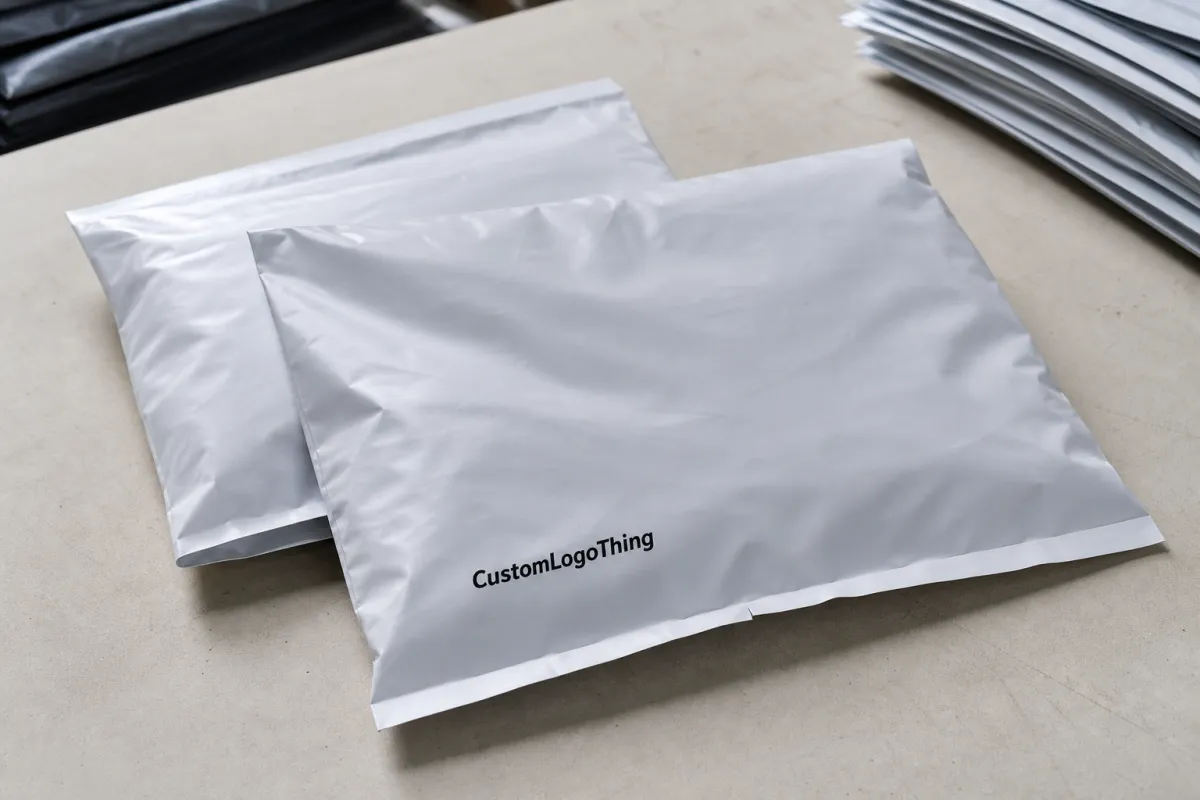
Apparel is often packed correctly and still arrives with problems because the package leaves a controlled environment and enters a messy one. Humidity, wet loading areas, and long dwell times in transit can undo careful folding faster than most teams expect. Waterproof mailers add a barrier without forcing every order into a heavier corrugated box.
Standard poly bags handle dust and bundling well, but they are not always enough when moisture resistance and presentation both matter. Waterproof Apparel Mailers help protect printed garments, reduce repacking, and keep the first impression cleaner than an outer wrap that has picked up water marks or abrasion. They also fit alongside Custom Poly Mailers, Custom Packaging Products, and Custom Printed Boxes without requiring every order to use the same structure.
The most useful mailer is usually not the thickest one. It is the one that matches the folded packout, seals straight, and protects against moisture without inflating freight cost.
Size should start with the garment, not the artwork. A single folded tee has different needs from a hoodie with an insert card or a bundled kit. Moisture exposure, storage time, and handling style all affect the right spec, so the mailer should be selected around those realities instead of around a template.
- Single folded tees: usually need a slim flat mailer with limited headroom.
- Hoodies and sweatshirts: typically need a wider body and a stronger seal zone.
- Leggings and activewear sets: work best in a tighter fit that avoids excess air.
- Promo kits: often need opacity and a branded surface for a cleaner handoff.
For recurring orders, it helps to lock the mailer spec into the same system used for replenishment, storage, and packout instructions. That reduces seasonal rework and keeps pricing steadier because the size and construction stop changing from run to run.
Sizing and Construction Details for Folded Garments
Size is not a detail to skim past. A mailer can be technically long enough and still behave badly if the garment crowds the seal area or if the fold leaves too much slack inside the bag. Too tight slows the line. Too loose lets the package shift in transit and hurts presentation.
Flat mailers are the simplest format and usually the lowest cost. Gusseted mailers add room for thicker garments, bundled orders, or products that do not compress neatly. Expanded formats make sense when the package needs a more retail-ready feel or when the product stack is uneven. Each option changes material use, flexibility, and freight footprint.
Closure area matters as much as body dimensions. If the top seal lands crooked or the adhesive strip is too narrow, the problem shows up immediately in packout. Clean side seals, straight edges, and consistent closure pressure keep the line moving and reduce rework.
Opacity should be decided early. Some programs want full concealment for privacy or premium branding, while others need a clearer panel so operators can identify contents without opening the bag. If the garment includes metal trims, bulky zippers, or hard inserts, test the actual folded sample. A mailer that looks right on paper can fail once those hard points press against the film.
- Flat format: efficient for lighter single items and lower freight cost.
- Gusseted format: better for hoodies, thick knits, and bundled sets.
- Expanded format: useful for retail presentation or irregular packouts.
A useful rule is simple: do not size against the garment’s flat measurement. Size against the folded, taped, and labeled version that will actually move through the line. That avoids a common mistake: a mailer that looks correct on a spec sheet but becomes awkward in daily use.
Film, Seal, and Print Specifications Buyers Should Compare
Once the size is set, the construction details matter. Buyers should ask for the film type, thickness, seal width, closure style, and print method in plain language. Vague specs often hide weak points, especially when a sample looks fine but production quality drifts later.
Film thickness is often listed in microns or mils. The right number depends on product weight, shipping lane, and handling risk. Light apparel mailers can work at thinner gauges, while heavier garments or rougher parcel handling usually justify thicker film. Thickness alone is not enough; puncture resistance, tear direction, and seal strength matter too. If a supplier can provide dart impact or tensile data, that is more useful than a vague durability claim.
Seal construction should be checked with the same care. Heat seals tend to give a cleaner edge and stronger bond consistency. Self-seal styles are faster for pack lines that care about throughput. Adhesive closures should be tested under heat, cold, and humidity because a closure that works in a sample room can behave differently after time in a trailer or warehouse staging area.
| Mailer Type | Typical Use | Approx. Unit Price Range | Notes |
|---|---|---|---|
| Unprinted flat waterproof mailer | Single tees, low-branding shipments | $0.09-$0.16 | Lowest setup burden and simplest production path |
| Custom printed flat mailer | Branded direct-to-customer apparel | $0.15-$0.24 | Usually one print area with moderate coverage |
| Gusseted custom mailer | Hoodies, heavier knits, bundled sets | $0.22-$0.38 | More material, more volume, more freight weight |
| Expanded premium mailer | Retail-ready or multi-piece orders | $0.30-$0.55 | Higher cost, better packout control, stronger shelf feel |
Print variables drive the rest. Color count, ink coverage, registration tolerance, and whether the artwork sits on one face or wraps the package all influence cost and consistency. A proof should show the real print area, not just a loose layout on a blank template. For shipping-test guidance, a reference such as ISTA is more useful than a generic promise that the bags are “durable.”
Simple, bold artwork usually holds up better on mailers than crowded designs. Fine text and thin rules can look sharp on screen and disappear once the film flexes during handling.
Bulk Pricing, MOQ, and Quote Variables That Change Unit Cost
For a custom Waterproof Apparel Mailers bulk order, price comes from a few predictable inputs: size, film gauge, print colors, closure type, and the setup work needed before the first unit runs. Small quantities carry more overhead because the supplier has to recover proofing, setup, and production preparation across fewer bags.
MOQ is where buyers often get surprised. A simple unprinted mailer may be possible at 1,000 pieces, while a custom printed order usually makes more sense at 3,000 to 5,000 pieces or above. Higher volume improves the price curve, especially on repeat orders where artwork and dimensions stay fixed.
Freight can change the final number more than expected. Two quotes may look close until pallet count, shipping class, residential delivery, or split shipments are added. A low piece price can disappear once the order is landed, so buyers should compare the mailer alongside tape, inserts, and cartons as part of the total packaging stack.
To get a useful quote, send the folded garment dimensions, target quantity, print file, and delivery window. If any of those are fuzzy, the estimate will be fuzzy too. If sustainability targets matter, ask about material options and verify that the construction matches internal standards. In many cases, the better answer is the lighter gauge that fits correctly instead of a heavier bag with excess air.
Production Process and Lead Time Expectations
The production path is usually straightforward: inquiry, artwork review, proof approval, production scheduling, and shipment. If a sample is required, decide that early because it can add meaningful time before the order is released to the line.
A repeat order with approved artwork may move in roughly 12-15 business days after proof approval, though the real number depends on factory load, bag size, and print complexity. New artwork, custom color matching, or a larger print area can extend that window. Rush work exists, but it should be treated as a contingency, not a planning model.
- Submit dimensions, garment type, quantity, and the print file.
- Review the proof and confirm fit, opacity, closure, and logo placement.
- Approve a physical sample if the size or finish is new.
- Lock the receiving date, pallet count, and dock details before production begins.
Approval lag is a real timing risk. A production slot can be lost if artwork comments sit for several days. The fastest projects are usually the ones with clean specs and quick signoff. If the mailer has to work next to custom printed boxes or other retail packaging, keep the finish and branding notes aligned from the start.
How to Compare Suppliers on Quality, Not Just Price
A low quote is not a strong quote if the bags split at the seal, the print misses registration, or the film varies too much from unit to unit. Quality checks should start with seam integrity, film clarity, print placement, and pack consistency. Those are the details that determine whether the mailer actually works in a live operation.
Ask for samples and inspect them like a warehouse operator would. Check whether the top seal is straight, whether the bag opens without tearing, and whether the print lands where the proof showed it. If a supplier can explain tolerances without hiding behind jargon, that is usually a good sign. If they cannot explain what changes when the film gauge shifts, the risk shifts to your team.
Communication speed matters too. Apparel programs reorder the same packaging across multiple seasons, and a supplier who keeps size, artwork, and material notes organized saves time later. That is especially true for brands that want a consistent package story from launch to replenishment. For future support and reference material, a supplier should be able to keep notes organized through Custom Packaging Products and FAQ resources.
Test samples with real product, not a generic fold. Sleeves, tags, zippers, inserts, and fold direction can change the way a mailer performs. A sample that looks perfect with a dummy sheet can behave differently once the actual garment goes in.
Next Steps for a Custom Waterproof Apparel Mailers Bulk Order
The cleanest path is to gather the facts before pricing. For a custom waterproof apparel mailers bulk order, send folded garment dimensions, quantity, print requirements, closure preference, and the target delivery window. If multiple SKUs are involved, include the packout for each one so the supplier can recommend a size that works across the real use cases.
Ordering a sample or pre-production proof is usually the safest move. It lets the team check fit, seal strength, appearance, and packing speed before the full run is committed. When comparing quotes, keep the variables aligned: same size, same film, same print setup, same freight assumptions. Otherwise the numbers are not comparable.
For repeat programs, keep the approved sample and proof on file as the reference point for reorders. That habit protects consistency, reduces recheck time, and lowers the risk of surprise changes on a later run.
Frequently Asked Questions
What size should I choose for a custom waterproof apparel mailers bulk order?
Choose the size based on the folded garment, then add just enough clearance for easy insertion without leaving a lot of empty space. Test the fit with the actual packout, especially if the order includes inserts, hang tags, or multiple folded items in one mailer. A physical sample is the safest way to confirm the final size.
Are waterproof apparel mailers better than standard poly bags for bulk shipping?
Yes, if moisture protection and presentation matter more than using the lightest possible wrapper. They help protect garments from damp docks, weather exposure, and handling that would leave a simpler bag looking tired. The right construction depends on transit risk, garment type, and how polished the package needs to feel on arrival.
What affects pricing most on custom waterproof apparel mailers?
Size, film thickness, print colors, closure style, and total quantity are the biggest cost drivers. Setup work, color matching, and freight method also move the landed cost. A useful quote depends on the exact spec, not a rough size estimate.
Can I get samples before placing a bulk order?
Yes, and that is the safest way to verify fit, seal quality, opacity, and print placement. Use the sample with actual folded apparel so you can see how it handles in real packing conditions. Approving a sample before production is especially useful when the construction or artwork is customized.
How long does production usually take for waterproof apparel mailers?
Lead time depends on proof approval, print setup, order size, and the current production queue. Straightforward repeat orders move faster than new jobs that need sampling or artwork changes. Build extra time for freight if the order has to arrive by a fixed launch or replenishment date.
For buyers who want dry product, stable branding, and fewer surprises in transit, the best approach is to treat the spec as a working tool rather than a generic bag choice.

