Seven hundred tournament welcome packs can arrive on time and still fail. If 42 are missing a lanyard, 18 printed bags are scuffed across the logo, and volunteers spend Friday night rebuilding cartons instead of setting up registration, the shipment was not truly ready. A Frosted Zipper Bags Carton Packing checklist for sports clubs is the control sheet that ties the bag specification, insert list, carton quantity, label wording, and inspection record together before anything leaves the packing area.
That sounds ordinary, but club orders rarely behave like simple packaging jobs. Age groups, sponsor items, team colors, uniform sizes, race bibs, coach packets, registration lanes, and late committee changes all end up inside the same carton plan. The bag may be the piece athletes see first, yet the carton determines whether the order can be opened and used quickly or becomes a sorting problem in public.
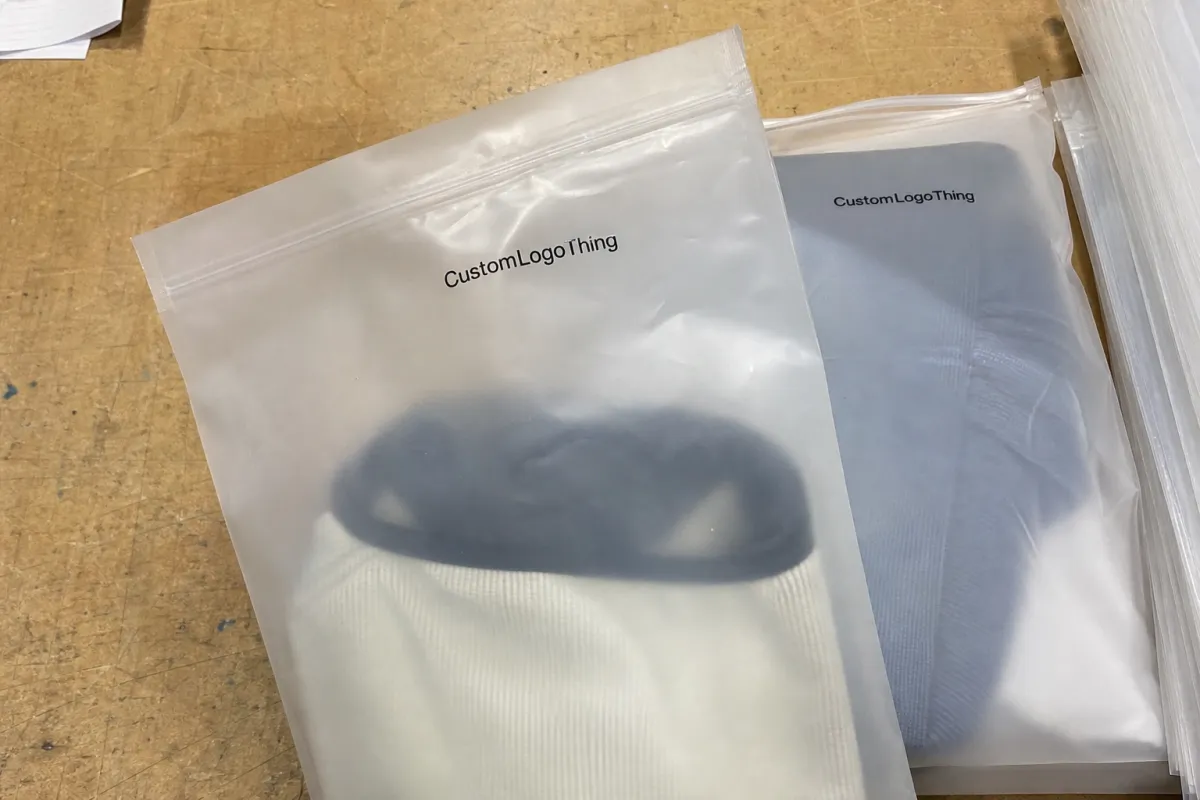
Frosted Zipper Bags are useful for sports programs because they sit between promotional packaging and practical storage. The semi-private film softens the view of the contents, the zipper gives athletes a reusable closure, and the surface generally feels cleaner than loose envelopes or thin disposable sleeves. For a registration pack, accessory kit, or sponsor handout, that first impression matters.
Still, frosted film is not armor. Printed panels can rub under pressure. Zipper tracks can bend when cartons are overfilled. Bottom gussets can crease if the load shifts in transit. A good carton plan protects the presentation you paid for and saves the receiving team from making judgment calls under time pressure.
Frosted Zipper Bags Carton Packing Checklist for Sports Clubs: What It Prevents
A 1% packing error looks harmless on a spreadsheet. Ship 2,000 athlete kits, though, and that is 20 complaints, 20 manual fixes, and often one sponsor asking why a sample, flyer, or logo card was missing from the handout. For volunteer-run clubs, 20 fixes can take two people out of setup for an evening.
The point of a Frosted Zipper Bags Carton Packing checklist for sports clubs is not paperwork for its own sake. It prevents miscounts, crushed kits, mixed versions, unclear carton labels, avoidable freight disputes, and the familiar scramble of opening every box because nobody trusts what the outside label says. It also forces a useful early question: are you buying empty bags, or are you buying cartons that can be opened and used immediately?
Sports clubs are exposed because their deadlines are fixed. A swim meet, football tournament, gymnastics competition, school athletics day, or charity run will not move because carton 14 has mixed age-group packs. Add sponsor inserts and volunteer labor, and the number of variations can start to resemble SKU management rather than a small packaging order.
Packaging reality check: carton packing is the overlooked middle step between bag production and athlete delivery. Many costs that look like event-day problems began as packing assumptions.
A checklist also protects the supplier. Clear carton counts, approved labels, and signed inspection points reduce the risk of disputes after cartons have been opened, moved between teams, or split across venues. If the carton record shows what was packed, where it was packed, and how it was labeled, both sides have something firmer than memory to work from.
How Frosted Zipper Bags Move From Loose Units to Club-Ready Cartons
The production flow is simple on paper: make the frosted zipper bags, fold or stack them, count loose units, create inner bundles, pack master cartons, apply labels, palletize if needed, then dispatch. The risk sits between each handoff. A count can be right at the bundle stage and wrong at the carton stage if one bundle is duplicated, skipped, or placed in the wrong version.
Buyers should separate three packing levels. Unit packing refers to the individual bag or finished kit. Bundle packing might mean 25, 50, or 100 empty bags wrapped together. Carton packing defines how those bundles or finished kits sit inside the shipping carton, how many cartons exist, and what each carton label says.
Common club uses include player registration packs, swim meet credential bags, gym uniform accessory packs, race bib kits, fan merchandise bundles, medal presentation pouches, coach envelopes, and sponsor sample bags. Each use changes the load on the zipper and carton. Empty bags can often be packed flat and dense; filled kits need more air space, consistent orientation, and a stricter maximum weight.
Frosted material changes packing behavior in small but important ways. Matte surfaces usually hide light handling marks better than glossy clear film, but printed logos can still scuff if bags are over-compressed. If one carton holds 500 printed bags and the load shifts during transit, the top layer may arrive looking different from the sample approved during proofing.
Orientation matters. Zipper heads, gussets, hang holes, and printed panels should face consistently so volunteers can unpack without sorting every bag twice. For event distribution, one extra minute per carton becomes visible quickly. Fifty cartons at one extra minute each is nearly an hour of volunteer labor, and that hour usually comes during setup, not during a quiet week in the office.
A packing matrix keeps the order honest. Each carton number should connect to bag color, print version, size, quantity, insert list, and destination group. For example, carton 06 might read: “U12 blue, 200 bags, lanyard plus sponsor card, registration lane B.” That is far more useful than “sports bags,” especially when multiple teams are unloading the same delivery.
Specs to Confirm Before Any Carton Is Sealed
The checklist starts before packing. Confirm bag width, height, film thickness, zipper type, frosted opacity, print position, handle or hang-hole detail, and bottom gusset depth. If the purchase order says 250 x 350 mm but the artwork proof assumes a centered logo on a 300 mm-tall bag, that conflict must be resolved before production, not after finished bags are being counted.
Thickness deserves real scrutiny. A thin frosted zipper bag can reduce cost and carton weight, which may be fine for empty giveaways, paper inserts, or light registration documents. Heavy medals, metal pins, folded jerseys, small drink bottles, sunscreen sachets, or bundled sponsor samples can stress side seams and zipper tracks. Many lightweight promotional zipper bags sit around 70-100 microns. Heavier club kits may need 120-180 microns, depending on weight, shape, and how tightly the carton is packed.
Build the packing checklist around the heaviest realistic kit, not the neat sample on the approval desk. Tournament packs often grow after sponsors add flyers, coupons, protein samples, badge holders, or small retail products. A 90 g sample pack can become a 220 g event pack without anyone updating the carton count, and that change affects film choice, carton strength, freight cost, and handling comfort.
Branding controls also belong on the sheet. Record logo orientation, Pantone or CMYK reference, sponsor hierarchy, crest placement, and whether artwork should remain visible after filling. If a sponsor pays for front-panel placement, a packed bag that hides the mark under a folded T-shirt creates a commercial issue, not just a design issue.
Carton specs need the same discipline: corrugated grade, carton dimensions, maximum gross weight, bags per bundle, bundles per carton, moisture protection, and pallet pattern if the order ships by freight. For heavier filled kits, many buyers prefer cartons kept under 15-18 kg so volunteers can lift them safely. If cartons may sit in a damp clubhouse, storage container, or temporary tent, ask about liners, carton strength, and pallet wrapping rather than assuming indoor warehouse conditions.
Compliance labels depend on market and use. Possible controls include suffocation warnings, recyclable material marks, country of origin, batch numbers, and carton-side contents labels. For broader packaging guidance, buyers can review resources from the Packaging Machinery Manufacturers Institute and transport testing references from ISTA. ASTM test methods may also be relevant for film strength, seal performance, and transit handling, depending on the order and destination.
Cost, MOQ, and Unit Cost Signals Sports Clubs Should Check
The cheapest unit price can become expensive if carton packing is vague. Labor does not disappear. It moves from the supplier’s packing table to the club table, usually at the least convenient moment.
Cost drivers include bag size, film thickness, zipper quality, frosted finish, print colors, print coverage, order quantity, carton strength, inner packing method, and inspection level. A one-color logo on a standard size is usually more economical than a full-coverage print with multiple versions, thicker film, sorted cartons, and numbered labels. The second option may still be the better buy if it removes hours of event setup and lowers the chance of errors at registration.
MOQ, or minimum order quantity, is not only a sales rule. It reflects film rolls, printing setup, machine time, zipper material, and carton utilization. A club asking for 180 bags across six print versions may find that setup cost dominates the quote. A club ordering 5,000 units in one version usually spreads setup more efficiently.
| Quote Line | Typical Use | Cost Signal | Risk If Vague |
|---|---|---|---|
| Bags only | Club packs everything locally | Often the lowest unit price; custom printed empty bags may range around $0.18-$0.45 each at mid-size quantities, depending on size, film, zipper, and print | Volunteer sorting, local packing errors, extra storage time, and unclear shortage evidence |
| Standard carton packing | Empty bags packed in fixed counts | Moderate cost; often 100-500 bags per carton depending on dimensions, thickness, and carton size | Cartons may not match team tables, registration lanes, or age groups |
| Club-specific carton sorting | Bags sorted by team, age group, station, or finished event pack | Higher packing labor; may add a few cents per usable kit or a fixed handling charge | Lower event-day labor, but only if the carton map is accurate and approved |
Packing density affects freight. Ten thousand flat bags may ship efficiently. Ten thousand pre-filled athlete kits take more cubic space and may trigger dimensional-weight charges, especially when inserts are bulky but light. Freight math can punish air, and carton designs that look tidy on a packing bench may become costly once priced by volume.
Ask for three quote lines: bags only, bags with standard carton packing, and bags with club-specific sorting. Then compare total landed cost per usable event kit, not just price per empty bag. Hidden costs can include artwork revisions, rush production, extra master cartons, split shipping, barcode labeling, carton relabeling, overage handling, and replacement stock for shortages.
The sharper question is simple: what will it cost to put the correct bag in the correct hands on event morning? That is the number the treasurer should see.
Process and Timeline From Artwork Approval to Delivery
A practical timeline starts with confirmed specs, approved artwork, sample or pre-production proof, bag manufacturing, quality control, carton packing, carton labeling, freight booking, and receipt at the club or event site. The clock should start after artwork and specs are approved, not after the first inquiry. Unclear artwork, missing logo files, or unresolved size decisions can quietly consume five business days.
Typical production for custom frosted zipper bags may run about 12-25 business days after proof approval, depending on quantity, print method, material availability, and schedule. Freight can add a few days for domestic moves or several weeks for international shipments. Route, customs checks, service level, and seasonal freight pressure all matter, so fixed promises should be treated carefully unless they are tied to a confirmed production and dispatch plan.
Delays cluster in predictable places: frosted film availability, print proof corrections, zipper material selection, holiday production schedules, customs documentation, and carton label changes. Label changes sound minor until carton numbers have already been printed, packed, or photographed for approval.
Work backward from event day. Allow a delivery buffer, a volunteer sorting day, transit time, production lead time, proof approval, and internal decision-making. If bags are needed for a Saturday tournament, delivery on Friday is not a plan; it is a bet with very little room for recovery.
The Frosted Zipper Bags Carton packing checklist for sports clubs should include an arrival inspection window. Count cartons, compare carton numbers, open sample cartons, check the printed version, test several zippers, and report discrepancies immediately. Once cartons have been split across team managers, shortage evidence gets weaker and replacement options narrow.
Rush orders can be possible. Even so, quality inspection and carton verification should not be the steps that disappear. Packing errors become public because they show up at registration tables, team benches, or sponsor booths. Faster is useful only if the order remains countable.
Assign one decision owner for artwork, quantity, and packing changes. Committee input is normal; contradictory email chains are expensive. A single owner reduces the chance that one person approves “500 per carton” while another requests “sort by age group.”
Step-by-Step Carton Packing Checklist for Club Orders
Use the checklist as a working control sheet, not a decorative attachment. It should be visible to the supplier, the club contact, and anyone managing freight or receiving. For large events, the same document can later guide volunteers as they open cartons and stage tables.
- Confirm the final specification sheet. Match bag size, thickness, zipper, print, color, gusset, handle, and hang-hole details against the purchase order, artwork proof, and approved sample if one exists.
- Define the packing unit. State whether the unit is 50 empty bags per inner bundle, 500 bags per master carton, or one finished player kit per bag.
- Lock the insert list. For filled kits, record every item with approximate dimensions and weight, including sponsor additions that arrive after the first quote.
- Assign carton numbers before packing begins. Every carton should trace back to a quantity, print version, insert list, and destination group.
- Inspect the first cartons. Check count accuracy, zipper function, print scuffing, seal strength, bag orientation, and carton label readability before the full run continues.
- Record carton weights and dimensions. Compare outliers. A carton that is too light or too heavy often signals a count error, missing insert, duplicated bundle, or substituted packing method.
- Photograph the evidence. Capture the packing layout, carton label, and sealed carton. Photos help with approval, receiving checks, and freight claims if damage occurs.
- Create the receiving checklist. Count cartons, check carton numbers, sample open at least three cartons, test several zippers, and report discrepancies quickly.
- Keep reference standards. Save one approved bag, one carton label, and the final carton map for repeat orders.
A strong checklist also names the person who signs off at each stage. Anonymous approvals are hard to audit. Initials, dates, and photo records create accountability without turning a club order into a bureaucratic marathon.
For larger tournaments, a simple tolerance rule helps: any carton weight more than 3-5% outside the expected range gets opened and checked. That is not perfect science, but it catches many missing-bundle and extra-insert problems before dispatch. If a carton is supposed to hold 100 identical kits, its weight should not drift far from the others without a reason.
Common Packing Mistakes That Create Event-Day Problems
The most common failure is approving the bag design but never approving the carton packing plan. The supplier then chooses a default method, often by efficient production logic rather than event distribution logic. Factory efficiency and registration-table efficiency are not always the same thing.
Mixing versions in one carton is another troublemaker. Age groups, home and away teams, sponsor-specific packs, coach kits, and volunteer packs should not share a carton unless there is a visible divider and a clear carton-side label. A volunteer should not need to open 12 bags to understand what carton 12 contains.
Overfilling cartons is risky. Frosted zipper bags can crease, zippers can deform, and printed panels can rub during transit. If the carton bulges before sealing, the count may be efficient, but the presentation is being sacrificed. Bulging cartons also stack poorly, which increases crush risk on pallets and in delivery vehicles.
Vague labels create avoidable friction. “Club order” tells the receiving team almost nothing. Better labels include quantity, bag size, color, print version, team or event group, gross weight, and carton number. Example: “Carton 08 of 24, U14 red player packs, 75 units, lane C.”
Late sponsor inserts deserve special caution. They can change bag weight, carton count, packing sequence, and freight dimensions after the quote has been approved. A single energy bar sample may look minor. Multiply it by 3,000 kits and it becomes several hundred kilograms of product, plus new carton volume and possibly a different handling plan.
Sample bias is real. One beautiful prototype does not prove 5,000 production bags will be packed correctly. The prototype proves design intent. The carton standard proves distribution readiness.
Do not skip arrival inspection. Freight damage, moisture exposure, and count discrepancies become harder to resolve after cartons are opened, moved, and distributed. If ISTA-style transit testing is not practical for the order size, basic receiving discipline becomes even more valuable: count, compare, open, photograph, and report.
Build a Packing Brief Before Requesting a Quote
Before asking for pricing, list the bag size, quantity, thickness, print details, event date, destination, carton limits, and whether bags ship empty or pre-filled. If filled, include every insert with approximate dimensions and weight. A medal, folded shirt, and sponsor card behave very differently inside a zipper bag, even if they fit inside the same sample.
Prepare a simple carton map. Useful columns include carton number, bag version, quantity, destination group, gross weight, carton dimensions, and special notes. This can be a spreadsheet. It does not need to look polished; it needs to be unambiguous.
Estimate distribution reality. Who opens the cartons? Where are they stored? How many volunteers handle them? Are cartons going to team tables, registration lanes, coach pickup, merchandise booths, or a sponsor station? A carton plan that ignores the venue layout often creates the sorting work it was meant to prevent.
Ask suppliers for photos of packed cartons, first-carton inspection records, carton label proofs, and the final packing list before dispatch. For repeat orders, save the approved artwork, carton map, material specs, and event feedback about bag strength or packing quantities. Small notes such as “zipper strained with medal and bottle” can save money and frustration on the next run.
Most packing problems are not mysterious. They are undocumented assumptions. Before approving production, turn the frosted Zipper Bags Carton packing checklist for sports clubs into a shared document between the club, supplier, and freight contact. The goal is not extra administration. The goal is a shipment that can be opened, checked, and put to work without a room full of people rebuilding it by hand.
FAQ
What should a frosted zipper bags carton packing checklist include for a sports club order?
A frosted zipper bags carton packing checklist for sports clubs should include bag size, thickness, print version, quantity per bundle, quantity per carton, carton number, gross weight, destination group, label details, and inspection sign-off. Add event-specific notes such as team name, age group, sponsor insert list, or registration station so cartons can be unpacked without re-sorting.
How many frosted zipper bags should a sports club pack in one carton?
The right count depends on bag size, film thickness, zipper bulk, and whether the bags are empty or filled. Empty bags may pack at higher counts, sometimes several hundred per carton. Packed athlete kits should be controlled by weight, crush risk, zipper stress, and handling comfort rather than carton count alone.
Do frosted zipper bags cost more when cartons are sorted by team or age group?
Usually, yes. Sorting adds labor, labeling, carton control, and inspection time. That added packing cost can still be cheaper than asking volunteers to manually sort hundreds or thousands of bags before an event, especially if venue access is limited or registration opens early.
What lead time should a sports club allow for custom frosted zipper bags and carton packing?
Allow time for artwork approval, production, quality checks, carton packing, freight, and arrival inspection. A practical schedule often needs several weeks, with a buffer before tournament day because late artwork changes, sponsor inserts, freight delays, or split shipments can extend the process.
Can frosted zipper bags be packed with uniforms, medals, or sponsor samples inside?
Yes, but the supplier needs the actual insert list, approximate weight, and dimensions before quoting or packing. Heavy, rigid, or sharp items may require thicker film, stronger zipper tracks, lower carton counts, or protective packing to reduce scuffing, seam stress, and zipper deformation.

