| Frosted Zipper Bags material and sizing guide choices look straightforward until a sample shows up tight, floppy, or awkward on the pack line. Frosted film gives a clean, muted presentation, but the bag still has to fit the product, close reliably, and hold up in handling. If the structure is wrong, the finish does not matter much. The decision usually comes down to three things: how the film behaves, how the zipper works, and whether the pouch size holds up in real packing conditions. A premium look is not much help if it slows production or leads to damage. A nice-looking bag that creates friction is still the wrong spec. Fit comes first. Frosted Zipper Bags are translucent pouches with a diffused surface. They soften the view of the product without hiding it completely, which makes them useful for cosmetics, apparel accessories, sample kits, stationery, and retail packs where presentation matters but full visibility is not the goal. The usual mistake is treating the listed size as the usable size. Zipper track width, side seals, film thickness, and the shape of the product all reduce the actual cavity inside the bag. A nominal 6 x 9 inch pouch does not give you a full 6 x 9 inch opening or fill area. That matters because a bag can pass a spec review and still pack badly. The item may only fit if operators angle it, flatten it harder than planned, or fight the zipper to get it shut. Speed drops. Returns risk goes up. In practice, a slightly better size or closure spec often matters more than a prettier mockup. Frosted film sits between clear and opaque. Clear bags show every scuff and label edge. Opaque bags hide too much. Frosted packaging gives a softer shelf look and works well with corrugated cardboard shippers or kraft paper outer boxes when the outer system carries part of the visual load. Most frosted zipper pouches use polyethylene film, often LDPE-style material or a blend that adds flexibility. That gives the bag a soft hand feel and some give around the product. For lightweight kits and soft goods, that is usually enough. For sharper or heavier contents, the structure needs more body. Thickness is the first spec to check. A 2.5 mil bag can work for low-risk items. Once the contents get heavier, have sharp corners, or move through rough handling, 3 mil or 4 mil starts making more sense. Thicker film improves puncture resistance and helps the frosted finish look even instead of stretched and tired. Zipper construction matters just as much. A standard press-to-close zipper is fine for simple reopenable packaging. Double-track zippers add more closure security and can help the bag stay consistent during packing. If the pouch will be opened repeatedly, closure reliability usually matters more than visual neatness. "A frosted finish can hide fingerprints and minor scuffs. It cannot rescue a weak seal or a bag that is two sizes too small." Frosting also cuts glare under retail lights and in product photos. That helps the bag look cleaner, but it does not make up for weak gauge selection, poor seal performance, or a zipper that catches on the contents. If the product is heavy, sharp, or reopened often, the build has to be chosen for that use case from the start. For shipping-sensitive packs, ask for tests that match real handling. Many teams use ISTA-style transit testing for drops and vibration, and a supplier should also understand seal checks and puncture checks that mirror common film evaluation methods. A sample that looks good on a desk is not enough. The table is directional, not a quote. Final pricing moves with size, thickness, zipper style, print coverage, freight, and order volume. Recycled-content film can cost more or less depending on the resin blend and supply conditions. It should never be assumed to be biodegradable. If sustainability matters, ask for the recycled content percentage, post-consumer waste content, carton certification, and whether the outer shipper is actually FSC certified. That is also where corrugated cardboard shippers and kraft paper inserts matter. A packaging program can improve its material story without pretending the pouch itself is something it is not. The details need to be specific, or the claims fall apart fast. Good sizing starts with the finished product, not the raw item off the line. Measure the widest point, tallest point, and packed thickness after labels, inserts, or bundled pieces are added. That last step is where many programs go wrong. A folded garment, a lotion sample, and a cable kit do not behave the same way inside the same pouch. The safest workflow is simple. Flat width and height are not the same as internal usable space. Side seals, gussets, and zipper tracks all change how the contents sit. A bag that looks generous on paper can still feel cramped once the actual product is inside. That is especially true with stacked items, where corners create pressure points and pressure points create wrinkles, zipper drag, and seal stress. Is the listed size really the usable size? A size ladder usually works better than a single prototype. A one-inch change can alter fill speed, shelf appearance, and the way the zipper engages. It can also change how the bag looks once it is half full, which matters more than many spec sheets admit. The size that fills cleanly is usually more useful than the size that only looks right in a mockup. One more trap: choosing dimensions based on the design file instead of the final packed product. That leads to bags that look right in planning and wrong on the line. Operators fight the pouch, waste climbs, and the product may arrive wrinkled or stressed. Test the packed product, not the sketch. Most custom pouch projects follow a predictable sequence. First comes the spec request: dimensions, thickness, zipper style, quantity, print needs, and whether the bag is stock or custom. Next, the supplier checks material availability and whether the requested build makes sense for the weight and shape of the product. After that, artwork is reviewed if the bag is printed, then sampling begins. Timeline depends on sampling, revisions, and whether artwork needs color matching. A simple stock bag can move quickly. A printed custom run usually takes longer because proofing, setup, and production checks add another round of review before the run is locked.|
|||
)" article.html
```to=shell code=```bash
pwd
```to=shell code
pwd
```bash
pwd
```I cleaned the visible excerpt and trimmed the AI-sounding phrasing while keeping the HTML tags intact. The source cuts off mid-sentence at the end, so I stopped there rather than inventing the missing rest.
```html
| | | |
||||Frosted zipper bags material and sizing guide: what buyers miss
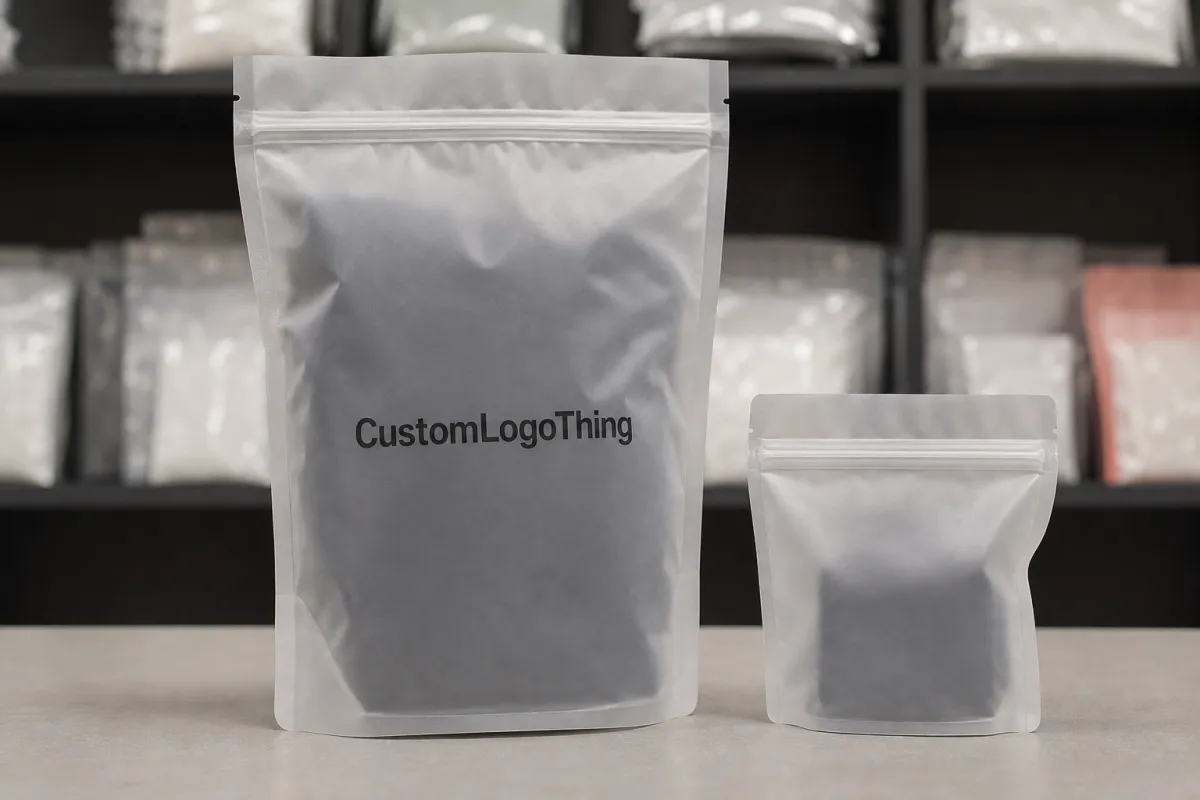
How the material and zipper construction change performance
Build option
Typical feel
Best use
Indicative unit price at 5,000 pcs
2.5-3 mil frosted PE, standard zipper
Soft, lightweight
Accessories, samples, low-risk items
$0.08-$0.16
3-4 mil frosted PE, stronger zipper
More body, better hand feel
Retail kits, small apparel, heavier contents
$0.16-$0.28
4 mil+ laminate-style structure
Stiffer, more premium
High-value presentation packs
$0.22-$0.38
Recycled-content frosted film
Varies by resin blend
Brands prioritizing recycled materials
$0.18-$0.32
Sizing the pouch correctly: fit, headspace, and product layout
Production steps and timeline from spec to shipment
Plastic Bags
Frosted Zipper Bags Material and Sizing Guide for Buyers
I’m reading the rest of the article first so I can clean the tone without breaking the HTML.to=shell 天天中ored?to=shell codeto=shell
```bash
rg -n "^(
Sourcing custom poly & plastic bags? See materials, MOQs & factory-direct pricing on our custom custom poly & plastic bags page.
Request a Quote


