The real buying question is simple: does a frosted zipper bag improve presentation enough to justify the added cost? In many cases, yes. The frosted finish reduces glare, softens visible clutter, and makes small products look more deliberate on shelf or in a kit. That helps with apparel, cosmetics, accessories, samples, and starter packs, where packaging affects perceived value as much as protection does.
What trips buyers up is assuming the finish is the main cost driver. It usually is not. Size, thickness, zipper style, printing, pack-out, freight, and MOQ move the quote much more than the frosted look itself. If you know which specs change the price, you can compare suppliers on the same basis and avoid paying for vague differences.
Why Frosted Zipper Bags Win on Shelf Value
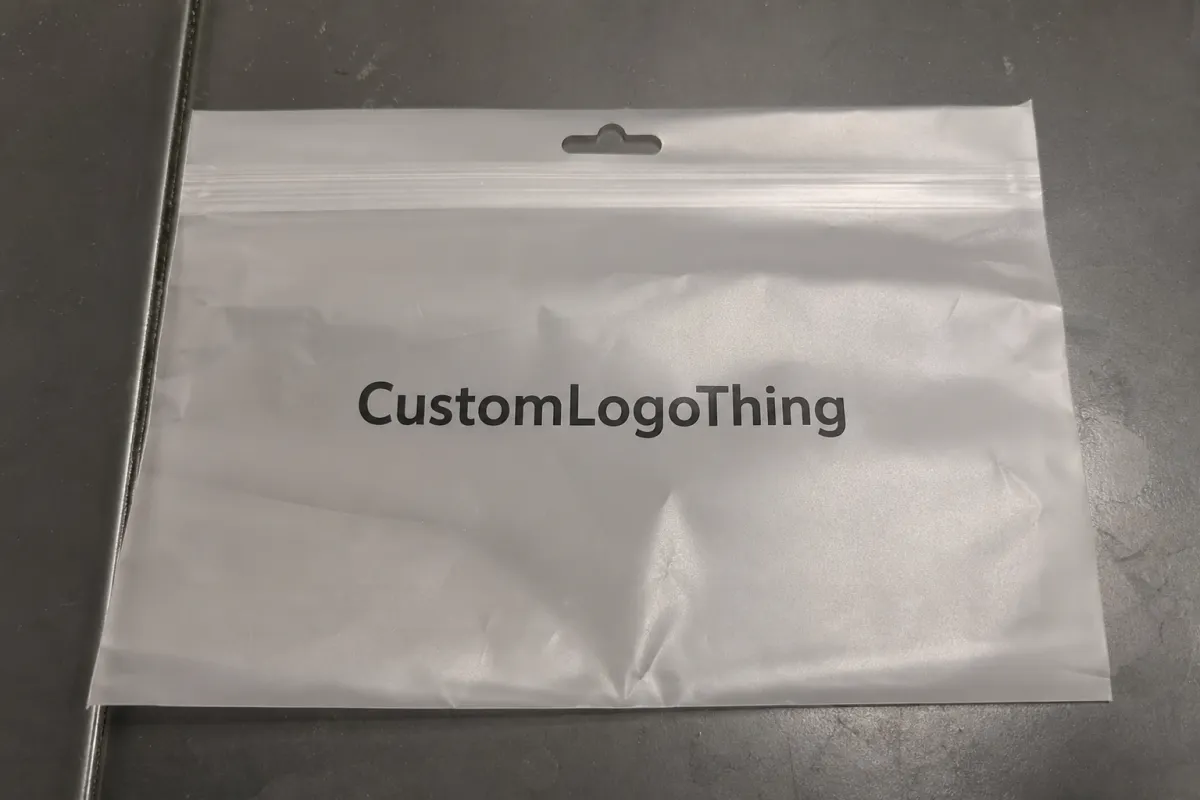
Frosted film usually adds only a small premium over standard clear film, but the visual result can be much better. It cuts reflections from store lighting, hides fingerprints and minor scuffs, and gives contents a cleaner read from a distance. For low-cost products, that can be the difference between looking basic and looking intentional.
That matters because packaging is competing for attention, not just serving as a container. A simple item in a well-made frosted bag can look more organized and higher value than the same item in a flimsy clear pouch. The bag does not change the product, but it changes the first impression quickly.
Frosted bags also help in fulfillment and kitting. They conceal mixed contents better than high-clarity film and make small inconsistencies less visible. That is useful when multiple SKUs are grouped into a set and the pack-out needs to look consistent.
The finish itself is not usually the expensive part. The bigger cost swings come from decisions that affect material usage and production time: larger dimensions, heavier film, stronger zippers, extra print coverage, and special shapes. A 6 x 8 inch flat pouch with a single logo is a very different job from a 10 x 14 inch gusseted bag with a double-track closure.
The biggest overruns usually start with incomplete specs, not with the frosted finish buyers notice first.
Product Details That Change the Look and Feel
Most Frosted Zipper Bags use polyethylene film, often in the 2.5 to 4 mil range for general retail and fulfillment use. Thinner film costs less and packs flatter, but it wrinkles more easily and can feel soft. Thicker film adds stiffness, puncture resistance, and a more premium hand feel, though it can be less convenient if the bag needs to fold flat or ship in volume.
The zipper is nearly as important as the film. A standard press-to-close zipper is the most economical choice and is easy for customers to reopen. A heavier or double-track zipper feels more durable and may suit reusable storage or kit packaging, but it increases unit cost. If the bag is for one-time accessory packaging, that upgrade may not be worth it.
Shape also changes the economics. Flat pouches are simple and usually cheaper. Gusseted bags hold more, stand better in displays, and work well for folded garments, skincare samples, cables, or mixed parts, but they use more material and need tighter production control.
- Frosted surface: lowers glare and improves shelf readability.
- Film thickness: affects stiffness, puncture resistance, and perceived quality.
- Zipper type: affects closure feel, ease of reuse, and failure risk.
- Gusset depth: affects volume, standing shape, and pack-out behavior.
- Print area: affects branding impact and setup cost more than the artwork alone.
Small design choices can have an outsized effect on the final impression. A clean logo placement, consistent zipper color, and correct sizing often do more for perceived value than expensive decorative effects that do not improve function. The reverse is also true: a good-looking bag that is too tight, too loose, or awkward to close will create complaints in use.
Inspection should focus on the issues that actually fail in production. Check zipper alignment, seal consistency, haze variation, and print placement. If the bags are packed into cartons, check whether the stack stays stable during handling. These are the problems that show up at receiving and during fulfillment.
Frosted Zipper Bags Unit Cost Guide: Pricing, MOQ, and Quote Math
This is where most buyers want the answer first. The Frosted Zipper Bags unit cost guide is not just a price range; it is a way to see how MOQ, setup, printing, and freight change the real number. A quote that looks cheap can become expensive once the factory adds tooling, packing, and transport. That is normal. The key is knowing what is included.
For a standard frosted zipper bag with simple printing and no unusual structure, these bulk ranges are a practical starting point:
| Order size | Typical unit cost | What usually drives the price | Buyer note |
|---|---|---|---|
| 1,000 pcs | $0.28-$0.55 | Setup charges, sample cost, freight spread | Useful for trials, weak on economy |
| 3,000 pcs | $0.20-$0.36 | Lower setup burden, better material buying | Often the first practical break point |
| 5,000 pcs | $0.16-$0.28 | Better bulk pricing and steadier production flow | Common sweet spot for steady demand |
| 10,000 pcs+ | $0.12-$0.22 | Material efficiency, lower handling cost per piece | Best if forecasts are reliable |
Those ranges move quickly when the spec changes. Larger dimensions can add 15% to 40%. Heavier film, custom zipper colors, extra print coverage, matte effects, and die-cut handles also raise cost. A one-time tooling fee for a new size or cut shape may be around $80-$250 for simpler builds, with more complex requirements costing more. If a quote seems unusually low, check whether one of those items has been left out.
The cleanest comparison is identical specs: same dimensions, thickness, zipper, print coverage, pack count, and freight terms. If one supplier is cheaper, the difference should be explainable. If it is not, the quote is probably incomplete.
Unit price and landed cost are not the same thing. Unit price is the factory charge for the bag. Landed cost includes the full path to your warehouse: material, zipper, print, setup, packaging, and freight. That is the number procurement should use.
Quick formula: material + zipper + print + tooling + setup + packaging + freight = real cost per piece.
MOQ matters because setup charges get spread across every unit. Small runs are more expensive per piece, while larger runs reward stable specs and repeat production. If you are ordering for a launch, a trial, or a seasonal kit, the MOQ can decide whether the order works financially at all.
Production Steps and Lead Time From Proof to Shipment
A clean order usually moves through inquiry, spec review, artwork check, proof approval, sampling, production, inspection, and shipment. Delays tend to happen before production starts: missing dimensions, unclear art files, and late changes are the main causes.
A typical timeline looks like this:
- Inquiry and spec review: 1-2 business days if the buyer sends complete details.
- Artwork check and digital proof: 1-3 business days.
- Custom sample or pre-production sample: 5-10 business days.
- Production run: usually 12-20 business days for a standard bulk order.
- Final inspection and packing: 1-3 business days.
Shipping adds another layer. Air freight is faster, often 3-7 business days after handoff, but it gets expensive quickly. Ocean freight is much cheaper per unit and much slower, often adding 20-35 days or more depending on route, congestion, and customs. Peak season can stretch both options.
If a launch date matters, ask for the full timeline, not just the factory schedule. A quote that shows only production time can look fast while still missing transit and buffer time.
Sampling is where most avoidable problems are caught. A sample shows zipper feel, print placement, bag stiffness, and film clarity before the full order runs. If the sample is off, fix it immediately. It is far cheaper to correct a proof or sample than to rework thousands of units later.
For packaging and transit testing, the guidance at ISTA is useful when bags are shipping inside cartons or through parcel networks. For broader packaging references and terminology, packaging.org is a practical source. Neither site replaces a spec sheet, but both help keep requirements clear.
Specs to Lock Before You Request a Quote
A supplier can only price what is clearly defined. Vague requests create vague quotes. If you want a useful number, send the full spec in one pass instead of piecemeal follow-ups.
Include these details:
- Size: width, height, and gusset depth if applicable.
- Thickness: mil or micron target, plus any feel preference.
- Zipper style: standard, heavy-duty, or double-track.
- Print needs: number of colors, coverage area, and art file format.
- Packaging: bags per inner pack, cartons per case, and pallet needs if relevant.
- Destination: shipping country, ZIP, port, or warehouse location.
- Usage: apparel, cosmetics, samples, accessories, storage, or food-adjacent contact.
Usage matters because packaging for one category is not automatically suitable for another. If the bags are going near food, regulated products, or claims that require documentation, ask for the actual paperwork early. The same applies if recycled content, resin type, or certification claims matter.
Pack-out should also be specified. If the bags are going into an inner carton, retail tray, or master shipper, say so. A bag can look fine on its own and still fail as part of a larger packing system if the count per case is awkward or the stack shifts during transit.
Tell the factory what you are optimizing for: lowest cost, stronger shelf appearance, easier reuse, faster packing, or flatter shipping. The clearer the goal, the better the recommendation. Otherwise you get a generic assumption, and generic assumptions are rarely efficient in packaging.
How to Compare Suppliers Without Paying for Noise
The cheapest quote is not always the best, and the most polished quote is not always the most honest. Factory-direct pricing usually wins on bulk orders, while brokers and resellers often charge more in exchange for easier communication or domestic support. The model is less important than whether the supplier is clear about what is included.
Ask direct questions about film type, seal construction, carton count, print registration, and freight terms. Clear answers matter more than marketing language. A supplier who can explain the spec in plain terms usually understands the job better than one who only talks about “premium quality.”
A simple comparison looks like this:
| Supplier type | Price level | What you get | Risk to watch |
|---|---|---|---|
| Factory-direct | Usually lowest on bulk orders | Better control over spec, MOQ, and production | Requires disciplined buyer specs |
| Broker / trading company | Usually higher | More coordination and simpler communication | Markup and less visibility into tooling fees |
| Local reseller | Usually highest | Faster domestic support and easier payment flow | Limited customization and weaker bulk economics |
Sample policy matters. A real pre-production sample is much more useful than a mockup because it exposes zipper feel, print placement, seal consistency, haze variation, and overall stiffness. If a supplier will not produce a usable sample or proof, that is a warning sign.
Freight language matters too. Ask whether the quote is EXW, FOB, or delivered. Ask what is included and what is not. A low unit price can be misleading if cartons, inner packing, or inland transport are added later. The best supplier is the one that gives you the cleanest landed-cost estimate, not just the lowest headline number.
Next Steps for a Clean, Fast Custom Quote
The fastest path to a useful quote is to send complete specs up front. Start with exact size, quantity, finish, zipper style, print coverage, destination, and pack-out requirements. Then ask for a second volume tier so you can see whether a larger order actually improves the economics.
Use one message with the essentials:
- Dimensions: width, height, and gusset.
- Quantity: target order size plus a second tier for comparison.
- Build: frosted finish, thickness, zipper type, and any special shape.
- Print: colors, coverage, and artwork file format.
- Pack-out: bags per inner pack, carton count, and pallet needs if relevant.
- Ship-to: country, ZIP or port, and preferred freight method.
- Timing: sample date, production window, and delivery target.
Then ask three direct questions: What is the sample path? What is the schedule after proof approval? What is the landed cost with freight included? Those answers tell you more than a polished sales email.
The buying rule is straightforward. Compare the full cost per piece, not just the headline unit price. Confirm MOQ, setup charges, tooling, print specs, freight, and timing. A frosted bag should earn its place by improving presentation and keeping packing friction low, not by adding decorative cost that does not help the buyer.
FAQs
What drives frosted zipper bags unit cost the most?
Order quantity usually has the biggest effect, especially at lower MOQs. After that, size, film thickness, zipper style, and print coverage shape the price. Freight, packaging, and setup charges can also change the landed cost enough to alter the buying decision.
What MOQ should I expect for frosted zipper bags?
MOQ varies by size, material, and print method. Smaller runs almost always cost more per bag because setup costs are spread across fewer units. Ask for tiered pricing so you can see the gap between a test order and a production run.
How long does frosted zipper bag production usually take?
Proofing can move quickly if the artwork and dimensions are ready. Production often takes 12-20 business days for a standard bulk order, then shipping adds its own timeline. If a quote only shows factory time, request the full schedule.
Can I get a custom printed frosted zipper bag quote with mixed sizes?
Yes, but each size usually needs its own setup, spec sheet, and pricing tier. Mixed sizes often raise total cost because production, packing, and scheduling become more complex. A clean way to approach it is to group sizes by shared structure where possible.
What details do I need to get an accurate frosted zipper bags quote?
Send exact dimensions, thickness, finish, zipper style, print requirements, quantity, and delivery destination. If you need samples, say so early so the first quote reflects the real cost. The less guessing involved, the less likely the final invoice is to drift.

