A custom Frosted Zipper Bags bulk order can do something a lot of packaging cannot: make a product look controlled without making it feel overbuilt. The frosted surface hides fingerprints, minor scuffs, and the visual clutter that clear plastic tends to amplify. That matters more than many buyers expect. A package is often the first object a customer touches, and the first thing they judge, before they ever reach the product itself.
For brands trying to upgrade product packaging without adding weight or moving into a full carton system, Frosted Zipper Bags sit in a useful middle ground. They are lighter than boxes, easier to pack than tissue-and-sleeve combinations, and usually cleaner than a plain poly mailer for retail-facing goods. The math is simple: fewer materials, fewer handling steps, and less visual noise on shelf or in a kit.
That is why buyers keep moving away from folded cartons, separate labels, and extra inserts unless those extras serve a specific purpose. In wholesale packaging, decoration only earns its place if it supports speed, cost, or presentation. Frosted Zipper Bags can do all three, but only if the specs are chosen carefully.
Custom Frosted Zipper Bags Bulk Order: Why Buyers Switch
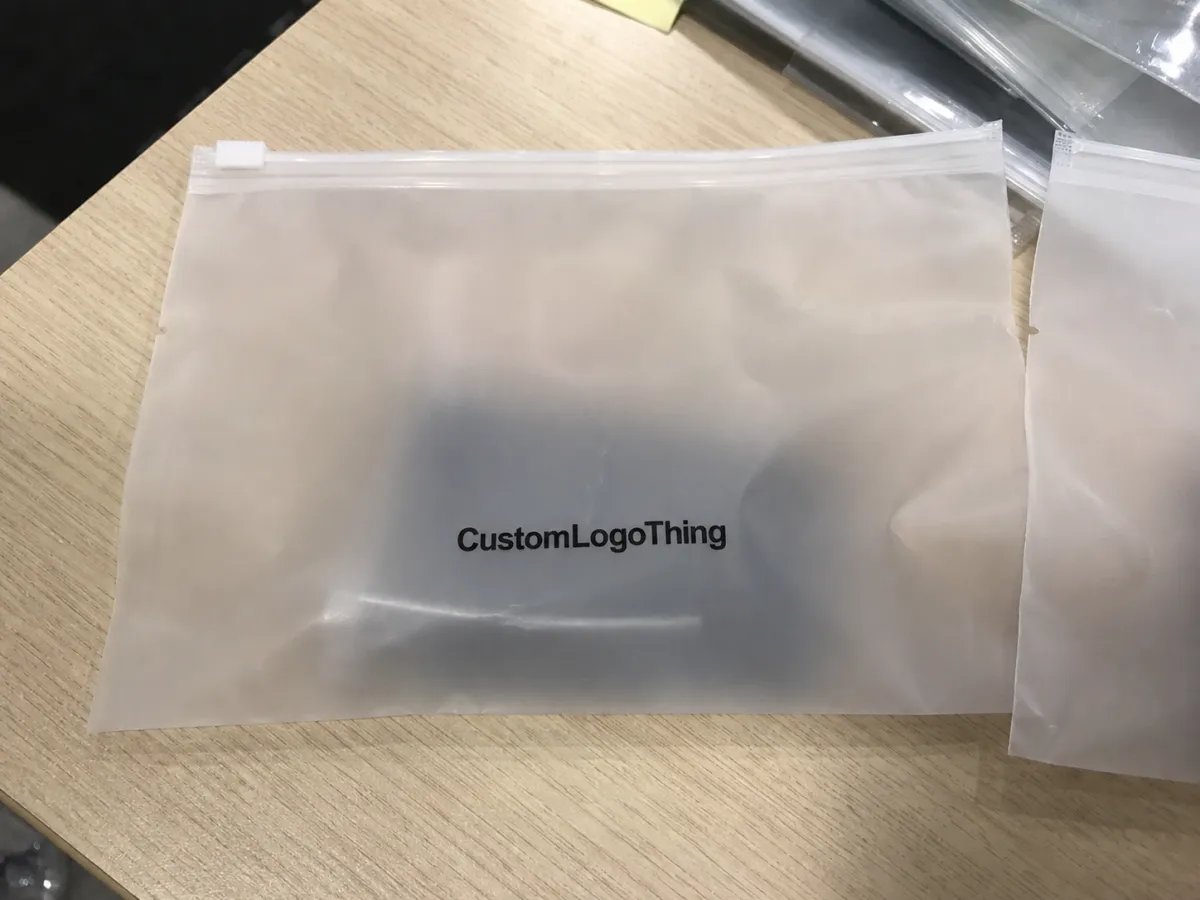
Frosted film solves a practical problem. Clear bags show everything: dust, handling marks, printing errors on the contents, and even the shape of a folded item that was packed too quickly. Frosted material softens that view. It does not hide the product, but it does make the package feel more composed. That difference is small on paper and obvious in hand.
This is why the format shows up in apparel accessories, beauty kits, stationery bundles, cable packs, travel sets, subscription boxes, and small hardware programs. The bag gives the item a finished edge without asking the buyer to commit to a rigid carton. It also works well for products that get repacked or handled multiple times during fulfillment. A pouch that still looks decent after several touches is worth more than one that only photographs well.
There is another advantage that gets overlooked: storage. Flat bags take up less room than rigid packaging and are easier to stage on packing tables. If a warehouse is moving thousands of units, that difference becomes real. Less cubic volume means less clutter, and less clutter usually means fewer mistakes at the table. Packaging does not need to be elegant to be efficient, but it should not get in the way.
The price structure also helps. With a custom frosted zipper Bags Bulk Order, the first few thousand units absorb setup costs more efficiently than a small run. Once the artwork is approved and the film is dialed in, the unit price usually drops enough to make the switch worthwhile. That is the practical reason buyers keep moving from mixed-material packaging toward a single pouch format.
“A package can be inexpensive and still look thoughtful. It can also be expensive and still look careless.”
If you are comparing packaging systems, this format sits between a bare plastic sleeve and a more structured Custom Packaging Products line. That middle position is often exactly what buyers need: enough brand presence to look intentional, not so much structure that freight and labor start climbing too fast.
Frosted Finish, Zipper Style, and Print Surface Details
Not every frosted bag has the same feel. Some use a light matte PE film that stays soft and flexible. Others rely on thicker laminated builds that feel firmer in hand and resist scuffing better during transit. A buyer choosing only by sample appearance can miss the point. The film structure matters because it affects stiffness, closure performance, print clarity, and how the package behaves in shipping.
The frosted look itself usually comes from the film surface or a matte treatment, not from some separate decorative layer. That means the print behaves differently than it does on glossy clear film. Colors often appear slightly muted unless the job uses a white underbase or a strong contrast palette. This is not a defect; it is a material reality. Designs that rely on thin lines, tiny type, or pale tones tend to lose energy on frosted film. Bold artwork survives better.
The zipper deserves as much attention as the surface. A weak closure turns a polished pouch into a complaint. For retail packaging, buyers usually want a press-to-close zipper that opens cleanly, seals with even pressure, and does not drift off track at the ends. If the bag is meant for repeated use, the zipper needs enough grip to survive multiple open-close cycles without splitting or losing tension. That detail sounds minor until a customer has to tape a bag shut because the track failed.
Printing choices also change cost and appearance. One-color logos are usually the easiest path because they keep contrast high and setup simpler. Two- or three-color art can work well, but each added color raises the chance of registration issues, especially when the film surface is matte and slightly diffused. Full-coverage printing is possible on some builds, but buyers should expect a softer, less mirror-like finish than they would get from gloss packaging.
For buyers weighing material options, the useful breakdown is usually this:
- Light frosted PE for low-weight items, accessory kits, and lower-cost branded packaging.
- Thicker laminated film for premium presentation, repeated use, or contents that need more body.
- Single-color print for the clearest logo visibility and the most stable pricing.
- Multi-color print for stronger shelf impact, if the art tolerates a softer visual finish.
For broader terminology and material basics, the Packaging Machinery Manufacturers Institute is a useful reference point. If your program includes recycled content or claims tied to responsible sourcing, verify the standards carefully through FSC or the correct certification body before using the language on packaging or sales sheets.
Sizes, Thickness, and Build Specs That Change Performance
Size selection should start with the product, not with the supplier catalog. Measure the item as it will actually ship: folded, inserted, stacked, tagged, or bundled. If the product sits inside another sleeve or carton, measure that complete footprint. A bag that is too tight slows packing. A bag that is too large wastes film and makes the product feel loosely contained. The best fit is usually slightly forgiving, not exact to the millimeter.
Thickness is where many buyers oversimplify. A thin bag can work for light accessories, jewelry, small cosmetics, or soft goods that are not crushed in transit. Heavier gauges make more sense for stacked sets, hardware, or programs where the pouch will be reused several times. In general, buyers are choosing between lower material cost and better hand-feel plus durability. That is a tradeoff, not a universal upgrade. If the package only needs to reach the customer once, overbuilding it can be wasted money.
Most sourcing teams also need to think about structure. Side gussets add room without forcing the front print area into an awkward shape. Bottom gussets help with bulkier contents. Straight-seal designs are simpler and often cheaper, but they can be less forgiving when the product varies slightly from unit to unit. If you are packaging anything with inconsistent depth, a little extra structure often saves more than it costs.
Quality control should not stop at the sample image. A good order sheet should specify material, thickness, finished dimensions, zipper style, seal type, and acceptable tolerance. If that information is vague, the order will be hard to inspect later. The issues that create returns are often small: zipper tracks that do not align, seals that vary by a few millimeters, or print placement that drifts into the seam area.
Before approving a run, confirm these points:
- Material type and thickness in microns or mils
- Finished size plus the allowed tolerance range
- Print area and whether seams or zippers reduce it
- Zipper style and whether the closure is meant for repeated use
- Pack count per inner bundle and master carton
For shipping-heavy programs, it can also make sense to think like a transit lab. Not every pouch needs formal testing, but if the product is fragile, high value, or tied to a launch deadline, an ISTA transit profile can expose weak points before cartons are on a truck. That is cheaper than finding out after a damage claim.
Pricing, MOQ, and Unit Cost Breakpoints
Bulk pricing drops in tiers because setup costs get spread over more pieces. Art preparation, film setup, printing setup, and production time all sit in the first band. That is why a quote for 1,000 bags can look frustratingly high beside a 5,000- or 10,000-unit quote. The difference is not mystery pricing. It is fixed cost being divided differently.
MOQ usually changes with size, print complexity, and whether the bag is a standard shape or a fully custom build. Standard formats can start lower, especially if the supplier already has the tooling in place. A custom size with multiple colors, special zipper parts, or nonstandard film usually asks for more volume on the first order. Buyers should ask for pricing at two or three tiers. One tier is not enough to understand the breakpoints.
A useful rule of thumb: simple printed frosted bags at larger quantities can sometimes land around $0.18-$0.45 per unit, depending on size, film thickness, and zipper style. Smaller runs can cost significantly more, and heavy print coverage or premium film can push the number higher. That range is not a promise; it is a realistic starting point for planning. Anyone quoting a low unit price without asking about size, thickness, print colors, and closure style is leaving out the expensive part.
These are the main cost drivers buyers should watch:
| Spec choice | Typical effect on unit cost | What it changes in practice |
|---|---|---|
| Thicker film | Higher | More stiffness, better feel, better durability |
| More print colors | Higher | More setup work, stronger branding potential |
| Custom zipper style | Higher | Better user experience, more sourcing complexity |
| Larger bag size | Higher | More material usage per unit |
| Single-color logo | Lower | Simpler production and cleaner quotes |
Freight changes the landed cost faster than some buyers expect. Air shipping can make a budget-friendly bag look expensive once the cartons are counted. Sea freight usually lowers unit freight cost, but it adds time and more planning around customs and port handling. If the order is tied to a launch, make sure the timeline includes freight, not only production. A low factory price with a missed deadline is not a savings.
If you are building a broader sourcing plan, the Wholesale Programs page is useful once quantity and timing are defined. Without those two numbers, quote comparisons can drift into guesswork.
Production Steps, Proofs, and Lead Time From Approval to Delivery
The process is usually predictable if the buyer sends usable information. It starts with a quote request, then moves to size confirmation, artwork review, proofing, sample approval if needed, production, inspection, and shipment. Miss one stage and the schedule stretches. Packaging rarely fails because the factory cannot run the job. It fails because the order was not ready to run.
Most delays are unglamorous. The artwork file is too small. The logo is in a format that cannot be separated cleanly. The size spec is written in a sentence instead of a measurement. The buyer changes the print layout after proof approval. Each one seems minor by itself. Put them together and the timeline slips by days.
Lead time depends on the order type. Stock-based runs usually move faster because the bag body is already available. Standard custom runs take longer because the printing and film setup need to be prepared. Complex jobs with heavy coverage, multiple colors, or unusual zipper parts take the longest. A practical planning range for simpler custom work is often around 12-15 business days after proof approval, with more involved projects taking longer. Freight time sits on top of that. Anyone selling a launch on a fixed date should count backward from delivery, not from the date the proof was sent.
Artwork quality changes the schedule too. A clean vector file speeds the process. A low-resolution screenshot can drag it. If the design is going on frosted film, the supplier should also be able to warn you about contrast issues before production starts. On a matte surface, thin fonts and pale colors can disappear faster than buyers expect. White underprint helps, but it adds cost and setup. That is one of the reasons print evaluation matters before approval.
What a Reliable Supplier Shows Before You Place the Order
A reliable supplier does more than send a low quote. They explain what is included and what is not. That means actual measurements, a proof that reflects the final layout, and a realistic view of where the costs sit. If every answer is a quick yes and nothing is written down, the order is probably not as controlled as it sounds.
Good suppliers catch the awkward parts early. They confirm zipper orientation, flag logos that sit too close to a seam, and point out when the print will soften on a frosted surface. They also know where failures usually appear: off-center zippers, weak seals, inconsistent film thickness, or print that shifts during the run. The value is not just speed. It is fewer surprises after approval.
Compare suppliers on practical points rather than polished language:
- Quote detail and whether it includes usable specs
- Proof turnaround and how revisions are handled
- Sample access for launch-critical orders
- Production communication during the run
- Damage response if cartons arrive wrong or compromised
That last point is easy to miss. If an order arrives with print errors or damage, the supplier should have a clear process for photos, counts, replacements, and timing. Sympathy does not refill inventory. Process does.
For buyers who need a broader package branding program, a supplier that also handles inserts, sleeves, or printed cartons can keep the visual language consistent across formats. That helps only if the supplier can still manage the basics well. A broad catalog is not a substitute for clean production.
“Fast quotes are useful. Fast quotes with wrong specs are just expensive email traffic.”
Common Ordering Mistakes That Inflate Cost or Delay Shipment
The most common mistake is approving a size from a product photo. Photos distort scale. A bag that looks right on screen can be too shallow in production or too loose once the product is inserted. Even a few millimeters can change the feel of the package. Too tight creates packing friction. Too loose makes the item look unrefined.
Artwork causes its own set of headaches. Low-resolution logos look soft on frosted film because the surface already reduces sharp contrast. Fonts without enough weight can fall apart in prepress. Designs placed too close to the zipper track or seal can get clipped. The bag does not fix weak art. It only shows the weakness faster.
Thickness and zipper choice are the other major traps. If the film is too thin, the bag may wrinkle, tear, or feel cheap in hand. If the zipper is underspecified, repeated use will wear it out faster than expected. Buyers often choose by unit price alone, then discover the savings disappeared into returns, repacking labor, or customer complaints. The more honest comparison is landed cost plus risk.
Another mistake is forgetting that print coverage and color count affect not just cost but also appearance. A design that looks balanced in RGB on a laptop may look flatter on frosted film. Sometimes the solution is not more ink but better contrast. Other times it is a white base, a larger logo, or a simpler layout. The design has to work with the material, not against it.
Before payment, confirm these basics:
- Quantity and quantity tier
- Exact finished size and tolerance
- Print sides, colors, and placement
- Carton count and inner pack count
- Ship-to address and delivery deadline
If the order is tied to a retail launch or subscription kit, a sample or written spec sheet is not optional. It is insurance against expensive rework. A few extra days spent checking details are easier to absorb than a warehouse full of bags that do not fit the product. Packaging mistakes usually do not fail loudly at first. They fail in the warehouse, in transit, or after the customer opens the package.
For broader support on sourcing and packaging options, the Custom Packaging Products page is useful, and the FAQ can reduce back-and-forth on basic ordering questions.
Next Steps for a Custom Frosted Zipper Bags Bulk Order
If you want a usable quote, send facts first. Start with bag size, quantity, print colors, preferred finish, zipper style, and target delivery date. Add the product dimensions if you have them. If the pouch needs to hold a folded garment, a kit, or a boxed item, include that too. These details cut the guesswork down fast.
Send the artwork file even if it is not final. A supplier can usually spot weak contrast, seam conflicts, or type that will disappear on frosted film. That review is much easier before production begins. If the order is time-sensitive or tied to a launch, ask for a sample or a written spec sheet before you approve the run.
A disciplined buying process is not complicated:
- Confirm specs before comparing quotes
- Review the proof for scale, placement, and contrast
- Approve a sample if the order is strategic or high value
- Lock the timeline with production and shipping included
That is how a custom frosted Zipper Bags Bulk order stays inside budget and still looks intentional. The best results usually come from boring discipline: same specs across suppliers, landed-cost comparisons instead of headline price, and clear signoff before production starts. Packaging rewards precision more than enthusiasm.
What is the usual MOQ for custom frosted zipper bags bulk orders?
MOQ depends on size, print complexity, film thickness, and whether the bag uses stock tooling or a fully custom build. Smaller standard runs may start lower, while fully custom printed bags often need a larger first order. Ask for two or three quantity tiers so you can see where the price breaks actually sit.
How long does production take after proof approval?
Simple custom runs can often move in roughly 12-15 business days after proof approval, while more complex jobs take longer. Lead time changes with print coverage, zipper style, and whether samples are required. Freight adds its own schedule, so count production and transit separately.
Can frosted zipper bags be printed on both sides?
Yes, many custom runs allow front and back printing if the artwork and budget support it. The usable print area may shrink near seams, zipper tracks, or gussets. Confirm the layout early so important elements do not get clipped during production.
What thickness should I choose for retail or apparel packaging?
Light accessories can use a thinner bag if the package will not take rough handling. Heavier apparel, stacked kits, or reuse-focused programs usually need a thicker gauge for better body and zipper performance. If the order is uncertain, compare a sample spec sheet before choosing by price alone.
What do you need from me to quote custom frosted zipper bags bulk order pricing?
Send the bag size, quantity, print colors, finish preference, and any special zipper requests. Include your artwork file if you have one, even if it still needs work. A target delivery date helps the supplier quote the correct production schedule and freight path.

