Frosted Zipper Bags Wholesale for Retail Packing Orders
If you are comparing Frosted Zipper Bags wholesale options for retail packing, start with the physical reality of the package. Clear poly shows fingerprints, scuffs, and uneven fill levels quickly. Frosted film hides a lot of that handling noise and gives the pack a cleaner read without forcing you into a rigid carton.
That matters on a shelf, inside a subscription box, and in any kit that gets opened more than once. Packaging is not a background detail. It is part of the product presentation, and it keeps working long after the purchase order is closed.
Cheap-looking packaging is still cheap-looking, even if the unit price looked excellent on paper.
Why frosted zipper bags wholesale can outperform clear poly
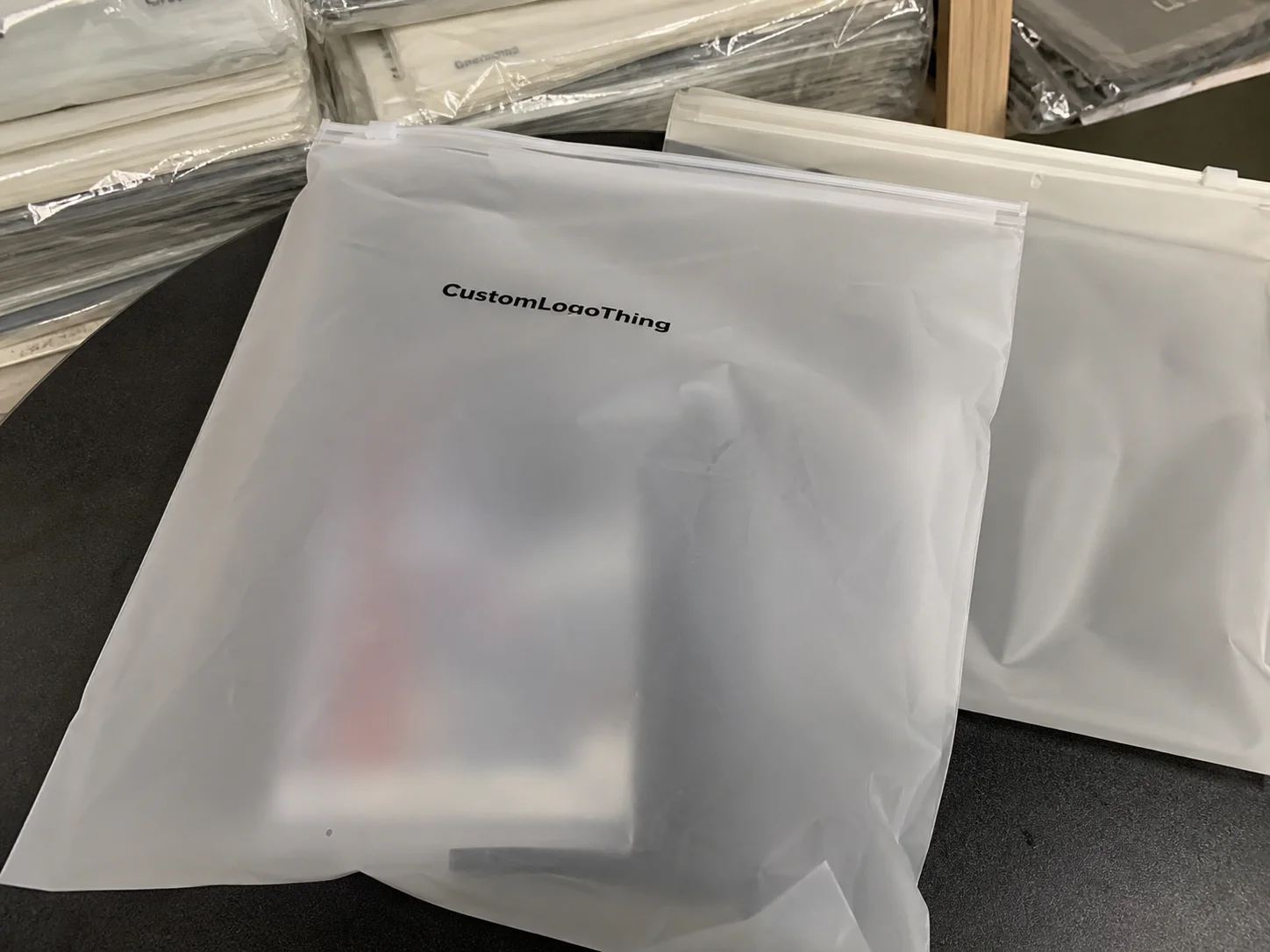
Clear poly bags do one job well: basic protection. Presentation is a separate test. The first crease, dusty fingerprint, or scuff can become the whole story, especially for apparel, accessories, cosmetics, and sample sets where buyers judge quality from the outside before they touch the contents.
Frosted film changes that first impression in a useful way. The matte translucence softens glare, hides minor handling marks, and makes the contents feel more considered without adding the weight or cost of a rigid box. That is one reason Frosted Zipper Bags Wholesale keeps showing up in retail packing, travel kits, and bundled merchandise.
The zipper adds another layer of value. A proper press-to-close closure lets the customer open and reclose the pack without destroying the presentation. For wardrobe items, refill packs, and accessories that get stored again after purchase, that reuse factor can cut complaints because the package still has a function after first use.
Still, these bags are not a cure-all. Thin film wrinkles and sags. A weak zipper kills the premium feel the moment someone handles it. If the size is wrong, the package either looks overstuffed or floats around the product with too much empty space. The spec has to match the item, not the other way around.
Low packaging cost can turn expensive in three places: rework, returns, and brand perception. The unit price is only one line in the real cost.
For shipping programs, keep transport stress in mind too. If the pouch rides inside a larger pack-out and has to survive carrier handling, the packaging should be assessed against the kind of drop and vibration expectations used in ISTA test standards. That is not overengineering. It is basic risk control.
Film thickness, zipper styles, and surface finish buyers should compare
Not all frosted bags are built the same. Buyers who treat them as interchangeable usually discover the difference after the first production run, not before. The core choices are film thickness, zipper style, finish intensity, and any extras such as a hang hole, tear notch, or reinforced header. Miss one of those, and the bag may look right on a quotation sheet but fail on the packing line.
For most retail uses, film thickness usually falls between 2.5 mil and 6 mil. Lighter film works for soft goods and lightweight accessories. Heavier film makes more sense for products with edges, weight, or repeated opening and closing. Apparel often lives in the middle. Cosmetics and sample kits need enough structure to stand up in a display stack. Small hardware needs the most care because one weak seam can turn into a spill.
The zipper matters more than many buyers expect. A weak closure makes the whole package feel flimsy. A stiff or misaligned zipper slows manual packing. A good press-to-close profile should open cleanly, close with a clear tactile snap, and hold through multiple cycles. If the bag needs repeated reuse, a slider zipper may justify the higher price because it improves the customer experience and reduces wear on the closure.
Surface finish changes the visual read as much as the thickness does. A lighter frost lets more of the product show and keeps the pack airy. A heavier frost gives more privacy and hides scuffs better. It also affects print legibility. Fine logos can disappear if the frost is too heavy, while a bold one-color mark usually stays readable. That is why print testing matters before a full run.
If a supplier can share tensile and impact information in ASTM terms, that is more useful than hearing that the bag is “strong” or “premium.” Those adjectives are not specifications. If your team writes internal packaging standards or compares vendors, terminology from packaging.org can also help keep the conversation grounded in real packaging language instead of sales copy.
One practical detail often gets missed: supporting materials. If the pack includes inserts, instruction cards, or hang tags, asking for FSC-certified paper on those components can improve the overall impression even if the pouch itself is plastic. Buyers frequently think about the bag alone and ignore everything else the customer sees at once.
Size ranges, seal options, and product fit for common retail uses
Size is where a lot of packaging orders go sideways. Buyers quote the flat bag dimension and forget product thickness, zipper stack, and the space needed for a clean close. The result is a bag that collapses around the item or one that swallows it and looks lazy on the shelf.
The right approach is to work backward from the filled pack. Measure the product, add tolerance for the zipper area, and allow enough extra room for clean packing. A flat bag might look correct on paper and still be wrong once folds, labels, and closures are included. For thicker contents, a gusseted format can help, but only if the added width actually matches the item. Otherwise, you are just paying for air.
Common retail uses include jewelry, cosmetics, small apparel, stationery, travel kits, refill packs, and bundle sets. Those categories share one trait: they need neatness. A bag that wrinkles badly or bulges at the seal undercuts the value of the item inside. That is especially true for products sold as gifts or starter sets, where first impression matters more than people admit.
These rough size ranges are a practical starting point:
- Small accessories: 3 x 4 in. to 5 x 7 in., usually 2.5 to 3.5 mil film.
- Apparel and soft goods: 8 x 10 in. to 12 x 16 in., usually 3 to 4 mil film.
- Beauty and sample packs: 4 x 6 in. to 8 x 12 in., usually 3 to 5 mil film.
- Heavier or reusable packs: 10 x 12 in. and up, usually 4 to 6 mil film.
Seal options matter too. A standard press-to-close zipper is enough for most retail packing. A stronger double-zip style is worth considering if the pouch gets reopened often or if the contents are loose. Tear notches help on display packs, and hang holes are useful for pegboard retail. If the bag is carrying hardware, beads, or small components, tighter closure tolerances are worth paying for. Loose fit is not a feature.
One common mistake is ordering oversized bags because “it gives us room.” Too much room makes contents slide around and the package look underfilled. Another mistake is forcing a thick product into a small bag because the dimensions were cheaper. That stresses the zipper and creates weak corners. Neither choice helps the sale.
Cost, pricing, MOQ, and what actually moves your unit price
Buyers ask for unit price first. Fair enough. But with frosted bags, the unit price is the result of a chain of decisions: size, film weight, zipper type, printing, and volume all change the number. If you compare quotes without checking those details, you are not comparing the same product. You are comparing assumptions.
The main price drivers are usually material thickness, bag size, zipper profile, print coverage, and order volume. Larger bags need more resin. Thicker film uses more material and can demand tighter production control. Printing adds setup and ink cost. A simple one-color logo is one thing. Full-coverage branding or multiple print passes is another.
MOQ follows the same pattern. Stock bags usually start lower because the setup is already in place. Custom size and custom print push the minimum higher because the waste and setup cost are spread across fewer units. If you need a special finish, a reinforced header, or a custom hanger hole, expect the minimum to rise again.
Here is a practical way to think about pricing at medium volumes, using 5,000 pieces as a reference point:
| Order Type | Typical MOQ | Indicative Unit Price | Best For | Notes |
|---|---|---|---|---|
| Stock frosted zipper bags | 1,000-2,000 | $0.08-$0.16 | Fast replenishment and unprinted kits | Lowest setup cost, limited size flexibility |
| Custom size, no print | 3,000-5,000 | $0.12-$0.25 | Retail packs that need a clean fit | Price moves with dimensions and film weight |
| Custom print | 5,000-10,000 | $0.18-$0.35 | Branded shelf presentation | One-color logos cost less than multi-color work |
| Heavy gauge or special finish | 5,000+ | $0.22-$0.45 | Weightier products and premium feel | Usually needs extra sampling before approval |
Those numbers are not universal. Freight, carton count, sample fees, and rush handling can move landed cost enough to change the buying decision. A quote that looks cheaper by a cent or two can become the more expensive option once delivery, rework, and delay risk are included. That is why disciplined buyers ask for the whole picture, not just a unit line.
If you are planning a larger program, ask for tiered pricing. A good supplier should show where the cost drops at 10,000 units, 25,000 units, and beyond. That makes it easier to decide whether to consolidate a few SKUs or keep them separate for inventory control. The answer is not always to chase the lowest line item. Sometimes the better move is to keep the reorder path simple.
The cheapest quote is often the one with the most excuses hidden inside it. Tolerances get vague. Print quality gets fuzzy. Lead time gets optimistic. Then the packing team inherits the problem.
Process and turnaround: how a wholesale order moves from sample to ship
A clean ordering process saves more money than a small discount. The best suppliers keep the sequence simple: request specs, confirm size and material, review artwork, approve sample or proof, start production, then pack and ship. That should be the whole flow.
The most common delays are predictable. Artwork arrives incomplete. The buyer sends only a flat dimension and forgets the filled pack-out. Someone changes the print file after proofing has started. Or approval takes a week because internal stakeholders were not looped in early. None of that is mysterious. It is just friction.
Timeline depends on the order type. Stock bags can move quickly, often in 7-12 business days once details are settled. Custom printed or custom-sized runs usually need 12-20 business days. Large-volume orders, slider zippers, or special finishes can push the schedule toward 20-30 business days. Transit adds more time, especially if the delivery is cross-border or you are waiting on consolidated freight.
For launch planning, build in a buffer for the first proof. A sample that looks fine on screen can still need a correction in real life. Zipper feel, frost level, and print placement are all easier to fix before production starts. After the run is underway, every correction costs more.
Here is the order sequence that tends to keep things moving:
- Send bag dimensions, quantity, finish preference, zipper style, and print requirements.
- Add a pack-out photo or product sample if the fit is sensitive.
- Review the proof and check the zipper line, logo placement, and target thickness.
- Approve the sample before production starts.
- Confirm ship method, destination, and carton count.
For products that will be shipped inside a larger pack-out, it helps to think beyond the bag itself. If the item needs repeated transport protection, align your internal drop and vibration expectations with the testing language used in the packaging trade. That gives procurement, production, and quality teams a common reference point for what “ship-ready” means.
What separates a reliable supplier from a low-quote headache
Reliable suppliers do not just send low numbers. They explain what the number covers. That sounds basic, but a lot of bad quotes are built on vague assumptions and optimistic tolerances. The result is a price that looks attractive until someone asks the obvious question: what exactly are we getting?
A good supplier confirms dimensions in writing, states the film thickness, identifies the zipper type, and flags tradeoffs before you approve the run. If print is involved, they should show how the artwork will sit on the frosted surface and where the safe zones are. If the bag is custom, they should also be honest about waste, overrun allowance, and any tolerance on size or color.
Operationally, the signs are easy to spot. Quote responses come back on time. Samples are consistent. The zipper closes the same way across multiple pieces. The bags arrive clean, not dusty or creased from sloppy packing. Small things like that tell you whether the supplier respects your receiving team and your brand standards.
Red flags are usually visible early:
- Vague MOQ answers.
- No clear detail on thickness or zipper style.
- Artwork approved before dimensions are confirmed.
- Unexpected add-ons after internal approval is already in motion.
- Color promises with no proof or sample reference.
Packaging buyers should care about that because rework is not just a production issue. It burns time in procurement, receiving, and merchandising. A supplier that reduces rework is usually worth more than a supplier that saves a fraction of a cent per unit. That is not a sales line. It is how the math works once the warehouse is involved.
For broader packaging terminology and buyer education, packaging.org is a useful reference. It will not choose the supplier for you. It does help keep the conversation grounded in real packaging language.
Next steps to request a clean quote and lock in production
If you need frosted zipper bags wholesale, the fastest path is a complete spec request, not a vague “send pricing” email. Give the supplier the finished size, target film thickness, zipper style, finish preference, print requirements, quantity, deadline, and ship-to location. That is the minimum needed for a quote that means anything.
If fit is critical, include a product sample, a filled pack-out photo, or both. That one step prevents a lot of back-and-forth. A bag that works for a flat garment may fail for a folded product, a boxed kit, or a set with loose components. The more the supplier can see, the fewer assumptions they need to make.
For repeat orders, a stable spec sheet is the best tool you have. It cuts quoting time, reduces mistakes, and makes reorders less painful. That is the real value of a clean wholesale program. Not drama. Not surprise savings. Just fewer mistakes and a better product on the shelf.
For retail packing orders that need presentation, convenience, and a predictable reorder path, frosted zipper bags wholesale is a practical category with enough flexibility to handle apparel, accessories, and sample kits without overengineering the pack.
What should I check before ordering frosted zipper bags wholesale?
Confirm the finished product size, not just the flat bag dimension. Check film thickness, zipper strength, and whether the finish is light or heavy frost. Ask how the quote changes with printing, custom sizing, and freight.
How does frosted zipper bag pricing change with thickness?
Thicker film usually raises unit cost because it uses more material and often needs tighter production control. Thin film may look cheaper, but it can wrinkle, tear, or feel flimsy in retail use. The best price is the thickness that survives handling without overbuying material.
What MOQ is typical for custom frosted zipper bag orders?
MOQ depends on size, print complexity, and whether the bag is stock or fully custom. Simple stock-style orders usually start lower than custom printed or custom-sized runs. Ask for tiered pricing so you can see how the cost drops as volume increases.
How long does production usually take after proof approval?
Stock bags ship faster than custom printed or custom-sized orders. The clock starts after artwork, size, and proof details are fully approved. Build in buffer time for freight, especially if your launch date is fixed.
What do I need to send to get an accurate quote?
Send dimensions, quantity, zipper style, finish preference, and whether you need printing. Include a product sample, pack-out photo, or target use case if the fit is critical. Add your deadline and shipping destination so the quote reflects the real landed cost.


