Fitness Studio Frosted Zipper Plastic Bags Wholesale Order Planning
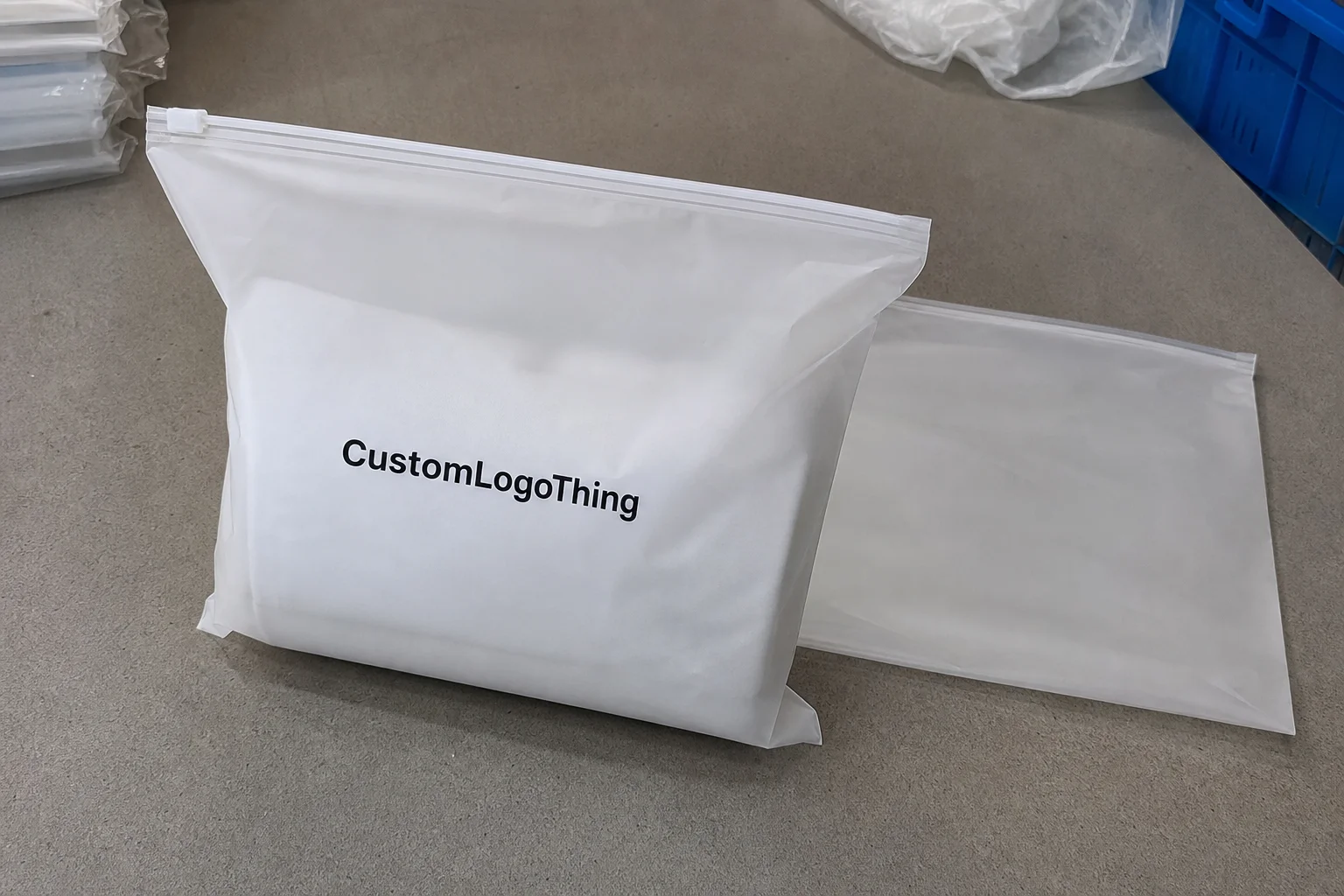
fitness studio frosted zipper Plastic Bags Wholesale order planning is mostly about reducing variables. A studio usually needs packaging that looks clean, protects folded apparel or small kits, and can be reordered without rework. That means the bag has to fit the product, support the brand, and stay consistent across launches.
The frosted finish helps because it softens what is inside without hiding the package shape. Clear film can make inserts, folds, and labels look busy. Frosted film creates a cleaner presentation, which is useful for member welcome kits, boutique retail, and front-desk handoff. The bag reads as part of the brand instead of a disposable wrapper.
Repeatability is the real buyer concern. Studios refresh retail assortments, class packs, and onboarding kits throughout the year. If the size, zipper, print placement, or packing method changes every time, the reordering process slows down and the final presentation becomes uneven. A stable spec makes it easier to reorder the same item with less review.
Before asking for a quote, define the use case. A handoff bag, a shelf-display bag, and a kit bag do not need the same dimensions or visual treatment. If the contents include folded garments, cards, or samples, the bag should have enough space for insertion and closure without straining the zipper or wrinkling the front panel.
For recurring orders, keep the approved spec, artwork, sample notes, and carton instructions together. That record shortens the next order and reduces the chance that the supplier has to rebuild the job from scratch. In wholesale packaging, documentation is part of cost control.
What The Frosted Film And Zipper Construction Actually Do
Most Frosted Zipper Bags used by studios are made from PE or PP film. PE is softer and more flexible, which can suit apparel or kit inserts that need a little give. PP is firmer and holds shape better, which helps when the bag needs to stand up visually in retail or merchandising.
The frosted effect comes from how the film scatters light. A lighter haze still allows some visibility of the contents, while a heavier haze pushes the contents into the background. For studio packaging, that balance matters. Buyers usually want the logo, closure, and overall package shape to be more visible than the items inside.
Zipper construction affects usability as much as the film does. A single-track zipper is often enough for light inserts or low-touch giveaway items. A stronger or smoother closure is worth considering if the bag will be opened and closed often, or if staff will handle it repeatedly during packing and distribution. A weak zipper can make an otherwise clean package feel cheap.
Construction details also change how the bag presents on display. Rounded corners can reduce wear and make stacks look neater. A euro slot or hang hole helps if the bag will be merchandised on pegs. Clean side seals and a straight bottom seam matter because frosted film shows flaws quickly.
Shipping and handling should be considered too. A sample that looks fine on screen can behave differently once it is stacked and compressed in cartons. Standards from organizations such as ISTA are useful when evaluating how packaging will survive transit. If the overall program includes paper inserts or cartons, references from the FSC system may matter for those components.
A good frosted zipper bag protects the contents, presents the brand clearly, and keeps its shape and closure feel through normal handling.
Sizing, Thickness, And Print Specs That Keep Reorders Consistent
Size errors usually show up after the first shipment. A bag can be close on paper and still feel wrong if the folded item is tight, the zipper has to stretch, or the front panel wrinkles around the contents. The safer method is to measure the actual packed product first, then add room for insertion and closure.
Width, height, and gusset should be checked together. A folded tee, a jogger set, and a small accessory bundle do not occupy the same shape, even if the rough dimensions look similar. Studios that pack mixed assortments should test the most demanding item, not the easiest one.
Film thickness should be specified in mil or micron and tied to the use case. For many wholesale orders, a practical range is roughly 3.5 to 6 mil. Thinner film can work for light inserts and giveaway items. Heavier film is better for apparel, accessory bundles, and bags that will be handled often or reused. Thickness affects puncture resistance, feel, fold behavior, and cost.
Print spec is more than just artwork placement. A single-color logo on frosted film can look crisp if the contrast is strong and the ink stays clear of seams and the zipper area. Multicolor art can work too, but registration and ink density need more control. Light colors and low-contrast palettes often weaken on translucent film, so the proof should show realistic contrast rather than a polished mockup that hides the issue.
For reorders, define tolerance language. Which measurement must stay exact, and which can vary slightly without affecting the pack-out? That distinction prevents slow drift over time. A supplier can hold some dimensions tightly while allowing others a little flexibility, but only if the buyer states the priority.
Sample approval is useful before volume production. A sample shows how the folded garment sits inside, how much of the contents remain visible, and whether the zipper closes cleanly after inserts are added. A dimension sheet alone will not reveal a bag that feels too tight or one that leaves too much empty space.
| Wholesale Option | Typical Spec | Approx. Unit Price | Best Use |
|---|---|---|---|
| Basic frosted zipper bag | Standard size, 3.5-4 mil, one-color print | $0.18-$0.28 | Giveaways, light inserts, simple member handouts |
| Midweight branded bag | Custom size, 4-5 mil, one- to two-color print | $0.24-$0.38 | Apparel, accessory bundles, retail counter sales |
| Premium presentation bag | Heavier film, tighter tolerance, larger print area | $0.32-$0.46 | Welcome kits, boutique display, repeated open-close use |
These numbers are only planning ranges. Final cost moves with size, film weight, zipper style, print coverage, carton pack-out, and the amount of setup required. A buyer who understands those drivers can compare quotes more accurately than someone starting with a vague target price.
Pricing, MOQ, And Unit Cost Drivers For Wholesale Buyers
Wholesale pricing becomes easier to read when the quote is broken into parts. Material use is usually the biggest driver, so bag size and thickness matter first. Zipper style adds another layer because a stronger closure often costs more to make. Print count affects setup, and print coverage changes ink use and proofing time.
MOQ rises when the order becomes more specific. Standard dimensions and simple branding usually allow lower minimums than custom sizing, unusual finishes, or detailed print work. That is a production reality, not just a sales tactic. The smaller the run, the more setup cost has to be spread across each bag.
Volume lowers unit cost only if the spec stays stable. A larger run does not help much if the artwork keeps changing or the sample has to be reworked several times. In practice, the cheapest order is not always the lowest quoted price. It is the one that arrives on time, matches the approved sample, and does not create a second freight charge because the first run was wrong.
Freight, duty, and case packing should be shown separately. Buyers get surprised when the factory price looks acceptable but the landed cost rises after shipping, import charges, or inefficient carton loads are added. If the bags are going to multiple sites, carton labels and case counts should be agreed early so receiving does not become a manual sorting task.
The fastest way to get an accurate quote is to send a complete spec: dimensions, film thickness, zipper type, print file, quantity, carton instructions, and delivery window. That gives the supplier fewer gaps to guess at and reduces back-and-forth over basic issues.
Order Process, Proofing, And Lead Time From Art To Shipment
A clean order flow should be visible before production starts. The usual sequence is request for quote, spec confirmation, digital proof, sample review if needed, production, inspection, and shipment. That sequence matters because it catches errors early, before they become expensive to fix.
Lead time depends on artwork readiness, bag complexity, order size, and the production queue. A straightforward run with final art and locked dimensions can move faster than a custom bag that still needs placement changes. In many wholesale programs, a planning range of 12 to 15 business days after proof approval is reasonable, but that range can stretch if the order needs special packing, color correction, or extra inspection.
Artwork on frosted film needs a careful review. Transparent or light-toned logos can lose definition against the translucent background. Placement also matters. Artwork too close to the zipper or seam can distort once the bag is filled. The proof should show scale, location, and contrast, not just the logo isolated on white.
Milestone dates help more than a single ship date. Ask for proof approval, production start, inspection, and shipment dates. That gives the studio a practical schedule for launches, retail restocks, or kit assembly. A final delivery date alone is too blunt to manage around.
Quality control should be built into the order. A useful inspection list includes zipper function, seal integrity, print alignment, color consistency, bag dimensions, and carton count. If the order is going to multiple locations, outer carton labels and case counts matter as much as the bags themselves.
Reorders move faster when the first order was documented properly. Keep the approved proof, final spec sheet, sample notes, and packing instructions together so the second order does not become a new project.
What A Packaging Partner Should Deliver For Studio Reorders
A useful packaging partner does more than return a price. The partner should be able to reproduce the previous spec, explain any cost change, and flag anything that could affect the bag's look or function before production starts. That is the main test for repeat work.
Support should be specific. Buyers need clear guidance on size, film weight, print placement, and the limits of the material. Sometimes a lighter film is the right choice. Sometimes a cleaner one-color print is better than forcing more coverage onto translucent material. Honest tradeoff guidance is more useful than general sales language.
For multi-location fitness brands, consistency matters even more. Different sites may receive inventory differently, but the bag should still look and function the same everywhere. That lowers training friction and keeps brand presentation aligned. It also makes reorder planning simpler because the team is working from one approved standard.
Packing standards matter too. Case count, bag count per carton, label format, and pallet requirements affect how quickly an order can be received, stored, and distributed. If those details are defined early, the bags can move into operations without staff having to sort mismatched cartons or restack loose shipments.
Another sign of a strong partner is how well they handle the second order. The first order may go smoothly because everyone is watching closely. The second order shows whether the supplier kept the records and can repeat the same result without a reset.
Next Steps To Lock In A Wholesale Order Without Surprises
Start with three inputs: the actual product dimensions, the target quantity, and the print file. Those three items drive most of the quote. Without them, pricing becomes a rough estimate, and rough estimates are weak planning tools for wholesale packaging.
Before a larger purchase order is released, request a sample or mockup that reflects the final spec. This matters most when artwork sits near the zipper edge or the contents vary in shape from one order to the next. A sample shows whether the frosted surface hides enough of the contents, whether the closure feels smooth, and whether the package holds its shape when filled.
Final approval should cover material, size, zipper style, print location, carton count, and shipping window. If those items are locked, the order is much less likely to drift. If they are loose, the risk moves downstream into production, freight, and receiving.
For a studio that wants packaging to stay consistent across launches and reorder cycles, treat fitness studio Frosted Zipper Plastic Bags Wholesale Order Planning as a repeatable process. Define the spec, confirm the proof, inspect the sample, and keep the records. That approach protects budget, presentation, and timing in the same workflow.
What size frosted zipper plastic bags fit most fitness studio apparel orders?
Measure the folded item first, then add enough clearance for easy insertion and full zipper closure. A folded tee, legging set, or small apparel bundle should be tested in a real sample rather than guessed from garment size alone. If the bag also needs to hold inserts or cards, leave extra room at the top so the closure does not strain.
How does a frosted finish change custom fitness studio packaging?
The frosted surface softens the view of the contents and makes the package feel more deliberate at handoff or on display. It can improve logo contrast, but that effect depends on print color and placement. A proof or sample is the safest way to confirm how much visibility the studio actually wants.
What MOQ should I expect for wholesale frosted zipper bag orders?
MOQ usually rises with custom dimensions, heavier film, and more complex print work. Standard sizes and simple branding generally allow lower minimums than special shapes or multi-color art. A useful quote should make the minimum run and the reorder quantity clear so the buyer can plan restocks without guessing.
How long does a custom frosted zipper bag wholesale order take?
Lead time depends on proof approval, quantity, and how much adjustment the artwork needs. The fastest orders are the ones with final art, stable dimensions, and a clear shipping method. Ask for milestone dates for proof, production, inspection, and shipment, not only a final delivery date.
Can frosted zipper bags be reused for retail, giveaways, and member kits?
Yes, if the zipper quality and film thickness are chosen for repeated handling. One well-planned spec can work across several studio uses as long as the size and print layout fit the contents. Avoid overfilling the bag, since that shortens closure life and makes the package look forced.


