Frosted Zipper Bags MOQ for Private Label Lines
Frosted Zipper Bags moq for private label lines is less about a single minimum and more about how the bag is built, printed, packed, and shipped. A cosmetic refill, a supplement pouch, and a small hardware kit can all use the same basic format, but they do not belong on the same spec sheet. Film thickness, zipper profile, print coverage, and carton count all move the number.
Frosted film earns attention because it looks finished early. It softens glare, hides fingerprints better than glossy clear film, and gives labels a calmer background. That can matter more than people expect when a product is still being tested and the package has to carry the brand before the line has earned consumer trust.
Why frosted zipper bags sell a premium look faster than clear bags
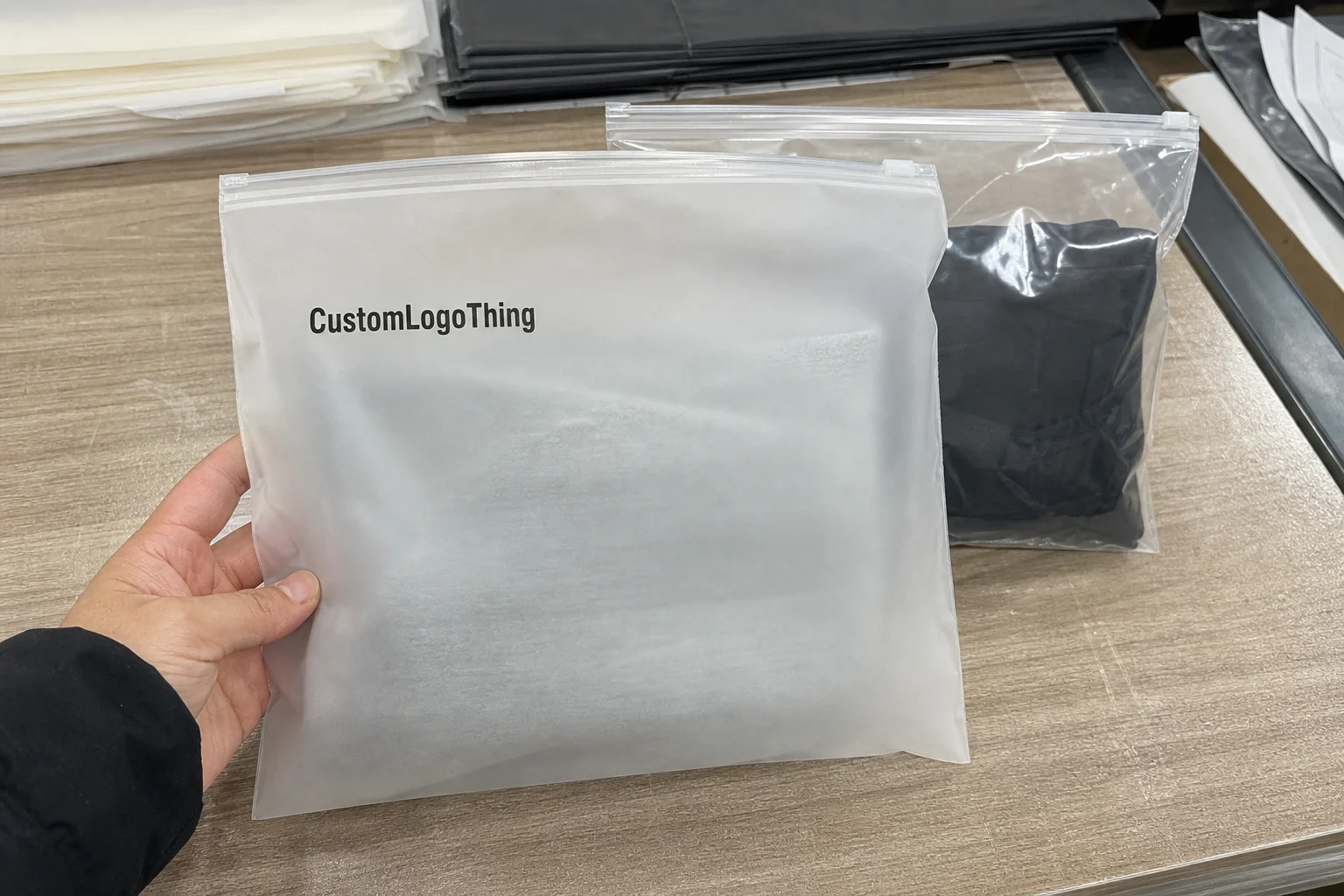
From a packaging buyer’s perspective, frosted film solves a simple problem: it keeps the package readable without showing every visual detail inside it. Clear bags can look busy when the product has mixed colors, odd shapes, or multiple components. Frosted bags smooth that out. The result is a cleaner shelf read and, usually, a better product photo.
That visual effect changes perception. A matte-translucent pouch can make a modest item look deliberate instead of temporary. It does not have to be a luxury pack to feel premium. Sometimes the difference is just a less reflective surface and a label that sits against a quieter background.
There is a practical side too. Frosted film tends to hide scuffs and fingerprints better than glossy clear material. For products that are handled often in fulfillment, retail, or subscription-kit assembly, that matters. A bag that looks clean out of the box is easier to approve, and it usually stays presentable longer in transit.
One caveat: frosted finishes can mute what is inside the bag. That is good when the product itself is visually inconsistent, but less useful when color is part of the selling point. If the contents need to stay visible, ask whether a lighter frost level or a partial window makes more sense. That choice is often cheaper than redesigning the whole pouch later.
"The package does not need to be loud. It needs to be clear, consistent, and easy to approve."
For private label launches, that is the real advantage. Frosted Zipper Bags give you a clean starting point without forcing a complex custom structure on the first order. The package can look ready while the product line is still proving itself.
Product details that define the right bag before you quote
The quickest way to get a vague quote is to describe only the color and ignore the structure. Frosted Zipper Bags can be made from PE, CPP, or laminated film structures, and those choices do not behave the same. PE usually feels softer and more flexible. CPP tends to feel crisper. If the product is oily, aromatic, or sensitive to moisture, the resin and laminate choice matter more than most first-time buyers expect.
Zipper style changes the user experience as much as the film does. A standard press-to-close zipper works for many retail packs, but some products need a stronger profile, a double track, or a tamper-evident closure. Stand-up, side-gusset, and flat formats also affect how the bag fills and whether it sits well on shelf. A pouch that looks ideal in a rendering can still slow down a filling line if the base is too narrow or the zipper sits too close to the seal.
Before requesting pricing, define the use case in plain terms: fill weight, product texture, storage conditions, and whether the bag must block dust, odor loss, moisture, or handling damage. That single step removes a lot of quote noise. It also helps the supplier decide whether a stock format is enough or whether you really need custom dimensions.
Artwork details belong in the first request, not the third revision. Common requests include custom print, logo placement, hang holes, tear notches, euro slots, and exterior labels. If the bag is part of a branded kit, align the pouch graphics with the labels and inserts at the same time. A separate label system can work well, but it should not fight the bag visually.
The sample-first approach is not optional for sensitive products. A 3 mm change in width can affect fill speed. A zipper that feels fine by hand can still be awkward after repeated opening and closing. Small mismatches are enough to create waste later, especially on a line that is moving toward bulk pricing and tighter margins.
Specifications that control performance, shelf life, and approval
Good quoting starts with hard numbers. Width, height, gusset depth, thickness, zipper profile, seal strength, and printable area should all be known before the supplier prices the run. If those values are vague, the quote will be vague too. That sounds obvious, yet it is where many private label programs lose a week.
Thickness drives a lot of the user experience. Lighter gauges reduce material cost and can improve unit economics, but they also flex more and may feel less stable in the hand. Heavier film adds rigidity, which usually improves shelf presentation and can reduce complaints about collapse during filling. The right answer is rarely the thickest option. It is usually the one that balances cost, handling, and presentation.
Seal quality should not be guessed. If the product needs stronger protection, ask whether the supplier checks seal performance with a method aligned to ASTM F88 for seal strength. For transport validation, packaging teams often use ISTA test protocols to simulate drops, vibration, and compression. You do not need to over-engineer every pouch, but you do need to know whether the bag can survive the route from warehouse to shelf.
If the pack is for food or supplements, ask for written confirmation of the material and ink system rather than assuming a generic food-safe claim covers everything. The film, zipper, and printed areas all matter. A supplier should be able to explain what is covered, what is not, and what paperwork exists to support the claim. That level of clarity is more useful than a vague compliance statement.
Artwork is its own spec set. Ask for the dieline, bleed, safe area, color mode, and print method. One-color art behaves differently from spot-color art, and full-coverage print can change the way frosted film appears once ink lands on it. If the logo sits too close to a seal edge or zipper line, the pouch may need a redesign even when the artwork looks fine on screen.
Printing method affects both MOQ and finish. Digital printing often works well for short runs and faster revisions. Gravure or flexo can make more sense at higher quantities, especially when the same format will repeat across multiple SKUs. The right process depends on how stable the artwork is, not just on the order size.
For teams that need a common reference point, packaging terminology is easier to manage when everyone is speaking the same language. A source like ISTA is useful for transport test logic, while broader packaging references such as packaging.org help buyers and designers stay aligned on terms.
frosted zipper bags moq for private label lines: pricing variables that move the number
The phrase Frosted Zipper Bags moq for private label lines sounds like a simple threshold question, but in practice it is a cost model. MOQ is driven by setup economics, not only by bag size. Printing method, film width, zipper type, bag format, and whether the order uses stock tooling or custom tooling all affect the minimum order quantity.
First-run pricing almost always looks different from repeat pricing. The initial order absorbs artwork prep, proofing, setup charges, and sometimes tooling fees if the bag needs a custom shape, a special hang hole, or a nonstandard closure. Once the spec is locked and the dieline is approved, repeat orders usually drop in unit cost because the setup work has already been paid for.
Buyers often focus on the bag price and miss the landed number. That is a mistake. A low quote can hide higher freight, higher carton-pack costs, or extra revision charges. The real question is not just what the bag costs. It is what the full carton, printed, packed, and shipped unit costs once the order reaches your facility.
| Order Tier | Typical Cost Per Piece | Setup Charges | Best Fit |
|---|---|---|---|
| 2,000 pieces | $0.22-$0.42 | $80-$250 | Market testing, smaller SKU trials, or short retail runs |
| 5,000 pieces | $0.13-$0.28 | $50-$180 | First serious launch, one or two colors, standard pouch sizes |
| 10,000 pieces | $0.09-$0.20 | Lower per-unit impact | Stable demand, repeat replenishment, stronger bulk pricing |
The table is directional, not universal. Larger dimensions, heavier film, multi-color print, soft-touch effects, and tighter carton packing can move the quote quickly. So can a zipper profile that is more expensive to source or a bag shape that needs special handling. If you are comparing suppliers, ask for tiered pricing at two or three quantities. That shows you where the real break point sits.
MOQ can also move in the other direction. Standard stock sizes sometimes start lower because they avoid custom tooling, while fully printed, retail-ready bags often need a higher minimum to cover setup and print loss. If the supplier gives you only one number, ask what happens if you remove print, reduce colors, or switch to a stock size. The answer usually exposes the cost drivers.
Tooling fees deserve direct attention. A shaped top, a special hang hole, or a nonstandard sealing edge can add costs that do not show up in a casual email quote. Better to surface those numbers early than discover them after artwork approval. It is easier to change a spec before proofing than after a production slot has been reserved.
Here is the buyer rule I trust: ask for a quote that separates bag price, setup charges, tooling fees, carton packing, and freight assumptions. If the supplier cannot itemize those lines cleanly, the unit cost is not fully transparent. And if the unit cost is not transparent, comparing suppliers becomes guesswork.
Production process and timeline from artwork to shipment
A clean production workflow saves more time than a rushed one. The sequence should be simple: inquiry, specification review, artwork check, sampling, approval, production, quality inspection, and export packing. If a supplier cannot explain that path in plain English, expect delays later.
Most delays happen at the same points. Artwork arrives incomplete. Dimensions change after sampling. Color approval takes longer than planned. Shipping marks are confirmed late. None of that is unusual. It is just expensive. Every round of correction interrupts the line, and every interruption adds cost to the order.
Lead time should be split into three parts. Sample lead time comes first, and it is usually shorter than bulk production because the run is small. Bulk production comes next, and it depends on queue position, print method, and order size. Freight time is separate again, especially if the shipment moves by sea. Buyers who combine those three into one vague number often miss launch windows.
As a rough planning range, simple samples may take 7 to 12 business days after spec confirmation, while bulk production can sit around 12 to 20 business days once artwork is approved. Freight can add another 1 to 5 weeks depending on the route. Those are planning numbers, not promises. The real answer depends on the factory calendar, the print method, and how quickly the buyer closes the open items.
One practical rule helps more than almost anything else: the more complete the spec sheet, the shorter the turnaround tends to be. If the supplier knows the bag size, zipper style, film thickness, print coverage, finish, quantity, and destination before quoting, fewer revisions interrupt production. That is where private label teams actually save time.
For many buyers, the real schedule risk is not production time. It is approval time. A sample may sit on a desk for a week while three people weigh in on the zipper feel, label placement, or print color. Build that into the plan. The machine time is measurable. The human delay is what usually moves the launch date.
If you need a quick check on common order questions, the FAQ below covers the basics before files go out. It is faster to remove ambiguity upfront than to fix it after the proof comes back.
Operational checks that prevent costly reorders
This is the part that protects margin. A pouch can look correct on a rendered mockup and still create problems on the line. The most common failures are small: zipper tracks that do not close evenly, seals that vary by a few millimeters, film that feels too soft for automated filling, or print that drifts too close to the edge.
Pre-production checks should cover dimensions, seal lines, zipper action, and print registration. If the bag has a top notch, hang hole, or euro slot, confirm that these features do not interfere with the closure or the filled product height. If the bag is supposed to stand up, test it with the actual product weight rather than a placeholder fill. A pouch that looks stable empty can behave differently once it is filled.
Color control matters more than many buyers expect. Frosted film changes how ink reads, especially with light colors and transparent areas. White ink can improve contrast, but it can also add cost and shift the look. If the brand relies on a specific shade, ask for a physical proof or a sample under the lighting where the product will actually be approved.
For food, supplements, and fragrance-sensitive goods, confirm the barrier requirements in writing. Some products only need a simple protective pouch. Others need better odor retention, moisture control, or a laminate structure rather than plain PE. The right spec depends on the product, not on a generic packaging template.
That is also where labels and inserts belong in the conversation. If the bag is part of a broader private label system, the carton marks, outer labels, and internal product labels should be reviewed together. The bag is not just a container. It is the first part of the SKU that most buyers will touch.
Custom Labels & Tags are often the easiest way to keep the system visually consistent without rebuilding the pouch spec for every variant. That matters when a line has multiple scents, sizes, or formulas and the packaging needs to scale without looking improvised.
The buyer mistake to avoid is simple: accepting a low price before checking the process behind it. A slightly higher quote with better spec control, cleaner proofing, and clearer freight assumptions often produces the better landed cost. The cheapest bag is not always the cheapest program.
Next steps to get an accurate private label quote
If you want an accurate quote, send a complete request the first time. Include bag dimensions, film thickness, zipper style, finish, print coverage, target quantity, and destination. Add the product weight and the use case as well. A bag for powder, a bag for apparel hardware, and a bag for supplements do not share the same technical priorities.
If possible, include your preferred carton pack count and whether the bags need retail-ready features like a hang hole or euro slot. Those details change packing and freight, which means they affect the landed price. They also influence how the factory stages the run.
Ask for a sample or mockup confirmation before mass production. That protects you from avoidable rework. A sample should show the final thickness, closure behavior, print placement, and label readability, not just a rough visual reference. Once the sample is approved, bulk production can move with fewer surprises.
Then compare tiers. Review the MOQ, the setup charges, the cost per piece, and the freight assumptions together. If one quote looks cheaper only because it excludes packing or proofing, it is not a better quote. It is an incomplete one.
The cleanest decision is the one that matches target margin and launch timing at the same time. That is why frosted zipper bags moq for private label lines should always be tied to the actual spec, not to a generic catalog minimum. If the package supports the brand and the numbers still work, the order is ready to move.
What is a realistic MOQ for frosted zipper bags in private label programs?
MOQ usually depends on size, print complexity, and film structure rather than one universal number. Stock or lightly printed runs can start lower than fully customized retail packaging, while multi-color print and special shapes often need a higher minimum. Ask for tiered pricing so you can see both the starting point and the better unit-cost break points.
Can I order samples before meeting the MOQ?
Yes. Sample approval is the safest way to confirm look, zipper function, and seal quality before bulk commitment. Request a sample that matches the exact thickness and finish you plan to buy, then test filling behavior, shelf appearance, and label readability.
What affects the unit cost the most?
The biggest drivers are bag size, thickness, print coverage, and zipper or closure type. Special features such as hang holes, tear notches, or custom shapes raise setup and production cost. Freight, carton pack configuration, and order quantity can also change landed cost significantly.
How long is the typical production timeline after artwork approval?
Timelines vary based on whether the order needs sampling, custom printing, or special packaging. Artwork approval and sample signoff are usually the biggest gating steps before bulk production starts. Separate production time from shipping time when you plan your launch date.
What should I send to get an accurate quote?
Send dimensions, desired thickness, zipper style, print file, and target quantity. Include product weight, packaging use case, and whether you need retail-ready features like a hang hole. Add your destination country so the quote can reflect shipping and export packing requirements.


