Frosted Zipper Poly Bags for wellness brands moq planning matter because packaging is often the first premium signal a shopper sees. Before anyone compares ingredients or reads a claim panel, they notice finish, structure, and whether the package looks intentional. A matte, translucent pouch can make a soap bar, tea sample, salt blend, or refill pouch feel considered instead of disposable.
The format is practical too. A frosted zipper bag gives a cleaner shelf read than a glossy clear pouch, offers more flexibility than rigid packaging, and can move from test order to reorder without forcing a full redesign. That flexibility is useful for brands that want to compare Custom Packaging Products against shipping formats such as Custom Poly Mailers when the program includes fulfillment.
The risk is overcomplicating the first order. A pouch that looks polished in a mockup but is hard to source in repeatable specs becomes expensive fast. Launch planning works better when the bag supports the actual order size, keeps unit cost under control, and still leaves room for bulk pricing later.
Why frosted zipper poly bags change the shelf impression
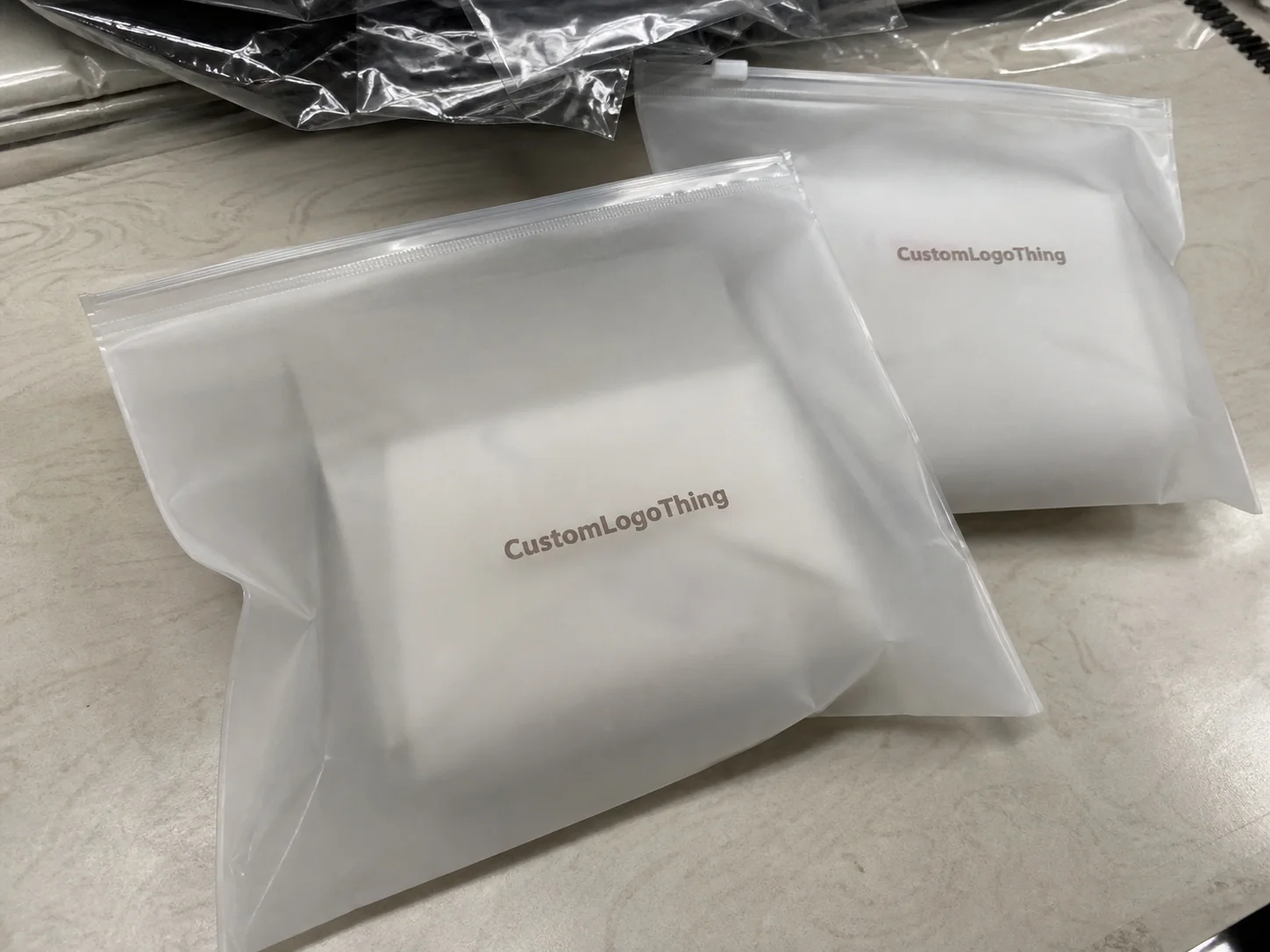
Wellness packaging lives or dies on first impression. A frosted surface softens glare, reduces the plastic shine that can make a pouch feel cheap, and gives the logo or label a cleaner backdrop. On a crowded shelf or in a DTC unboxing, that restraint reads as intentional.
That matters for dry wellness products such as bath salts, herbal tea, gummies, facial wipes, sample kits, and supplement accessories. The package has two jobs: protect the product and signal category fit. A frosted zipper pouch handles both well when the contents are dry, reasonably stable, and do not need a rigid wall for protection.
The format also helps with SKU planning. A flexible pouch can often cover several flavors, scents, or sizes with only artwork changes. That reduces dead inventory and keeps reorders simpler. In Frosted Zipper Poly Bags for wellness brands moq planning, that flexibility is usually the difference between a package that scales and one that becomes a recurring headache.
For buyers comparing packaging structures, the examples in Case Studies usually make the tradeoffs clearer than a spec sheet.
Material, zipper, and finish details buyers should verify
Not all frosted bags are built the same. The base film usually falls somewhere in the 2.5 to 5 mil range, depending on size, product weight, and whether the pouch needs to stand upright. Lighter film can work for sample kits or small tea sachets. Thicker structures make more sense for bath salts or heavier multi-piece sets.
The zipper changes the user experience more than many teams expect. A standard press-to-close zipper is fine for most dry wellness products, but the closure needs to be consistent across the run. Buyers should also confirm whether the bag uses a single-track or double-track closure, since that affects both ease of use and the perception of quality.
Finish matters too. A light-frosted surface shows more of the product silhouette and usually feels more modern. A heavier frost is more opaque, which helps if the contents are visually busy or if the brand wants a muted, soft look. The right choice depends on what should be visible and what should stay abstract.
Common usability details should be checked before production starts:
- Hang hole if the bag will go on a peg display or retail hook.
- Tear notch if the product needs an easier first open before the zipper takes over.
- Gusset if the item needs a better standing profile or more fill volume.
- Seal width if the bag will hold a heavier product or be handled often during fulfillment.
- Moisture resistance if the bag may sit in a humid bathroom, spa, or retail environment.
For shelf-life or transport concerns, confirm the film spec early, especially for bath and body items that pick up humidity fast. If the product has volatile oils, strong fragrance, or food-contact sensitivity, ask for the material and seal structure up front. For shipping performance, standards such as ISTA protocols are a useful reference point, and the current guidance at ISTA is worth checking before you lock the packaging spec.
Sizes, print area, and spec choices that keep orders efficient
Size selection drives more of the economics than most buyers expect. Standard dimensions usually protect margin because they reduce the likelihood of custom tooling fees and can make the run easier for the supplier to schedule. A pouch that is close to an existing production size will often price better than a fully custom dimension.
The real question is not which size looks best. It is which size fits the product cleanly, uses the least excess material, and stays easy to fill in house or at co-pack. If the bag is too tight, the zipper gets harder to close and the seal line can look strained. Too much dead space, and the pouch feels underfilled.
Print area is another place where better planning saves money. A simple logo lockup on frosted film often looks better than a crowded layout with too many fine lines. White ink performs especially well because it creates contrast without flattening the bag into a heavy block. Full-coverage artwork can work, but it usually raises setup charges and pushes unit cost higher than a restrained design.
In practice, these are the spec choices that matter most:
- Front-only versus front-and-back print, depending on how much information the package needs to carry.
- Bag thickness, which affects stiffness, shelf presence, and shipping durability.
- Zipper placement, because an off-center closure can interfere with artwork or filling.
- Artwork complexity, especially if the design depends on gradients, small type, or fine registration.
- Color count, since more colors often mean more setup and higher bulk pricing thresholds.
If the brand is not ready for a high-volume run, simplify the spec before simplifying the design. Buyers often cut visual elements first, but the bigger savings usually come from standard dimensions, a practical zipper choice, and a print plan that does not force extra tooling. That is the part of Frosted Zipper Poly Bags for wellness brands moq planning that protects margin before the first order is even approved.
Pricing, MOQ, and frosted zipper poly bags for wellness brands moq planning
MOQ is shaped by a few basic variables: size, print coverage, number of colors, film thickness, and whether the supplier can run the order on existing tooling or has to create a new setup. Standard sizes with simpler artwork can often start at a lower threshold than fully custom dimensions.
That is why the cheapest unit price is not always the best buy. A lower per-piece quote can hide larger tooling fees, higher setup charges, or a minimum that is too large for the launch plan. A better quote compares total spend, not just cost per piece.
Here is a practical pricing frame many buyers use for early budgeting. The exact numbers will move by supplier, size, and artwork, but the pattern holds.
| Option | Typical MOQ | Best for | Rough unit cost | Notes |
|---|---|---|---|---|
| Standard size, one-color logo | 3,000 to 5,000 pcs | Sample kits, bath salts, dry accessories | $0.18 to $0.28 | Lower setup charges, faster approval path |
| Custom size, two-color print | 5,000 to 10,000 pcs | Retail SKUs with distinct fill weights | $0.22 to $0.42 | Tooling fees may apply if the format is new |
| Full-coverage print, heavier film | 10,000 pcs and up | Premium launches, stronger shelf blocking | $0.30 to $0.60 | Higher ink coverage and more involved production planning |
These are working ranges, not promises. Add more variables, and you add more material planning, press time, and scheduling friction. A brand that asks for a simple frosted bag with restrained artwork will usually see a cleaner quote than a team that wants custom dimensions, multiple colors, and special finishes in the same order.
Standard size first, custom size second. That sequence usually protects margin better than trying to force every launch into a bespoke spec.
Think about the order the same way you would think about inventory risk. A 10,000-piece buy at a lower unit cost can still be a mistake if the brand is not sure which SKU will win. A 5,000-piece order with a slightly higher cost per piece may be the better choice if it keeps cash available and gives the team room to refine the packaging before scaling. For more context, the purchasing notes in FAQ are a useful companion to the numbers here.
Production steps, proofing, and turnaround for a first order
The first order is usually the most vulnerable to delay because every missing detail creates another round of email. The cleanest process starts with a complete quote request: target size, product weight, quantity, artwork format, print colors, zipper style, and delivery destination. If those fields are incomplete, the supplier has to guess.
After the quote, the next gate is artwork review. A good packaging partner should check dieline fit, bleed, print resolution, and the way white ink will sit on frosted film. That stage catches the kind of problems that show up as blurred type, awkward logo placement, or a design that becomes unreadable once it wraps around the pouch structure.
If sampling is needed, plan for it. A physical sample or pre-production proof can add time, but it is still cheaper than correcting an entire print run. For wellness brands, the most common proofing issues are color accuracy, zipper alignment, and whether the pouch looks too transparent or too opaque once filled.
Typical timelines vary, but a workable planning range looks like this:
- Artwork and dieline review: 1 to 3 business days if files are clean.
- Proof revisions: 1 to 5 business days, depending on how many changes are requested.
- Sample or pre-production approval: 3 to 7 business days when a physical check is required.
- Production: often 12 to 18 business days after final approval for a straightforward run.
- Shipping: depends on method, destination, and freight conditions.
Those numbers move when the spec gets more complicated. Special finishes, full-color coverage, or a new tool can add time. The faster the buyer confirms final files, quantity, and delivery address, the more predictable the schedule becomes.
If the product is intended for shelf testing, retail pitching, or fulfillment trials, check the package under real handling conditions. Repeated zip-open cycles, temperature changes, and compressed cartons can reveal issues that a static proof will not.
What a reliable packaging partner should handle for wellness orders
Good suppliers do more than quote a price. They catch technical mismatches before the job starts. That means flagging a zipper choice that will not suit the fill weight, warning you when a print treatment will be too busy for frosted film, and telling you honestly when the requested size will push the order into a much higher MOQ bracket.
That level of support matters because a bad decision shows up in several places at once: rework, delay, and lost launch timing. A reliable partner reduces that risk by asking better questions up front rather than just repeating the quote.
Look for a supplier who can give clear answers on these points:
- Spec confirmation, including film thickness, zipper type, and finish level.
- Artwork checks, especially for white ink, small type, and print registration.
- MOQ transparency, with a straight explanation of what drives the threshold.
- Setup charges and tooling fees, so there are no surprises after approval.
- Lead time discipline, with a schedule that includes proofing, production, and shipping.
Service quality shows up in repeatability. A partner that can point to consistent work in Case Studies is usually doing something right operationally. Repeatable packaging comes from process control, clear spec handling, and enough discipline to avoid making the same mistake twice.
Next steps for a clean quote and launch-ready order
If you are preparing a launch, start with the product itself. Measure the filled dimensions, confirm the target quantity, decide whether the pouch needs a hang hole or gusset, and choose the finish level before asking for pricing. That sequence produces quotes you can actually use.
The most efficient buyers narrow the field fast. They pick one or two standard sizes, settle the zipper style, and compare MOQ tiers against projected sell-through. Then they ask for pricing in the format that matters: total spend, unit cost, setup charges, and the effect of any tooling fees. That is the cleanest way to compare suppliers without getting distracted by a headline number that hides the real cost.
If the line includes several SKUs, keep the first order simple. Use the same pouch structure across variants and change the artwork where possible. That reduces complexity, lowers the chance of a production error, and often improves bulk pricing on the next run.
Before the first quote request goes out, include these items:
- Product dimensions or fill weight.
- Target quantity and a realistic backup tier.
- Print-ready files or editable artwork.
- Color targets, especially if white ink is part of the design.
- Preferred finish, from light frost to heavier opacity.
- Delivery address and timeline constraints.
The brands that do this well usually move faster because the supplier does not have to reconstruct the brief. They also negotiate from a stronger position, because they can compare options on the same basis instead of accepting a quote built around assumptions. That is the practical edge of planning early: fewer revisions, fewer surprises, and a launch package that supports margin from the start.
What MOQ should I expect for frosted zipper poly bags for wellness brands?
MOQ usually depends on size, print coverage, and how many colors or special finishes the design uses. Standard sizes with simpler artwork generally reach a lower threshold than fully custom dimensions or heavy ink coverage.
Are frosted zipper poly bags a good fit for supplement and bath product packaging?
They work well for dry wellness items, sampler kits, soaps, salts, and accessory packs that benefit from a clean premium look. You should still confirm closure strength, moisture resistance, and any product-specific compliance requirements before ordering.
How long does production usually take after artwork approval?
Turnaround depends on proof revisions, order volume, and print complexity, but approval speed is often the biggest variable. If the dieline, files, and quantity are final, the schedule is usually much more predictable.
What print method works best on frosted zipper poly bags?
The best method depends on whether the design is a simple logo, solid color blocks, or a more detailed retail layout. White ink and restrained coverage often perform well on frosted film because they preserve contrast without overcomplicating the run.
How can I lower unit cost without increasing risk on a first order?
Use a standard size, limit the number of print colors, and compare quote tiers before committing to a larger run. Focus on total landed cost and sell-through speed, not unit price alone, so the order supports margin instead of tying up cash.


