Frosted Zipper Poly Bags for Cosmetic Brands: MOQ Planning
Frosted Zipper Poly Bags change the shelf read quickly. A clear bag says utility; a frosted one looks considered without adding rigid packaging cost or weight. For cosmetics, that matters because the pouch is part of the presentation, not just a container.
For Frosted Zipper Poly Bags for cosmetic brands moq planning, the real decision is not only finish. It is whether one pouch spec can support sample kits, refill sets, PR mailers, and accessory packs without forcing extra SKUs or extra inventory. The bag should look cleaner in transit, reseal reliably, and be simple to reorder.
The buying mistake is treating the pouch like a trend item. The spec affects unit cost, lead time, and how much inventory risk you carry. If the packaging will be reused across multiple launches, choose a format that works across the line before artwork is locked.
Why frosted zipper poly bags can lift a cosmetic line fast
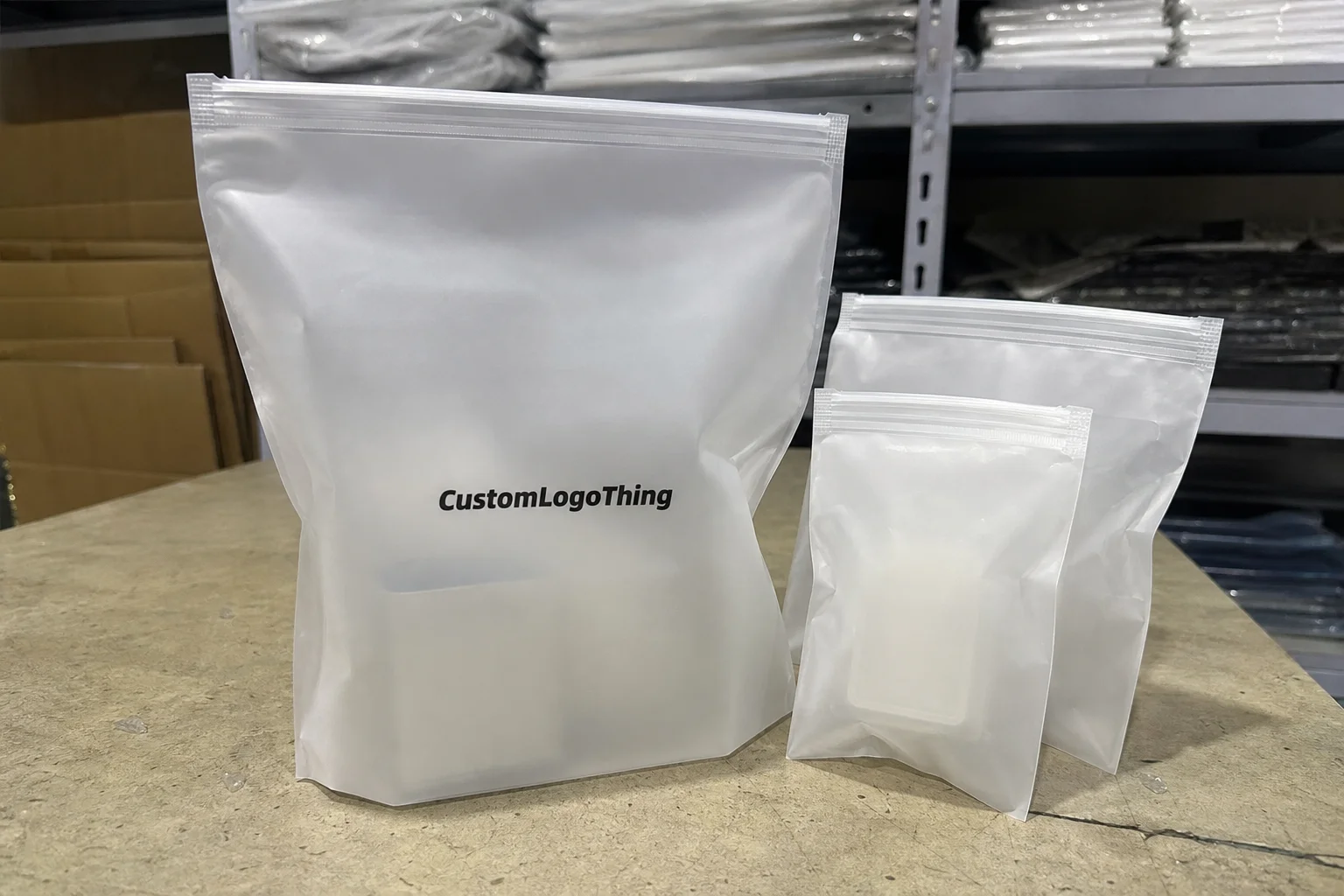
A frosted bag gives a more finished appearance than a fully clear pouch, but still lets inserts, labels, and product silhouettes show through in a controlled way. That balance works well for cosmetics because the packaging looks intentional without exposing every internal edge.
There is also a handling advantage. A semi-matte surface hides fingerprints and light scuffs better than glossy film, which helps once cartons are opened, resealed, and moved through fulfillment. That matters for lip sets, brush kits, sample packs, travel sets, and accessory bundles that need to look neat after shipping.
Most buyers choose this format for a few practical reasons:
- Launch kits that need a polished presentation without rigid packaging.
- Subscription inserts that should stay consistent from shipment to shipment.
- Travel sets that need a lightweight, resealable format.
- PR mailers or accessory packs that need to arrive tidy after multiple touchpoints.
That is why Frosted Zipper Poly Bags for cosmetic brands moq planning should happen before artwork approval, not after. Once the art is set, the spec tends to harden around it. For broader packaging reference, the Packaging School is a useful source for basic packaging discipline.
A bag that looks premium but fails on the zipper is still a bad package. Cosmetic buyers need to judge presentation and function together.
Material and zipper details cosmetic buyers should lock in
The core build is simple: frosted flexible film, a zipper closure, and a clean seal around the edges. The details decide whether the bag feels premium or just looks that way in a photo. Two pouches can seem similar and still behave very differently in use.
Most buyers are looking at polyethylene or a similar flexible film with a matte or frosted finish. The actual feel changes with gauge, surface treatment, and how the zipper is integrated into the top edge. A deeper frost softens labels and inserts, while a lighter frost keeps more of the contents visible.
Before you quote, confirm the specs that affect function and cost:
- Film type: frosted PE or similar flexible material.
- Thickness: often described in mil or micron.
- Zipper style: single-track or double-track.
- Closure behavior: easy to engage and consistent across the full width.
- Presentation features: hang hole, gusset, tear notch, or window if needed.
- Print area: logo placement, panel coverage, and how subtle or bold the artwork should be.
If the pouch will hold leak-prone items, fragile compacts, or a set that gets opened often, ask for a sample or proof before production. It is also reasonable to ask whether the pack has been tested against an ISTA-style distribution profile, especially for premium sets that need to survive fulfillment without cosmetic damage.
Zipper quality matters more than artwork. A clean print cannot hide a track that closes unevenly or opens again in transit. If the bag is meant to be reused, the closure should stay aligned after repeated cycles without becoming stiff or weak at the ends.
Size, thickness, and closure specs that protect presentation
Size should start with the product, not the pouch. Measure the longest component, the widest component, the total fill weight, and whether you need room for tissue, inserts, or a small protective tray. A good cosmetic bag has enough headspace to close cleanly without bowing, but not so much extra room that the contents slide around.
Thickness changes both feel and performance. Thinner film can work for light samples, sachets, and accessory cards. Thicker film is better for heavier kits, travel items, or anything that needs a firmer retail impression. If the bag feels too thin, it often reads as temporary even if it technically works.
Closure reliability matters because cosmetic products are handled more than once. A zipper should engage smoothly across the full width and stay closed after repeated open-close cycles. If the seal is inconsistent, the weakness shows up quickly in retail fixtures, subscription packs, and returns.
For multi-SKU programs, one or two standard sizes usually make more sense than a different pouch for every product. That keeps artwork, packing, and forecasting cleaner. Reserve custom dimensions for hero sets, premium kits, or high-volume items that can justify the extra setup.
If the pouch is part of a larger fulfillment system, our Custom Poly Mailers can be a useful companion format. For cosmetic brands, the main goal is consistency: the same closure feel, the same print placement, and the same visual density from run to run.
Pricing, MOQ, and unit cost planning for cosmetic orders
Price is driven by a small set of variables: bag size, film thickness, zipper type, custom printing, special finishing, carton configuration, and whether you are ordering one size or several. For Frosted Zipper Poly Bags for cosmetic brands moq planning, the biggest mistake is comparing quotes only on unit cost without checking setup charges, tooling fees, sample charges, and freight terms.
As quantity goes up, unit cost usually drops because production time, waste, and packing labor are spread across more pieces. That is why MOQ should be planned against forecast, not just the lowest possible order. A slightly larger first run can be cheaper overall if it reduces reorders and avoids rushed freight.
| Order style | Typical use | MOQ behavior | Typical cost per piece | Notes |
|---|---|---|---|---|
| Stock-style frosted zipper bag | Samples, small accessory kits, quick launches | Lower MOQ, faster availability | $0.10-$0.22 | Best for simple specs and limited customization |
| Semi-custom bag with logo print | Retail sets, PR mailers, branded refills | Moderate MOQ | $0.18-$0.35 | Print coverage, size, and zipper style affect price |
| Fully custom size and print program | Hero sets, multi-SKU launches, seasonal packaging | Higher MOQ | $0.28-$0.60+ | Best when repeat orders are likely and spec control matters |
Those ranges are directional, not universal. A small order with heavy print coverage can cost more than a larger order with simpler artwork, and some suppliers include setup in the unit price while others show it separately. Ask for MOQ, unit cost at each break, tooling or plate fees, sample cost, carton count, and freight assumptions in the same format.
If the brand expects replenishment, plan to the forecast instead of ordering to the minimum. The first run is not the cheapest program if you have to reorder quickly or accept a spec that does not match the rest of the line.
MOQ mistakes that push costs up
The first mistake is over-customization. Every added variable - size, zipper variation, print color, window, hang hole, insert layout - increases setup complexity. The second mistake is splitting a small program into too many SKUs too early. Three low-volume orders usually cost more than one healthy order.
The third mistake is ignoring print method. A subtle one-color logo is not the same as full-panel coverage, and the difference affects pricing, proofing, and lead time. If the brand wants the frosted surface to stay visible, too much ink can erase the point of using the material in the first place.
The fourth mistake is treating freight as an afterthought. A quote can look attractive until the boxes are split across multiple shipments or the schedule forces expensive air freight. Packaging buyers who plan the order together with the launch calendar usually spend less than buyers who solve logistics after production starts.
A final issue is skipping the sample phase because the art looks fine on screen. Frost level, zipper stiffness, opacity, and print contrast can all shift in production. One approved sample is cheaper than one pallet of bags that technically meet spec but do not look right next to the product.
Process and turnaround from quote to shipment
The order flow should be predictable. It starts with dimensions, quantity, zipper preference, and print requirements. From there, the supplier quotes the build, reviews artwork, issues a sample or proof if needed, and moves to production after approval.
Most delays are practical. Missing dimensions create another round of clarification. Unclear zipper preferences lead to revised samples. Artwork files that are not set up cleanly force prepress corrections. Late changes after proof approval push the schedule, especially for multi-SKU programs.
A realistic timing framework looks like this:
- Stock-style order: often the fastest path if no print or custom size is required.
- Printed custom order: usually adds proofing and press setup time.
- Multi-SKU program: adds coordination time because every variant has to stay aligned.
- Tighter launch deadline: may require earlier signoff on artwork, carton counts, and shipping method.
For a cosmetic launch, confirm the final quantity before production starts. Also confirm whether the bags need retail cartons, master cartons, barcode labels, or a special pack count for distribution. Those details decide whether the goods can move straight into fulfillment or need rework on arrival.
Lead time should be read as a chain, not a single number. Sample approval, file cleanup, production, packing, and transit all sit on the schedule. If one piece slips, the rest move. The safest planning model is to lock the spec, then count backward from the launch date with buffer for proofing or freight changes.
How we support cosmetic brands with quality control and repeat orders
Good packaging support is mostly about reducing surprises. Cosmetic brands need bags that open cleanly, close reliably, and arrive looking like the proof. That means checking material consistency, zipper function, edge finish, dimensions, print alignment, and carton packing before shipment.
Repeat orders should get easier, not harder. Once a spec is approved, the next order should move faster because the dimensions, artwork, and pack format are already locked. That is especially useful for line extensions, seasonal sets, and reorders that need to match the original run exactly.
There is also a trust element. A buyer should be able to ask for the actual spec, not vague marketing language. If the bag is tested for seal strength, material thickness, or transit performance, the answer should be specific. If the program includes paper inserts or brand cards, recycled or certified paper options can be checked through standards bodies such as FSC when that matters to the brand story.
The checks that usually catch real problems are simple:
- Dimension check: finished size matches the approved spec.
- Zipper test: the closure runs full width and reseals without snagging.
- Seal inspection: edges are even, with no weak spots or waviness.
- Print review: logo placement matches the proof, with no drift.
- Pack-out test: the actual product fits with the intended insert or padding.
- Carton check: counts, labels, and outer packing match the shipping plan.
This process keeps frosted zipper poly bags for cosmetic brands moq planning repeatable. The buyer gets a spec that can be reordered, the merchandiser gets a cleaner presentation, and the operations team gets fewer surprises.
Next steps for requesting a quote and locking quantities
If you want a useful quote, gather the details before you ask. A supplier can only price cleanly if the bag dimensions, target thickness, zipper preference, fill product, print files, and order quantity are clear. If the bag will hold a cosmetic set, include the weight, the largest component, and whether inserts or padding are required.
Use this internal checklist:
- Dimensions: width, height, and gusset if needed.
- Material target: film thickness and frosted appearance level.
- Closure: single-track, double-track, or another zipper style.
- Artwork: logo placement, color count, and print coverage.
- Quantity: launch volume, reorder assumption, and buffer stock.
- Packing: carton count, labels, and any barcode or retail needs.
For quote comparison, ask for MOQ, price breaks, sample availability, estimated turnaround, and freight assumptions in the same format from each vendor. That makes unit cost comparison honest and reveals whether a lower starting price hides setup charges or a higher minimum that will leave inventory sitting too long.
Align the packaging quantity with the launch date and the expected replenishment window. Cosmetic teams often plan product inventory carefully but treat packaging as an afterthought. That creates cash tied up in bags that do not yet match demand. The safer move is to approve the PO only after the final spec set is locked.
What MOQ should cosmetic brands expect for frosted zipper poly bags?
MOQ usually depends on bag size, thickness, and whether printing or custom dimensions are involved. Higher quantities reduce unit cost, so it helps to plan against forecasted sell-through instead of ordering only to the minimum.
Can frosted zipper poly bags work for sample kits and retail sets?
Yes. They are commonly used for samples, travel kits, PR mailers, and small retail accessories. The frosted finish helps the pack look cleaner while still letting the contents read as organized and premium.
What specs matter most when ordering frosted zipper poly bags for cosmetics?
The key specs are size, thickness, zipper style, opacity level, and whether you need custom printing or inserts. You should also confirm whether the bag needs a hang hole, gusset, or a stronger closure for repeated opening.
How long does production usually take after artwork approval?
Turnaround depends on whether the order is stock-style or custom, and whether proofing is required. Final timing also changes with quantity, printing complexity, and shipping method, so confirm lead time before approving the PO.
What should I prepare before asking for a quote?
Provide dimensions, target quantity, product weight, artwork files, zipper preference, and any special packing requirements. Including those details upfront shortens back-and-forth and makes MOQ and pricing comparisons much more accurate.


