If you ask three suppliers for a price on apparel packaging and give them three different levels of detail, you will get three different quotes back. That is normal. The bad part is pretending those quotes are comparable. They are not.
The fastest way to waste time is to ask for “just a price” on Garment Poly Bags for Apparel brands supplier quote checklist needs without the specs attached. A supplier can guess. But guesswork is how brands end up with the wrong size, the wrong thickness, or a quote that looks fine until freight and setup show up later.
For apparel brands, the quote is not paperwork. It is the decision point. A clean quote tells you whether the bag fits the folded garment, whether the print method matches the artwork, and whether the landed cost still works after packing, transit, and import charges. A sloppy one hides problems until production is already moving. That is where budgets go to die.
Why a sloppy quote costs apparel brands real money
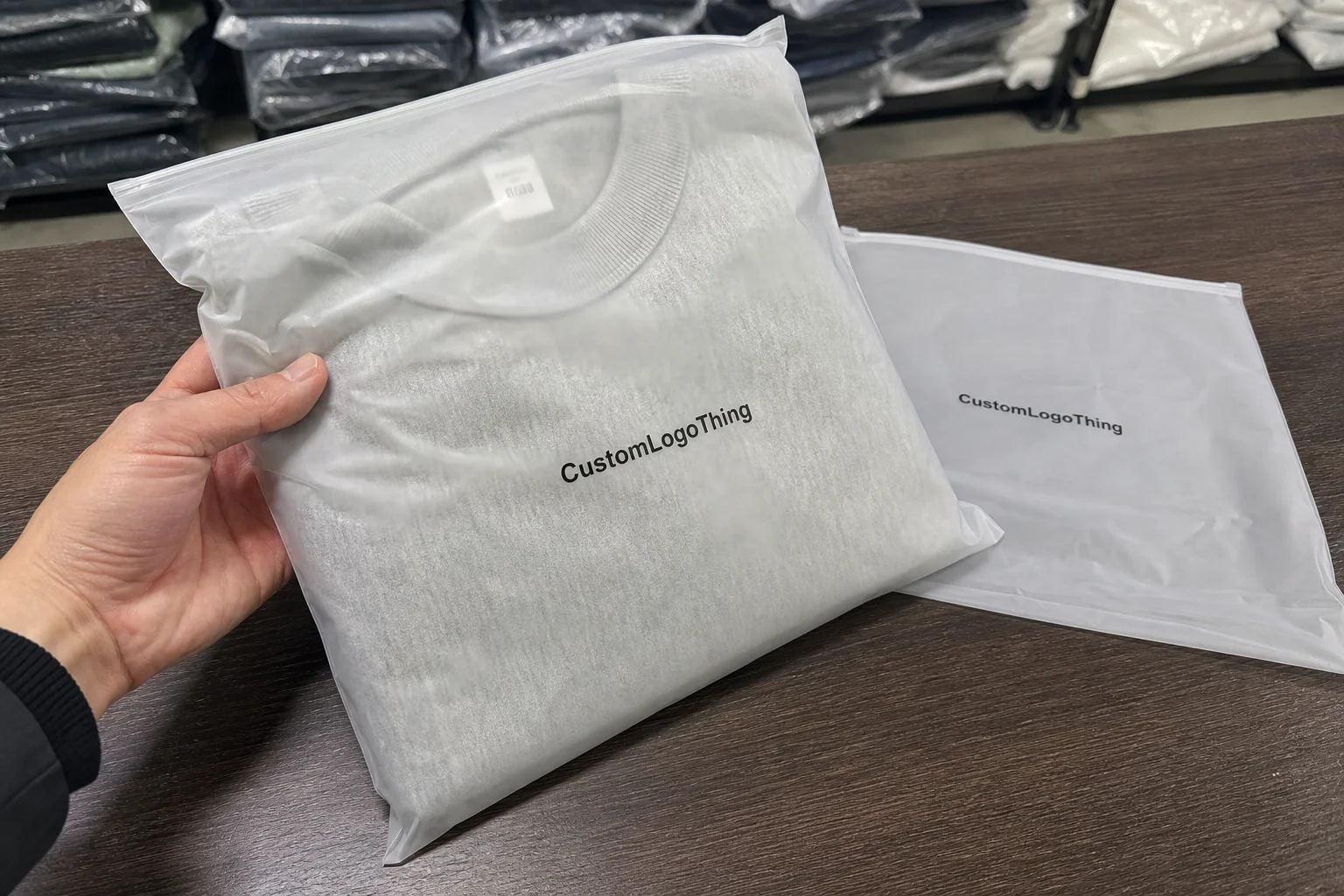
“How much for poly bags?” is not a useful purchasing request. It is barely a starting point. A supplier cannot price a flat 10 x 14 inch clear bag the same way they price a 12 x 16 inch printed resealable bag with a suffocation warning, a flap seal, and recycled content. Film thickness alone can swing unit cost by 15% to 30%, depending on material and order volume.
Vague RFQs create vague answers. Then someone re-quotes. Then someone asks for samples. Then the sample is wrong because the garment size was never shared. That turns a one-week sourcing task into a three-week loop of avoidable corrections. The hidden costs are real: extra sampling, revised proofs, slower freight booking, and packaging that does not fit the fulfillment line.
“A good quote should remove questions, not create them.”
From a buyer’s point of view, consistency matters more than clever wording. If you want an apples-to-apples comparison, every supplier needs the same inputs: dimensions, thickness, print method, closure style, quantity, and destination. That is the whole point of a proper garment Poly Bag Supplier quote checklist. It prevents the classic nonsense where one supplier quoted a stock-style bag and another quoted a custom printed bag, then someone pretends the numbers mean the same thing. They do not.
Brands also forget about tolerance. A bag that is “close enough” on paper may be too short for folded hoodies or too tight for a garment with a hang tag and tissue. Size tolerance, usually around ±2 mm to ±5 mm depending on the factory and bag type, can matter more than many buyers expect. At volume, that little mismatch becomes a line problem, not a design problem.
If you want cleaner buying decisions, start with a quote request that reads like a production brief. Not a wish list. That is how you reduce risk before a single roll of film is cut.
Which garment poly bag style fits your apparel line?
Not every apparel line needs the same bag. A basic tee in a warehouse does not need the same packaging as premium lingerie for retail shelves. Choose the structure that protects the product and supports fulfillment, then stop there. Fancy packaging is expensive. So is choosing the wrong one.
Flat poly bags are the cheapest option and work well for folded tees, babywear, socks, and lightweight basics. They are simple, easy to pack, and available in clear or frosted film. If the product is mainly shipping from warehouse to customer, this is often the most practical choice.
Resealable bags, usually with a flap adhesive or zip-style closure, make sense when the garment may be opened and reclosed in store, during returns processing, or during kitting. They cost more, but they reduce handling frustration. That matters when staff are packing dozens or hundreds of units per hour.
Suffocation-warning bags are standard for many e-commerce and fulfillment operations. If your bags are used in direct-to-consumer shipping, ask whether the warning text is required for your market and channel. In the U.S., many brands use warning print as a practical liability measure even when the packaging is not going through retail shelving.
Garment bags with headers and hang holes are useful when the product is displayed or hung in a retail environment. They add presentation value, but they also add cost and more production steps. Use them only if the merchandising setup justifies it.
Printed retail poly bags are for brands that want branding visible on shelf or on arrival. Clear film with one- or two-color print is common. Full coverage printing costs more, especially if the supplier must match brand colors closely.
For material finish, clear film gives visibility. Frosted film feels a little more premium. White film hides the product better and gives print contrast, though it can reduce the “see what you get” benefit. For apparel brands, the simplest structure that does the job is usually the right one. Anything more is branding theater, and the warehouse does not care about theater.
| Bag style | Best for | Typical tradeoff | Common use case |
|---|---|---|---|
| Flat poly bag | Tees, socks, basics | Lowest cost, less premium feel | Warehouse packing, DTC shipping |
| Resealable bag | Premium basics, returns-friendly items | Higher cost, better handling | Retail and e-commerce |
| Suffocation-warning bag | Most shipped apparel | Compliance print may limit design space | Fulfillment centers |
| Header bag | Hung garments, retail display | More structure, more cost | Store merchandising |
| Printed retail bag | Brand-forward products | Higher setup and print costs | Launches, seasonal drops |
For more packaging formats, see Custom Packaging Products and compare them against your actual fulfillment needs. If you are also shipping boxed goods, Custom Poly Mailers may be a better fit than overpacking every garment with a separate bag.
What specs to lock before requesting samples or pricing
If you want accurate pricing, lock the specs first. Otherwise the supplier is guessing, and guesswork gets expensive. The core items are simple: bag width, gusset, length, thickness, closure type, print colors, and artwork placement. Miss one of those and your quote can shift enough to change the buying decision.
Start with the finished garment size, not just the clothing SKU. A folded hoodie, for example, may need a much wider bag than a tee even if both are “medium.” Share the product dimensions, folding method, and whether tags, labels, or tissue are included. A supplier can size the bag correctly only if they know the packaged profile.
Film and structure choices
Most apparel poly bags use LDPE or CPP. LDPE is softer, flexible, and generally more forgiving on sealing. It is common for garment packaging because it has good clarity and a nice feel. CPP is stiffer and often offers a crisper appearance, which some brands prefer for retail presentation. Cost depends on thickness, finish, and print demand, but LDPE usually wins on everyday practicality.
Thickness matters more than many buyers realize. A typical range for apparel bags is around 30 to 100 microns, depending on the product weight and how much abuse the bag will take in transit. Lightweight socks do not need the same film as a heavyweight fleece set. Overbuying thickness is easy. Paying for unnecessary plastic is less exciting once the invoice arrives.
Ask about adhesive flap strength if you need resealable closure. Some flaps hold well for repeated handling; others are only good for one clean seal. If you need anti-static properties, recycled content, perforation, or hang holes, include that up front. These are not side details. They change the quote.
Packaging format matters too. Do you want the bags folded, rolled, bulk packed, or packed by count per carton? If fulfillment is organized around easy pick-and-pack, a clean carton pack count and consistent master carton size can save labor. A supplier quote should also state carton quantity and whether palletizing is included. Otherwise, you will discover the real logistics cost after the “good price” has already been approved.
For compliance references, the industry tends to look at transport testing resources from ISTA, and recycled content or waste claims often tie into resources from EPA. If your brand makes sustainability claims, ask for documentation. Do not guess your way through compliance. That is how marketing gets nervous.
Pricing, MOQ, and unit cost: what drives the quote
Price is driven by a handful of variables, and none of them are secret. Material thickness, bag size, print coverage, number of colors, closure style, and order volume usually have the biggest impact. If the supplier is quoting a more complex decoration process, setup fees rise too.
For practical budgeting, simple clear stock-style poly bags can start around $0.03 to $0.08 per unit at larger quantities, while custom printed or specialty bags often sit around $0.10 to $0.35 per unit depending on size, film, and print complexity. That range is wide for a reason. A 1-color warning print on a plain bag is not the same thing as a fully branded retail package.
MOQ varies with customization. Simple bags may be available at a few thousand pieces, while fully custom printed orders often start higher, commonly 5,000 to 20,000 pieces depending on size and factory setup. Low-MOQ orders are possible, but the unit price tends to be higher because the setup cost gets spread over fewer bags. Basic math, not supplier drama.
Ask these questions before you approve anything:
- Does the quote include plates, cylinders, or print setup?
- Are samples included, and are they pre-production or blank?
- What is the actual MOQ for this exact spec?
- Does the price include carton packing and inner packing?
- Is freight included, or quoted separately?
- What happens if artwork changes after proof approval?
Compare landed cost, not just unit price. A quote that looks cheaper on paper can become more expensive once freight, customs, sampling, and packing are added. A slightly higher factory price with fewer surprises may be the smarter buy. That is the boring answer. It is also the correct one.
Process and timeline: from quote request to production steps
The normal workflow is straightforward: inquiry, spec confirmation, artwork review, sample approval, production, inspection, and shipping. The problem is that each step can stall if the buyer skips information. A supplier cannot approve a print proof for a garment bag if they do not know the finished dimensions or whether the closure has to be repositioned.
Typical timing depends on product complexity. Stock-like clear bags with minor customization may move in 7 to 12 business days after proof approval. Fully custom printed bags often take 12 to 20 business days for production, plus transit time. First orders usually take longer because artwork, sampling, and approval add extra steps. That is normal. Not glamorous, but normal.
Where do delays happen? Usually in the same few places:
- Artwork arrives with missing bleed or low resolution.
- The buyer did not provide the finished garment size.
- Sample approval takes too long.
- The brand changes specs after the proof is already issued.
- Freight booking is left until the last minute.
Rush orders are possible, but they usually cost more. Expect some combination of overtime, shorter scheduling windows, or higher shipping charges. If a launch date is locked, ask for a written milestone schedule with proof date, sample date, production start, inspection, and ship date. You do not need a romance novel. You need dates.
“If the timeline is not written down, it is not a timeline. It is a hope.”
For buyers building packaging programs that must meet repeatable quality targets, ask whether the supplier references internal inspection standards or third-party testing. While not every apparel bag needs formal transit testing, packaging programs that ship in volume often benefit from process discipline similar to what packaging professionals would expect under Packaging & Sustainability resources.
How to compare suppliers without getting tricked by vague promises
The strongest supplier is not the one who says yes to everything. It is the one who makes ordering predictable. That means clear specs, clear sampling, clear pricing, and written terms. If a supplier cannot confirm material grade, tolerance, and print method in writing, you are not buying certainty. You are buying optimism. Cute, but expensive.
Look at responsiveness first. Did they answer with actual dimensions, thickness, MOQ, and Lead time? Or did they send a price with no context? Good suppliers can explain the difference between a 60-micron LDPE bag and an 80-micron version without getting vague. They should also tell you whether the print is flexographic, gravure, or another method, because print method affects setup cost, image sharpness, and MOQ.
Here are red flags I would not ignore:
- No MOQ stated.
- No proofing or sample process.
- Freight terms are missing.
- Sample quality does not match the quote.
- The supplier keeps changing the spec after the first answer.
Domestic sourcing can offer faster communication, shorter transit, and easier reorders. Overseas sourcing usually gives better piece pricing at volume, but lead time and import handling add complexity. Neither is automatically better. The right answer depends on your launch schedule, margin target, and how much logistics pain your team is willing to absorb.
Brands that want a steadier procurement process can tighten results by asking for a side-by-side quote sheet with every line item listed. That makes differences easier to spot. If one quote hides setup fees and another includes them, you will see it immediately. If you need a clean template, ask for the same structure every time. Suppliers who are organized will not mind. The others will become very busy very quickly.
Next steps to get an accurate apparel bag quote fast
Gather the facts before you send the request. That saves time for everybody. Start with garment dimensions, folding method, bag style, quantity, artwork files, and destination zip code or country. Then confirm whether you want a blank bag, one-color print, multi-color print, or a fully branded retail finish.
For the fastest response, send the supplier this basic package:
- Finished garment size or spec sheet
- Bag dimensions and thickness target
- Closure type and whether a flap seal is needed
- Print requirements, colors, and placement
- Quantity and target reorder schedule
- Shipping destination and preferred Incoterms if applicable
If you want a look-and-feel match, include reference photos or a sample bag. That helps the supplier understand whether you want a clear basic bag, a frosted finish, or something more premium. Ask for sample lead time, production lead time, and landed cost before approval. If the supplier cannot provide those three items cleanly, keep looking.
One more thing. Do not buy on the lowest number alone. Compare the final quote against the actual spec set, not the headline price. The best result comes from a clear brief and a supplier who can execute it without drama. Use the Garment Poly Bags for Apparel brands supplier quote checklist before ordering, and you will save yourself a lot of avoidable pain.
FAQ
What should I include in a garment poly bag supplier quote request?
Include bag dimensions, film thickness, closure type, print requirements, quantity, and shipping destination. If possible, add garment size, folding method, and carton pack count so the quote matches real use. That is how you avoid re-quoting later.
How do I compare garment poly bag quotes from different suppliers?
Compare the same specs line by line: size, material, thickness, print method, MOQ, and included services. Use landed cost, not just unit price, because freight, sampling, and setup fees can change the real total.
What MOQ should apparel brands expect for custom poly bags?
MOQ varies by size, print complexity, and factory setup, but custom orders usually require higher quantities than stock-style bags. Simple clear bags often have lower MOQ; printed or specialty bags usually need a larger run to stay cost-effective.
How long does it take to produce garment poly bags for apparel brands?
Timeline depends on whether the bag is stock-like or fully custom printed. Expect extra time for artwork approval, sample sign-off, and freight, especially on first orders.
Can I order a sample before placing a full apparel bag order?
Yes, and you should, especially if size, print clarity, or closure performance matters to your brand. Ask whether the sample is blank, printed, or pre-production, because each serves a different purpose.


