Why garment poly bags matter for apparel presentation and protection
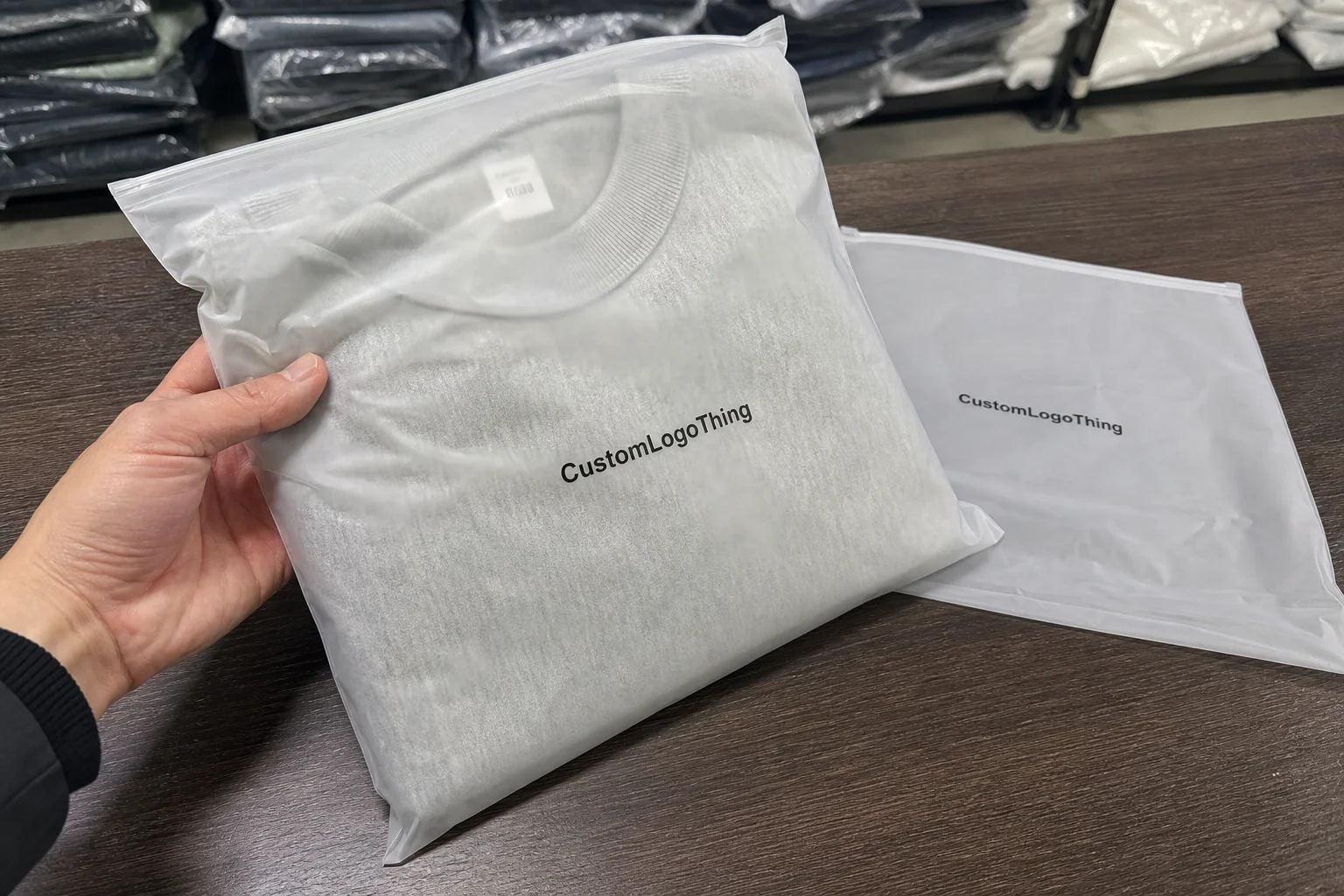
The Garment Poly Bags for Apparel brands quality inspection guide starts with a basic fact that gets ignored far too often: the bag is part of the product experience. A cloudy film, crooked print, weak seal, or wrong size makes a good garment feel less finished before anyone touches the fabric.
Garment Poly Bags sit between folding and carton packing. They protect apparel from dust, light handling, moisture exposure during transit, and the random warehouse chaos that every brand pretends is under control. They also keep styles, sizes, and SKUs organized. That matters in retail back rooms, distribution centers, and e-commerce operations where speed and accuracy matter more than decorative packaging speeches.
For apparel buyers, the challenge is not choosing a bag that looks acceptable in a sample photo. It is deciding whether the bag will stay consistent through production, packing, shipping, and receiving. A supplier can send a perfect-looking sample and still miss the mark on film gauge, seal strength, perforation behavior, or carton counts. That is where inspection earns its keep.
Good inspection is less about being picky and more about reducing expensive surprises. Rework costs money. Repacking costs money. Late launches cost even more. If the standard is clear before production begins, there is a much better chance the finished order will actually match the approved sample instead of drifting into “close enough.”
How inspection moves from raw film to packed cartons
Quality control starts before a bag is cut. Some factories extrude film from resin pellets in-house. Others buy converted film and focus on printing, forming, sealing, and packing. Either way, the first checks usually involve film width, gauge, haze, surface contamination, and obvious defects like gels, pinholes, wrinkles, or stretch marks.
Once the film is cleared, the run moves into printing, cutting, perforating, folding, and sealing. Each stage can introduce its own problems. Print registration can drift. Cut edges can become uneven. Perforation can tear too easily or refuse to open cleanly. Seals can look fine but fail under pressure if temperature, dwell time, or pressure settings are off. Packaging looks simple until you try to hold a line speed and consistency at the same time.
That is why in-process inspection matters. Waiting for the finished cartons to show up before checking anything is how minor drift turns into a full rejected lot. A practical line check might include bag dimensions every few hundred pieces, seal strength at regular intervals, and sample pulls after a roll change or machine adjustment. The earlier a defect is found, the cheaper it is to fix.
Final carton inspection still matters. It catches issues that show up late in the run, especially after operators change rolls, clear jams, or speed up to finish the order. Receiving inspection is the last gate. The warehouse should verify carton condition, labels, counts, and a sample pulled from multiple cartons, not just the one sitting on top and looking innocent.
For brands that manage broader packaging programs, the same discipline should apply across the pack-out system, including Custom Packaging Products and, in some cases, Custom Poly Mailers for direct-to-consumer shipments.
What buyers should check before approving a run
Clarity is one of the first things people notice. Clear film should show the garment cleanly, without heavy haze or a dull cast. If the brand wants a retail-ready presentation, haze should be measured or at least defined visually against an approved sample. “Looks okay” is not a standard. It is a shrug.
Thickness tolerance matters just as much. A bag listed as 0.0020 inches may still perform poorly if the gauge swings too much across the roll or between lots. Too thin, and protection suffers. Too inconsistent, and folding behavior changes from carton to carton. Buyers should ask for an actual tolerance range and not accept a thickness number with no practical control behind it.
Seal integrity is another common failure point. A heat seal can look neat and still split during packing, stacking, or transit if the seal band is too narrow or contaminated with dust or film residue. Perforation quality needs its own check, especially for top-open bags used in retail folding. If the tear line is weak, workers fight the bag. If it is too strong, workers tear the wrong section and create waste.
Print registration should be checked on every branded run. Logo placement, color consistency, size marking, and warning text all need to sit where the approved artwork says they should sit. A small shift may not ruin the bag, but it usually signals weaker process control than you want on a production order.
Odor, static cling, surface contamination, and sizing accuracy are worth checking too. Strong odor can be a sign of poor material handling or a resin issue. Excess static makes bags cling to each other, trap dust, and slow packing. If recycled content or compliance language is part of the product claim, the documentation should be in order before production starts. For broader material and waste context, the EPA recycling resources can help teams think through material choice and downstream handling.
| Inspection factor | What to check | Typical risk if ignored |
|---|---|---|
| Clarity / haze | Transparency, clouding, surface finish | Dull presentation, lower perceived quality |
| Thickness | Gauge at multiple points | Weak protection, uneven folding |
| Seal quality | Seal width, adhesion, split resistance | Open bags, damage in packing |
| Print accuracy | Color match, placement, registration | Brand inconsistency, rework |
| Carton packing | Count, labeling, bundle format | Receiving errors, warehouse delays |
A practical inspection flow for apparel teams
The cleanest inspection flow begins before production. Confirm the spec sheet, approved artwork, dimensions, material type, thickness, pack format, and any warning text or label requirements. If a master sample exists, both sides need to agree on which version controls the order. “The one I have on my desk” is not a process.
First-article inspection should happen before a full run is released. One sample bag is checked against the approved standard for size, print, finish, function, and overall appearance. This is the stage where a hole position that is 3 mm off, a logo that sits too low, or a seal that tears too easily can be caught before the problem multiplies across thousands of units.
In-line inspection needs structure. Pulling a few samples at random is better than nothing, but not by much. A better routine is to sample from defined intervals, such as a fixed number of bags per carton or a set sample from every pallet, depending on order size and risk. Check count accuracy, seal quality, print shifts, contamination, and surface damage. If the order is for a higher-value retail program, increase the sample frequency. The extra time is usually cheaper than the cleanup.
End-of-run sampling matters because the back end of a production lot is where drift likes to show up. Operators are changing rolls, clearing jams, and trying to finish on schedule. That is not the moment to assume everything stayed perfect. A final check should confirm counts, carton labels, pack format, and whether the finished product still matches the approved sample.
Receiving inspection closes the loop. The warehouse should check outer cartons, pallet wrap, labels, and a sample from more than one carton. If the brand uses the same bag across multiple styles, the receiving checklist should tie back to the style code so someone does not accept the wrong SKU because it “looked right.”
Practical rule: if a defect would annoy a buyer in person, it belongs in the spec sheet. “Looks fine” is not a quality standard.
Documentation helps here more than people admit. Approved samples, defect logs, and photos make later claims easier to resolve and make reorders less dependent on memory, which is a terrible quality system.
Price, MOQ, and spec decisions that change quality expectations
Price and inspection standards are tied together. Lower MOQ orders often carry higher unit costs because setup, plate work, line checks, and changeovers get spread across fewer bags. A 5,000-piece run will almost never price like a 50,000-piece run, and pretending otherwise just creates confusion during quoting.
Material choice affects both cost and inspection scope. A plain clear LDPE bag is usually easier to control than a custom-printed bag with size markings, punch holes, warning text, or recycled-content language. Add anti-static treatment, custom die-cuts, thicker film, or special finishes, and the supplier needs to monitor more variables to keep the result consistent.
Buyers comparing quotes should ask for pricing by MOQ bands when possible. Common breakpoints might be 5,000, 10,000, and 25,000 units. That makes it easier to see how setup costs and per-unit pricing move as volume changes. It also reveals whether the inspection effort being proposed is realistic for the price being offered.
Here is a simple comparison that helps during supplier discussions:
| Order type | Typical cost impact | Inspection focus |
|---|---|---|
| Standard clear bag, plain pack | Lower setup cost, simpler conversion | Size, clarity, seal, count |
| Printed brand bag, 1-2 colors | Plate and registration cost | Print alignment, color consistency, seal strength |
| Custom size with special finish | Higher tooling and QA time | Tolerance, surface quality, function |
| Retail pack with labels and assortments | More labor and pack-out checks | Carton count, label accuracy, pack configuration |
Tighter tolerances and more frequent checks usually improve consistency, but they also add labor and time. That tradeoff is normal. The real comparison is total landed cost, not the bag price alone. A cheap quote that triggers rejects, repacking, or a delayed store launch is not cheap. It is just badly timed.
Timeline and turnaround realities for custom orders
A custom bag order usually moves through artwork approval, sampling, production, inspection, packing, and shipment. If the spec is clear and the artwork is final, sampling can move quickly. If the print file needs cleanup, dimensions are still changing, or the warning text is not approved, the schedule stretches. That is normal. Packaging runs do not care about optimism.
The most common delay triggers are avoidable: missing measurements, inconsistent logo files, artwork revisions, special warning text that needs sign-off, and film availability issues. If the bag needs a custom perforation pattern or a nonstandard carton layout, the supplier may need extra confirmation before starting the line. That is not a problem by itself. It just needs to be built into the timeline.
Rush orders deserve caution. A compressed schedule reduces time for first-article review and leaves less room to catch drift before release. Fast work is possible, but it narrows the margin for correction. Buyers who want speed should expect to make faster approvals and accept less flexibility on changes. That is the tradeoff. There is no magic version where everything is urgent and also perfectly leisurely.
For planning, many brands do best with a basic timing cushion: artwork confirmation, sample approval, production, inspection, transit, warehouse receiving, and allocation to the correct location. Seasonal launches and replenishment programs benefit from that buffer because a packaging delay can slow folding, packing, and outbound fulfillment even when the garments themselves are ready.
Mistakes that create avoidable rejects
One of the most common mistakes is approving a sample that looks good but never testing how it behaves on a live packing line. A bag can look clear in a sample room and still split at the seal, cling too much, or jam during folding. Visual approval is only one part of the decision.
Another mistake is using vague spec language. Words like “premium,” “strong,” or “clear” mean nothing unless they are tied to measurable requirements. A usable spec should state dimensions, thickness, seal width, print placement, carton count, and acceptable defect limits. If the standard cannot be measured, it cannot be enforced.
Inspecting only one carton is another weak spot. Problems often appear later in the lot, especially after a roll change, temperature shift, or shift handoff. Pulling samples from multiple cartons and multiple pallets gives a better picture of whether the run stayed in control. One clean box does not prove much.
Skipping documentation creates extra pain during claims and reorders. Photos, defect logs, and signed sample approval records make it much easier to settle disputes and repeat a successful run. They also stop the next order from depending on someone’s memory of what “we did last time.” That kind of memory is not a process. It is a gamble.
Building a repeatable standard
The goal is not perfect packaging. The goal is repeatable packaging that meets the brand’s use case without constant firefighting. Start with a one-page spec sheet that lists dimensions, material, thickness, print details, pack format, carton count, and acceptance criteria. Keep it practical enough for warehouse use and detailed enough for production control.
Set up a sample approval process with a signed master sample, photo references, and a clear defect threshold before the full run starts. If the buyer and supplier agree on acceptable haze, print shift, seal variation, and contamination levels, there is less room for arguments later. That alone saves time.
Create a receiving checklist for the warehouse team so incoming shipments are checked the same way every time. Include carton condition, outer label accuracy, count verification, and a quick sample review from multiple cartons. If the same packaging is used across several styles, link the checklist to the style code and keep the reference sample accessible.
For brands buying Garment Poly Bags regularly, this kind of control is what keeps quality stable as volumes change. Clear specs, measured tolerances, documented samples, and disciplined receiving checks reduce defects and make the supply chain easier to manage. Nothing flashy. Just fewer problems.
FAQ
What should an inspection checklist for garment poly bags include?
A useful checklist should cover dimensions, thickness, seal strength, print accuracy, clarity, odor, carton count, and packaging condition. It should also reference the approved sample so receiving teams know what acceptable quality looks like. Defect limits for scratches, haze, contamination, warped seals, and off-register printing should be stated clearly.
How do apparel brands check poly bag thickness accurately?
Brands should verify the supplier’s gauge specification with a thickness tool at multiple points on the film or finished bag. One reading is not enough. Several measurements across the roll or batch give a much better picture of consistency, and those readings should be compared against the tolerance range in the spec sheet.
What defects are most common in garment poly bags for apparel brands quality inspection guide checks?
Common defects include cloudy film, weak seals, wrong size, inconsistent perforation, print misalignment, and carton count errors. Static cling, dust, and surface contamination show up often too, especially in high-speed packing environments. Some issues only become visible after packing, which is why final sample checks matter.
How long does quality inspection usually add to the production timeline?
Light inspection can happen during normal production with very little delay if the spec is clear and the supplier is organized. More detailed approval cycles may add time for first-article review, re-sampling, or rework. Fast buyer approvals and clear communication usually shorten the overall turnaround more than anything else.
How can brands reduce cost without lowering inspection standards?
Lock specs early so the factory does not have to restart artwork, sizing, or pack-format approvals. Choose tolerances and packaging formats that match the real use case, then inspect samples carefully before production starts. That prevents expensive rejects, replacements, and shipment delays later.


