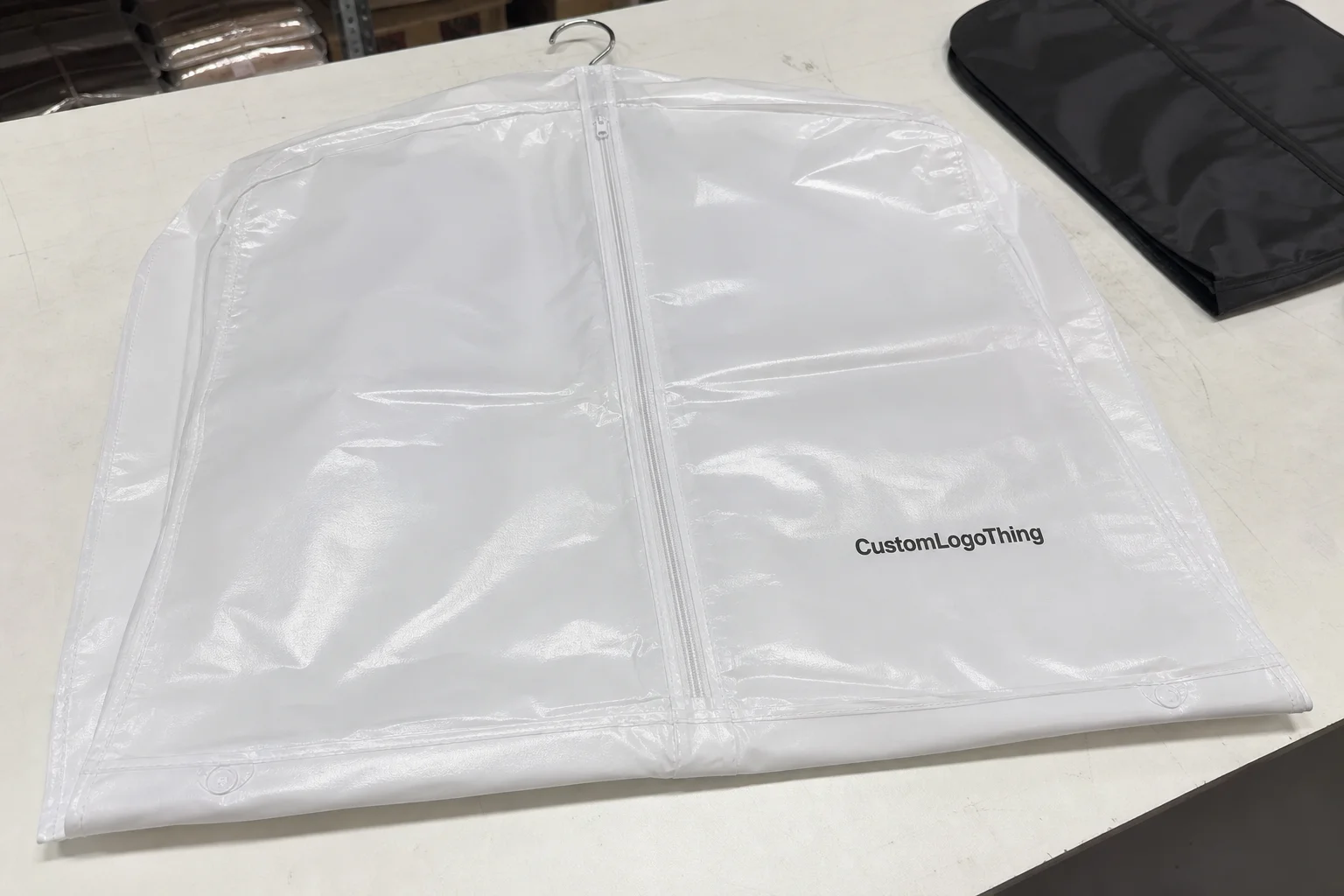
If you are sourcing Garment Poly Bags for Ecommerce Brands Artwork Proof Checklist items for a launch, the proof is not busywork. It is the last chance to catch a logo that falls across a fold, a barcode that sits too close to a seal, or warning text that no longer matches the bag size. Those mistakes are cheap to miss on screen and expensive to fix on a press run.
Ecommerce teams usually want the same three things: the bag should look right, protect the product, and move through fulfillment without drama. The proof has to confirm more than the artwork. It has to confirm that the artwork fits the actual bag construction, the material, and the packing flow. That is where a real Garment Poly Bags for Ecommerce brands artwork proof checklist pays for itself. It gives design, operations, and production one document to argue with instead of three different versions of “close enough.”
Not every packaging job needs the same level of review, but apparel bags are unforgiving in a few specific ways. The print area is often tight. Clear film shows everything. Warehouse staff need labels and scan codes to read fast. If one of those pieces is off, the mistake tends to show up late, usually after the order is already scheduled.
Why artwork proofs prevent costly bag mistakes
An artwork proof is the preproduction version of the bag art. It should show where the print lands, how large it is, what text is included, and how the design interacts with the diecut, seal area, fold line, flap, or hanger hole. A clean proof is not the same thing as a printable proof. The screen can make almost anything look orderly. Production will not be nearly as polite.
That is why I would treat proofing as a risk review, not a formality. A bad proof can trigger reprints, delays at receiving, and angry internal follow-up that wastes more time than the packaging itself is worth. For a small reorder, that is annoying. For a launch with inbound inventory tied to a marketing date, it can break the schedule.
The point of the checklist is to force one question over and over: does this file match the real bag, not just the idea of the bag? Designers care about appearance. Operations cares about scanability, pack speed, and shelf impact. Production cares about whether the print can run cleanly on the chosen film. The proof has to satisfy all three.
“If the proof does not show bag size, print area, fold references, and approval version clearly, it is not ready yet.”
That sounds strict because it is. It is also how you avoid a second round of proofing after someone spots a problem too late.
What the proof must show on garment poly bags
A useful proof should do more than display a polished mockup. At minimum, it needs the final bag dimensions, the print area, the placement of artwork, the seam and fold references, and the exact copy that will print. If the bag includes a hang hole, adhesive flap, gusset, vent holes, suffocation warning, recycled-content note, or barcode, those elements should appear on the proof too.
There is a clear difference between a design mockup and a production proof. A mockup helps people picture the brand. A production proof answers operational questions. Is the logo centered on the face panel? Is the barcode far enough from the edge to scan reliably? Does any text fall into the seal margin? Is the warning panel still readable after the layout is adjusted for the actual bag size? Those are the questions that matter.
Clear and translucent film add another layer. Artwork that looks bold on a white background can get washed out on transparent polyethylene. If the bag uses white ink underprint, the proof should say so. If it is a one-color print on clear film, the proof should make the contrast expectations obvious. If the artwork will be visible after the garment is folded, the proof should reflect the fold direction and the likely pack orientation, not some idealized front view that no one will see in the warehouse.
Read the proof against the dieline and the spec sheet line by line. Do not approve a bag because the image looks fine. Good packaging teams separate visual approval from production approval. They may approve the brand look quickly, then still check the mechanical details before signing off. That extra step is not bureaucracy. It is a cheap way to avoid a costly rerun.
Keep version control tight. If the supplier sends redlines, revision notes, or a proof number, save them with the approval record. Reorders can happen months later, and nobody wants to guess which file was the real one. If one team prints from the wrong PDF, the bad version tends to become the new favorite by accident.
For brands that track sustainability claims or material compliance, confirm the wording before approval. Not every poly bag has FSC-linked components, and not every recycled-content claim is supported by the same documentation. If paper inserts or cartons are part of the package set, the FSC reference is useful for chain-of-custody expectations. For broader packaging practices, the Institute of Packaging Professionals is still a solid industry source.
Cost, pricing, and MOQ factors to compare
Pricing for Garment Poly Bags usually comes down to a few variables: size, film gauge, print colors, number of print sides, custom dimensions, and extras like hang holes, venting, or resealable adhesive flaps. MOQ matters too. Small runs tend to carry heavier setup cost per bag. Larger runs spread plate costs, proofing time, and machine setup across more units.
Quotes can look similar while assuming different things. One supplier may include plates, one proof revision, and domestic freight. Another may split every line item apart and call it transparency. That is not a virtue if it hides the real landed cost. A bag that looks cheaper by two cents can cost more once freight, revision fees, or a second proof cycle show up.
| Option | Typical MOQ | Indicative Unit Range | Best For | Watch Outs |
|---|---|---|---|---|
| Stock-size clear poly bag, one-color print | 3,000-5,000 | $0.07-$0.14 | Simple apparel packing and quick replenishment | Limited layout flexibility and fewer branding options |
| Custom size, one- to two-color print | 5,000-10,000 | $0.11-$0.22 | Branded ecommerce packaging with a tighter fit | Setup fees and proof revisions can move the final price |
| Custom size, multiple print areas, special notes | 10,000+ | $0.18-$0.32 | Launches with compliance text or more detailed branding | More artwork complexity and a longer approval cycle |
Those numbers are working ranges, not promises. Film gauge, print coverage, resin prices, freight distance, and secondary operations all move the final quote. A buyer comparing garment poly bags should ask for a quote that separates the bag spec, the print spec, setup charges, and shipping. If all of that is wrapped into one line, it becomes hard to know whether two suppliers are quoting the same product.
One practical habit helps a lot: compare the proof and the quote together. If the quote says 2-mil film but the proof visually suggests a heavier bag, ask which spec controls. If the proof shows a larger print area than the quote appears to allow, stop and confirm. A five-minute question beats a five-thousand-unit mistake.
MOQ also changes how strict you should be with approval timing. Lower quantity orders sometimes seem safe because the exposure is smaller. They are not immune to errors. Small runs can be worse in one way: teams are more likely to rush them because the order feels minor. The press does not care how minor the order feels.
Production steps and timeline from file to approval
The usual process starts with file intake. The supplier checks logo files, typography, artwork dimensions, and any mandatory copy. Then comes preflight, where the team looks for resolution problems, missing links, color mode issues, and whether the file matches the dieline. After that, the proof is generated for review. Internal edits follow, then approval, then release to production.
Delays tend to happen in the same places. Missing dielines create layout confusion. Low-resolution art can look acceptable on the proof and still print soft. Incorrect barcode data forces another proof cycle. Too many revision rounds after the first proof can also push the schedule, especially when marketing, operations, and compliance are reviewing different details at different times.
Simple reorders can move fast if the layout is unchanged and the plant already has the print setup on file. New artwork, custom dimensions, and special print requirements add time. In practice, many custom bag jobs need roughly 12 to 15 business days from proof approval to completion, though the exact timing depends on the supplier, print method, and order size. Freight consolidation or special packing can add another buffer before the launch date.
A more realistic planning habit is to treat proof approval as its own deadline. Too many teams leave it floating until the purchase order is already in motion. That works right up until the first revision turns into a second one, or compliance notices the warning text is out of date. Build a cushion. Packaging almost never gets faster because the launch date is closer.
For brands that care about broader materials and waste handling, EPA recycling guidance can be a useful internal reference when packaging decisions need to be explained to operations or compliance: EPA recycling and waste reduction resources.
Spec details that change the final print result
Some proof problems are not artwork problems. They are spec problems. Film thickness changes how the bag handles on press and how it feels in packing. Material type matters too. LDPE, HDPE, and recycled blends behave differently in clarity, stiffness, seal strength, and print response. If the bag includes an adhesive flap, vent holes, a hang hole, or a gusset, those features need to be built into the artwork plan before approval.
Color is another place where assumptions break down. On clear film, ink density often looks lighter than it does on coated paper. On translucent material, white underprint can be the difference between readable branding and washed-out copy. If the proof shows Pantone or CMYK values, treat them as a guide, not a guarantee. Exact color match on poly film depends on ink system, print method, opacity, and the base material itself.
Artwork placement has physical limits. Seal zones are not decoration. Fold lines are not free real estate. Barcode quiet space matters. If the bag is packed by warehouse staff, the layout should also reflect how the bag opens, where the front panel faces, and whether the SKU or size information can be read without flipping the bag around twice.
Compliance and operations details usually deserve more attention than they get. Common examples include suffocation warnings, recycling language, SKU identifiers, country-of-origin notes, and handling marks. If your team uses the same bag across multiple product lines, standardize this copy early. Version drift starts when one department rewrites the warning text just because the last one was “close enough.”
Another detail buyers underestimate is film gauge versus feel. A bag can meet the spec and still feel flimsy if the gauge is wrong for the garment weight or the pack line. Very lightweight tees and heavier knits do not stress a bag the same way. If the product is folded tight, inserted by machine, or stacked in cartons for travel, the bag needs enough stiffness to survive handling without tearing or wrinkling badly.
The right proof should show more than brand color and logo position. It should show that the bag can actually do the job in the warehouse and on arrival. That is the line between packaging that looks good in a rendering and packaging that holds up in production.
Common proofing mistakes ecommerce teams repeat
The most common mistake is approving on appearance alone. The second is ignoring the dieline. The third is sending low-resolution artwork and hoping the proof will cover for it. It will not. Another frequent problem is assuming digital color will match press exactly. That is not how film printing works, especially on clear or translucent substrates.
Copy errors slow production more than people expect. A wrong SKU, an outdated size callout, missing legal text, or brand language copied from an old order can force another revision cycle. If the product line changed but the bag template did not, the old wording can quietly follow the new order all the way to print.
Barcodes deserve special attention. Poor contrast, tight placement, or a symbol pushed too close to a seam can cause scan failures in the warehouse. If the bag will be scanned in receiving or fulfillment, test the layout before approval. A barcode that looks clean on the proof still has to read cleanly with the actual scanner used in the operation.
Internal handoffs create a lot of these mistakes. Marketing may approve the look while operations owns receiving, packing, and compliance. If those teams review different versions, the approval becomes meaningless. The safer approach is one version-controlled proof that everyone signs off on. Basic? Yes. Common? Also yes. That is why so many projects still go sideways.
- Do not approve until the proof matches the dieline exactly.
- Do not treat a polished mockup as production-ready.
- Do not place barcodes near folds or seals without testing them.
- Do keep the proof, spec sheet, and notes in one place.
If your packaging set includes mailing formats as well as apparel bags, the same discipline applies to Custom Poly Mailers. Different material, same failure modes: wrong size, wrong layout, wrong assumptions, late discovery.
Next steps before you approve the proof
Before signing off, walk through a short checklist. Confirm the dieline match. Confirm the final bag size. Confirm artwork size and placement. Confirm copy accuracy, including warnings and SKU data. Confirm barcode readability if the bag includes a scannable code. Confirm the material note, film gauge, and any finish or construction detail that changes the final look or function. Then confirm who actually owns approval.
If the layout changes, the wording changes, or the spec sheet changes, ask for a revised proof. Small edits are not casual notes once the file is in motion. They are production changes. Keeping them visible prevents the “I thought that was already approved” conversation that burns time and creates blame nobody needs.
Save the approved proof with the spec sheet and version history. That makes reorders cleaner and gives the team something concrete to compare against later. It also shortens vendor conversations when someone asks why a previous job worked and the new one needs to match it exactly.
The core idea behind a strong Garment Poly Bags for Ecommerce brands artwork proof checklist is simple: do not let a launch depend on assumptions. Check the artwork, the bag structure, the compliance text, and the production limits before the press run starts. That is what prevents reprints, protects the timeline, and keeps the packaging working for both the warehouse and the customer.
FAQ
What should a garment poly bags artwork proof checklist include for ecommerce brands?
It should cover size, print area, artwork placement, copy accuracy, barcode readability, and any compliance text that must appear on the bag. It should also confirm the dieline, fold lines, seam areas, and approval version so the team is reviewing the same file the factory will use.
How long does artwork proof approval usually take for custom poly bags?
Simple proofs can move quickly if the file is complete and the layout is standard. New sizes, custom print layouts, and multiple revision rounds add time, so ecommerce teams should build in a buffer before launch.
Which pricing factors matter most when reviewing a bag proof quote?
The biggest drivers are bag size, film gauge, number of print colors, print sides, special features, and the MOQ. It also helps to check whether setup, plates, freight, and proof revisions are included in the quoted price.
What artwork mistakes cause the biggest production delays?
Low-resolution logos, missing dielines, incorrect copy, and barcodes that do not scan cleanly are the most common delays. Extra revision loops also slow the schedule, especially when different teams are approving different versions of the same file.
Do ecommerce brands still need a physical sample after approving the digital proof?
A digital proof approves layout and content, but a physical sample can verify feel, clarity, and real-world fit. It is especially useful when the design uses clear film, white ink, tight tolerances, or a new bag construction.