A bag that looks fine on a sample table can break a carton plan the moment it reaches a live packing line. A change of just a few millimeters in bag width can alter unit count, shift carton dimensions, and push freight into a higher dimensional-weight bracket. That is why Garment Poly Bags for ecommerce brands shipping carton plan decisions are not only about protection. They are a cube, labor, and freight problem.
Most buyers start by asking for the “standard” bag size. That is usually the wrong first question. The better starting point is the garment itself: folded dimensions, fabric recovery, trim, and how the item behaves after it is pressed or folded for packing. Once that is clear, the bag spec, shipper size, and packout method become easier to lock down. The result is fewer surprises, less rework, and less money spent moving empty space.
There is also a practical truth most teams learn the hard way: the cheapest bag on paper is often the most expensive one in the building if it slows packing or forces a larger carton. A clean carton plan is not about finding the lowest unit price. It is about finding the lowest landed cost for the real operating pattern.
Garment Poly Bags for Ecommerce Brands Shipping Carton Plan Basics
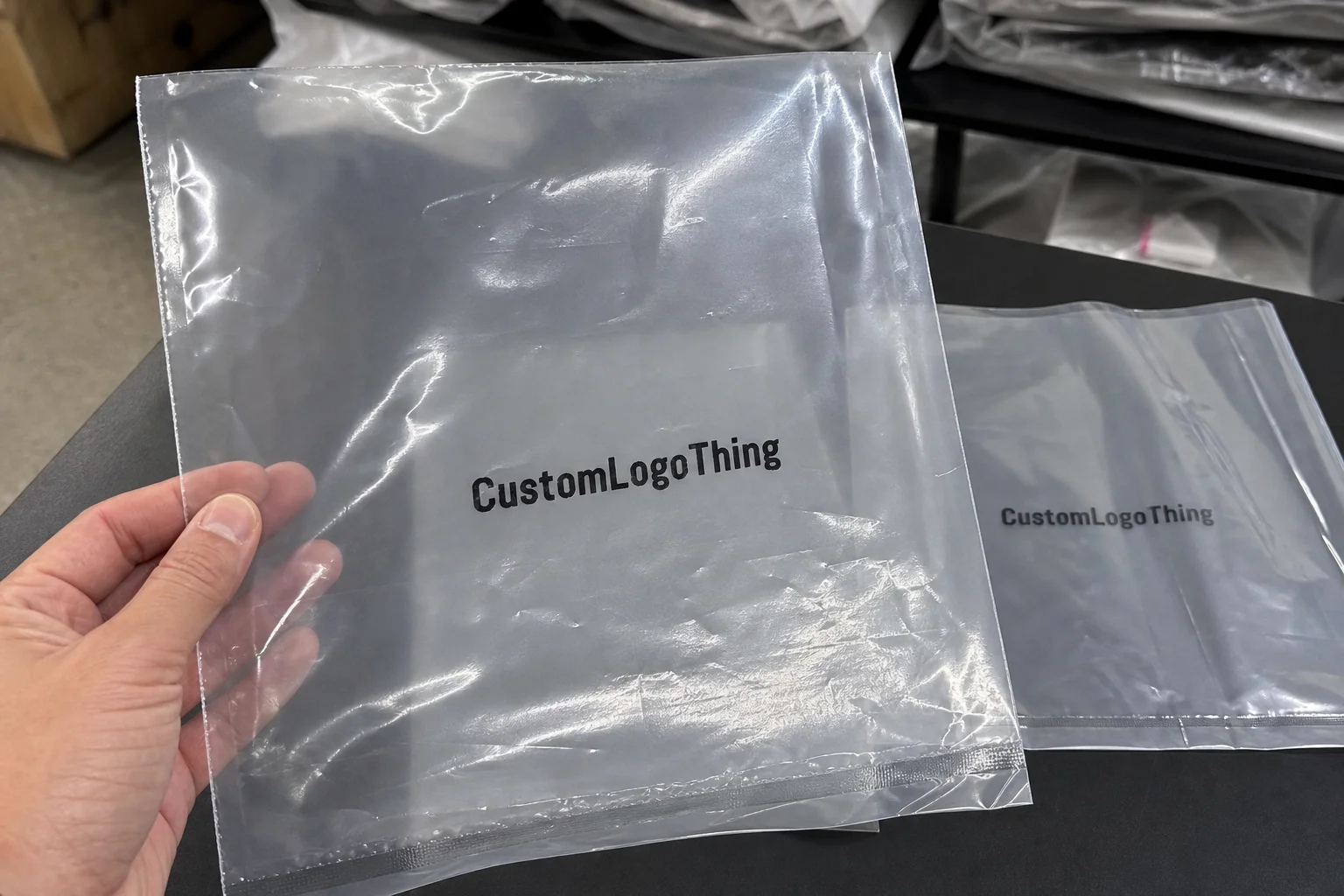
A useful carton plan starts with four numbers: folded garment size, bag size, carton size, and units per carton. Miss one of those and the rest of the math gets soft fast. With Garment Poly Bags for Ecommerce brands shipping carton plan work, a bag that fits the product can still be a poor fit for the shipper once the line starts packing at speed.
The bag should be treated as part of transit packaging, not just a sleeve. It keeps out dust, scuffing, and light moisture, but it also determines how neatly a garment stacks. A flat tee in a 1.5 mil LDPE bag behaves very differently from a hoodie in a wider 2 mil bag. One stacks like a brick. The other may spring open, trap air, or force the carton to bow.
That difference matters in ecommerce fulfillment, where the packing station has to stay fast and predictable. If a packer has to fight slippery film, overstuffed corners, or a closure that keeps slipping, the labor cost shows up immediately. Slowdowns are not theoretical. They turn into longer pack times, more tape usage, and more boxes that fail a quick visual check.
Freight is where the second cost hit appears. If a bag size change drops carton count from 18 units to 16, the loss may look small until it is multiplied across weekly volume. More cartons mean more labels, more tape, more pallet positions, and more chances to hit dimensional-weight penalties. In high-volume ecommerce shipping, tiny packaging changes compound quickly.
The best setup usually begins with the bulkiest SKU, not the prettiest one. Design around the hardest item first, then check whether the smaller SKUs are still efficient. If the biggest garment works without wasted cube or over-compression, the rest of the line usually becomes easier to manage.
“A bag spec can be technically correct and operationally wrong. The carton plan decides which one matters.”
That is why the buyer should think in systems. Bag, carton, pallet, carrier rules, and pack speed are all linked. If one part drifts, the rest gets expensive.
Process and Timeline: From Spec Sheet to First Carton
The smoothest projects are the ones where the buyer sends complete inputs before asking for a quote. A supplier can only work with what is in front of them. If the garment size, print requirements, carton target, and shipping assumptions are incomplete, the quote is usually a rough estimate that gets revised later. That wastes time and muddies the comparison.
The actual workflow is simple, even if the details are not:
- Group SKUs by folded dimensions and weight.
- Choose a starting bag style and film gauge.
- Request samples or proofs if print is involved.
- Run a packed test in the target carton.
- Confirm carton count, closure method, and pack steps.
- Release production only after the packout math is locked.
Each step is easy to rush past. That is where timelines slip. If the fold method changes after the sample is approved, the carton plan may need to be redone. If the print copy changes late, the proof cycle starts over. If the team still has not decided whether the bags ship folded, loose, or on rolls, lead time stretches for no good reason.
For a straightforward unprinted run, a 12 to 15 business day production window after proof approval is a common working range. Custom print, thicker film, or a special pack pattern can extend that. Freight adds its own clock. A factory can finish on time and still miss the receiving window because of vessel schedules, customs checks, or port delays. Those are not packaging issues, but they absolutely affect packaging planning.
The cleanest way to think about timing is to split it into four separate clocks: quoting, proofing, production, and transit. That is more useful than asking for a single promise date. It also keeps operations from promising a receiving window that finance and warehouse teams cannot support.
One more operational point: if the carton count changes after samples are approved, the whole packout should be rechecked before production ships. That sounds basic. It is also one of the most common sources of avoidable rework.
Key Specs That Drive Protection, Cube, and Packout Speed
The specs that matter most are not always the flashy ones. Film thickness, width, length, seal style, venting, and whether the bag is folded or on a roll all affect how the line moves. Those choices shape both package protection and packing speed.
Film gauge is the first lever buyers look at. Thicker film resists tears and punctures better, especially around zippers, snaps, hang tags, or rough knit edges. But thicker is not automatically better. More gauge means more resin, more cost, and sometimes less carton efficiency. For many soft goods, 1.5 mil to 2.0 mil LDPE is enough. Bulky items or harsher handling environments may need 2.5 mil or more.
Bag width is the silent cost driver. Too narrow and the garment wrinkles, bunches, or traps tension at the fold. Too wide and you pay for air. That excess space can reduce carton count, lower shelf density, and increase freight cube. A few millimeters can change the rhythm of a packing line.
Seal style matters more than people expect. Bottom-seal bags are common and economical, but the seal position has to match the product weight and fold. Side seals can help with certain garment shapes. Resealable closures improve presentation and reduce accidental openings, but they add cost. Perforated rolls can speed up dispensing if the pack station is actually set up for them. Without the right workflow, a roll format just becomes another thing to manage.
Garment shape changes the answer. T-shirts, socks, and base layers usually stack cleanly. Hoodies, sweatshirts, joggers, and heavy knits are harder to compress and often need a wider bag to avoid corner stress. Flat measurements alone do not tell the whole story. Fabric springback changes the actual packed profile, and that is where sample testing earns its keep.
Operationally, the best spec is the one that protects the item and keeps hand motion simple. If the packer has to twist, re-fold, or force the closure every time, the line slows down. That shows up as labor minutes, inconsistent cartons, and more mistakes during busy periods.
For teams that want a formal testing framework, the transit and compression methods published by ISTA are a practical reference. For broader material-efficiency context, the EPA materials and waste hierarchy is useful as a policy baseline.
Cost, Pricing, MOQ, and Unit Cost Drivers
Unit price is only one part of the decision. The real cost of Garment Poly Bags for Ecommerce brands shipping carton plan choices includes production price, carton efficiency, inbound freight, storage footprint, and the labor needed to pack each order. A bag that saves a cent or two can still cost more overall if it forces oversized cartons or slows throughput.
These are the main pricing drivers buyers should expect:
- Size: larger bags use more resin and usually cost more.
- Thickness: moving from 1.5 mil to 2.5 mil can raise cost noticeably.
- Print coverage: one-color branding is simpler than full-surface print.
- Bag style: folded, roll-fed, resealable, and vented formats price differently.
- Volume: higher quantities lower unit cost and usually improve production efficiency.
- Resin type: virgin, recycled-content, and specialty films do not price the same.
At low minimums, test orders are useful, but they usually carry a higher per-bag cost. A 5,000-piece run can land in one pricing band while 25,000 pieces land in another. That said, buying more of the wrong spec just multiplies the mistake. Cheap inventory that does not fit the carton plan is still bad inventory.
The table below shows directional pricing and packing behavior for common setups. These are not universal numbers. Resin markets move, print coverage changes, and carton rules vary by facility.
| Bag Setup | Typical Unit Cost at 5,000 Pieces | Carton Efficiency | Best Fit |
|---|---|---|---|
| Clear LDPE, 1.5 mil, unprinted | $0.05-$0.09 | High | Light tees, basics, socks |
| Clear LDPE, 2.0 mil, unprinted | $0.07-$0.12 | High to medium | General apparel, moderate handling |
| Printed LDPE, 2.0 mil | $0.10-$0.18 | Medium | Branded ecommerce shipping and retail-ready presentation |
| Heavier bag, 2.5 mil or above | $0.14-$0.24 | Medium to lower | Bulkier garments, higher abrasion risk |
| Perforated roll format | $0.08-$0.16 | High if line setup is right | Fast-moving order fulfillment lines |
The table is useful mostly because it shows what not to do: compare only bag price and ignore the carton. If a slightly higher-spec bag allows more units per shipper, fewer cartons per pallet, or lower freight cube, it can win on landed cost even if the invoice looks worse.
Ask suppliers to quote the bag spec and the packed-carton assumptions together. Unit cost alone is half a story. Landed cost is the part that pays the bills.
For teams comparing packaging formats, it can also help to review broader options like Custom Packaging Products, Custom Poly Mailers, and, where the product needs more rigidity, Custom Shipping Boxes.
Step-by-Step Carton Planning Checklist for SKUs
A clean carton plan is built SKU by SKU. It is not guessed from a product photo. Two items that look similar on a website can pack very differently once sleeves, seams, trim, and fabric recovery are factored in. Style name alone is not enough.
Step 1: Group garments by folded size and weight. A lightweight tee, a dense hoodie, and a sock pack belong in separate planning buckets unless the numbers truly match.
Step 2: Test a packed sample in the intended bag. Count how many units fit in the target carton without crushing corners, forcing the closure, or bulging the side walls.
Step 3: Check the carton against warehouse realities. Pallet pattern, shelf depth, carrier thresholds, and receiving workflow all matter. A carton that looks fine on a table can fail on a live line because it does not stack well or is awkward to tape.
Step 4: Write the final spec on one sheet. Include bag width, bag length, film gauge, seal style, carton quantity, pack method, and reorder trigger. If the team cannot find the details quickly, the process is too loose.
Step 5: Build a review point for reorders. Fabrics change, fold standards drift, and product teams add new sizes. A carton plan should be updated when the SKU shape changes, not after the warehouse starts fighting it.
This is where order fulfillment and packaging planning overlap. A good spec sheet makes handoffs easier between sourcing, operations, and finance. It also prevents one team from saving pennies while another absorbs the labor pain later.
If sustainability is part of the brief, match the material choice to a documented sourcing policy. The FSC framework is relevant for paper-based components, and the same discipline should be applied to plastic packaging by tracking resin use, recycled-content claims, and waste targets with actual records instead of marketing language.
Common Mistakes That Inflate Freight and Rework
The expensive mistakes are usually boring. They are the ones teams repeat because the bag “looked close enough.” Ordering by guesswork is the biggest one. If the spec is based on a rough visual estimate instead of a packed sample, the carton plan is already shaky.
Using one bag size for every SKU is another common error. It simplifies purchasing on paper, but it creates slack space in some cartons and compression issues in others. The result is a double tax: wasted cube on one end and damage risk on the other.
Skipping the pack test is a fast path to rework. A sample that fits the garment but jams in the carton is not a pass. The test has to cover the whole path: garment, bag, carton, closure, and tape-up.
Vague specs cause their own damage. If the buyer cannot state carton count, seal position, or target ship method, the supplier fills in the blanks. That may work once. It does not scale. In packaging, ambiguity becomes labor.
Ignoring cube is the freight mistake that keeps showing up in billing disputes. A low-cost bag can trigger a larger carton, and a larger carton can trigger dimensional weight charges. That cost never appears on the bag invoice. It shows up in freight, warehousing, and time spent reconciling carrier bills.
Oversizing the carton to avoid a rework problem can be just as bad as undersizing it. A forced closure slows the line, but a loose carton lets the product shift in transit. The right answer sits in the middle: enough protection to keep the garment clean and intact, enough efficiency to keep the carton stackable and economical.
For brands trying to tighten operations, the useful benchmark is not an idealized packaging spec. It is a repeatable packout that survives normal order volume without drift.
Expert Tips and Next Steps for a Cleaner Launch
The simplest way to reduce risk is to test three SKUs before scaling. Pick one best seller, one bulky item, and one compact item. That mix gives a realistic read on how the carton plan behaves across the range instead of validating only the easiest case.
Build a one-page decision sheet with acceptable bag width ranges, carton count targets, and cost ceilings. That keeps sourcing, operations, and finance aligned on the same numbers. It also stops small changes from drifting through the system without review. Small changes are how packaging budgets get messy.
If the business has to balance presentation and freight control, set the decision rule up front. A printed bag may be worth the added cost if it improves presentation, reduces returns, or allows more units per shipper. If none of that is true, keep the spec plain and spend the money where it actually changes the customer experience.
My practical recommendation is simple: request quotes with the final carton assumptions already baked in, then compare landed cost rather than bag price alone. That is the point where Garment Poly Bags for Ecommerce brands shipping carton plan work stops being a purchasing exercise and becomes an operations decision. If the numbers are right, the line stays fast, the cartons stay efficient, and freight stops throwing curveballs.
For teams that need a next move, pull the folded measurements, run a packed sample, confirm the carton plan, and then price the bag spec against the actual shipping method. That sequence keeps the decision anchored in reality instead of wishful thinking.
How do garment poly bags change carton count for ecommerce brands?
Carton count changes when bag width, fold style, and garment thickness affect how tightly units stack. A packed sample is the only reliable check; estimates based only on flat garment dimensions are usually too optimistic.
What bag specs matter most when planning ecommerce shipping cartons?
Start with width, length, film gauge, seal strength, and whether the bag is folded or on a roll. Then match those specs to the SKU mix so the carton stays protective without wasting cube.
How do I compare pricing for garment poly bags and carton planning?
Ask for unit price and landed cost assumptions together, including carton count and freight impact. A slightly higher bag price can win if it reduces carton size or lowers shipping charges.
What is the fastest way to estimate lead time for a new order?
Split the timeline into quoting, proofing, production, and shipping instead of asking for one total number. Custom print, thickness changes, and carton-specific packing usually add the most time.
What should I check before placing a low-MOQ test order?
Confirm the test order uses the final carton dimensions and not a shortcut version. Use the test to validate pack speed, damage protection, and whether the bag fits the long-term shipping plan.


