Garment Poly Bags for ecommerce brands moq planning sounds like a packaging topic. It is really an inventory decision with a plastic shell around it. Get the size wrong, and the bag becomes dead stock. Get the thickness wrong, and you pay for damage, rework, or a second order that should never have happened.
Packaging buyers do not get paid for pretty mockups. They get judged on fit, speed, damage prevention, and landed cost. That is why the first order should be built from actual SKU data, not a hopeful sales forecast and a glossy mood board. The cheapest quote is often the one with the most expensive surprises hidden inside it.
If you need a broader look at formats and ordering paths, Custom Packaging Products is a useful place to compare options, and our FAQ covers common ordering questions before you send files.
Why garment poly bags for ecommerce brands moq planning starts with inventory math
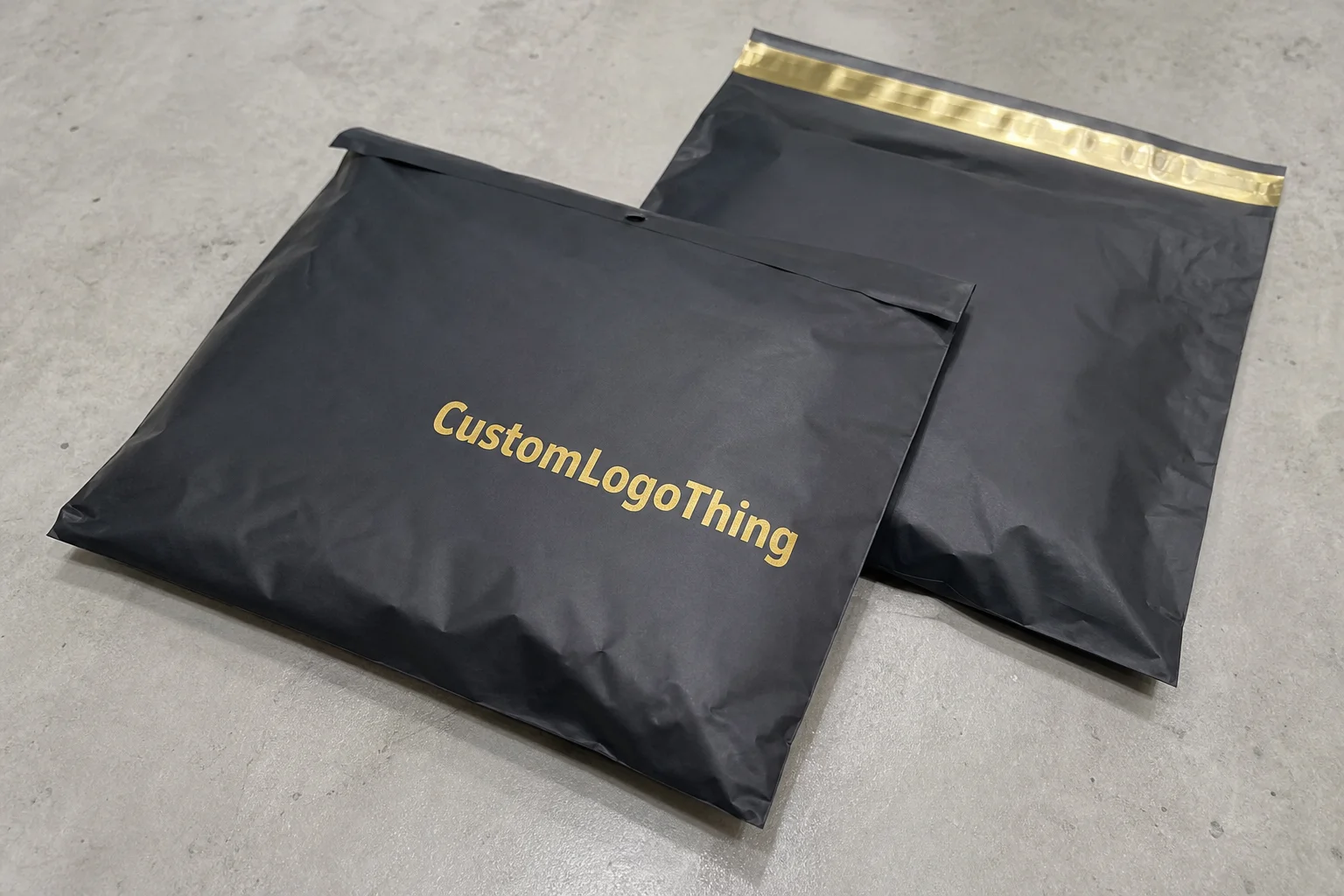
The wrong bag size rarely looks disastrous on a quote sheet. It becomes obvious on the floor. The warehouse team tries to use one bag across multiple SKUs, the fold sits awkwardly, the seal line drifts, and the smallest items rattle around like they were packed by someone who never opened the box. That is how a low-cost packaging choice creates waste across an entire assortment.
Ecommerce packaging does more than keep dust off a garment. It affects how fast a picker can move, whether the product lands looking clean, and whether a customer opens the parcel to find a wrinkled collar or a graphic pressed into a crease. A bag that saves two seconds per unit matters when the line is moving all day. A bag that slows the line quietly burns labor every shift.
Smart planning starts with actual demand. Look at monthly volume by SKU, the fold method used in fulfillment, and how much space the garment really needs once it is packed. If the first order is sized for a dream scenario, you end up with excess inventory in the wrong spec. That is not a savings. It is storage with a receipt.
The failure pattern is predictable. A brand wants one printed bag for several sizes, sizes it around the largest item, and assumes the smaller pieces will be fine. They usually are not. The bag looks oversized, the product slides, and the pack team starts reaching for filler or reverting to plain stock bags. Now the custom order has created a second workflow, plus a reorder.
“Packaging should match how the warehouse actually packs, not how the brand wishes the warehouse packed.”
That sounds obvious. It still gets missed every week. The practical fix is to treat the bag as part of the packing method, not as a separate branding exercise.
For brands that want a neutral reference point on packaging standards, Packaging Machinery Manufacturers Institute resources are useful for understanding how suppliers think about handling, storage, and production constraints. Not exciting. Useful anyway.
What should be built into the bag, not added later
Some programs do not need custom bags. If the garment is standard, the order volume is volatile, and branding is light, a plain bag with the right dimensions may be the right answer. That is not a compromise. It is a clean decision. Custom bags earn their place when the fit, print, and pack-out method need to stay consistent across repeat runs.
The best features are usually the boring ones. A good bag stacks neatly, seals without drama, stays clear enough for product identification, and dispenses without turning into a tangle of static film. If the warehouse needs a hang hole, a barcode window, a tear notch, or a warning statement, that spec should be locked before production starts. After the proof stage is not the time to discover a missing detail.
Closure style matters more than most buyers expect. Flap seals are popular because they speed pack-out. The adhesive has to be strong enough to stay closed in transit and weak enough to avoid ripping the film during handling. Too weak, and the bags pop open. Too aggressive, and the seal becomes a mess for returns or resealing. Those are small failures until they happen thousands of times.
Overbranding is another common mistake. A giant print area can hide the product and make the bag feel heavier than it is. In practice, restrained branding usually works better: a clear logo, size marking, maybe a barcode window, and compliance text where required. The bag should support the garment, not compete with it.
There is a difference between a nice mockup and a production-ready bag. The mockup gets approved in a meeting. The production-ready version keeps the fulfillment line from slowing down. If you are comparing packaging styles, our Custom Poly Mailers page is a useful reference for print coverage and material tradeoffs.
If the bags move through a distribution center, check whether they need a clear product window, easy-open perforation, or a warning label that can be read quickly at pack-out. A design that adds steps on the line usually costs more than the quote suggests. That is true even when the base unit price looks good.
Quality control is not glamorous, but it is where many programs succeed or fail. Ask for checks on film gauge, seal integrity, print registration, adhesive peel strength, and edge trimming. If a supplier cannot explain how they test these items, the bag spec is probably softer than it should be. In packaging, “close enough” has a habit of becoming “why did this leak?”
Standards matter too. ISTA procedures come up when packaging has to survive transit abuse, and ASTM methods are common in material and film testing. FSC documentation may matter when a program includes paper inserts or supporting materials. The point is not to collect acronyms. The point is to pin down what the supplier must actually build and verify.
Specs to lock before you request a quote
Before you ask for pricing, define the folded garment size, not the flat fabric measurement. That distinction matters. A shirt, hoodie, or dress may have the same style family on paper, but the packed footprint can change once the item is folded, tagged, and inserted. If the garment is bulky, a few extra millimeters can be the difference between a clean fit and a bag that bows at the seams.
Film thickness comes next. Lighter film works for simple dust protection and low-friction handling. Heavier film makes more sense when puncture resistance, feel, or repeated handling matters. There is no universal answer. A tee bag and a heavyweight hoodie bag are not the same problem. Buyers who treat them like they are usually pay for it later.
Print choices change the quote fast. A one-color logo on one side is not the same order as a full-coverage print with multiple colors and exact placement rules. If the artwork needs cleanup, a vector rebuild, or a revised dieline, that affects both timeline and cost. The earlier the art is locked, the less the order drifts.
Handling details are easy to overlook and hard to fix later. Ask how the bags will be packed: loose, banded, or carton-packed. Ask whether the adhesive is permanent or resealable. Ask whether perforation is needed for dispensing. Ask where compliance text should sit. Each of those choices affects pack-out speed, labor cost, and how the product behaves on the line.
- Finished garment size: Measure the item as it will ship.
- Bag width and length: Include room for inserts and sealing.
- Film thickness: Match protection to the product and handling risk.
- Print setup: Confirm colors, coverage, and placement.
- Compliance text: Decide on warnings, recycling marks, or labels early.
It also helps to define what a good sample looks like before production begins. A proper approval should check for clear print, even sealing, correct dimensions, and no distortion at the closure. If the sample looks fine but the film feels too thin, that is not a small issue. It usually comes back as a handling complaint.
MOQ, pricing, and the unit cost drivers that matter
MOQ is where many buyers get surprised. Stock bags can have low minimums. Custom size and print usually do not. That is not a supplier being difficult. It is the reality of setup time, tooling, material waste, and production efficiency. If you want a lower MOQ, expect a higher unit cost. If you want better bulk pricing, expect to buy more.
The main price drivers are usually bag size, film thickness, number of print colors, and order quantity. New tooling or a fresh dieline can add cost. More print coverage adds cost. Heavier film adds cost. Carton pack and freight assumptions can add cost too. None of that is mysterious, but quotes often hide different assumptions, which makes “cheap” bids impossible to compare unless you normalize the spec.
| Option | Typical MOQ | Typical cost per piece | Best for |
|---|---|---|---|
| Stock clear poly bag | 500 to 1,000 | $0.03-$0.08 | Fast replenishment and basic protection |
| Custom size, one-color print | 3,000 to 5,000 | $0.08-$0.16 | Brands with stable SKU volumes |
| Custom size, multiple colors or heavier film | 5,000 to 10,000+ | $0.14-$0.28 | Higher presentation standards and repeat runs |
Those numbers are directional, not universal. Material grade, carton count, and freight assumptions move them around. Still, they are good enough to stop bad decisions early. If one quote comes in much lower than the others, check whether the supplier quoted a thinner film, a smaller print area, or a looser packing spec. Sometimes the product is not the same product.
Ask every supplier to price the exact same package: same dimensions, same film gauge, same print colors, same carton pack, same delivery destination, same proof format. That is how you compare real unit cost instead of a pile of almost-related numbers. It also keeps the discussion honest, which saves time on both sides.
There is a tradeoff worth stating plainly. A lower MOQ reduces risk if the design is still changing or SKU demand is uncertain. A larger run can cut cost per piece enough to justify the extra inventory, especially if the bag works across several styles. The mistake is pretending those two goals can always be satisfied at the same time. They cannot.
For ecommerce brands, the unit price is only part of the story. The landed cost includes setup, sampling, freight, receiving, and the labor saved or lost in fulfillment. A bag that packs faster can beat a cheaper one that creates bottlenecks. That is the part buyers feel in the warehouse, not in the spreadsheet.
Production steps, lead time, and delivery planning
The production path is usually straightforward: quote, spec review, artwork check, sample or proof approval, production, packing, freight booking, and receipt. The catch is that any one of those steps can stall the order. Most delays come from missing dimensions, artwork that needs cleanup, or approval chains with too many people involved. If three departments need to sign off on a simple packaging item, the schedule starts slipping for no good reason.
Lead time depends on material availability and how clean the files are. A supplier who has to redraw your logo is not working on the same clock as one who can move straight to production. In normal conditions, a custom run often takes about 12 to 15 business days after approval, and that can stretch if the order needs special film, a new setup, or unusual packing instructions.
For ecommerce teams shipping to multiple warehouses, the real question is not just when the bags arrive. It is where they arrive first, and what happens if one truck runs late. Split deliveries can protect fulfillment, but only if the purchase order and carton labels are clear. If one distribution center is waiting on bags while another has surplus, the problem was not production. It was planning.
Rush orders do happen. They make sense when a launch date or seasonal spike leaves no room for a standard timeline. They also cost more than people expect. Expedited freight, priority production, and compressed approvals can push the landed cost high enough that the original quote stops being useful. You are paying for time, not just product.
Good planning is simple and annoying in the way good planning usually is. Work backward from the ship date, include proof time, allow a freight buffer, and set the reorder point from actual sales velocity. Seasonal brands should treat that buffer as non-negotiable. A late bag run can stall the whole fulfillment window.
If you need a reference point for how packaging is evaluated for shipping durability, the ISTA site is useful for understanding transit testing logic. If the pack survives handling and arrives intact, the customer sees the product the way the brand intended. That is the job.
Documentation matters here too. A spec sheet should show dimensions, film thickness, print placement, adhesive type, carton pack, and destination. If those details live in five different emails, the reorder will be slower and more error-prone than it needs to be. Packaging runs repeat better when the paperwork is boring and complete.
Why repeat buyers stop shopping around
Repeat buyers do not stay with a supplier because the samples looked nice once. They stay because the supplier checks specs before production, catches mismatches early, and does not treat every reorder like a fresh experiment. That matters in Garment Poly Bags for Ecommerce brands moq planning, because repeatability beats cleverness once the SKU mix gets messy.
Consistency is where the value shows up. Stable color, stable thickness, predictable sealing performance, and the same print placement on every run reduce headaches. If a brand has seasonal swings or a lot of SKU variation, a supplier who can handle changes without turning the order into a fire drill is worth more than a lower quote that creates new work.
Service quality is measurable. It looks like fewer file errors, cleaner documentation, clearer carton labeling, and answers that address the spec instead of repeating the price. It also means the supplier understands that packaging affects fulfillment labor, not just shelf appearance. A lot of vendors miss that part because they are selling boxes and film, not the operational mess that follows a bad order.
Brands that move from one-off buys to repeat runs usually stop shopping around because the hidden switching costs outweigh the savings. New samples, new proof cycles, revised artwork, and another round of internal review all add up. If the current supplier is getting the job done with clean documentation and predictable pricing, the “cheaper” alternative is often just slower and more annoying.
That is also where internal planning gets easier. The team can keep an approved spec sheet, reorder threshold, and artwork file on hand, then place the next run without rebuilding the brief from scratch. If you want examples of how packaging programs are documented, our Case Studies page shows how repeatable specs and cleaner approvals reduce friction.
Next steps for placing a smarter order
Start with the essentials: folded garment dimensions, SKU counts, print files, target quantity, and warehouse destinations. If the product line includes multiple sizes, identify the largest practical fold and size the bag around that. If the bag has to work across styles, build around the one that actually creates the fit problem. Spreadsheet logic is not the same as packing logic.
Set the reorder point from sales velocity and lead time, not from optimism. If a bag takes three weeks to produce and a week to ship, the reorder point should not wait until the last carton is opened. That is how rush orders happen. Rush orders are expensive because the original plan was too loose.
Ask for a mockup or spec sheet that shows the bag size, print area, and carton pack before approving production. A clean approval saves more money than a clever negotiation. It keeps everyone aligned on what is being made, which is the entire point of buying packaging instead of gambling on it.
For ecommerce brands, Garment Poly Bags for Ecommerce brands moq planning works best when spec, quantity, and delivery date are decided together. Split them apart and the usual mess shows up fast: dead stock, setup charges you did not budget for, or a reorder that lands after the inventory gap has already done damage. Keep the three together, and the packaging starts acting like a business tool instead of a pile of regrets.
What MOQ should ecommerce brands expect for garment poly bags?
MOQ depends on whether the bag is stock or custom. Stock bags can start around 500 to 1,000 pieces, while custom size and print often land in the 3,000 to 5,000 range or higher. Compare quotes only after locking dimensions, film thickness, print setup, and carton pack.
How do I size garment poly bags for mixed ecommerce SKUs?
Measure the finished folded garment, not the flat fabric. Then add room for tags, inserts, and normal folding variation. If several SKUs share one bag, size to the largest practical fold so the smallest item does not slide around and look sloppy.
What drives unit cost most on custom poly bags?
Bag size, film thickness, number of print colors, and order quantity usually move unit cost the most. Freight, carton pack, and setup charges also affect landed cost, so quote comparisons should include shipping assumptions and packing format.
How long does production usually take after approval?
Lead time depends on artwork readiness, material availability, and whether the order needs a sample or proof first. Clean files and a fast approval cycle shorten the schedule more than almost anything else. A normal custom run often lands around 12 to 15 business days after approval, before freight.
What should I send first to get an accurate quote?
Send garment dimensions, estimated quantity, print artwork, and the delivery location or warehouse list. Include compliance text, flap preference, and whether the bags need to ship in cartons or bundles. The more complete the brief, the less back-and-forth you pay for.


