Garment Poly Bags for ecommerce brands rush reorder planning is a control problem, not a packaging afterthought. If the approved size, film, artwork, and carton pack are already on file, a reorder can move as a repeat job instead of a new sourcing exercise.
That only works when the order history is clean. A missing width, outdated proof, or changed compliance line can turn a routine replenishment into a rush project. The goal is to preserve enough of the previous spec that production can start quickly and the fulfillment team does not end up waiting on packaging.
If the spec changes, it is not really a reorder anymore. It is a new project with a shorter deadline.
Garment poly bags for ecommerce brands rush reorder planning
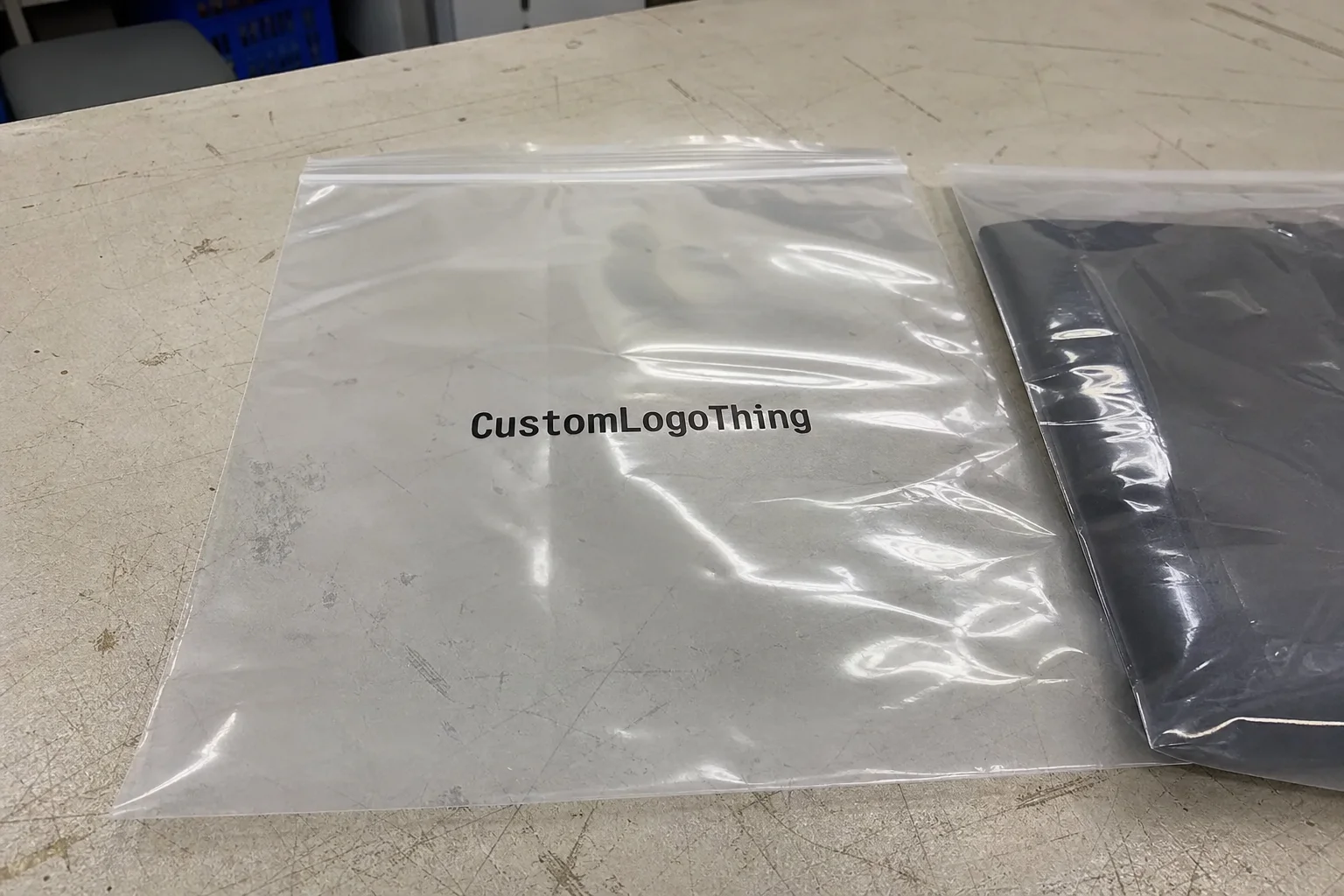
For ecommerce brands, Garment Poly Bags do more than protect apparel. They support fold quality, SKU identification, compliance, and line speed. When inventory gets tight, those functions matter more because the packaging has to work without slowing packout or creating exceptions on the floor.
The advantage of a repeat order is predictability. If the width, length, gauge, closure style, and print copy are already approved, the buyer should be confirming quantity, checking the artwork version, and booking freight. That is a much cleaner path than remeasuring product and reopening approvals that should have been settled on the last run.
Strong reorder planning also means knowing when the next order is already late. Safety stock should cover production plus transit, not just the next few pallets in the warehouse. Waiting until the last carton is opened is how brands end up choosing between the wrong bag and the late bag.
Most companies that handle this well keep one master spec, one approved artwork file, one named buyer contact, and one backup ship-to plan. That is not sophisticated procurement. It is basic discipline, and it avoids the freight charges, rush fees, and internal churn that show up when the packaging team is forced to guess.
Product details buyers should lock before they reorder
“Same bag as last time” is not enough. A supplier needs finished dimensions, material type, gauge, closure method, seal style, and print details. If the bag is used for folded tees, knits, bundled sets, or return-ready packs, the fit should be written down rather than remembered loosely from the last order.
Material choice affects cost and performance. LDPE and LLDPE are common because they balance clarity, flexibility, and price. Gauge often falls around 1.5 to 3 mil for apparel packaging, but the right thickness depends on product weight, handling, and whether the bag needs extra puncture resistance during shipping.
Clarity helps with SKU checks and presentation. Opaque or printed film supports branding and privacy. Vented bags can reduce trapped air on bulkier items, while reclosable bags are useful for returns and multi-piece sets. None of these is universally better. The correct choice is the one that fits the actual packing workflow.
Compliance details should be locked before the quote. If the bag needs a suffocation warning, the exact language belongs in the request. If the brand wants recycled-content film, that must be stated early because sourcing and film behavior can change lead time. For transit-sensitive packaging, it helps to know whether the program should align with test expectations from groups such as ISTA.
Carton pack also matters. If one carton holds 1,000 bags and the next holds 950, receiving and line replenishment become harder than they need to be. The bag itself may be correct, but inconsistent packout still creates friction at the dock and at the pack station.
Specifications to confirm before you request a quote
A clean quote starts with clean data. Send the finished bag dimensions, not just the garment size. The supplier needs to know how the item is folded, whether there is a hang tag or insert card, and how much clearance is required so the packer is not forcing product into a sleeve that is too tight.
Use this list to avoid back-and-forth:
- Bag size, including width, length, and any flap allowance.
- Film gauge, stated in mil or micron.
- Material type, such as LDPE, LLDPE, or a recycled-content blend.
- Seal type, such as side seal, bottom seal, or adhesive flap.
- Print area and number of colors or printed sides.
- Artwork version, including file name and approval date.
- Carton pack, including quantity per carton and pallet preference.
Then add the logistics fields that decide whether the order actually lands on time: target ship date, ship-to address, quantity by SKU, whether the order splits across warehouses, and whether partial freight is acceptable. If those details are missing, the quote may still be possible, but the risk rises.
There is a difference between a bag that fits and a bag that supports throughput. A bag can be large enough and still slow the line if the opening sticks, the seals vary, or the gauge is too thin for repeated handling. The right spec reduces rework, keeps the pack station moving, and cuts the odds of crushed corners or scuffed fabric in transit.
Packaging references from industry associations help with terminology, but they do not replace a production-ready order sheet. The buyer still has to translate the requirement into a file the factory can execute without guessing.
Pricing, MOQ, and unit cost drivers for rush orders
Packaging pricing moves for concrete reasons. Size is one. Gauge is another. Print coverage matters. Closure style matters too, especially if the bag needs an adhesive strip or reusable seal. Recycled content, venting, warning copy, and custom packing all add cost. Volume lowers unit cost, but only until extra inventory starts becoming a warehouse problem.
For rush reorder planning, MOQ is also a cash-flow decision. A larger minimum may improve the piece price, but if the brand only needs enough bags to bridge six or eight weeks, overbuying can create dead stock. A smaller emergency run can be the smarter choice when the real issue is keeping fulfillment from stopping.
| Order Type | Typical MOQ | Estimated Unit Cost | Typical Production Window | Best Use Case |
|---|---|---|---|---|
| Standard repeat order | 5,000 to 10,000 pieces | $0.08 to $0.18 | 12 to 18 business days | Planned replenishment with locked specs |
| Rush reorder with approved artwork | 3,000 to 5,000 pieces | $0.10 to $0.22 | 7 to 12 business days | Inventory dip before a drop or promotion |
| Emergency split shipment | 2,500 to 5,000 pieces | $0.12 to $0.28 | 5 to 10 business days | Fulfillment is at risk and time is the constraint |
Freight should be separated from unit price whenever possible. So should proofing fees, rush handling, and any setup tied to new artwork. Otherwise the buyer sees a low piece price and a high landed cost, which distorts budget planning and makes supplier comparisons meaningless.
One useful habit is to standardize the core bag and keep only the artwork variable. That lowers future reorder friction and makes forecasting less fragile. If a brand keeps changing shapes, closure styles, or warning copy every cycle, every reorder behaves like a fresh launch.
Rush reorder process and lead time: what happens first
Once the request lands, the process should be linear. First comes spec review. Then artwork check. Then proof approval. After that, the job is scheduled, QC is assigned, cartons are packed, and freight is booked. If a supplier skips one of those steps, the buyer usually pays later in delay or confusion.
The fastest jobs are the ones with the fewest variables. A previously approved dieline helps. Unchanged artwork helps. A clear delivery deadline helps even more. If the brand can state the required receipt date, the factory and freight team can work backward from a real target instead of building around guesses.
Delays usually show up in the same places: missing measurements, artwork corrections, unclear delivery terms, or an internal approval chain that takes longer than expected. The cleanest way to avoid that is to gather the decision-makers before the quote request goes out.
Production time is not the same as transit time. A supplier may finish quickly, yet the order still misses the need date because freight was not booked correctly. That matters even more for split shipments or multi-warehouse delivery. If the brand is planning against a promotion, the transit plan should be part of the first conversation.
Rush lead times also depend on how much of the order can be repeated without rework. If art is unchanged and film is in stock, the order can move faster. If the buyer wants a new warning panel, a different gauge, or a revised pack count, the clock gets longer. That is production reality, not bureaucracy.
Quality control checks that stop small mistakes from becoming big expedites
QC is where a lot of packaging programs fail quietly. The bag may look fine on paper, but the real test is whether it matches the approved sample and packs cleanly at speed. A good supplier should check dimensions, gauge, print registration, seal integrity, and carton pack before shipment.
The first check is fit. The bag should hold the garment without excess slack or strain. Too much extra space creates a sloppy presentation and encourages movement in transit. Too little space slows packing and can stress seams or printed areas.
The second check is print accuracy. Warning copy needs to be legible and positioned correctly. Branding should line up with the approved artwork version, not a close match from an older file. Version control matters more than most teams admit until a run carries the wrong logo placement or a stale legal line.
The third check is physical consistency. Seals should be uniform. Openings should separate cleanly. Film should not tear too easily when handled by a packer working at speed. If the bag sticks, catches, or splits, the issue will show up on the line long before it reaches the customer.
Buyers should also ask for carton verification. The count per carton should match the plan. Labels should show the right SKU, quantity, and destination. Mixed cartons can work, but they should be intentional, not accidental. A mislabeled carton on a tight schedule is a preventable problem.
What a dependable rush-reorder partner should prove
Reliability is measurable. Ask whether prior order records are retained, whether the spec sheet is version-controlled, and whether QC checks are documented for every run. If the supplier cannot repeat the same order without drift, the rush order adds risk instead of reducing it.
Inventory visibility matters too. A partner who can pull up the prior film gauge, seal type, carton count, and artwork version can spot conflicts before production starts. That prevents the common mistake where the buyer thinks they are reordering the same bag, but the factory is quoting a slightly different one.
Support shows up in small decisions. Can the team review backup artwork quickly? Will they recommend a carton count that speeds up receiving? Can they flag a spec that increases cost without improving performance? Those behaviors save time without lowering the standard.
If the bag program sits inside a wider packaging stack, it helps to work with a supplier that can coordinate adjacent items such as mailers, inserts, or shippers. That can reduce the number of vendors touching a launch and simplify purchase order management. A broader catalog like Custom Packaging Products can make that easier to manage.
Next steps to secure the reorder before stock runs out
The best move is not to wait for inventory to hit zero. Audit the current bag spec now, confirm the next demand window, and set a reorder trigger before the shelf goes empty. In practice, the trigger should be based on weeks of cover, not a feeling that the carton stack still looks healthy.
Gather the essentials in one pass: finished size, quantity by SKU, artwork file, compliance copy, ship-to address, and the date the order must land. If there are multiple warehouses, say that up front. If the artwork might change, flag it immediately so the proof cycle does not reopen halfway through production.
For the highest-volume SKU, build one backup spec now. That means one approved size, one approved gauge, one approved closure, and one approved warning panel. Then the next rush order becomes a repeat order instead of a redesign project.
Brands that handle apparel packaging well do not rely on memory. They use the same spec file, the same approval path, and the same receipt target every time. That reduces noise, shortens lead time, and keeps the fulfillment team from discovering problems after the pallets are already late.
If inventory is close to the floor, place the next order while there is still room to absorb a mistake. That is the real job of Garment Poly Bags for ecommerce brands rush reorder planning: give the team enough margin to make a clean decision before the clock runs out.
How fast can garment poly bags for ecommerce brands be reordered if the specs are already approved?
If the size, material, print, and compliance copy stay unchanged, a repeat order can move quickly. Production may be measured in business days rather than weeks, but transit still has to be booked and confirmed. The receipt date matters more than the start date.
What information do I need to request a rush quote for garment poly bags?
Have the final bag dimensions, gauge, quantity, and artwork version ready. Include the ship-to location, target delivery date, carton pack, and whether the order needs split fulfillment. If the bag carries warning language or regulatory copy, send that in the first request.
What drives the unit cost on custom garment poly bags?
Size, gauge, print complexity, and order volume are the main drivers. Special requirements like recycled content, venting, or custom packing can raise cost. Freight and rush handling should be separated from the unit price so the comparison stays honest.
Can I change artwork on a repeat order without restarting production?
Minor copy or logo changes may be possible if the base spec stays the same. Any change to print area, warning language, or layout should trigger a new proof review. Version control matters, so keep the approved file and date stamp tied to each SKU.
What should ecommerce brands standardize to make future rush reorders easier?
Standardize the bag size, gauge, closure style, carton pack, and compliance copy for core SKUs. Keep one backup spec for the highest-volume item so a replacement can move immediately. Track usage rates so the next reorder starts before the safety-stock threshold is crossed.


