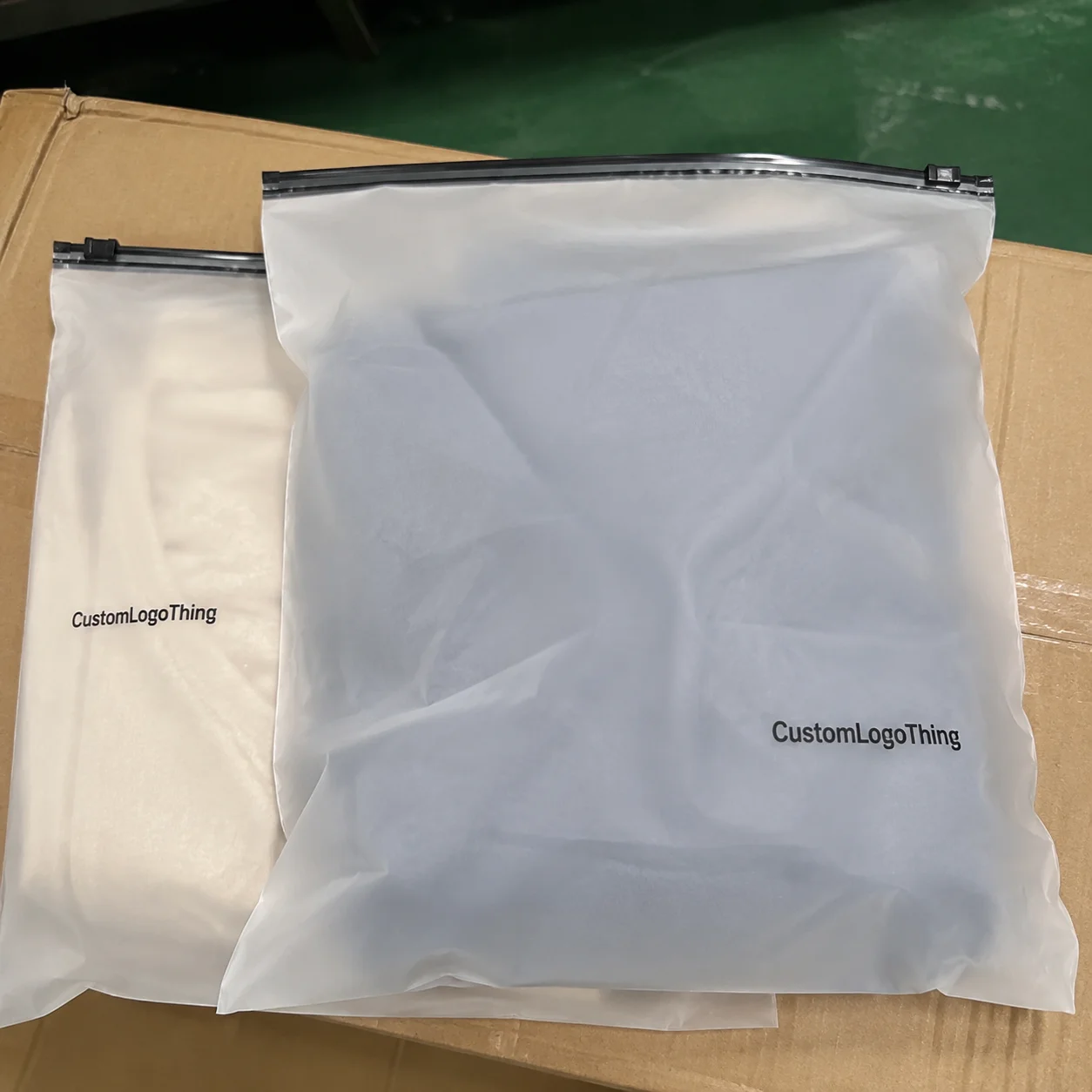
A Garment Poly Bags for Event teams supplier quote checklist sounds dull until a crew is repacking 300 shirts at 8 p.m. and half the bags are wrong. Too small. Too thin. Or somehow priced like premium retail packaging for a plain folded tee. That is how a cheap-looking item turns into labor waste, messy presentation, and last-minute rework.
Event apparel has a short fuse. Uniforms get sorted, merch gets folded and refolded, sponsor shirts move through multiple hands, and VIP kits need to look clean on arrival. The bag is not the star of the show, but it does have a job. It keeps garments clean, grouped, and easy to count. Miss the spec and the failure shows up fast.
Why event teams lose money on the wrong garment poly bag spec
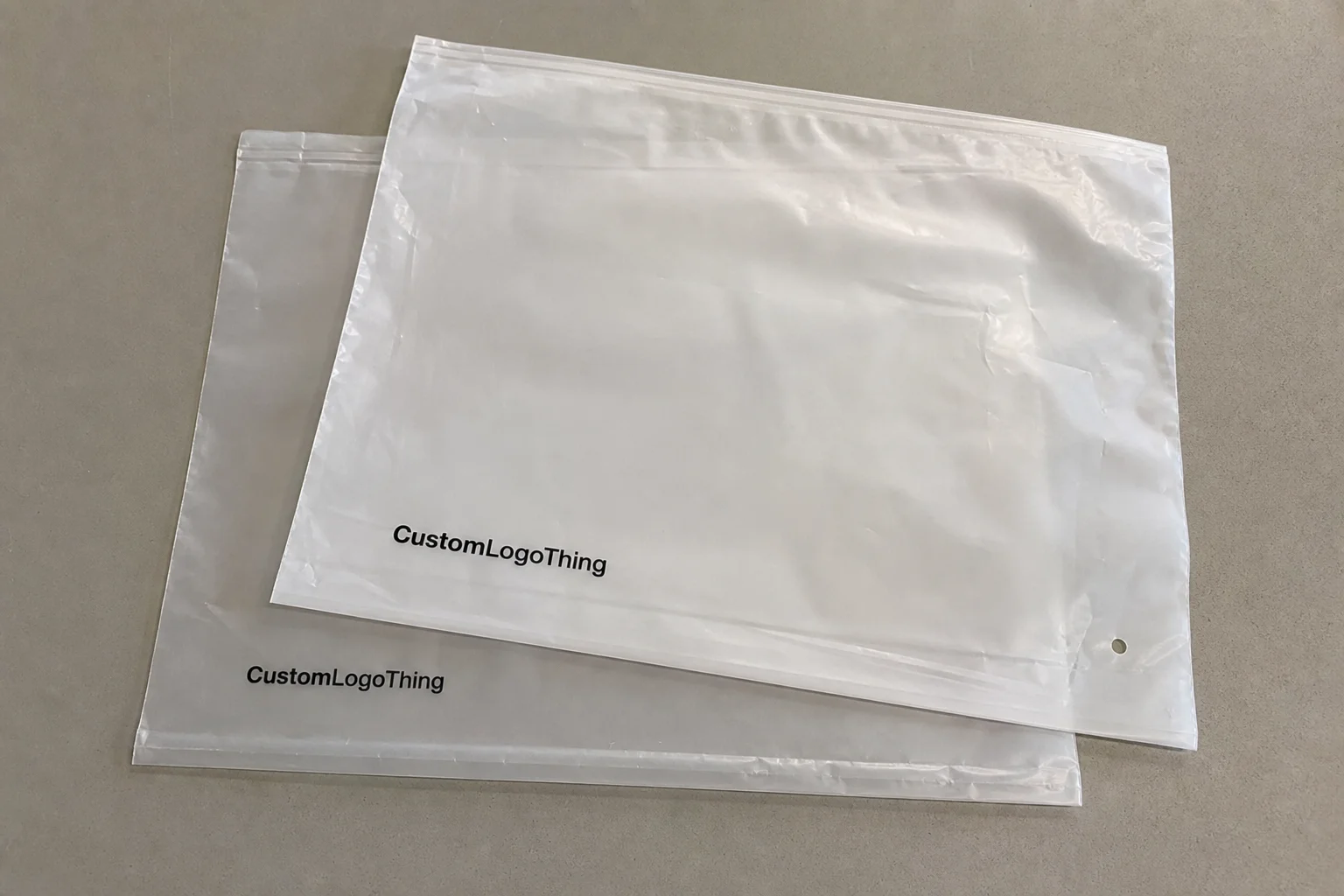
The biggest mistake is treating the bag as a generic consumable. It is not. A wrong spec leaks money in three places: material, labor, and freight. Oversized bags use more film and take more carton space. Undersized bags slow packing because staff spend time wrestling the fold into place. Weak film splits, which means rebagging, replacement stock, and a final look that screams rushed.
The pain is worse on live events because the workflow is compressed. There is no warehouse luxury of sorting later. Boxes arrive, bags get opened, garments get packed, and the clock keeps moving. If a team is packing shirts, polos, hoodies, or layered kits, the right bag has to fit the garment, the label, and the speed of the line. A spec that works for a folded tee can fail completely on a sweatshirt.
There is also a hidden cost that buyers miss: inconsistency. A bag that varies too much in thickness or cut size slows the entire table. Packers stop trusting the material. They start checking every third bag. That sounds minor until you are 2,000 units deep.
Another common problem is overbuying presentation. Not every event needs a printed bag. Not every package needs a resealable closure. A lot of teams spend more than necessary because they are trying to make the bag do brand work that a label or insert could handle for less. If the bag is only there to keep garments clean and sorted, keep it simple.
Practical rule: the cheapest unit price is not the cheapest order if the bags create rework, split under handling, or force rush freight.
The quote request has to match the real use case. That starts with the actual garment, the actual fold, and the actual event timeline. Everything else is guesswork, and guesswork is expensive in packaging.
What the garment poly bags for event teams supplier quote checklist should include
The quote request needs enough detail that the supplier can price the job without making assumptions. “Need garment bags” is not a brief. It is a message that usually comes back with three follow-up questions and a quote that changes twice.
Start with bag style. Flat poly bags work well for folded tees, polos, and most lightweight apparel. Side-gusset bags are better for bulkier items because they give the garment more room without stretching the film. Resealable bags make sense for reusable staff uniforms, retail merch, or kits that may be opened and repacked. Wicketed bags are useful if the packing team is running a faster line and wants cleaner dispensing.
Next, define the event use. Staff uniforms need clear identification and easy reclosure. Retail merch benefits from visibility because shoppers and staff need to confirm color and size quickly. Sponsor shirts often only need a clean clear bag with a size label or small logo. Backstage wardrobe usually needs better sorting support, because the real problem there is not appearance alone. It is speed, accuracy, and the ability to grab the right item without opening three bags.
Printing should stay tied to a purpose. A one-color logo, size mark, or barcode window is often enough. More print does not automatically create a better package. It just creates more setup, more proofing, and more chances to miss the deadline. If the bag only needs to keep apparel clean, clear film plus a legible label area usually beats a fully printed wrapper that slows production and inflates the quote.
Closure choice matters too. Open-top bags are the lowest cost and the fastest to pack. Adhesive flap seals are useful for single-use kits where you do not want garments slipping out in transit. Zipper-style closures are stronger for repeated opening, but they cost more and are usually overkill for one-time event distribution. In practice, many event teams do best with the simplest closure that still protects the contents.
Clear packaging also reduces confusion backstage. When the bag is transparent, size, color, and garment type are visible at a glance. That sounds obvious. It is still the difference between a smooth pick-and-pack table and a pile of opened bags because someone needed to confirm whether the medium black polo was actually a medium black polo.
Specifications your supplier needs: size, film, and finish
Size should be written in finished dimensions, not guessed from the garment hanger. Measure the folded garment itself, then add room for any insert card, barcode label, instruction sheet, or hangtag that will go inside the bag. A folded tee may fit comfortably in a 10 x 14 inch bag. Hoodies, jackets, and layered sets often need 14 x 18 inches or more. If the bag is too exact, packers waste time forcing the fold. If it is too large, the item shifts and looks sloppy.
Film thickness needs to be stated in real numbers. Many event buyers use 1.5 to 2 mil for lighter, single-use packing. For heavier garments, higher-touch handling, or shipments that move through several points before final distribution, 2.5 to 4 mil is usually safer. Thin film can be fine for a short hop. It is less fine when the bags are being loaded, unloaded, sorted, and restacked by different people.
Material choice changes the feel of the bag and the way it performs. LDPE is common for garment packaging because it is flexible and usually gives good clarity. HDPE can be lighter and less expensive in some applications, but it is not always the right choice for presentation or durability. Recycled-content poly is worth asking about if the team has sustainability requirements, though buyers should confirm whether the recycled blend still meets clarity and handling expectations. If a supplier cannot explain the difference, the quote is not finished.
Finish sounds cosmetic until you are staring at a table full of bags under bad light. Crystal clear film makes labels and logos easier to read. Frosted film can look cleaner for premium kits, but it may slow scanning and visual sorting. Glossy film tends to hold up better under event lighting. Matte can hide scuffs, which matters if the bags are being moved around before handoff. If barcodes or size markers matter, ask for a sample under the actual lighting your crew will use.
There are also quality-control details worth asking about. Thickness tolerance matters because a bag that is nominally 2 mil but drifts soft or weak across a run can fail during packing. Print registration matters if the logo sits too close to the edge or bleeds. Seal strength matters on resealable or heat-sealed bags, especially when the contents are folded tightly. If the supplier cannot describe how they inspect these things, they are quoting a price, not a process.
For teams dealing with rough transit, packed cartons, or multiple handoffs, ask whether the supplier can share a material sample or test method. Packaging standards are not decoration. They keep the conversation grounded in actual performance instead of vague promises.
Cost, pricing, MOQ, and what drives your quote
Price moves with a few predictable variables: size, thickness, bag style, print coverage, and order volume. Bigger bags use more film. Thicker bags use more material and usually slow production a bit. Printed bags require setup and approval. Zipper or resealable formats add extra steps. Small runs are almost always the most expensive per unit because setup costs get spread over fewer pieces.
MOQ should not be treated as a surprise. It is part of the buying decision. For Custom Garment Bags, many suppliers start somewhere around 500 to 3,000 units, depending on size and print complexity. Once a run moves above 5,000 pieces, unit pricing often improves enough to matter. That does not automatically make bigger orders the right answer. If the event is one-time, excess inventory is just storage with a nicer name.
There are usually extra fees to watch. Artwork prep, print plates, film tooling, and proof revisions may be separate line items. Some suppliers fold those into the unit price. Others break them out. Ask for both the recurring cost and the one-time cost so the quote does not hide the real spend. A clean headline price that grows after approval is not clean at all.
Typical buyer ranges for standard sizes and moderate print coverage usually land in these bands:
| Option | Typical use | MOQ range | Unit price range | Notes |
|---|---|---|---|---|
| Plain flat poly bag | Single-use tees, basic uniform packing | 500-2,000 | $0.03-$0.08 | Lowest cost, easiest to source, little to no branding |
| Printed flat bag | Merch, sponsor shirts, size-marked kits | 1,000-5,000 | $0.06-$0.16 | Setup costs matter; one-color print is usually enough |
| Resealable garment bag | Reusable uniforms, VIP apparel, staff kits | 1,000-3,000 | $0.12-$0.28 | Better presentation, more handling durability |
| Heavy-duty zipper bag | Premium wardrobe, repeated reuse, travel kits | 1,000-5,000 | $0.25-$0.55 | Higher cost, but stronger and more reusable |
If the team is also packing outbound merch boxes or shipping kits, do not blur the line between presentation packaging and transit packaging. Those jobs are different. A garment bag protects and presents the apparel. A mailer protects the shipment. Mixing the two usually leads to an overbuilt spec and a larger invoice than the project needs.
The most useful quote comparison is not unit price alone. It is landed cost, including setup, freight, and any rush fee. That is the number that decides whether the quote is actually good or just cosmetically cheap.
Process and timeline: from quote request to delivery
The workflow is straightforward: send specs, review the proof, approve the sample or artwork, and move to production. The part that breaks down is usually the brief. Missing dimensions slow the quote. Low-resolution artwork slows proofing. Unclear quantities slow pricing. Last-minute changes slow everything.
For a standard custom order, proof review can take 1 to 2 business days if the artwork is clean and the spec is complete. Production usually lands somewhere around 8 to 15 business days after approval for standard garment bags. Shipping adds another 3 to 7 business days depending on destination and service level. That is the normal range, not a promise. High-volume jobs, unusual film, or specialized printing can stretch it.
Rush orders are possible, but they come with tradeoffs. A supplier may be able to speed up the print stage but not the raw material. Another may expedite production but leave shipping untouched. Ask which part of the schedule is flexible and which part is fixed. That tells you whether the deadline is manageable or just optimistic.
For event work, buffer stock is cheap insurance. A 5% to 10% overage can save the day if a carton is damaged, counts are short, or a location needs a few extra units at the last minute. That sounds conservative because it is. Event timelines are not forgiving. They do not care how neat the approval chain looked on paper.
A clean handoff also matters. If the supplier does not clearly own sample review, proof approval, and production release, the order can drift. Good suppliers make the next step obvious. Weak ones send a vague update and hope nobody asks twice.
How to compare suppliers without getting sold fluff
The real differences between suppliers are not dramatic sales claims. They are consistency, communication, and control. Consistency means the bags arrive at the same thickness and cut size across the run. Communication means the supplier answers questions before the deadline starts slipping. Control means they can show what material is being used, how the artwork will print, and how the order is checked before shipment.
I usually trust suppliers more when they can provide a material sample, a clear art template, and a proof sign-off process without making it feel like a favor. That is the baseline. If they cannot give you those things, the quote is too thin to trust. A polished sales deck does not make a bag stronger.
Cheap pricing can hide a lot. A low quote can become expensive if the film splits during packing, the dimensions are off by enough to slow the line, or the print lands too dark to read. Labor is the hidden cost people underestimate. One extra person checking or rebagging thousands of units can erase the savings from a bargain quote.
Quality control should be visible in the answer, not buried in the process. Ask how they check gauge consistency, seal strength, print placement, barcode readability, and final count verification. If recycled-content claims are part of the order, ask exactly what the claim covers. Broad claims without definition are marketing. Specific claims with documentation are useful. The difference matters.
For recurring programs, supplier consistency becomes even more important. The same spec should feel the same on reorder. If it does not, the supplier does not have real process control, and the team ends up revalidating a product it already approved once. Nobody needs that headache twice.
What good looks like: written specs, confirmable samples, a real contact who owns the order, and a quote that separates one-time charges from recurring cost.
Next steps for getting a cleaner, faster supplier quote
Before requesting pricing, gather the basics: garment type, folded dimensions, quantity, closure style, print requirements, and delivery deadline. That is the minimum. If you also know whether the bags are for one-time packing, reusable uniforms, retail merch, or VIP kits, the supplier can quote a better fit on the first pass.
A practical quote checklist should include:
- Finished bag dimensions
- Garment type and folded size
- Material preference and thickness
- Clear or printed finish
- Color count and artwork file type
- Closure style
- Quantity tiers
- Shipping destination and deadline
Ask for two quotes if the order is custom: one optimized for lowest unit cost, one optimized for the fastest acceptable delivery. That makes tradeoffs visible instead of forcing a false choice. If the bags carry a logo or size marking, request a digital proof before production. If the order is large or tied to a fixed event date, a sample is even better. The extra step is cheaper than correcting a whole run.
Compare the final number as total landed cost, not just unit price. A quote that looks low can jump once freight, setup, and rush charges are added. The reverse also happens: a slightly higher unit price can win if it arrives on time and eliminates waste on the packing line.
The cleanest Garment Poly Bags for Event teams supplier quote checklist is the one that forces clarity before money changes hands. Give the supplier the real size, real timeline, and real print needs. Then compare the quotes on total value and fit, not on the headline number alone. That is usually the difference between packaging that helps the event run and packaging that becomes another problem to solve.
What should I include in a garment poly bag supplier quote request for event teams?
Include finished dimensions, garment type, quantity, thickness, closure style, print details, and the delivery deadline. If printing is required, attach the artwork file and specify whether you want a digital proof or a physical sample first.
How do I choose the right thickness for garment poly bags for event teams?
Use lighter film for single-use packing and heavier film when the bags will be handled multiple times or shipped long distance. Bulky, premium, or tightly folded garments usually need a stronger spec than a basic tee.
What affects MOQ and unit cost on custom garment poly bags?
MOQ and unit cost are driven by bag size, print complexity, film thickness, bag style, and order volume. Higher quantities usually reduce unit cost, while custom printing and specialty features raise the minimum order.
How long does production usually take after I approve the quote?
Standard custom jobs often take 8 to 15 business days after approval, plus shipping time. Add extra time for artwork revisions, sample review, and any rush freight to the event site.
Can I get garment poly bags with logos for event uniforms and merch?
Yes. Most suppliers can print simple logos, size labels, or handling notes on clear or opaque bags. Keep the artwork clean and ask for a proof so the print stays legible and the bag still works for packing.