Request a Logo Patches Supplier Quote for Beer Brands
Logo Patches Supplier Quote for Beer Brands: What You’re Really Buying
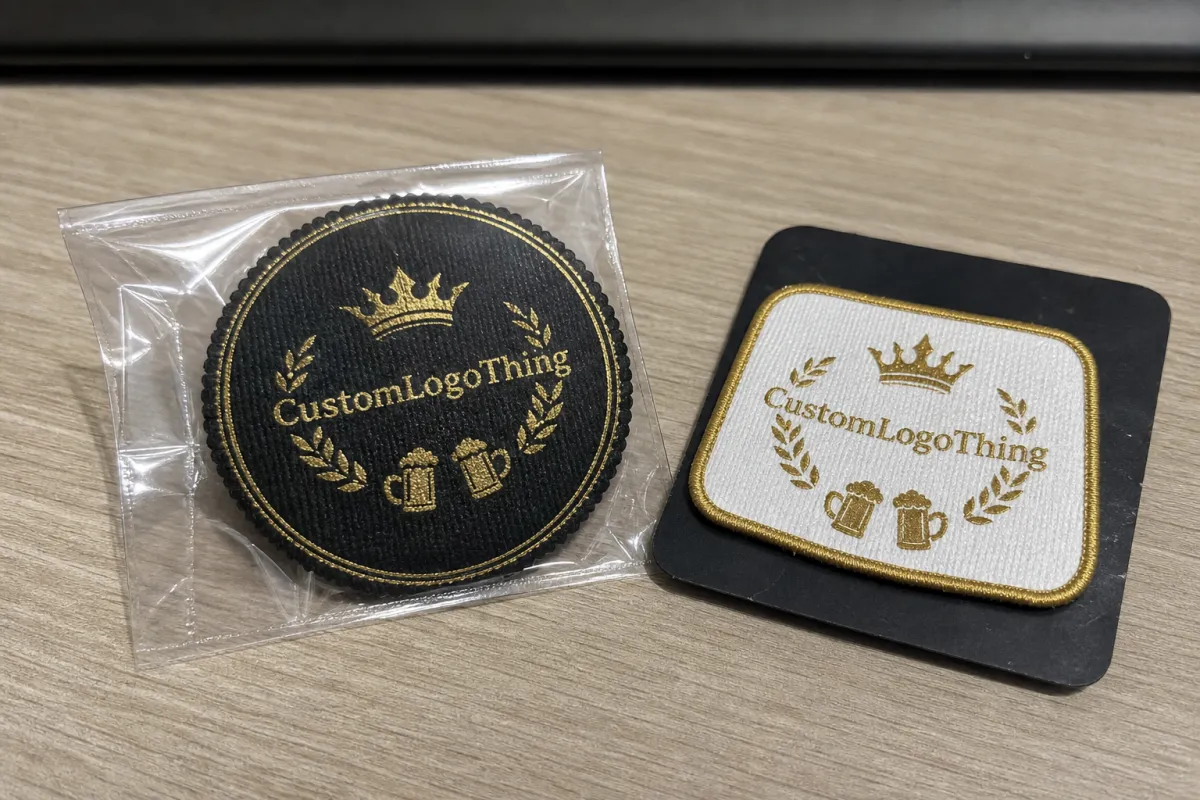
The seasonal lager is ready. The taproom team wants hats and work shirts on the floor in three weeks. Suddenly, a small patch decision carries more weight than expected.
Buyers searching for a Logo Patches Supplier Quote for beer brands usually need three things at once: quick pricing, clear construction options, and enough production detail to avoid ugly surprises after proof approval. A patch may look simple on a quote sheet, but material choice, backing, border, color tolerance, and attachment method all affect the final cost and performance.
A brewery patch is not just decoration. It identifies staff, upgrades a plain cap into sellable merchandise, gives distributor apparel a more finished look, and makes a limited-release campaign feel planned rather than improvised. One strong patch design can be used across trucker hats, beanies, jackets, aprons, canvas totes, cooler bags, workwear, beer club gifts, and festival merch.
The common mistake is asking for “a patch price” before defining the patch. A serious quote should state the patch type, finished size, backing, border, color count, attachment method, sampling requirement, packaging, shipping terms, and production lead time. Without those details, two supplier quotes may appear comparable while offering very different durability, appearance, and landed cost.
Practical rule: a patch sewn onto staff apparel that gets washed every week should not be quoted the same way as a loose collector patch sold at a release party.
For an accurate quote, the supplier needs enough information to engineer the product, not just decorate it. Artwork, garment use, deadline, quantity, and budget range all matter. Better input produces better pricing.
Patch Styles That Fit Brewery Apparel and Taproom Merch
Beer brands do not share one visual language. Some lean into old-world crests, barley illustrations, and tavern-style marks. Others use loud can-label graphics, mascots, neon color palettes, or stripped-down wordmarks. The patch material should fit the design and the garment it will live on.
Embroidered patches are the familiar textured option. They work well for heritage breweries, rugged staff shirts, trucker hats, denim jackets, and workwear. Embroidery gives dimension and a tactile finish, but tiny lettering can fill in because thread has physical thickness. Letters under about 4 mm high often need simplification, especially on dense twill backgrounds.
Woven patches are flatter and sharper. They are usually the better fit for small type, thin outlines, brewery crests, hop illustrations, badge artwork, and detailed can-label elements. The design is woven with finer threads, so it can hold more line detail than standard embroidery. The tradeoff: less raised texture.
PVC and rubber patches suit modern beer brands that want waterproof, wipe-clean, outdoor-friendly branding. They perform well on cooler bags, caps, jackets, and festival merch exposed to rain, spilled beer, or repeated handling. Raised and recessed molded levels can create strong contrast, although very fine line work still has limits.
Faux leather and genuine leather patches are common on premium caps, rustic apparel, and barrel-aged release merch. A debossed, stamped, or laser-engraved logo can look sharp on brown, tan, black, or gray surfaces. Genuine leather varies in tone and grain. Some brands want that character; others are better served by faux leather for tighter consistency.
Chenille patches are bold and nostalgic. They fit varsity jackets, anniversary drops, brewery club programs, and large statement pieces. They are not the right tool for intricate label art or tiny type.
| Patch Type | Best Use | Detail Level | Typical Cost Range* |
|---|---|---|---|
| Embroidered | Work shirts, hats, jackets | Medium | $0.85–$2.20 per piece at 500 pcs |
| Woven | Detailed crests, small text, badges | High | $0.70–$1.90 per piece at 500 pcs |
| PVC | Outdoor merch, cooler bags, modern caps | Medium to high | $1.60–$3.80 per piece at 500 pcs |
| Leather | Premium hats, rustic retail apparel | Medium | $1.25–$3.50 per piece at 500 pcs |
| Chenille | Varsity jackets, clubs, large pieces | Low to medium | $2.20–$5.50 per piece at 250 pcs |
*Ranges are planning figures, not fixed pricing. Final cost depends on size, quantity, backing, border, artwork complexity, sampling, and freight.
The best material is rarely the trendiest one. It is the one that matches the garment, wash expectations, artwork detail, brand personality, and attachment method. A useful quote should make those tradeoffs visible before the buyer approves production.
Artwork, Size, Color, and Backing Specifications to Confirm
Artwork quality drives patch quality. Vector files such as AI, EPS, SVG, or editable PDF are preferred because they allow the production team to scale the logo, separate colors, adjust outlines, and prepare stitch, weave, print, or mold files cleanly. A high-resolution PNG or JPG may be enough for initial review, but bitmap artwork often needs redrawing before production. That can add cost and one to three business days, depending on complexity.
Common beer brand patch sizes are fairly predictable. Cap front patches often land around 2 to 2.5 inches wide, depending on the hat panel and curve. Work shirt and jacket chest patches commonly run 3 to 4 inches. Sleeve, back, club, or event patches may be larger, sometimes 5 to 10 inches, but weight and flexibility should be checked before committing.
Shape changes the quote. Circles, shields, arches, ovals, rectangles, keg badges, hop cones, state outlines, and can-label-inspired silhouettes all affect cutting, border handling, and perceived value. A simple round patch with a merrowed border is usually easier to price than a die-cut hop vine with narrow tips.
Border selection should match the design. Merrowed borders give a classic raised edge on circles, ovals, squares, and simple shapes. Laser-cut or hot-cut borders handle custom silhouettes and tight geometry. Stitched borders are common on woven patches. Molded raised edges are used on PVC designs to define the shape and protect the face.
Backing deserves more scrutiny than it usually gets. Sew-on backing gives the best long-term durability, especially for staff garments that are laundered regularly. Heat-seal or iron-on backing speeds application, but heat settings must match the garment fabric and press equipment. Adhesive backing is useful for temporary placement, samples, or event use; it is not a permanent attachment method. Hook-and-loop backing works for removable patches on jackets, bags, or field-style uniforms. No backing is also reasonable if the decorator will sew the patches directly.
Color matching needs an early conversation. Label colors on paper, ink on aluminum cans, polyester thread, molded PVC, printed fabric, and leather engraving all reproduce differently. If a brewery has strict brand standards, provide Pantone references and expect a practical tolerance. Thread charts and PVC color systems can get close, but exact label-to-thread matches are not always possible.
Small design changes may be necessary. Fine barley stalks, thin hop vines, distressed lettering, and tiny “established” dates can look excellent on a can label and collapse on a 2-inch patch. A good supplier should flag those risks before production, not after the first sample comes back muddy.
Pricing, MOQ, and Unit Cost Factors for Beer Brand Patches
Patch pricing is driven by construction, finished size, quantity, material complexity, backing, border style, number of artwork versions, sampling needs, and shipping destination. A 2.25-inch woven cap patch at 1,000 pieces will price very differently from a 4-inch molded PVC patch with hook-and-loop backing and two colorways.
Embroidered and woven patches are often cost-effective for mid-size merchandise runs. PVC, leather, chenille, and highly custom shapes may carry higher setup, mold, tooling, or material costs. That does not make them poor choices. It means the buyer should understand the cost structure before comparing options.
MOQ should be clarified in plain language. Ask whether the minimum applies per design, per size, per colorway, or per backing style. If a brewery orders one logo in three thread colorways and two backing styles, that may be treated as six production versions. The effective unit cost can climb quickly.
Larger orders usually reduce unit cost because setup, digitizing, loom preparation, mold work, color testing, and machine changeover are spread across more pieces. Requesting price tiers is practical. Ask for 100, 250, 500, 1,000, and 2,500 pieces if those quantities are realistic for your program. A purchasing team can then compare actual price breaks instead of guessing.
- Artwork cleanup: often quoted separately if the logo needs redrawing, vector conversion, or simplification.
- Physical sample fees: common for first-time PVC, leather, chenille, or complex woven designs.
- Rush charges: possible if production capacity, material availability, and shipping method allow it.
- Retail prep: individual polybags, header cards, barcode labels, carton labels, and count-specific packing add handling cost.
- Freight and duties: international delivery can change the final landed cost, especially on heavier PVC or leather patches.
For a realistic Logo Patches Supplier Quote for beer brands, share the target budget and intended application. If the patch is going on a $28 retail hat, a premium leather or PVC build may make sense. If it is going on a high-volume festival giveaway, a simpler woven or embroidered badge may be the sharper buy.
Packaging also matters once patches become finished merchandise. Buyers planning kits, distributor shipments, or parcel delivery can review transit testing resources from ISTA. Packaging does not need to be overbuilt, but it does need to protect the goods and preserve counts through handling.
Process and Timeline from Quote Request to Finished Patches
A clean patch order follows a defined path: submit artwork and specifications, receive supplier review, confirm quote, approve digital proof, approve a pre-production sample if required, begin bulk production, complete quality control, pack, and ship. Skip steps, and the problems usually show up later.
Quote turnaround is faster when the buyer provides the basics upfront: size, quantity, patch type, backing, attachment method, delivery ZIP code or country, deadline, and a clean artwork file. If the supplier has to ask five follow-up questions before pricing, the project loses time before it starts.
Digital proofing is the first real control point. The proof should show patch dimensions, colors, border type, backing, and any artwork changes made for production. Embroidery may require thicker strokes and simplified small text. Woven patches may need thread color substitutions. PVC designs may need minimum wall thickness between molded color areas. Leather patches may need contrast adjustments so the engraving reads clearly.
A physical sample adds time, but it reduces risk. For a first-time design, new retail program, strict brand color, or patch going onto expensive garments, sampling is often worth it. Depending on material and complexity, a sample may add roughly 5 to 12 business days before bulk production begins. That range is not universal, but it is a useful planning window for many custom patch projects.
Bulk lead time varies. Simple embroidered or woven patches may move faster than molded PVC, leather, chenille, or orders with several versions. Many standard orders fall around 10 to 20 business days after proof approval, while complex or sampled projects may require more time. Shipping method matters too; air freight is faster but more expensive, and ground transit should be checked against the actual delivery address.
Rush orders are possible in some cases. A good supplier should first check artwork readiness, material availability, current production capacity, decoration deadline, and shipping method before promising a date. A precise answer is more useful than a cheerful one. “We can do it if you approve by noon and choose sew-on backing” beats a vague promise that collapses three days before a beer release.
Build internal approval time into the schedule. Marketing, merch, taproom operations, and purchasing may all need to see the proof. Stalled proof approval is one of the most common reasons apparel launch dates slip, and it has nothing to do with the sewing machine, press, mold, or loom.
Quality Checks That Matter for Brewery Staffwear and Retail
Patch quality should be judged by more than the front appearance. Check stitch density, edge finish, backing adhesion, color consistency, shape accuracy, surface cleanliness, flexibility, and packaging condition. A patch can look acceptable in a small photo and still fail on a hat curve or after repeated washing.
For embroidered patches, look for consistent thread tension, clean small lettering, no loose loops, and proper coverage where the base fabric should not show through unless it is intentionally part of the design. Dense fill areas should not pucker badly. Borders should sit evenly around the shape.
For woven patches, the key points are crisp line work, legible small type, smooth edges, and faithful reproduction of detailed label elements such as grain, hops, barrels, mascots, or badge borders. Woven patches are often chosen for detail, so fuzzy edges defeat the purpose.
For PVC patches, inspect molded depth, raised and recessed areas, color fill edges, flexibility, odor, and how the patch sits on curved items like caps. A patch that is too stiff for a cap front may lift at the edges or feel uncomfortable.
For leather patches, review engraving depth, debossing clarity, edge finishing, thickness consistency, and color variation. Natural leather is not plastic; some variation is normal. If the brewery wants a very uniform appearance, faux leather may be easier to control.
Wash and wear expectations should be defined before production. Staff shirts and aprons need stronger attachment and laundering performance than collector patches sold loose at a festival table. If garments will be commercially laundered, say so early. Heat, chemicals, and repeated drying cycles can be harder on patches than normal home washing.
Set acceptable tolerances before bulk production. For many patch orders, a small size variation of around ±1 to 2 mm may be realistic, depending on construction. Color tolerance depends on material. Placement tolerance matters if the supplier is applying patches to finished garments, especially on caps where panel seams and curves affect alignment.
For retail patches, packaging condition is part of quality. Header cards should align, barcodes should scan, polybags should not trap lint or loose thread, and carton labels should match the purchase order. Counting errors are dull until a taproom launch is short by 40 pieces.
How Custom Logo Things Supports Beer Patch Orders
Custom Logo Things helps buyers turn artwork into production-ready branded products without making the process feel mysterious. For beer patch orders, that means reviewing the logo, asking how the patch will be used, and translating the design into realistic specifications.
Material selection is a practical conversation. Embroidered, woven, PVC, leather, chenille, and printed patch options each have strengths. The right recommendation depends on garment type, artwork detail, budget, washing expectations, and whether the finished item is for staff uniforms, retail sales, distributor apparel, beer club gifts, or release-event promotion.
Quote support includes checking file quality, flagging small artwork details that may need adjustment, confirming size and backing, and offering quantity breaks. That makes the purchasing decision cleaner. A buyer should be able to compare two or three constructions and understand why one costs more than another.
Brewery buyers often need related branded pieces too: hang tags, neck labels, stickers, taproom merch packaging, promotional labels, or retail presentation materials. Coordinating these items can help the brand feel consistent from the patch on the hat to the sticker on the bag. For broader branded product examples, the Case Studies page provides useful context.
The focus is production clarity. Clear proofs, confirmed specifications, realistic timelines, and practical communication reduce the risk of receiving patches that look good on screen but fail on the garment.
Custom Logo Things can support first-time merchandise runs and reorder programs. Keeping patch specifications consistent is especially useful for breweries that restock hats, work shirts, aprons, and event apparel several times across a selling season. Reorders move faster when the approved proof, thread colors, backing, dimensions, and packaging instructions are saved.
Next Steps Before You Request Your Patch Quote
Before requesting pricing, gather the information that affects production. A complete request saves time and usually produces a more useful quote on the first pass.
- Logo artwork, preferably AI, EPS, SVG, or editable PDF
- Desired patch size or target garment location
- Estimated quantity and possible reorder volume
- Preferred material, if known
- Backing type: sew-on, heat-seal, adhesive, hook-and-loop, or none
- Garment or product application: hats, jackets, aprons, shirts, bags, uniforms, or loose retail patches
- Delivery deadline and shipping address
- Retail packaging instructions, such as polybags, labels, header cards, or carton markings
Photos or links to the garments help. Cap panels, jacket fabrics, apron weights, and bag surfaces all influence backing and attachment recommendations. A stiff PVC patch that works beautifully on a flat cooler bag may not be the best choice for a curved low-profile cap.
Define the use case. Staff uniforms, retail merch, festival giveaways, beer club member gifts, distributor apparel, and limited-release promotions do not always deserve the same patch build. A premium barrel-aged release hat may justify leather. A high-volume taproom giveaway may call for a simpler woven badge.
If the budget is open, request at least two construction options. Woven versus embroidered is a useful comparison for detailed artwork. PVC versus leather can help buyers decide between a modern outdoor feel and a warmer premium cap finish. Printed patches may also be worth discussing for full-color artwork that does not translate well into thread or molded material.
Ask for proof details in writing: finished dimensions, colors, border, backing, quantity, production lead time, shipping method, and whether the quote includes setup or sampling. If sustainability documentation matters for associated tags or packaging, ask early; organizations such as FSC provide recognized chain-of-custody standards for paper-based materials, though patch materials themselves require separate review.
Save the approved proof and production specifications. The next reorder can be quoted faster, matched more closely, and scheduled with fewer questions. That record should include patch type, dimensions, thread or material colors, backing, border, packaging, and any special notes about garment application.
The fastest path to a dependable Logo Patches Supplier Quote for beer brands is simple: send complete artwork and specs, define the intended apparel or retail use, and ask the supplier to confirm the most durable and cost-effective build before production begins.
FAQ
What should I include when requesting a custom brewery logo patch quote?
Send vector artwork if available, plus patch size, quantity, preferred material, backing type, garment application, delivery location, and deadline. If you are unsure about material, describe the intended use: hats, aprons, jackets, retail merch, staff uniforms, distributor apparel, or loose patches. Ask for quantity price breaks and confirm whether setup, proofing, sampling, packaging, and shipping are included.
Which patch type is best for beer brand hats and taproom apparel?
Embroidered patches work well for classic brewery branding and bold logos. Woven patches are better for small text, detailed crests, and label-style artwork. PVC patches suit outdoor, waterproof, or modern merch, while leather patches are popular for premium caps and rustic brand styles.
What is the typical MOQ for logo patches for beer brands?
MOQ depends on patch type, size, backing, and whether the design needs special tooling or setup. Ask whether the MOQ applies per design, per colorway, per size, or per backing style. Request price tiers at several quantities so you can compare the real unit cost before placing the order.
How long does production take after approving a beer brand patch proof?
Lead time varies by construction, complexity, sampling needs, and production capacity. Many standard patch orders fall around 10 to 20 business days after proof approval, while physical sampling may add roughly 5 to 12 business days. Rush timelines should be confirmed only after the supplier reviews artwork, materials, quantity, and shipping requirements.
Can one logo patch design be used on hats, shirts, jackets, and bags?
Yes, but the best size, backing, and attachment method may change by product. Cap patches need careful sizing and flexibility for curved surfaces, while jackets and bags can usually handle larger or heavier patches. If the same design will be used across multiple items, tell the supplier early so the patch can be built for the broadest practical application.


