Get Matte Zipper Bags Unit Bulk Reorder Plan That Works
Matte Zipper Bags Sell Better When Reorders Are Planned
Running out of bags usually costs more than the bags. That is the annoying packaging reality.
Buyers who want to Get Matte Zipper Bags Unit bulk reorder plan details right need more than a good-looking pouch. They need locked specs, predictable unit cost, realistic lead times, and a reorder trigger that does not depend on someone remembering inventory at 4:47 p.m. on a Friday.
Emergency freight, rushed print approvals, mismatched batches, and backordered inventory are not signs of “moving fast.” They are expensive proof that nobody built a refill plan. If a product sells 3,000 units a month and production plus freight takes 25 to 40 days, waiting until 800 bags are left is not lean inventory. It is gambling with shelf space.
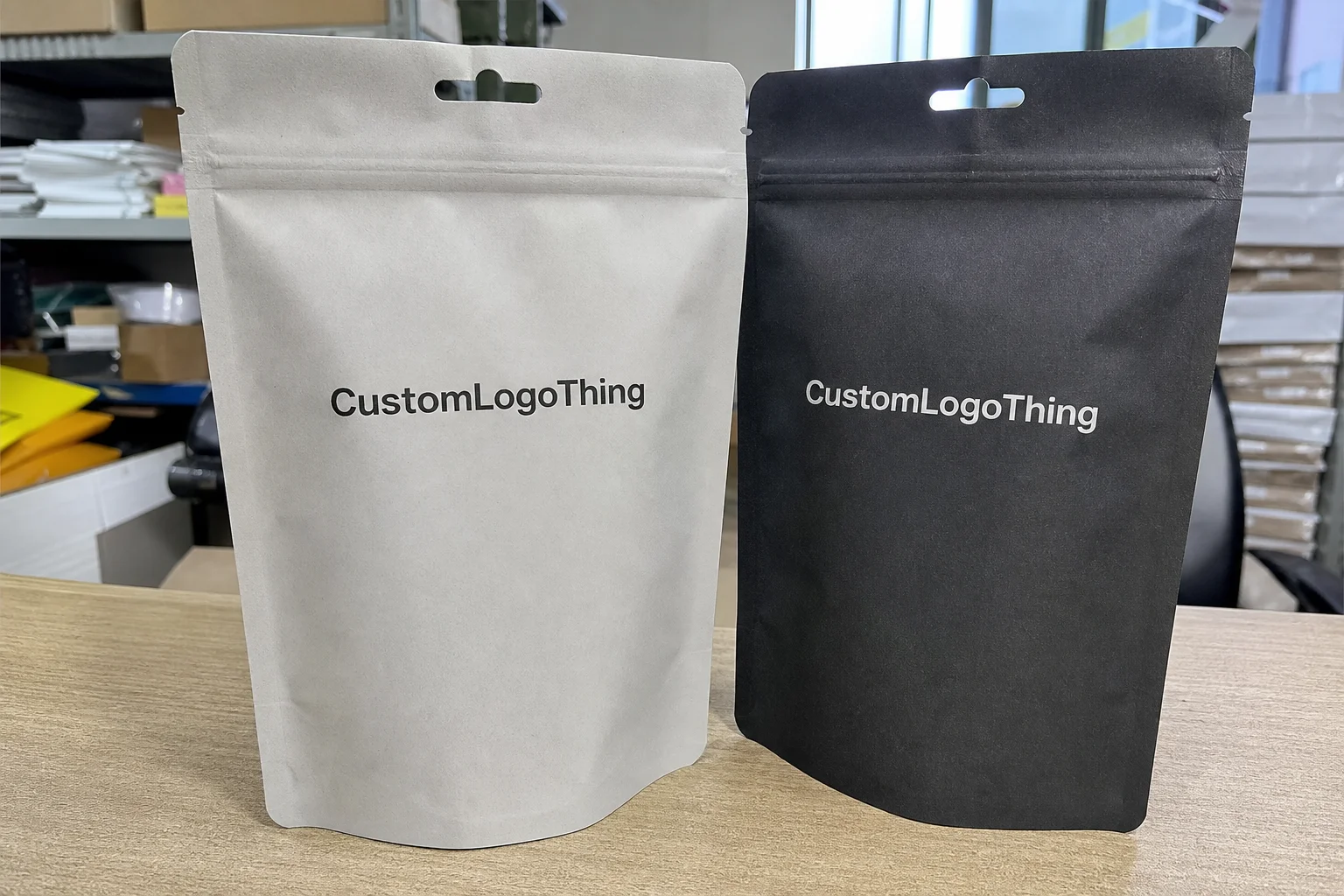
Matte Zipper Bags are popular because they solve several packaging problems at once. They give food, supplements, beauty products, pet treats, accessories, and promotional kits a more retail-ready look than clear economy bags. The zipper adds resealable convenience. The print area gives better brand control. The matte surface cuts glare, photographs better for ecommerce, and gives logos a softer finish.
Matte is not just decoration. A glossy pouch can look cheap under harsh warehouse lighting or product photography lamps. A matte pouch tends to hide light handling marks better and makes darker brand colors feel less plastic. Not always, of course. Bad artwork still looks bad on nice film. Packaging is not magic. Shocking, I know.
The practical goal is simple: spec the bag once, price it by useful quantity breaks, test it with the actual product, then reorder before the panic zone. Custom Logo Things can help organize bag style, quantity tiers, artwork details, and reorder timing through our Wholesale Programs.
Matte Zipper Bag Product Details Buyers Should Lock In First
Before price shopping, lock the physical bag. A supplier cannot quote cleanly from “something like a black matte pouch, maybe medium size.” That sentence creates five versions of the same quote and usually one invoice surprise.
The main styles are straightforward:
- Flat zipper bags: Good for samples, lightweight kits, apparel accessories, stickers, hardware parts, and flat promotional items.
- Stand-up zipper pouches: Better for retail shelves because the bottom gusset lets the bag stand when filled correctly.
- Three-side seal zipper bags: Useful for controlled fill lines, single-serve products, and a clean rectangular presentation.
- Bottom gusset pouches: Common for snacks, powders, coffee, pet treats, and higher fill volumes.
- Side gusset bags: Better for bulkier contents, though the front branding area needs careful layout.
- Hang-hole retail bags: Built for pegboard displays, often using round holes, sombrero holes, or euro slots.
Use case matters more than mood board aesthetics. Stand-up pouches work well for shelf display. Flat bags work for sample packs or lightweight kits. Gusseted pouches handle higher fill volume. Hang-hole bags help small items sell in retail lanes where shelf space is tight and hooks do the work.
Closure choice affects cost, filling, and customer experience. A standard press-to-close zipper is fine for many snacks, accessories, and dry goods. A stronger resealable zipper may be better for heavier powders, bulky contents, or bags that customers open often. Child-resistant zipper systems may be required for certain regulated products, depending on category and location. Tear notches give customers a cleaner first opening, usually placed below the top seal with enough room to protect seal strength.
Finish options go beyond basic matte. Buyers can choose full matte, spot gloss over matte, soft-touch matte, frosted matte, or matte bags with clear window panels. Spot gloss can make a logo or product name pop, but it adds setup and finishing cost. Soft-touch feels upscale, yet it may show oil from fingers more easily on dark bags. Pretty has consequences.
Material structure should match the product. PE can work for lower-cost flexible bags and simple non-barrier needs. PET/PE gives a stronger print surface and better dimensional stability. Metallized film or aluminum barrier layers help with odor, oxygen, moisture, and light protection. Kraft/matte hybrid structures create a natural look often used for tea, granola, pet treats, and wellness products.
Buyer rule: choose material based on product behavior first, appearance second. Product weight, oil content, odor, moisture sensitivity, sharp edges, and target shelf life matter more than the Pinterest board.
Also confirm whether the bag will be filled by hand, semi-automatic equipment, or a production line. Hand filling can tolerate more variation. Machines usually cannot. Zipper placement, opening width, seal area, and pouch stiffness can all affect fill speed and waste. A bag that looks perfect in a mockup but fights the filling process is not a bargain.
Print, Size, and Barrier Specifications That Affect Performance
Clean specs prevent vague quotes. Vague quotes create vague invoices. Nobody enjoys that little surprise.
Before pricing, finalize the core specifications: bag style, width, height, gusset size, thickness, material structure, zipper type, print colors, finish, window shape, hang hole, tear notch, and carton packing. If those details stay fuzzy, unit pricing will stay fuzzy too.
Size planning starts with the fill. Provide product fill weight, product dimensions for non-loose items, and desired headspace. A 4 oz powder and a 4 oz hardware kit do not behave the same in a pouch. Powders settle. Cookies break. Sharp parts poke. Pet treats leave oil. The bag needs to fit the real product, not the spreadsheet name.
For retail pouches, buyers often test two or three sizes before committing. A common mistake is choosing a bag that looks great empty but collapses or bulges after filling. If the pouch must stand upright, test it with actual product weight and fill height. A bottom gusset that is too narrow can turn a stand-up pouch into a sad little packaging sled.
Thickness ranges vary by material, but the buying logic is simple. Lighter structures can work for samples, soft goods, and short-term promotions. Mid-range films suit many retail snacks, dry goods, powders, and accessories. Heavier or higher-barrier structures make sense for dense, sharp, oily, aromatic, light-sensitive, or higher-value products.
| Specification Area | Typical Choice | Best Fit | Buyer Watch-Out |
|---|---|---|---|
| Print method | Digital print | Lower-volume, multi-SKU, test launches | Higher unit cost at scale |
| Print method | Gravure or plate-based print | Larger bulk runs and repeat orders | Setup cost and higher MOQ |
| Finish | Standard matte | Most retail and ecommerce products | Can mute bright colors slightly |
| Barrier | PET/PE, metallized film, or high-barrier laminate | Dry goods, supplements, pet treats, coffee, odor-sensitive products | Higher cost than basic PE |
| Retail feature | Hang hole or euro slot | Pegboard retail and small accessories | Needs enough top seal area for strength |
Artwork should be production-ready before the order gets serious. Send a vector logo, dieline-fit artwork, CMYK or Pantone references, bleed, safe zones, barcode placement, nutrition panel space, ingredients, warnings, and regulatory copy if relevant. Matte surfaces can shift perceived color, so printed proofs and Pantone targets are more useful than screen guesses.
Barcodes deserve more respect than they usually get. A barcode placed too close to a fold, gusset, zipper, or curved pouch edge can fail scans. High contrast helps. So does leaving enough quiet zone around the code. Retail packaging that scans poorly creates receiving delays, checkout problems, and a very boring chain of emails.
Quality control should cover zipper alignment, seal strength, color consistency, scratch resistance, opacity, odor control, barcode scan checks, and carton count accuracy. For shipping durability, ISTA test procedures can be useful reference points for transit performance; see ISTA for packaging test standards and protocols.
MOQ, Unit Cost, and Bulk Pricing Tradeoffs
Matte zipper bag pricing depends on size, material, thickness, print coverage, number of colors, order quantity, production method, zipper type, barrier requirements, finishing, and packing method. Anyone giving one universal price without specs is either guessing or selling you a headache.
Digital custom runs may start at lower quantities for simpler projects, especially if the structure uses standard material and the artwork is not complicated. Fully custom printed film, specialty finishes, high-barrier layers, or custom shapes usually need higher minimums because setup costs must be spread across enough bags to make the job rational.
Small runs have higher unit costs because proofing, setup, machine time, and handling are spread across fewer units. Larger runs reduce unit cost, but they tie up more cash and storage. Buying too little is expensive. Buying too much can become a slow-motion accounting problem, especially if ingredients, compliance copy, formulas, or branding may change within 3 to 9 months.
Realistic price ranges vary too widely for one clean number. A small flat pouch with simple printing is not in the same cost lane as a high-barrier stand-up pouch with soft-touch matte, a clear window, and multiple artwork versions. For planning, buyers should compare the unit cost curve, not chase a random “cheap bag” benchmark from a different product category.
| Order Type | Typical Use | Unit Cost Behavior | Best Buying Move |
|---|---|---|---|
| Low-volume custom run | Launches, sampling, small SKU tests | Higher per bag due to setup and proofing | Use for validation, not long-term cost control |
| Mid-volume bulk run | Growing ecommerce or retail replenishment | Better unit cost without extreme inventory risk | Compare against 60 to 120 days of usage |
| Large repeat run | Stable SKUs with predictable demand | Lowest unit cost, higher cash and storage commitment | Use only with locked artwork and stable demand |
Common cost adders include metallic inks, spot UV, soft-touch coating, clear windows, hang holes, specialty zipper systems, high-barrier film, custom shapes, and multi-SKU split runs. Splitting 10,000 bags across five artwork versions is not the same as ordering 10,000 of one design. Setup and changeovers matter.
To get useful bulk reorder pricing, ask for three quantity tiers. For example: MOQ, a mid-volume quantity, and a larger bulk quantity. That lets you see the unit cost curve instead of pretending the lowest total invoice is automatically the smartest buy.
A smart bulk buy balances current demand, storage space, shelf-life requirements, and price breaks. If you use 2,500 bags per month and lead time is 30 business days plus freight, holding 60 to 90 days of supply may be reasonable. If product labeling may change next quarter, a six-month packaging buy may be reckless. Facts first. Then discounts.
Also ask how cartons are packed. Carton count, pallet configuration, and storage conditions affect receiving and warehouse labor. Matte finishes can scuff if packed carelessly or dragged around during handling. The carton is not glamorous, but it is part of the cost picture.
Process, Lead Time, and Production Steps From Quote to Delivery
The standard process is not complicated. Submit specs. Receive a quote. Confirm material and size. Approve the dieline. Upload artwork. Review the digital proof. Approve a sample if required. Start production. Complete quality control. Pack cartons. Ship. Confirm delivery.
Skipping steps creates the mess.
Timeline depends on stock material availability, custom film requirements, artwork readiness, proof revision speed, order quantity, print method, special finishing, and destination. A simple repeat order on approved specs may move faster than a new custom high-barrier pouch with spot gloss, a window, and five SKUs. That should surprise nobody, yet somehow it still does.
Sampling deserves its own line in the schedule. Samples are useful for new products, new sizes, premium launches, or anything with uncertain fill behavior. A sample round can add days or weeks depending on complexity and shipping. Skipping samples may be acceptable for repeat orders with locked specs, but it is a risk decision, not a virtue.
Proof approval discipline matters. Every day spent debating whether the logo should move two millimeters is still a day. Production does not begin because someone had a nice feeling in a meeting. Approved artwork starts the clock.
Repeat production is cleaner because the factory is not rebuilding the order from scratch. The dieline, print file, material structure, zipper type, carton count, and finish should already be documented. That is the operational value behind a reorder plan. Less rework. Fewer assumptions. Faster approvals.
Set a reorder trigger before inventory reaches the panic zone. Use this formula as a starting point:
- Monthly usage: average bags used over the last 3 months.
- Production lead time: quote-to-finished-goods timing after proof approval.
- Freight time: shipping, customs if applicable, and receiving.
- Safety buffer: usually 2 to 4 weeks for seasonal spikes, retail promos, supplier delays, or internal receiving delays.
If you use 4,000 bags per month and production plus freight takes 6 weeks, your reorder trigger should be well above 4,000 units. Add a safety buffer and the trigger may land around 7,000 to 9,000 bags depending on risk tolerance. Freight timing should always be planned separately from production timing, especially for bulky cartons or international delivery.
Seasonality changes the math. A subscription box deadline, holiday retail push, new flavor launch, or marketplace promotion can drain packaging faster than a normal monthly average. If sales history is thin, build the first reorder plan around conservative usage assumptions and adjust after two or three cycles. Forecasts get better when they stop pretending to be psychic.
Quality Controls That Make Bulk Reorders Match the First Run
Consistency matters more on reorders than first orders. Customers notice when the second batch looks duller, seals weaker, or colors off. Retail buyers notice faster. They are trained to spot packaging drift because inconsistent packaging makes shelves look messy.
Master specs keep everyone honest. The approved dieline, artwork file, material structure, finish, thickness, zipper type, seal width, carton count, and color reference should be documented and reused. If your reorder depends on an old email thread and someone’s memory, enjoy the archaeology project.
Color control needs attention because matte finishes can mute colors. Pantone references, CMYK values, print proofs, and retained production samples help keep later batches close to the approved look. Screens vary. Office lighting varies. A physical approved sample is still one of the most practical QC tools in packaging.
Functional testing should include zipper open-close feel, seal strength, drop resistance, fill compatibility, odor transfer, leakage risk, and barcode scanning. For food or product-contact packaging, buyers should also ask about relevant material compliance and documentation. The exact requirements depend on the product and market, so packaging compliance should never be treated as a copy-paste job.
For paper-based or kraft hybrid options, FSC sourcing may matter to certain buyers and retail programs. You can review certification basics at FSC. Sustainability claims should match actual materials and documentation. A leaf icon on the pouch is not a compliance program.
Batch records and retained samples help compare future reorders. Keep one approved production sample in a labeled file with the order number, date received, material structure, and finish. Screenshots are not a quality standard. They are evidence that a screen existed.
Receiving checks should be boring and consistent. Count cartons, confirm carton labels, inspect random bags from multiple cartons, check print orientation, open and close zippers, scan barcodes, and compare the batch against the retained sample. If the first time anyone inspects the shipment is during production filling, the problem is already late.
Custom Logo Things is practical about this. Not magical. The advantage is organized production management, clear spec documentation, factory coordination, and repeat-order discipline. Buyers with multiple SKUs should standardize bag sizes and material structures where possible. One shared 6 x 9 inch pouch across three flavors is easier to buy and reorder than three nearly identical sizes that each need separate setup and inventory tracking.
How to Get Matte Zipper Bags Unit Bulk Reorder Plan Details Right
Start with a pre-quote checklist. Choose the bag style, measure the product fill, confirm quantity per SKU, decide print coverage, list finish preferences, identify barrier needs, and set the delivery deadline. That gives the quote a backbone.
Prepare artwork early. Packaging delays often start with missing art files, not factory drama. Send the vector logo, brand colors, required copy, barcode, icons, ingredients, warnings, compliance text, and any retail labeling requirements. If you have a barcode, test its size and placement before bulk production. A beautiful pouch with a barcode that will not scan is just expensive decoration.
Request tiered pricing, not just one number. Ask for MOQ, mid-volume, and larger bulk pricing so the reorder plan is based on actual unit cost differences. If the jump from 5,000 to 10,000 bags saves only a tiny amount, storage may not be worth it. If the unit cost drops sharply at 10,000 and you use 3,000 per month, the larger run may make sense.
Set reorder triggers with real math. Calculate monthly usage, add production lead time, include freight time, and keep a safety buffer for seasonal spikes or retail promotions. Buyers who sell through retailers should add more buffer before major resets, holiday pushes, or subscription box deadlines.
Standardize wherever possible. Shared bag sizes across related SKUs, one material structure, and a consistent zipper style can reduce purchasing friction. It can also reduce carton confusion during receiving. If your warehouse team has to identify 12 pouch sizes that differ by half an inch, somebody is eventually going to pick the wrong case.
Be honest about what is not stable yet. If the formula, serving size, compliance copy, logo, or retail requirements may change soon, avoid overbuying. Unit cost savings disappear fast when 20,000 bags become obsolete inventory. The cheapest pouch is not cheap if it ends up in a corner with a sticky note that says “old version.”
If you still have spec questions, the Custom Logo Things FAQ covers common order details, artwork requirements, and production basics. For a quote, send specs, artwork, target quantity, number of SKUs, and delivery location. The best Get Matte Zipper bags unit bulk reorder plan is built around real production facts, not wishful thinking.
FAQ
How do I get matte zipper bags with a unit bulk reorder plan?
Start with fixed specs: bag size, material, finish, zipper type, print method, and quantity per SKU. Then request tiered pricing for at least three order volumes so you can compare unit cost against storage, cash flow, and expected usage. A practical plan also needs a reorder trigger based on monthly usage, production lead time, freight time, and a safety buffer.
What MOQ should I expect for custom matte zipper bags?
MOQ depends on print method, material structure, bag size, and whether you need custom film or standard materials. Lower-volume digital orders may be possible for simpler projects, while larger custom printed runs usually require higher minimums. The practical move is to quote MOQ plus two larger tiers to see where the unit cost starts making sense.
What affects the unit cost of matte zipper bags the most?
Quantity, bag size, film thickness, barrier material, print coverage, finish type, and special features are the biggest drivers. Spot gloss, windows, metallic ink, soft-touch coating, and specialty zippers usually add cost. Larger orders reduce unit cost, but only if you can use the inventory before designs, regulations, or demand changes.
How long does matte zipper bag production take for bulk orders?
Timeline depends on artwork readiness, sampling needs, material availability, order volume, print method, special finishing, and shipping location. Repeat orders are usually faster because the dieline, artwork, and material specs are already approved. Plan production and freight separately because a finished order still has to move through shipping, customs if applicable, and receiving.
Can I reorder matte zipper bags and keep the same color and finish?
Yes, if the approved artwork, material structure, finish, and color references are documented and reused. Retained production samples help compare future batches and catch finish or color drift. Matte surfaces can mute colors, so proof approval and Pantone or CMYK references matter more than guessing from a screen.