Most graffiti custom stickers do not fail because the art is weak. They fail because someone chose the wrong material, skipped lamination, ignored the surface, or uploaded a soft JPEG and hoped production would somehow sharpen it.
Hope is not a production spec. A good street-style sticker has to print cleanly, peel without fighting the user, stick to the intended surface, survive handling, and still look sharp after being tossed into a mailer, slapped on a laptop, or used as part of branded packaging. The design can be wild. The order specs cannot be.
Why Graffiti Custom Stickers Look Simple but Fail Fast
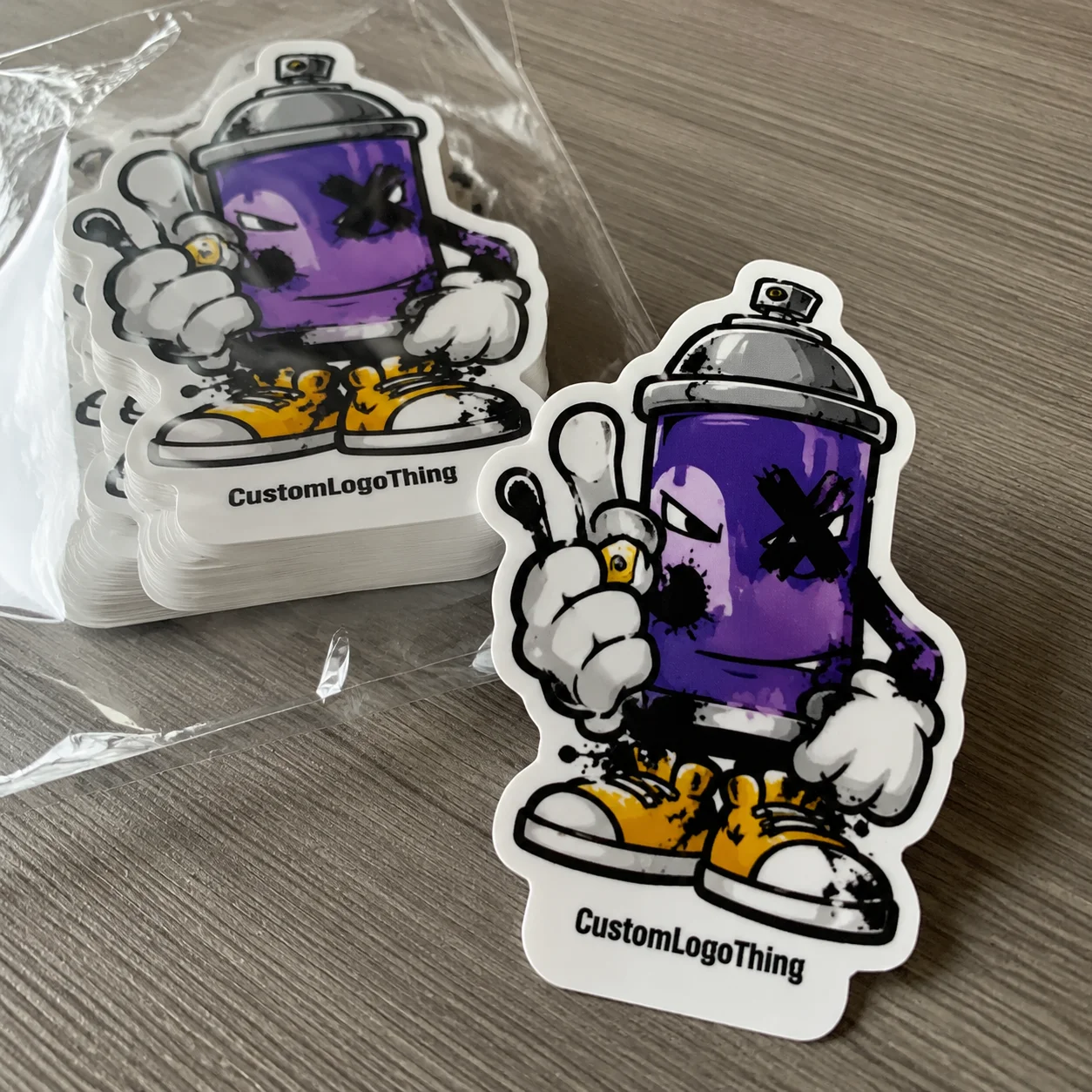
Graffiti-inspired sticker design borrows from street art: bold outlines, handstyle lettering, throw-up shapes, drips, spray textures, bubble forms, shadows, tags, and loud color contrast. That does not mean every sticker needs to imitate tagging culture or turn a brand into a fake alleyway. That is usually where the work gets cheesy. The stronger approach is to borrow the energy: speed, contrast, movement, attitude, and instant recognition.
For commercial use, graffiti custom stickers can work for streetwear packaging, skate brands, record labels, artist merch, event drops, laptop decals, shipping box inserts, cannabis accessories where legal, and local promotional campaigns. They can be collectible inserts inside retail packaging, seals for Custom Printed Boxes, or durable decals sold as merch. Same visual family. Very different technical requirements.
A 2-inch paper sticker for a flyer table is not the same product as a laminated vinyl decal going on a bumper, helmet, hard case, bottle, window, or outdoor sign. Paper can be fine for short-term indoor giveaways. Vinyl is safer for long wear, moisture, and rough handling. Clear film creates window effects and layered looks. Holographic stock can turn a simple tag into a louder merch drop, assuming the art has enough contrast to stay readable.
Practical rule: decide where the sticker will live before choosing the material. Designing first and solving the environment later is how buyers end up with peeling corners and awkward reorder emails.
The goal is not just making something loud. It is making a sticker that looks intentional at actual size, releases from the liner easily, sticks where it should, and does not look like a screenshot dragged out of a group chat. Very glamorous.
How Street-Style Sticker Printing Works
Most street-style decals are produced with one of three approaches: digital printing, screen printing, or digital printing with specialty finishing. Digital printing is the workhorse for short runs, full-color art, gradients, scanned textures, and multiple designs in one order. It is usually the right choice for quantities from 50 to a few thousand pieces, depending on size and supplier setup.
Screen printing fits bold spot colors, simpler shapes, and larger runs where setup costs can be spread across more units. It can give heavy ink coverage and strong color, but it is less forgiving if the file has 14 gradients, three spray textures, and a tiny distressed shadow under every letter. Specialty finishing includes holographic film, metallic stock, spot gloss, white ink layers, soft-touch lamination, or UV coatings. Good effects. Not free.
The production path usually runs through prepress review, color setup, proofing, print, lamination or coating, cutting, weeding if needed, quality check, packing, and shipping. A proper proof should show the final size, cut line, bleed, safe zone, material, finish, quantity, and any white ink layer for clear, metallic, or holographic materials.
Cut format matters more than buyers expect. Die-cut stickers follow the outer shape of the art. Kiss-cut stickers cut through the sticker layer but leave the backing sheet intact, which makes peeling easier. Sheeted stickers are grouped on flat sheets, useful for packs and inserts. Roll stickers are built for fast application to product packaging. Transfer stickers use application tape and work for separated vinyl shapes, but they are a poor fit for full-color spray textures.
Wild graffiti edges often work well as die-cut or kiss-cut decals. Tiny drip details are another story. Push them too far and the cutter turns style into confetti. For many digital cutters, very thin necks under about 1.5 mm can become fragile, especially on small stickers or soft films. Rounded internal corners and slightly heavier bridges usually peel better.
Vector art matters because clean paths produce sharp outlines and accurate cut lines. AI, EPS, and press-ready PDF files are common. High-resolution raster artwork still has a place for spray textures, gradients, and scanned hand-drawn tags. Use 300 dpi at final print size as a baseline. The trick is knowing which parts need clean vector edges and which parts can stay textured.
Materials, Adhesives, and Finishes That Change the Result
Material choice changes price, feel, durability, and application behavior. Paper is cheap and useful for packaging seals, event handouts, and short-term indoor branding. BOPP film is common for product labels because it handles moisture better than paper and works well on bottles, jars, and flexible containers. Vinyl is the standard for durable decals. Polyester is tougher and more dimensionally stable, often used where a premium feel or extra durability matters. Specialty films create visual impact: clear, chrome, holographic, glitter, fluorescent, or metallic.
Adhesive is boring until it fails. Permanent adhesive suits merch, packaging inserts, shipping box labels, and general product packaging. Removable adhesive works for pop-ups, temporary campaigns, window promos, and rental spaces where residue is a problem. Freezer-grade adhesive is made for cold products and refrigerated handling. High-tack adhesive helps on textured plastic, rough cardboard, powder-coated metal, and other difficult surfaces.
Surface compatibility is not theoretical. Stickers behave differently on glass, painted walls, kraft mailers, coated cardboard, powder-coated bottles, laptops, skate decks, curved jars, and molded plastic cases. A smooth glass window is easy. A dusty recycled mailer is less predictable. A curved bottle needs a label material and adhesive that can handle tension without edge lift.
Finish controls appearance and protection. Gloss makes color pop and gives graffiti art that wet-paint punch. Matte reduces glare and feels more boutique, especially for retail packaging or premium sticker packs. Soft-touch feels expensive, but it can scuff more visibly and adds cost. UV coating and lamination protect the print from abrasion and moisture. For stickers handled daily, lamination is usually worth the extra spend.
| Material or Finish | Best Use | Typical Tradeoff |
|---|---|---|
| Matte paper | Indoor giveaways, packaging seals, event handouts | Low cost, limited moisture resistance |
| White vinyl with lamination | Laptop decals, bottles, helmets, hard cases, outdoor use | Higher cost, much better durability |
| Clear vinyl with white ink | Windows, layered effects, premium product packaging | Needs careful artwork setup for opacity |
| Holographic film | Merch drops, collector packs, artist releases | Visual impact, but readability can suffer |
| Soft-touch lamination | Premium packs, retail inserts, boutique branding | Feels great, costs more, can show rub marks |
Durability should be discussed in ranges, not fantasy promises. Indoor paper stickers may be used for short-term branding or packaging inserts. Laminated vinyl can often handle months to years of normal use, depending on sun exposure, abrasion, moisture, adhesive, and surface prep. Outdoor durability is not magic. UV exposure, pressure washing, oily surfaces, and rough handling will beat up any sticker eventually. Physics remains undefeated.
For packaging buyers, sourcing claims also matter. If stickers are part of paper-based packaging or paired with FSC-certified boxes, ask how the sticker material affects recyclability claims. The Forest Stewardship Council is a useful reference for responsible paper sourcing, while broader packaging standards from groups like ISTA can help when shipping performance matters.
Cost, Pricing, and MOQ for Graffiti-Style Decals
Sticker pricing is driven by size, quantity, material, adhesive, number of artwork versions, cut complexity, finish, proofing needs, and whether pieces are supplied on rolls, sheets, or individually cut singles. Asking “How much for stickers?” sounds simple. It is also useless without specs.
Small short-run Custom Vinyl Stickers often land around $0.40 to $2.00+ each, depending on size, shape, finish, and quantity. A 3-inch laminated die-cut vinyl decal in a 100-piece run will not price like a 1.5-inch paper circle ordered in 10,000 units. Larger bulk runs can drop much lower, sometimes around $0.05 to $0.30 each for simpler designs, standard materials, and efficient layouts.
Minimum order quantity depends on the production method. Digital printing usually allows lower minimums, often from 50 to 250 pieces depending on equipment and finishing. Screen printing, metallic foils, specialty films, and complex finishing usually need higher quantities to make setup costs make sense. Setup is real labor. Someone has to prep files, calibrate output, make screens or tooling, inspect the run, and pack it properly.
Complex graffiti shapes raise cost because they create slower cutting, extra waste between stickers, tougher weeding, and more proofing. Drips, detached stars, hairline splatters, and jagged shadows can look great on screen but create weak points after cutting. If the supplier suggests simplifying the cut line, they are probably not trying to ruin the art. They are trying to stop it from becoming a pile of tiny vinyl noodles.
| Order Type | Common Quantity | Typical Unit Range | Best Fit |
|---|---|---|---|
| Short-run vinyl decals | 50 to 250 pieces | $0.40 to $2.00+ | Artist drops, test batches, small events |
| Bulk simple stickers | 1,000 to 10,000+ pieces | $0.05 to $0.30 | Giveaways, box inserts, broad promos |
| Specialty film stickers | 250 to 5,000 pieces | $0.20 to $1.50+ | Holographic merch, premium packs |
| Roll labels | 500 to 25,000+ pieces | Varies by size and material | Bottles, jars, fast application lines |
Spend more for outdoor use, retail merch, resale sticker packs, premium packaging, brand collaborations, and products customers will handle constantly. Spend less for event handouts, shipping box freebies, short-term promos, and internal hype kits. If stickers are part of a wider launch, compare them against the total packaging spend. A $0.22 decal inside a $6 product can be sensible. A $1.40 sticker thrown into every low-margin order may not be.
If you are pairing decals with Custom Labels & Tags or other Custom Packaging Products, quote everything with matching quantities and timelines. Mixing suppliers can work, but mismatched lead times are a classic way to have boxes ready while stickers sit in proofing limbo.
Process and Timeline: From Rough Tag to Finished Sticker
A clean sticker order usually moves through artwork preparation, quote confirmation, digital proof, proof approval, printing, finishing, cutting, quality check, packing, and shipping. The clock that matters is usually after proof approval, not after the first email. Buyers love counting from the first email. Production teams do not.
Simple digital sticker orders may take roughly 5 to 10 business days after proof approval. More complex die-cut shapes, specialty materials, multiple versions, large runs, or physical samples may take 10 to 20 business days or more. If the sticker uses an unusual film, specific adhesive, or matched color target, material availability can add time.
Several things slow orders down: low-resolution artwork, unclear cut lines, missing bleed, last-minute copy changes, color matching requests, unsupported file types, and buyers taking three days to approve a proof before asking why production is not already finished. A classic.
A good proof should show final size, cut line, bleed, safe zone, material, finish, quantity, orientation, and any white ink layer. For clear or metallic materials, white ink is especially important. Without it, colors can look transparent, dull, or tinted by the background. White ink can sit under the full design, under selected colors, or work as a design element. Name the spot color clearly so prepress knows what to do.
Samples help when risk is high. A digital proof catches layout problems, spelling mistakes, cut line issues, and obvious size concerns. A physical sample catches material feel, actual color, adhesive behavior, finish, opacity, and peel experience. It adds time and cost, but it is cheaper than receiving 5,000 premium decals that refuse to stick to powder-coated bottles.
Build the launch calendar backward from the in-hand date. If stickers need to arrive before a merch drop, retail shipment, music release, trade show, or box-packing window, leave buffer for proof revisions, shipping delays, and the inevitable last-minute design tweak someone will call “small.” Small changes are rarely small after files are approved.
Common Artwork and Ordering Mistakes to Avoid
The biggest design mistake is shrinking a detailed wall mural or social media graphic into a tiny sticker without simplifying it. Graffiti art often needs thicker lines, cleaner contrast, fewer micro-details, and stronger hierarchy to work at 2 to 4 inches wide. What reads on a 27-inch monitor may turn into visual soup at sticker size.
Thin cut paths are another problem. Isolated drips, tiny detached shapes, letter gaps, and splatter edges can create weak sticker points. If a drip is connected by a hairline neck, it may tear during weeding, peel poorly, or lift first after application. Keep small extensions stout. If the outer shape is too detailed, use a smoother kiss-cut outline around the design instead of following every bump.
File problems are painfully common: screenshots, low-resolution JPEGs, missing fonts, flattened artwork with no cut line, no bleed, and RGB colors that shift when converted to CMYK. For most sticker printing, supply vector artwork when possible. Outline fonts. Add 0.0625 to 0.125 inch bleed if the design runs to the edge. Keep critical text and thin details inside a safe zone of at least 0.0625 inch from the cut line.
Color expectations need discipline. Neon spray-paint effects, metallic looks, and screen-glow gradients do not automatically print the same on standard white vinyl. If you want neon, metallic, chrome, glitter, or holographic behavior, specify specialty inks or films. Standard CMYK can create bright colors, but it cannot perform miracles. The printer is a machine, not a wizard in a beanie.
Sizing mistakes also hurt. A 1.5-inch sticker is not the place for a full crew name, QR code, slogan, mascot, Instagram handle, distressed background texture, and micro-tag. Pick a hierarchy. One main word, one symbol, or one strong character usually works better than seven competing elements.
Ordering errors are just as expensive as artwork errors. Do not choose paper for outdoor use. Do not skip lamination for heavy handling. Do not underorder for launch kits if reprints will cost more in rush shipping than the stickers themselves. Also think about packing: individually cut pieces are good for resale and inserts, sheets are efficient for sticker packs, and rolls are better for fast application to product packaging.
Next Steps Before You Order Custom Street Stickers
Start by defining the job. Is the sticker a giveaway, retail merch item, packaging seal, product label, outdoor decal, window sticker, collector insert, or shipping box freebie? The answer controls the material, adhesive, finish, cut style, and budget. A retail decal needs a cleaner peel and better finish than a one-night event handout.
Before requesting a quote, collect the basics: final size, quantity, material preference, indoor or outdoor use, surface type, finish, cut style, number of designs, packaging format, deadline, and shipping location. If the material is unclear, describe the use case instead. A supplier can recommend options faster if they know the sticker goes on glass, kraft mailers, bottles, helmets, laptops, or curved jars.
- Size: Give exact width and height, such as 3 inches wide by 2.25 inches tall.
- Quantity: Ask for price breaks at 250, 500, 1,000, and 2,500 pieces if the final count is flexible.
- Material: State paper, BOPP, white vinyl, clear vinyl, polyester, or specialty film if known.
- Finish: Choose gloss, matte, soft-touch, UV coating, or lamination based on use.
- Cut style: Confirm die-cut, kiss-cut, sheeted, roll, or individually cut pieces.
- Deadline: Give the required in-hand date, not just the launch date.
Prepare artwork in vector format when possible. Use outlined fonts, a separate cut line, bleed, safe zone, and named spot colors for white ink, metallic film, or specialty effects. If using raster textures, keep them high resolution at final print size. For graffiti custom stickers with heavy texture, a hybrid file often works best: vector outlines for the letters and cut path, raster texture for spray grain and shading.
Order a smaller test batch if the sticker will be applied to unusual surfaces, exposed to water, used outdoors, or sold as a premium merch item. Testing adhesive is cheaper than apologizing to customers. Again, shocking.
Compare quotes fairly. Make sure each supplier is quoting the same size, quantity, material, finish, adhesive, cut type, proofing process, packing format, and delivery terms. A cheaper quote may be using paper instead of vinyl, no lamination, lower opacity white ink, or bulk-packed sheets instead of individual decals. Not always bad. Just not the same product.
For graffiti custom stickers that actually work, gather the specs, clean up the art, request a proof, and confirm the production schedule before approving the run. Loud design gets attention. Correct specs keep it from peeling, tearing, fading, or arriving two days after the drop.
FAQ
What are graffiti custom stickers best used for?
They work well for streetwear packaging, skate and music merch, artist sticker packs, event giveaways, laptop decals, retail inserts, shipping box branding, and promotional drops. Choose paper for short-term indoor use, vinyl for durable decals, clear film for windows, and specialty films when the sticker is part of the product experience.
Are graffiti-style custom stickers waterproof?
They can be water-resistant or waterproof depending on the material, ink, and finish. Laminated vinyl is the usual choice for bottles, outdoor use, and high-handling applications. Paper stickers are usually not the right call for wet surfaces unless they have a specific coating and the use case is still mild.
How much do custom graffiti decals usually cost?
Pricing depends on size, quantity, material, finish, adhesive, and cut complexity. Short runs may cost around $0.40 to $2.00+ each, while larger simple runs can drop closer to $0.05 to $0.30 each. Specialty films, lamination, tiny detailed cuts, and multiple artwork versions usually increase the unit cost.
What artwork file is best for graffiti sticker printing?
Vector files such as AI, EPS, or PDF are best for sharp lettering, outlines, and cut paths. High-resolution PNG or PSD files can work for textures and raster spray effects. Fonts should be outlined, bleed should be included, and the cut line should be clearly marked on a separate layer.
How long does it take to make graffiti custom decals?
Simple digital sticker runs often take about 5 to 10 business days after proof approval. Complex die cuts, specialty materials, large quantities, or physical samples can extend production to 10 to 20 business days or more. The fastest way to avoid delays is to submit clean artwork, approve proofs quickly, and confirm material, finish, quantity, and deadline before production starts.