Home fragrance embroidered Beanies Unit Cost Review sounds narrow, but the buying decision is broader than the phrase suggests. For a private-label fragrance bundle, the beanie has to do three jobs at once: look premium, hold up in wear, and stay inside a cost structure that does not crush margin. That combination is harder to get right than it appears from a flat quote sheet.
The blank cap price is only the beginning. Once embroidery, labeling, folding, bagging, carton packing, and freight are added, the finished number can move enough to change the economics of the entire set. A bundle that looks profitable on paper can become awkward fast if the accessory is overbuilt or if the packing assumptions are loose.
There is also a brand effect that gets underestimated. Candles burn down, diffusers empty, and room sprays disappear into cabinets. A beanie stays in the customer’s field of vision. If it is comfortable, tidy, and well stitched, it can carry the brand long after the fragrance product has been used. That lingering visibility is part of the value equation, not an afterthought.
Why Embroidered Beanies Can Lift a Fragrance Bundle’s Margin
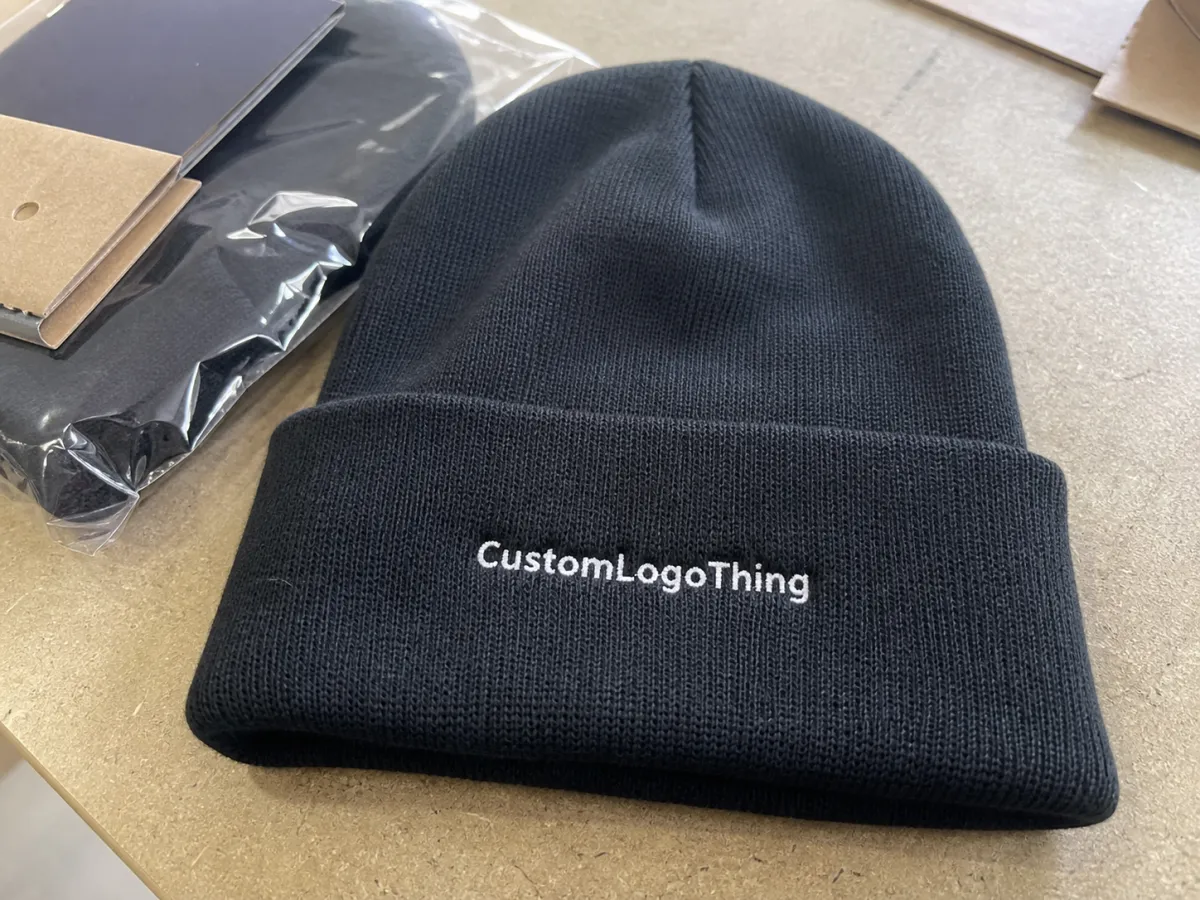
From a merchant’s view, an embroidered beanie often works as the keep item inside a gift set. It is the piece most likely to be reused, photographed, or worn after the fragrance product has done its job. That makes the accessory more than decoration. It becomes a quiet reminder of the brand every time it leaves the coat hook or the car seat.
The economics are just as important as the presentation. A fragrance assortment can already feel complete on scent alone, but the textile piece gives the bundle a stronger perceived value without forcing the retailer to rely on discounting. In practice, a modest knit accessory can support a higher ticket price better than another small consumable would, because it survives the unboxing moment.
That only works if the spec is disciplined. A clean one-color logo, a cuff that sits correctly, and a body shape that does not collapse after the first wear usually deliver more value than extra decoration. Busy artwork can look expensive in a proof and cheap on the head. The reverse also happens: a restrained stitch line can look smarter than a larger motif if the knit and thread balance is right.
There is a practical buyer lesson here. The beanie should not be chosen because it is fashionable in the abstract. It should be chosen because it behaves well in production, stays consistent across replenishment, and can be packed into the fragrance set without creating handling problems. That is the difference between a promotional accessory and a retail-ready component.
One more point matters. If the beanie is likely to become the item customers keep, then the quality threshold should be set with that in mind. A slightly better yarn blend or cleaner embroidery finish can be worth the small increase in cost if it protects the perception of the whole gift set. That is not indulgence; it is product logic.
Material, Fit, and Stitch Details That Shape the Final Look
Material choice drives most of the visual and cost differences in this category. Acrylic remains common because it is predictable, warm enough for casual wear, and generally economical. Acrylic-wool blends bring a softer hand and a less synthetic look, but they raise cost and can make shade matching more sensitive. For many fragrance programs, rib-knit construction is the practical middle ground because it stretches cleanly, recovers well, and holds embroidery in place without fighting it.
Fit matters more than many buyers expect. A beanie that sits too tall can look unfinished, while a cuff that is too short leaves the logo cramped. For gift sets, the safest choice is usually a moderate profile with enough stretch to fit a broad audience. Oversized slouch shapes can work, but they need stronger design intent and more careful testing. Otherwise, they can read as trendy on a screen and sloppy in a carton.
Embroidery quality is a separate decision from yarn quality, though the two affect each other. Stitch density, thread sheen, backing choice, and pull on the knit all shape the final appearance. A dense logo can look sharp, but too much stitch weight can distort the fabric or make the panel rigid. On finer gauges, the same design that looks crisp on paper may need reduction in size to avoid puckering.
For home fragrance programs, a single front logo is often the best compromise. It keeps production simple, lowers the risk of registration issues, and gives the product a clear brand mark without pulling attention away from the rest of the set. If a second placement is added, the buyer should be sure it serves a function. Otherwise it is just another variable in a process that already has enough moving parts.
Optional details can improve consistency across reorder lots, but they should be used with restraint. Thread colors should be tied to a clear reference system, woven labels should match the overall packaging tone, and any hangtag or barcode should be reviewed alongside the knit color. A fragrance gift set feels more expensive when those pieces agree with each other. Small mismatches, especially between textile and carton, can make the whole package feel improvised.
A neat embroidery panel and a stable knit usually beat a flashy design that distorts after the first wear. In this category, clean production earns trust faster than decoration overload.
Home Fragrance Embroidered Beanies Unit Cost Review: Pricing and MOQ
This is the part that usually decides whether a program is real or merely attractive on a spec sheet. A useful home fragrance embroidered beanies Unit Cost Review breaks the price into pieces that can be checked: blank beanie, digitizing or setup, embroidery stitches, finishing, folding or bagging, carton packing, and freight assumptions. If a supplier only gives one rolled-up number, there is too much hidden inside it.
Small changes in the spec can move the quote faster than buyers expect. A second thread color adds handling. A different patch location can slow the line. Custom labels, barcode stickers, retail folding, and polybags all affect labor, even if each one looks minor in isolation. This is why MOQ is not just a factory preference. It is tied to how much variation the production run contains and how efficiently the setup cost can be spread across the order.
Lower quantities almost always carry a higher unit price because the setup work gets divided by fewer pieces. Larger quantities usually improve the price and can also reduce freight cost per unit if cartons are packed efficiently. That said, a bigger order is only better if the sell-through can support it. Overstock is not a bargain just because the production math looks efficient.
| Option | Typical MOQ | Unit Cost Range | Best Use Case |
|---|---|---|---|
| Basic acrylic beanie, one-color embroidery | 300-500 pcs | $2.10-$3.60 | Simple private-label set with tight budget control |
| Rib-knit beanie, one- or two-color embroidery | 500-1,000 pcs | $3.20-$5.20 | Retail bundle with stronger hand feel and better shelf presentation |
| Acrylic-wool blend, embroidery plus woven label | 800-1,500 pcs | $4.80-$7.50 | Premium fragrance gift set or seasonal launch |
| Custom packaging, barcode, and retail folding | 1,000+ pcs | + $0.25-$0.90 per unit | Store-ready or DTC fulfillment program |
It also helps to compare quote styles carefully. Ex-factory pricing can look excellent until freight, carton packing, and local handling are added. Landed cost gives a truer picture of the actual unit economics. Sample charges may be credited on a bulk order, but not always, so that needs to be confirmed before approval. Overrun and underrun tolerances matter as well, because a wider production range can create inventory surprises on either side.
Another cost trap sits in the assumptions. Ask whether the quote includes standard embroidery placement, one approval sample, standard carton packing, and normal packing density. If any of those are unclear, the number is not fully usable yet. A quote that looks firm but leaves out packaging detail is less useful than a slightly higher quote that explains what is included.
For home fragrance bundles, the best result usually comes from keeping the accessory inside a target landed range that still leaves room for the candle, diffuser, or spray to do the margin work. That target will vary with stitch count, yarn blend, and pack-out complexity. A buyer does not need perfection in the accessory. The real goal is a repeatable unit cost that can survive production and freight without eroding the business model.
Process, Timeline, and Lead Time From Art to Delivery
The production flow should be clear enough to explain in one pass: artwork review, digitizing, sample creation, buyer approval, bulk embroidery, inspection, packing, and shipment. If a supplier cannot walk through that sequence cleanly, the project is exposed. The timeline matters because retail calendars are unforgiving, and a small delay at the sampling stage can push a launch out of season.
Lead time depends on several variables: stitch complexity, yarn availability, color approvals, order size, and whether the factory is already tied up with peak-season work. A simple one-logo beanie can move quickly if the art files are clean and the buyer responds fast. A multi-color design with several revisions can stretch out even when the order is relatively small.
Rush orders can be useful, but they also narrow the room for correction. There may be less time for sample refinement, packaging changes, or artwork cleanup. That is manageable if the spec is already settled. It is risky if the buyer is still debating color or placement. Speed is valuable, but only when the decision path is stable.
Typical planning ranges look like this:
- Art and placement review: 1-2 business days
- Digitizing and sample setup: 2-4 business days
- Sample production and buyer review: 3-7 business days
- Bulk production after approval: often 12-20 business days, depending on quantity
- Packing and shipment booking: 2-5 business days after completion
Those numbers are planning ranges, not promises. The schedule changes if the artwork is revised after sampling starts, if color approval is delayed, or if packaging details are adjusted late in the process. A well-run project locks the spec sheet before the order is released, not after production has already begun.
For programs that need transit testing or packaging documentation, it helps to align with established standards early. References such as ISTA are useful for shipping and transit considerations, while FSC can matter if paper-based inserts or cartons need to support sourcing claims. Those details sound administrative, but they can affect approval timing as much as embroidery itself.
Sampling, Color Matching, and Packaging Checks Before Production
Sampling catches the problems that quotes cannot show. Before the first sample is made, the supplier should have the artwork file, placement notes, and color references that matter. If those inputs are vague, the sample will be built on assumptions. That is where avoidable delays begin.
On the sample itself, check stitch density, pull on the knit, logo registration, cuff shape, and the way the design sits when worn. A logo can look tidy when the beanie is flat and fail once the knit stretches over a head form. That is why fit testing matters. A beanie is not a printed card; it is a wearable item that changes shape in use.
Color matching deserves the same care. Knit body color, embroidery thread, and woven or printed labels should be reviewed together. This is especially true for fragrance bundles, where the beanie has to sit beside a box, bottle, or candle that may already have a tightly controlled palette. One off-tone label or a slightly mismatched thread can weaken the feel of the whole set.
Packaging should be checked before bulk production, not after. Individual polybags protect the knit and make distribution easier. Hang tags and barcode stickers help with retail handling. Tissue wrap can improve the unboxing experience, but it adds labor and should be justified by the channel. Master carton counts matter too, especially if the same product needs to work for both store delivery and direct-to-consumer fulfillment.
Packaging is part of the unit cost, and it is also part of the product quality. Carton spec, pack count, outer label format, and folding method all affect how the order moves through the warehouse. If the beanie is being sold as part of a home fragrance program, it should arrive ready to support the set, not as a loose textile piece that still needs extra attention.
Sample approval is best treated as a three-part check: look, feel, and logistics. If the sample passes those three, the bulk order usually runs with fewer surprises.
For broader packaging guidance, the Institute of Packaging Professionals is a useful industry resource, especially for buyers who need a better handle on pack-out, transit protection, and shelf presentation.
What Makes Our Production Approach Reliable for Retail Programs
Retail programs depend on repeatability more than novelty. Stitch quality has to stay consistent. Sizing has to stay stable. Packing standards cannot drift between the first order and the reorder. If the beanie is sitting beside candles or diffusers in a curated set, even a small variation can make the brand look less controlled than it should.
Seasonal changes are another test. Many fragrance brands rotate colors for winter, spring, or holiday sets, and the production method needs to support that without turning every change into a fresh development cycle. A disciplined spec sheet keeps those updates manageable. It also keeps the buyer from having to re-explain the same requirements every time the collection changes.
Clear communication matters more than promotional language. If a thread color is unavailable, if a label stock has changed, or if a packaging component needs adjustment, the buyer should hear about it early. That is basic risk control. Problems handled late are more expensive and usually less elegant to solve.
Retail-focused QC also affects the handoff to the warehouse. Fold consistency, bag clarity, barcode placement, and carton counts all change how quickly the product can be received and shelved. For home fragrance bundles, presentation is part of the sales system. A beanie that arrives neatly packed is easier to merchandise, easier to photograph, and easier to reorder without creating operational noise.
The most reliable production partner is not the one that promises the lowest quote. It is the one that shows what is included, what is optional, what moves MOQ, and what changes landed cost. That level of clarity is what keeps a private-label accessory program usable after the first order has shipped.
Next Steps to Lock Art, Quantities, and a Firm Quote
A useful quote starts with usable inputs. Send the logo file, the preferred beanie style, the target quantity, the packaging preference, and the required delivery window. Those details let the supplier build the number around the real order instead of filling in blanks later.
It also helps to share the target retail price or desired gross margin. That is not just a finance note. It affects material choice, decoration scope, and packing method. A buyer who gives a margin target usually gets a better answer because the quote can be shaped around the commercial outcome, not just the decoration request.
The approval sequence should stay orderly: confirm the spec sheet, review the sample, finalize carton counts, and then release the production order with the agreed schedule. That keeps the home fragrance embroidered Beanies Unit Cost Review tied to real production choices rather than guesswork.
Before the PO is approved, compare the finished unit cost against the sample, freight, and packing assumptions so there are no surprises after production begins. For a fragrance bundle, this is the point where discipline protects the margin.
A well-planned order is less about chasing the lowest figure and more about choosing a spec that can be repeated, packed cleanly, and sold with confidence. That is the sort of buying decision that keeps a private-label launch on budget and on brand.
What drives the unit cost of home fragrance embroidered beanies the most?
Decoration setup, stitch count, and packaging choices usually move the price more than the blank beanie itself. Lower MOQ orders spread setup costs across fewer pieces, which raises the per-unit number. Freight and carton configuration can change landed cost even when the factory price looks stable.
What MOQ should I expect for embroidered beanies in a fragrance promotion?
MOQ depends on the beanie style, embroidery complexity, and whether custom labels or packaging are included. Simple one-logo programs can often run at lower quantities than multi-color or multi-location decoration orders. Ask for MOQ by color and by artwork version so seasonal planning stays accurate.
How long does sampling and production usually take for embroidered beanies?
Sampling usually takes longer when artwork needs digitizing or when the first approval sample needs adjustment. Production lead time depends on stock availability, stitch complexity, and order size. Clear art files, fast approvals, and a simple decoration plan usually shorten the schedule.
Can you match my fragrance brand colors and packaging details?
Yes, but the best match starts with clear color references, artwork, and a packaging spec before sampling. Knit body color, thread color, and label color should be reviewed together so the final piece feels consistent. Packaging can usually be tailored with polybags, tags, barcodes, and carton counts to fit the sales channel.
What should I send to get an accurate embroidered beanie quote?
Send the artwork file, target quantity, preferred beanie style, and any placement or thread color notes. Include the delivery window and packaging requirements so the quote reflects real production and shipping needs. If you already have a target retail price, share it so the quote can be built around your margin goal.


