The smallest beanie on the sample table is rarely the cheapest one to buy. In a toy cuffed knit Beanies Unit Cost Review, labor, setup, decoration, and packaging usually decide the real number long before size does. That is the part many buyers miss when they compare only the factory quote and ignore what happens after the carton leaves the line.
From a packaging buyer’s point of view, the cleanest order is the one with fewer surprises. A tiny cuffed knit beanie can look simple, but the price can still swing hard depending on yarn type, logo method, MOQ, and how many times the spec changes before approval.
Why Toy Cuffed Knit Beanies Cost Less in Bulk
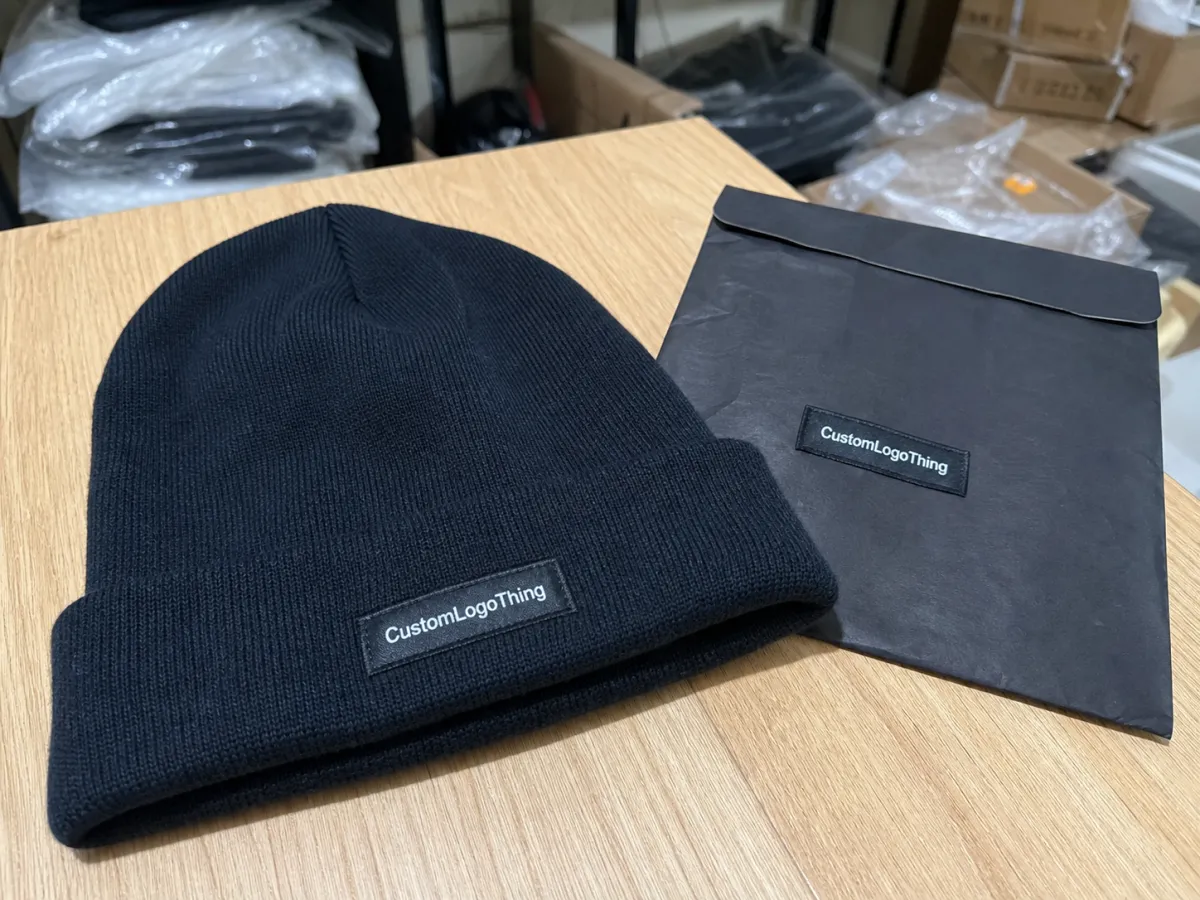
Bulk orders lower unit cost because the fixed work gets spread across more pieces. That includes knitting setup, color matching, sample approval, digitizing or knit-program prep, and first-run inspection. The beanie itself may be small, but the job still carries the same basic production overhead. Smaller does not automatically mean cheaper. That sounds obvious, yet buyers still get trapped by it.
In practice, repeated knitting patterns only start paying off once the run is large enough to absorb the early work. A 300-piece order can look expensive on paper because the setup charges and tooling fees sit on too few units. At 3,000 pieces, the same setup gets diluted, and the cost per piece starts to look sane. That is why a factory quote should always show the breakpoints clearly, not hide them behind a single shiny number.
Buyers should also look at landed unit cost, not just ex-factory pricing. Freight, carton count, inner packing, and handling can change the real cost faster than people expect. A $0.96 factory price can become $1.22 landed once you add shipping, packaging upgrades, and last-minute split delivery. That is not a surprise. That is the bill doing what bills do.
A clean quote should spell out the basics:
- Size and fit - body height, cuff depth, and stretch range.
- Yarn type - standard acrylic, recycled blend, wool mix, or specialty yarn.
- Logo method - embroidery, knit-in branding, woven label, patch, or tag.
- Sample policy - whether the sample fee is credited later or stays separate.
- One-time charges - setup charges, digitizing, tooling fees, and color approval work.
If the quote does not include those items, it is not really a quote. It is a teaser.
Clean specs save money. Vague specs create rework, and rework is where cheap orders stop being cheap.
For buyers who care about transit performance as much as appearance, it also helps to think about how the packed order will travel. If these beanies ship in retail cartons or gift boxes, transit testing using ISTA methods can be worth the effort. For paper-based packaging, ask for documentation tied to FSC if you need responsible sourcing claims. Those details do not always change the beanie price directly, but they do affect the finished program cost.
Product Details That Shape The Final Build
The core construction matters more than most first-time buyers expect. A toy cuffed knit beanie usually needs a body shape that holds itself well, a cuff that does not roll out of control, and a fit range that works for the intended display or retail use. If the item is for toy merchandising, the size may be closer to a novelty accessory than a full adult beanie. If it is for a gift set, the silhouette has to look neat in the box, not just cute in a photo.
Material choice is the next lever. Acrylic is usually the lowest-cost option because it is consistent, easy to source, and stable in production. Recycled acrylic or recycled blends can raise the price a bit, but they can improve the story if the buyer needs a more responsible material claim. Wool or wool-blend yarns cost more and often need tighter quality control because they can vary more in hand feel and shrink behavior. Softness matters, but so does repeatability. A buyer who wants every unit to match should care about that more than a vague “premium” label.
Decoration is where the unit cost often moves fastest. Here is the practical spread:
- Embroidery - clean and common, but thread count and stitch density affect price.
- Woven label - usually economical, especially for small logos and simple branding.
- Jacquard knit-in branding - strong look, but pattern setup can raise tooling fees.
- Patch application - works well for bold logos, though placement tolerance matters.
- Woven tag placement - cheapest option in many runs, but also the least integrated visually.
Packaging is not an afterthought. Loose pack keeps cost down, while polybags, hang tags, paper wraps, and retail boxes all add labor and material. A simple polybag can be a minor line item. A folded paper wrap with a printed belly band costs more. A premium retail box changes the economics again because you are paying for assembly time, board weight, and freight volume. If the packaging must look sharp on shelf, that is fine. Just admit it is part of the margin.
Before asking for a firm quote, approve the measurement sheet, Pantone targets, logo placement, and finish details. Buyers who lock those points early usually get better pricing because the factory can stop guessing. In a toy cuffed knit Beanies Unit Cost Review, guesswork is expensive. Precision is cheaper.
Specifications Buyers Should Lock Before Quoting
The quote is only as good as the spec sheet behind it. For a useful price, the supplier needs body height, cuff width, opening tolerance, and any minimum stretch requirement. A beanie that is 1 cm off on paper can land in the wrong size category once the knit tension changes. That sounds small. In production, it is not.
Stitch density, gauge, and yarn weight matter more than many buyers realize. A looser gauge can feel softer, but it may also affect shape retention and logo clarity. A tighter knit can hold a better silhouette, though it can cost more in machine time. If a sample looks good but the bulk quote jumps, the reason is often hidden in the knit structure. Same product name. Different build. Different price.
Color rules should be explicit. State whether the order uses one colorway or multiple, whether you need exact Pantone references, and whether yarn-dyed matching is required. Yarn dyed to a close standard is not the same as matched like a print swatch. If your brand needs exact color control, say so early. If you do not, you may end up paying for precision you never asked for.
Order structure matters too. Ask the supplier to quote by:
- Color - one run versus multiple colorways.
- Size - if the beanie needs more than one fit.
- Artwork version - one logo or several placement options.
- Packaging variant - loose pack, bagged, tagged, or boxed.
Every split increases complexity. Complexity usually increases the MOQ pressure as well. A split across two colors, two logos, and three package types can cost more than a larger single-spec run because the factory has to break up the production flow and carry more components.
Quality checkpoints should be written down before the quote gets accepted. A solid spec includes seam consistency, decoration placement tolerance, pull testing for the knit edges, and visual standards for yarn shade variation. For knit accessories, a simple bench test and a visual approval standard often catch more problems than a long meeting ever will. Buyers do not need theater. They need a measurable pass-fail list.
Pricing, MOQ, and Unit Cost Breakpoints That Matter
Bulk pricing usually steps down in tiers, and the best savings often appear right after a quantity break. A buyer who hovers just above the minimum order can pay almost the same setup cost as a smaller order, which makes the unit cost look worse than expected. Sometimes moving from 800 to 1,500 pieces saves more money than shaving a few dollars off a sample. That is the kind of math buyers should care about.
Here is a realistic pricing framework for a custom toy cuffed knit beanie program. These numbers vary by yarn, decoration, packaging, and shipping lane, so treat them as working ranges rather than promises carved into stone.
| Order Profile | Typical Decoration | Unit Price Range | Common Setup Charges | Notes |
|---|---|---|---|---|
| 300-500 pcs | Woven tag or simple embroidery | $1.35-$2.20 | $45-$150 | Low MOQ, but setup fees hit harder. |
| 1,000-2,000 pcs | Embroidery or patch application | $0.88-$1.45 | $35-$120 | Usually the first workable bulk pricing band. |
| 3,000-5,000 pcs | Woven label or knit-in logo | $0.62-$1.05 | $25-$100 | Best balance between price and production efficiency. |
| 8,000+ pcs | Simple branding with standard packaging | $0.48-$0.82 | $0-$75 | Higher volume spreads costs well, if specs stay stable. |
Those tiers show why MOQ is not just a policy number. It is part of the price structure. A lower MOQ usually means a higher cost per piece, because the factory still has to prepare the yarn, program the machines, and inspect the first run. Simple designs can often support lower MOQ. Custom colors, premium finishes, and more complex packaging tend to push MOQ up or price up, sometimes both.
One-time setup charges and recurring charges deserve separate attention. Setup charges may include digitizing, knitting program prep, color matching, or sample development. Recurring charges show up on every order: decoration labor, packaging assembly, and any specialty processing that cannot be absorbed by the base build. Buyers hate surprise fees almost as much as delays, and honestly, those two often arrive together.
When comparing quotes, use the same quantity, same material, same decoration, and same packaging. If one supplier quotes loose pack and another quotes bagged retail pack, the numbers are not comparable. That is how sloppy purchasing decisions get made. A proper toy Cuffed Knit Beanies Unit Cost review compares apples to apples, not apples to “premium fruit concept.”
Process and Timeline From Artwork Approval to Shipment
The production flow is usually straightforward, but every handoff can add delay if the buyer is not ready. The normal path is inquiry, spec confirmation, quote, mockup, sample approval, bulk production, QC, packing, and shipment. Skip one of those steps in your head and the schedule becomes fiction.
Reasonable timing ranges look like this:
- Quote and mockup - often 1 to 3 business days if the spec sheet is complete.
- Sample development - often 5 to 10 business days, sometimes longer for knit-in artwork.
- Sample revisions - add a few more days if color or placement needs adjustment.
- Bulk production - often 12 to 20 business days after approval, longer for complex builds or busy calendars.
- Packing and freight booking - 2 to 5 business days, depending on shipment method.
The biggest slowdowns are predictable. Vague artwork, late color approvals, repeated revisions, unclear packaging instructions, and split delivery requests all eat time. Buyers often blame the factory for delays that started with a missing file or a changed logo version. That is not me being harsh. That is just how production works.
You can save time by sending complete specs early, approving artwork quickly, and confirming the ship date before production starts. If you need a rush schedule, say so before the quote is final. Rush work can raise the unit cost, especially when the order needs special yarn, extra labor, or priority machine time. There is no mystery there. Faster service costs more because it interrupts the line.
For branded packaging, a simple paper wrap or hang tag can be a smart compromise between look and cost. If the project needs a more responsible packaging story, ask for paper components that can support FSC documentation. Keep the claims honest. Buyers and retailers notice when a box says one thing and the paperwork says another.
Why Buyers Reorder When Quotes Stay Clean
Repeat orders happen when the first run is easy to manage. Not glamorous. Just easy. Stable yarn sourcing, repeatable specs, and accurate records matter more than clever sales language. Buyers do not reorder because a supplier wrote a dramatic email. They reorder because the previous run matched the spec and arrived on time.
Stored production records reduce mistakes on future runs, especially for seasonal promotions or retail restocks. If the exact cuff depth, embroidery placement, and yarn code are already documented, the next order can move faster and with less back-and-forth. That is one reason serious buyers care about the paperwork as much as the sample.
Transparent communication is the other reason good suppliers keep business. If a color is being substituted, the buyer should know before production starts. If a decoration method will change the price by 12% or 18%, that needs to be stated plainly. No one likes being handed a “small adjustment” after approval. Small adjustments have a nasty habit of becoming margin problems.
Quality control matters because rejected units kill both budget and schedule. A well-run inspection catches seam variation, misaligned labels, loose threads, and off-color yarn before packing. For larger programs, that protection is worth real money. Fewer rejects means fewer replacements, fewer delays, and fewer conversations nobody wants to have.
A good partner will also flag weak specs before production starts. If the logo is too small for the knit gauge, the honest answer is to enlarge it. If the yarn shade will not read properly on the cuff, the right move is to revise it. Pretending everything is fine is expensive. Fixing it early is cheaper.
That is the whole point of a serious toy cuffed knit Beanies Unit Cost Review: fewer surprises, cleaner reorders, and a quote that still makes sense after freight, packaging, and QC are added.
Next Steps: Send Specs, Compare Quotes, and Lock the Run
If you want a useful quote, send a complete spec pack. Include product dimensions, quantity by color, logo files, packaging choice, and target delivery date. The more complete the file, the less time everyone wastes trying to guess what the finished piece should look like.
Ask for two versions of the quote if you can: one optimized for lowest cost and one for better presentation. That gives you a real tradeoff instead of a fake choice. In one version, maybe you keep loose pack and a woven tag. In the other, you move to a printed paper wrap, better insert card, and a cleaner retail look. Same product. Different business outcome.
Also ask for sample timing, bulk lead time, and freight estimates in the same reply. A low unit price is not helpful if shipping adds more than expected or the delivery window misses your launch date. Budget the full job, not just the factory line.
Before you issue the PO, confirm the final artwork, approval method, and reorder plan. That is usually where projects drift. One revised logo file. One packaging change. One unclear instruction. Suddenly the whole schedule is moving. Keep the approval chain short and explicit.
If you are comparing quotes now, compare them against the same spec sheet, the same quantity, and the same packaging target. That is how a toy Cuffed Knit Beanies unit cost review becomes useful instead of decorative. Then move forward with the option that protects margin, hits the timeline, and does not create cleanup work later.
FAQ
What affects toy cuffed knit beanies unit cost the most?
Quantity, decoration method, and packaging usually move the number most. Higher volume spreads setup charges across more units, while embroidery, knit-in branding, or premium packaging can raise the price quickly. Freight changes the landed total too, which is why factory price alone is never the full story.
What MOQ should I expect for cuffed knit beanies?
MOQ depends on yarn color, logo method, and whether the order is split across multiple versions. Simple designs can often go lower, while custom colors and more complex finishes usually push the minimum up. Ask for MOQ by style and by colorway, not just one number.
Can I lower the unit cost without hurting quality?
Yes. Simplify the decoration, reduce packaging upgrades, and keep the order to fewer colorways. You can also hit a better quantity break instead of sitting just above the minimum. Do not cut the spec clarity or quality checks, because cheap mistakes are still expensive.
How long do sample and bulk production usually take?
Sampling often takes several business days, and revisions can add more time if artwork or color needs adjustment. Bulk production is usually faster than sample development, but complex specs or busy seasons extend lead time. Rush schedules are possible in some cases, but they usually raise the price.
What should I send for an accurate beanie quote?
Send dimensions, quantity by color, logo artwork, decoration method, and packaging requirements. Include your target ship date and destination so freight and timing are quoted correctly. If you have a sample or photo reference, send that too; it removes a lot of guesswork.

