One patch that sits a little too high can make a polished home fragrance launch look strangely unfinished. That is the reason the home fragrance Logo Patch Beanies digital proof checklist matters. It catches the details that feel minor on a screen and expensive in production.
For a packaging buyer, the beanie is not a side item. It is part of the brand system, sitting beside candles, diffusers, room sprays, and gift sets. If the logo patch proof is vague, the final piece usually exposes that vagueness fast. Small canvas. Big consequence.
Home fragrance brands run into the same problem again and again. A logo that looks balanced in a mockup can sit too high on a cuff, lose contrast on a charcoal knit, or become muddy once it is translated into woven or embroidered form. The proof is where those choices stop being abstract and become instructions the factory can actually follow.
Why digital proof details matter more than the beanie itself
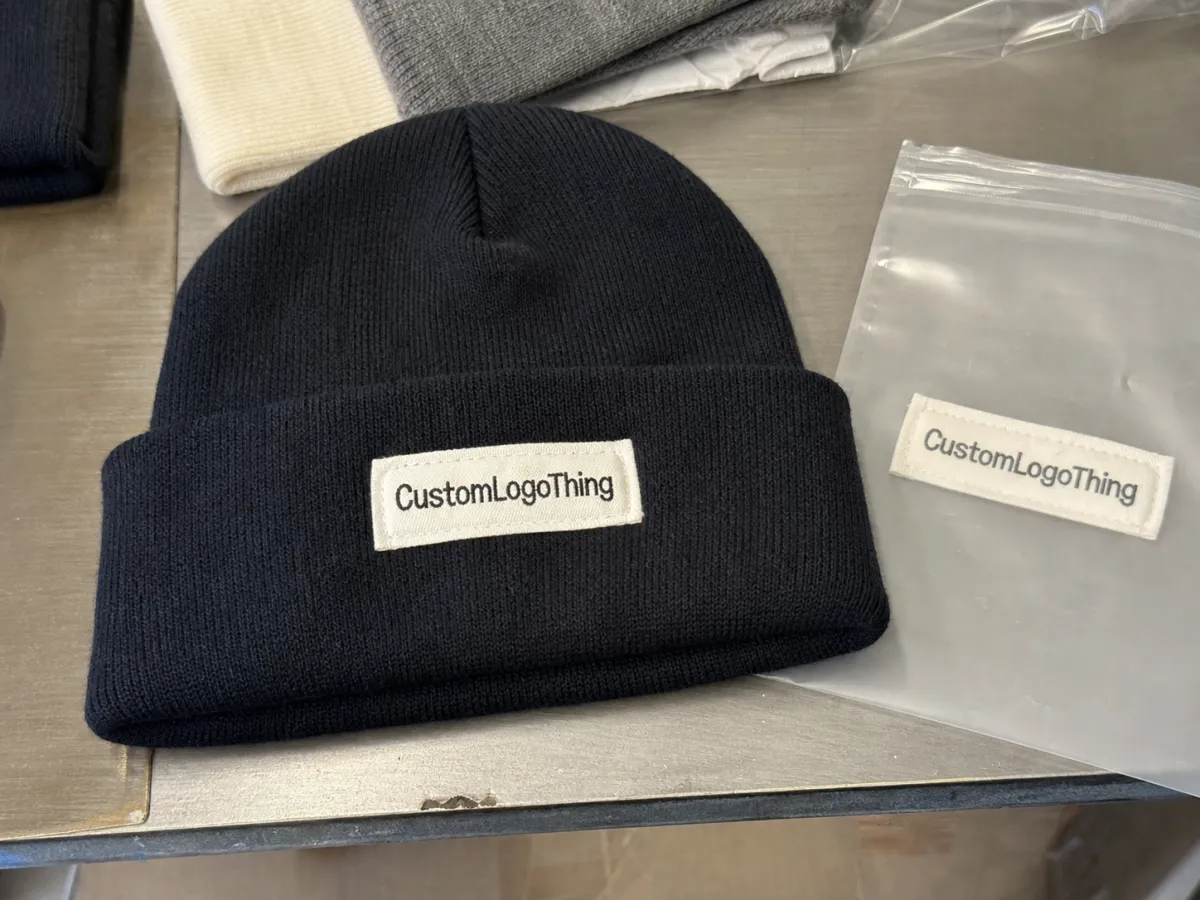
A beanie is small, but it is unforgiving. There is nowhere to hide a patch that is 4 mm too high, 2 mm too large, or colored too close to the base fabric. On headwear, the eye reads placement first and decoration second. That makes the digital proof less like paperwork and more like the control point for the whole order.
That matters even more for home fragrance merchandise because the beanie usually acts like an extension of the brand, not a standalone fashion piece. If the candles use soft neutrals and refined labeling, the beanie should feel like it came from the same shelf. A good proof protects that continuity. A lazy one creates a mismatch customers notice in photos, at pop-ups, and on retail tables.
If the mockup already feels uncertain, production will not fix it. It usually makes the uncertainty more visible.
This is where proof discipline pays off. A digital proof should confirm the patch type, placement, scale, color reference, base garment, and any secondary decoration. It should not just show a logo floating on a beanie silhouette. If the team treats the proof like a design review instead of an approval gate, the result is usually cleaner and faster.
There is also a practical reason to be strict. A beanie patch is exposed to stretch, seam shifts, and fabric texture that do not exist on a flat label. Even when the artwork is clean, the material can distort the read. The proof should account for that. Otherwise, the final piece can look technically correct and visually wrong.
Proofing process and timeline: from art upload to approval
The cleanest projects start with clean files. Vector artwork is the best starting point because it keeps edges and spacing intact when the patch is resized. A flattened JPEG may work for a mood board. It is a weak starting point for production. If the artwork is still in motion, send the best file you have and call out exactly what is unresolved.
Most proof cycles move through three checkpoints: initial submission, one revision round, and final sign-off. In practice, the first proof usually arrives in 24-48 hours. Revisions often take another business day or two. Production starts only after approval. That timeline stretches fast if the logo changes, the patch construction changes, or the approval chain includes marketing, operations, and leadership all at once.
That is why launch calendars need slack. If the beanies are tied to a candle drop, holiday gift set, or wholesale presentation, do not schedule the reveal for the same week you expect proof approval. Leave room for one round of corrections, one internal review, and the question that always appears after everyone thinks the file is done.
If your team needs help matching decoration method to order size, our Manufacturing Capabilities page is a useful starting point. It helps buyers choose a patch style before the proof stage gets crowded with opinions.
For projects that also include printed cartons, hangtags, or inserts, the proofing process works much like packaging prepress: every late change costs time. A small shift in thread count, backing choice, or patch edge treatment can add a revision loop that would have been avoidable with better upfront specs.
Logo patch materials, colors, and placement decisions
Patch material changes the tone of the piece more than many buyers expect. A woven patch feels crisp and detail-oriented. Embroidery adds texture and depth. PVC reads bolder and more dimensional. Faux leather gives a softer, lifestyle-heavy look. Each choice signals something different, and those signals matter when the beanies sit inside a premium home fragrance line.
Color contrast is a bigger issue on knitwear than on paper. A logo that looks strong on white art can disappear on charcoal, oatmeal, or forest green unless the outline is adjusted. On a cuffed beanie, the surface is textured, stretchy, and curved by light. A useful proof shows the patch against the actual base color, not a generic white mockup that makes everything look safer than it is.
Placement deserves equal attention. Front cuff, side placement, and center fold each change how people read the brand from a few feet away. Front placement gives the strongest brand read. A side patch feels more restrained. Center placement can work on slouchy styles, but it is harder to balance if the logo uses fine text or a narrow icon.
If the patch includes small type, ask for the minimum readable size before approval. Woven patches usually hold finer detail than thick embroidery, but there is still a limit. Thin lines, tiny serif text, and micro registration marks are the first elements to fail when the artwork gets translated into stitch density or thread count.
| Patch option | Typical add-on at 500 units | Visual character | Proof risk |
|---|---|---|---|
| Woven patch | $0.18-$0.32 | Crisp, flat, detailed | Medium if type is very small |
| Embroidered patch | $0.22-$0.40 | Textured, traditional, tactile | Medium for fine linework |
| PVC patch | $0.35-$0.65 | Bold, dimensional, modern | Lower for simple logos |
| Faux leather patch | $0.28-$0.55 | Warm, lifestyle-driven, premium | Medium for light emboss detail |
Those numbers are guide rails, not promises. Quantity, patch size, stitch count, and artwork complexity can move the quote quickly. A 300-piece run with a single-color woven patch can look very different from a 2,000-piece order with multi-color stitching and a custom base color.
Material choice also affects how the brand feels in hand. Woven and faux leather tend to read more refined in gifting programs. PVC can work well for sharper logo shapes or more modern launches, but it can feel too hard-edged if the rest of the line is soft and minimal. The proof should show enough context to make that call before anyone starts production.
Cost, pricing, and MOQ: what actually changes the quote
Buyers often focus on the blank beanie price first, but decoration usually moves the final number more. On a modest run, a standard acrylic or recycled acrylic beanie might sit around $2.20-$4.00 before decoration, while the patch add-on can add another $0.18-$0.65 depending on method. Add packaging, and the landed price shifts again.
The biggest quote drivers are patch type, logo complexity, number of colors, and whether the beanie color is stock or custom dyed. A clean one-color patch is cheaper to set up than a multicolor build with small detail. Same story with the garment: standard black, oatmeal, or heather usually prices better than a custom-matched shade.
MOQ can move too. A supplier may accept 100-150 pieces for a straightforward woven patch, but specialty decoration, custom colorways, or mixed sizes usually push that higher. The trap is chasing the lowest unit price without watching the structure underneath it. If an order is split across three colors or two patch versions, the apparent savings can disappear fast.
Timeline affects cost as well. Rush production, split shipments, and extra proof rounds all have a way of turning a tidy quote into a messy one. Ask for pricing at multiple quantities. At 250, 500, and 1,000 pieces, the per-unit change may show whether a slightly larger run gives a better landed price and a steadier margin.
If the beanies are part of a retail or event kit, think beyond apparel pricing alone. Packaging teams already understand the value of recycled paper inserts, FSC-certified hangtags, and fold consistency. The FSC standard is a simple way to discuss paper sourcing. If the set will ship with fragile packaging, basic transit thinking informed by ISTA methods can reduce crushed cartons and rework later.
There is one more pricing detail that gets missed: approval speed. A delayed proof does not just slow the order. It can force a schedule change that pushes the run into a more expensive production window. That is why the proof checklist matters as much as the quote itself. Cheap on paper is not cheap if the shipment misses the season.
A practical home fragrance logo patch beanies digital proof checklist
This is the part that saves money. The home fragrance logo patch beanies digital proof checklist should be short enough to use under deadline pressure, but specific enough to catch the mistakes that create reprints. Think of it as a final filter, not a design exercise.
- Check the copy first. Spelling, capitalization, spacing, and punctuation should match the approved brand use exactly.
- Confirm the logo size. Compare the patch width against the beanie cuff or panel dimensions, not just the mockup on screen.
- Review the color callouts. Pantone references are better than vague descriptions like "warm beige" or "deep black."
- Verify the patch location. Make sure the proof shows front, side, or center placement exactly where you expect it.
- Check backing and construction. Heat seal, sew-on, or adhesive backing changes both appearance and durability.
- Look for secondary decoration. Inner tags, woven labels, and retail fold requirements should be approved if they affect the final presentation.
- Match the launch system. The beanie proof should stay consistent with the candle label, diffuser box, and ecommerce imagery.
The list is simple on purpose. Most expensive mistakes are basic ones: a wrong word, an oversize mark, or a patch that is technically correct but visually too weak for the product line. The proof should answer the same question every time: does this belong in the brand?
For fast-moving teams, one spec sheet, one feedback email, and one final approver are usually enough. That reduces noise. It also prevents the common problem where three people approve the same proof for three different reasons, then production has to guess whose version counts.
Use the proof to lock the decision, not to reopen the design.
If the beanie will be sold online, ask for a second angle before approval. Front-only mockups can hide how the cuff folds or how the patch shifts when worn. A side view is often enough to show whether the logo still reads cleanly from normal viewing distance.
One more check matters more than most buyers realize: ask how the proof reflects the actual base color. Some factories use generic mockup libraries that flatten the knit texture and brighten the fabric. That can hide contrast issues. If the garment color is a key part of the brand, the proof needs to reflect it honestly, even if that makes the logo look less perfect on screen.
Common proofing mistakes that lead to delays, reworks, and waste
The most common mistake is approving artwork as if a screen proof were the same thing as production art. It is not. RGB artwork can look fine on a monitor and still translate poorly into stitch counts, print edges, or material color. If the patch uses Pantone matching, the proof should show that intent clearly, not vaguely.
Another trap is ignoring knit texture. A logo can look sharp on a flat digital surface and then soften once it is mapped onto ribbed fabric. That is especially true with thin linework, tiny icons, and small serif text. A pattern that is beautiful on paper may become muddy on a beanie, where the material itself adds visual noise.
Approval bottlenecks are slower than people think. One manager collecting comments from five stakeholders is usually faster than five separate messages going back to production. The best projects have one decision-maker or one compiled feedback note. That sounds basic, but it saves real time when the launch date is fixed and production slots are limited.
There is also the hidden cost of incomplete notes. If the proof comments do not specify whether the patch should be scaled, shifted, recolored, or rebuilt, the next revision can repeat the same problem in a different form. Clear notes say what to change and what to leave alone. Ambiguous notes force the decorator to guess.
Another mistake: approving without checking the back side of the patch or the inside finish. A front view may look perfect while the backing thread, seam bulk, or tag placement creates a snag point inside the beanie. That is not a dramatic defect, but it matters if the piece is being sold at a premium price or packed into a gift set that customers will open closely.
Expert tips and next steps for a clean first run
Create a one-page spec sheet before you request the proof. Include the logo file, color codes, patch style, placement, quantity, deadline, approval contact, and any packaging details that affect the final look. That one page does more work than a long email thread ever will.
Ask for a sample or swatch if the launch is high visibility. Screen color is useful, but it cannot tell you how faux leather feels against knitwear or how a dark thread line behaves under store lighting. A physical reference reduces surprises. It also helps non-technical stakeholders make faster decisions because they are reacting to something real.
If the beanies are part of a broader merchandise program, save the final proof, approval notes, and shipment record in one place. Reorders become easier when the approved version is obvious. That matters for home fragrance brands that refresh packaging, scent launches, and campaign art while keeping core merchandise consistent.
Keep the production standards aligned across apparel and paper goods. Packaging teams already understand why structured checks matter, and that mindset translates well here. Our production capabilities overview can help connect decoration method to order size, while standards bodies like Packaging Organization offer useful context on how buyers think about materials and presentation across the shelf.
The fastest way to avoid reprints is not a bigger budget. It is a sharper approval habit. Use the home fragrance Logo Patch Beanies digital proof checklist on the first run, then reuse it on every reorder so the brand stays consistent, the margin stays protected, and the merchandise feels like part of the same story as the candles, diffusers, and gift sets.
One final reality check: not every proof issue is worth fixing with a new version. Sometimes the right call is to adjust the artwork before the proof stage instead of trying to rescue a marginal design in production. If the logo is too detailed for a 2-inch patch, shrinking it will not solve the problem. Simplify the art, or choose a larger patch area. That is the kind of decision that keeps the run clean.
What should I upload for a beanie proof if my patch logo is not finalized?
Upload the best vector version you have, even if the logo is still being refined. That gives the decorator accurate geometry for scale and placement. Add notes that say which parts are still flexible, such as tagline text, icon spacing, or secondary colors.
How many proof rounds are normal for logo patch beanies?
One to two rounds is common when the artwork is clean and the buyer can approve quickly. More rounds usually happen when the logo needs redraws, the patch material changes, or the team is still deciding how bold the final mark should feel on the beanie.
Can a digital proof show the exact color and texture of a patch?
It can show the intended direction, but it is still an approximation. Screen color and real material texture never match perfectly. If exact finish matters, ask for a swatch or sample before approving the run, especially if the beanie will sit in a premium retail set.
What affects MOQ and unit cost on patch beanies the most?
Patch method, decoration complexity, and the number of colorways usually have the biggest effect. Smaller runs carry more setup cost per unit. Rush timing, special packaging, and extra proof revisions can also push the quote higher than expected.
How do I avoid delays when approving a beanie proof?
Check spelling, sizing, placement, and color in one pass so you do not reopen the proof for separate small edits. Use one compiled feedback email or one decision-maker. Then send a clear yes-or-no approval with any final notes so production can move without hesitation.


