Soap logo patch beanies Bulk Order Planning Guide for Buyers
Good soap Logo Patch Beanies Bulk Order planning starts before anybody asks for a quote. The safest orders are rarely the flashiest ones. They are the ones where the patch size is settled, the knit body is chosen for the right use case, and the buyer knows what the finished beanie has to do in the real world.
A beanie for retail has a different job than one for a staff uniform or a trade show giveaway. Retail pieces need stronger shelf presence and tighter consistency. Uniform pieces need repeatability and comfort. Giveaways need clean branding and a price point that does not collapse the margin. If those goals are blurred together, the spec gets muddy and the budget gets dragged around by every new revision.
Most headaches show up in the same places: a patch that is too small to read, a cuff that is shorter than the proof suggested, a logo placed too low on the fold line, or a body color that looked right on screen and wrong in hand. None of that is exotic. It is just production reality.
The cleanest run usually looks boring on paper. One decoration method. One approval path. One person signing off on the final proof. That is not glamorous, but it keeps the order from turning into a group project with a shipping deadline.
Soap logo patch beanies bulk order planning basics
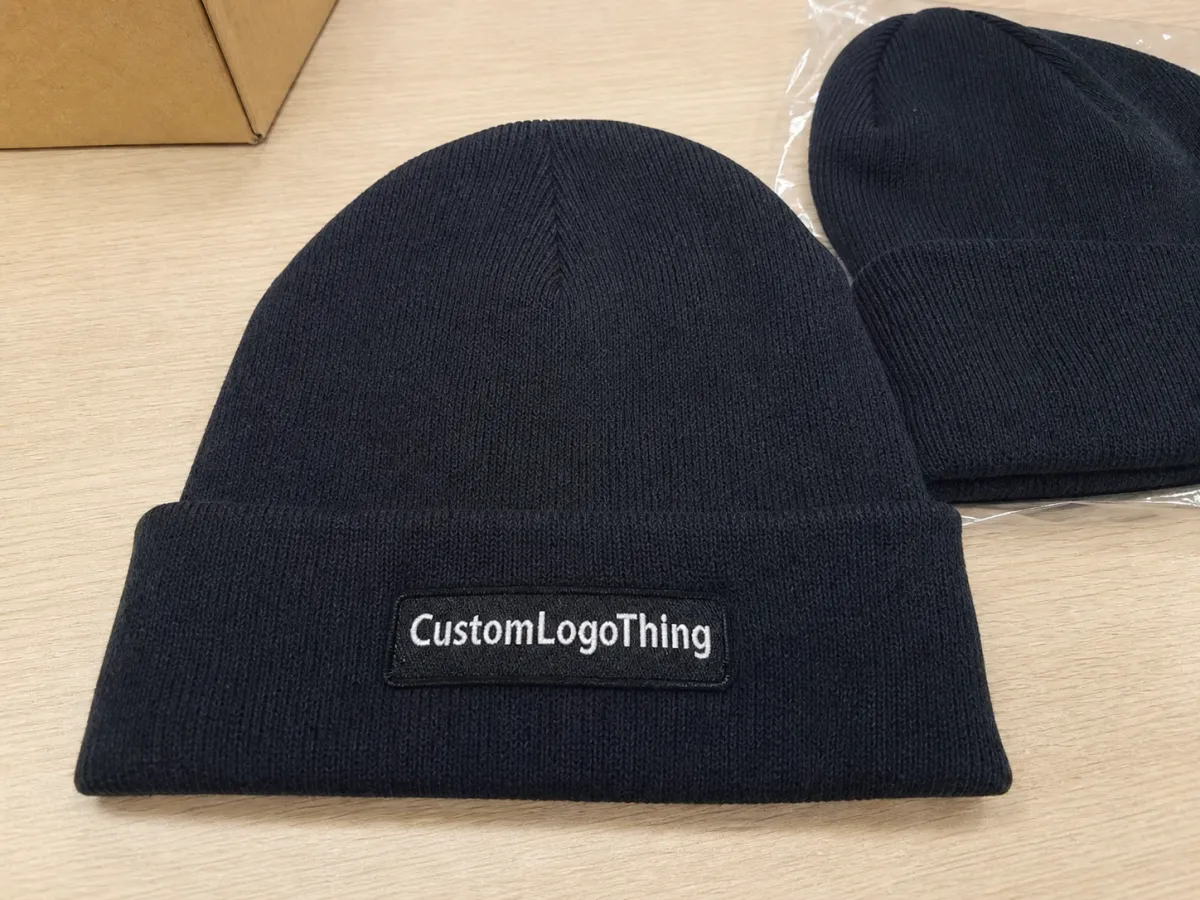
Bulk beanie orders fail less often on the knit body than on the patch. The patch is where detail, scale, and placement collide. If the logo is too detailed for the selected patch method, the finished piece will look fuzzy from a few feet away. If the patch is oversized, the beanie can feel heavy or awkward. If the patch lands too close to the seam or fold, it can twist when worn and look off-center in photos.
That is why soap logo patch beanies Bulk Order Planning should begin with the logo and the use case, not the blank beanie. Buyers who approve the decoration concept first usually avoid the slow drip of changes later on. Once the body style, patch method, and placement are tied together, the quote has something real to hold onto.
Start with the end use. A retail beanie needs a stronger visual hit and more consistent presentation. A team order might need a simpler patch with better durability and a color that works across different uniforms. A promotional giveaway can usually get by with a smaller patch and lighter packaging. The product should fit the job, not the other way around.
- Retail resale: cleaner patch finish, sharper contrast, and packaging that looks ready for a shelf.
- Team merch: comfort, repeatability, and a logo that still reads from arm's length.
- Employee gifts: simpler decoration and presentation that feels finished without adding fluff.
- Event giveaways: lower-friction specs, shorter approval cycles, and fewer moving parts.
There is also a practical recordkeeping side to all of this. Save the approved file, patch size, placement notes, body color, thread colors, and proof version in one place. If the order comes back six months later, nobody should have to guess whether the patch was 2.5 inches or 2.75, or whether the black thread was meant to match a deep charcoal body or true black. Reorders get messy when people rely on memory instead of a clean paper trail.
The smoothest bulk order is the one with the fewest surprises: final art, one patch method, one proof chain, and a buyer who knows the ship date before the run starts.
Patch construction, knit styles, and placement choices
Choose the patch format first, because the decoration method sets the tone for the rest of the build. Woven patches are strong when the artwork has small text or fine linework. Embroidered patches feel thicker and more tactile, which helps when a brand wants a heavier look. Faux leather patches read cleaner and usually feel more retail-friendly. Debossed patches and PVC-style patches each have their own look, but they also bring different tooling, cost, and lead-time implications. For soap Logo Patch Beanies bulk order planning, one well-chosen patch method is usually better than trying to mix three approaches into the same run.
Cuffed beanies are the easiest body style for logo placement because they create a stable front panel. Slouch styles can look better in lifestyle shots, but they need tighter placement control so the patch does not disappear into folds once the hat is worn. Front-center placement gives the strongest visibility. Side placement can work when the logo is tall and narrow, or when a secondary mark needs room beside the main brand icon. The goal is not novelty. The goal is legibility.
There is also the matter of fabric behavior. Knit is not a board. It stretches, compresses, and relaxes after sewing. A patch that sits neatly on a dense cuffed acrylic body may warp on a looser knit or ride differently after packing and shipping. That is why the same patch can look excellent on one body and sloppy on another. The body and the decoration have to be planned as a pair.
- Front-center patch: strongest read, simplest approval, and easiest to repeat across reorders.
- Side patch: useful for tall logos, narrow marks, or secondary branding that should not fight the main panel.
- Cuffed bodies: give the cleanest and most stable landing area for decoration.
- Slouch bodies: look relaxed, but they need more attention to placement and drape.
For most bulk orders, keep the system simple. One core patch method. One dominant logo scale. One approved placement pattern. If variety is needed, use color instead of structural variation. A black, oatmeal, and heather gray palette with the same patch spec usually looks more intentional than three different patch constructions pretending to belong to the same program.
Specs buyers should lock before quoting
The blank beanie body should be locked before anyone prices the patch. Fiber content, knit gauge, cuff depth, crown shape, and stretch all change the way a patch sits on the fabric. A 100% acrylic cuff beanie behaves differently from a wool blend or a recycled polyester knit. The difference shows up in hand feel, stitch density, and how neatly the patch edges lie after sewing. If the knit is too loose, the patch can distort. If the knit is too dense, the sew-down can pull the surface tighter than expected.
Then define the patch in writing. Include width and height, border style, backing type, edge finish, and attachment method. If the patch is sewn on, say so. If the plan includes heat-applied backing before stitching, say that too. These details affect labor time, sample approval, and how the finished logo handles in shipping. For buyers working through soap Logo Patch Beanies Bulk Order planning, the quote should reflect the real build, not a placeholder spec that gets cleaned up later.
- Body spec: fiber content, knit gauge, cuff depth, and crown shape.
- Patch spec: dimensions, edge finish, border treatment, and backing type.
- Color control: Pantone targets for artwork plus yarn shade references for the knit body.
- Packaging: polybag, hang tag, barcode label, carton count, and retail markings.
Color control deserves more attention than most buyers give it. Pantone targets are useful for artwork, but heathered and marled yarns do not behave like coated paper. A textured knit should usually be matched with a visual tolerance, not a promise of perfect chip alignment. That approach is more realistic and avoids pointless arguments later.
Packaging matters too. Retail orders usually need more than a beanie in a bag. Carton labels, bag counts, hang-tag orientation, and barcode placement all affect how fast the goods can be received and merchandised. If those details are not in the quote request, someone usually has to fix them after approval. That is where delays like to hide.
For programs that use recycled or FSC-certified paper hang tags, specify the stock early. The same applies to insert cards and printed packaging claims. If it is not written down, it tends to get interpreted in the cheapest possible way, which is rarely what the buyer meant.
Pricing, MOQ, and unit cost tradeoffs
Pricing usually breaks into four buckets: blank beanie body, patch fabrication, patch application, and packing. Freight sits outside the product quote until the shipment is finalized. That structure matters because buyers often compare unit prices without realizing one supplier bundled label application while another left it out. A low number is not helpful if it leaves half the order unfinished.
MOQ shifts with the build. A simple patch on a stock body usually supports a lower minimum than a custom knit color, a mixed-material patch, or a run with multiple placement variants. More setup work means more cost concentrated up front. As quantity rises, that setup gets spread across more units, so the unit price drops. That is the basic math behind bulk buying, and it still works even when sales decks try to dress it up.
| Build | Typical MOQ | Unit Cost Range | Notes |
|---|---|---|---|
| Stock acrylic cuff beanie + woven patch | 150-300 | $4.80-$6.60 | Good for clean logos, moderate detail, and faster approvals |
| Stock acrylic cuff beanie + embroidered patch | 150-250 | $5.10-$7.10 | Better when the brand wants texture and a more tactile finish |
| Stock body + faux leather or debossed patch | 200-500 | $5.40-$8.20 | Cleaner retail look, but more sensitive to tooling and approval detail |
| Custom knit body + woven or embroidered patch | 500-1,000 | $6.20-$9.50 | Best for brand-specific color matching and larger programs |
When comparing quotes, ask what is actually included. Mockups, file edits, sample shipping, label application, carton prep, and barcode placement can move the real price more than the base unit rate. Some buyers get caught by freight-ready packing too. One vendor may count cartons differently than another. Another may quote product only and leave the rest for later. That is why soap logo patch beanies bulk order planning works best when product cost, packing cost, and shipping cost are kept separate from the start.
Small quantity jumps can make a real difference. Moving from 150 to 250 pieces may lower the unit price enough to cover a sample fee or improve the margin on retail resale. But buying extra stock only makes sense if the design is stable and the sell-through is realistic. Cheap leftover inventory is still leftover inventory.
If the order is part of a broader sourcing program, the Wholesale Programs page is a useful place to review repeat buying, multi-SKU planning, and larger purchase orders. It helps to know whether the supplier is built for one-off jobs or ongoing replenishment before the first production run is locked.
Production steps and turnaround checkpoints
The cleanest production path is simple: brief, proof, approval, run, inspect, pack, ship. Anything that adds indecision stretches the timeline. Turnaround depends on stock availability, patch method, and how quickly approvals come back. A stock body with a straightforward patch can often move in about 12-15 business days after proof approval. More customized bodies or specialty patches usually take 20-30 business days, and physical samples can add another week or more. The fastest schedules almost always come from final art, final colors, and one person with authority to say yes.
- Brief: send final logo art, size targets, body color, and quantity split.
- Proof: review patch dimensions, placement, spelling, and color callouts.
- Sample or production approval: decide whether a physical sample is needed or proof-only approval is enough.
- Bulk production: track patch alignment, stitch consistency, and carton counts.
- Freight and delivery: book shipping early and keep buffer time before launch or event date.
The important checkpoints are not abstract. They are patch alignment, stitch tension, color matching, and packing counts. A patch that is off by a quarter inch may not matter on one piece, but it becomes obvious when 500 units are laid out together. The same goes for thread shade drift or carton shortages. A small miss repeated across a whole order is not small anymore.
Physical samples can be useful when the artwork is detailed, the patch material is unusual, or the buyer is sensitive to finish quality. They are not always required. But if the order has a retail date attached to it, sample approval needs to be treated like a real schedule item, not a casual extra. Waiting too long to review a sample is how clean timelines get wrecked.
Transit deserves its own thought, especially for orders moving through warehouses or distribution centers. Good carton structure and sensible inner packing reduce crushing and abrasion. If a shipper can explain how they pack for handling instead of just shipping, that is worth more than a fancy product mockup. For buyers who want a reference point on packaging and transit testing, the guidance at ISTA is a practical place to start.
How a dependable supplier prevents rework
A dependable supplier protects the buyer from two common failures: files that are too detailed for the decoration method, and approvals that are vague enough to be reinterpreted later. Thin lines, tiny text, low-contrast layouts, and oversized logos should be flagged before production starts. That sounds basic because it is basic. The problem is that basic mistakes still eat money.
The best teams do not just accept the file and move on. They explain where the design needs simplification, where the patch border needs breathing room, and where the logo should be scaled for visibility. That is a better sign than someone who says yes to everything and fixes it later. A polite yes is not the same thing as a workable production plan.
The best reorders are built on records, not memory: saved proofs, exact patch dimensions, thread references, and one approved version tied to the first shipment.
Material control matters too. Patch substrate, knit density, thread shade, and packaging method all affect how polished the final order feels in hand. Even a good logo can look uneven if the patch stock is too shiny, the body knit is too loose, or the bagging is sloppy. Buyers who plan to reorder should treat documentation as part of the product. Keep the approved artwork, the patch dieline, the sew-down notes, and the carton map together so the next order matches the first without a fresh round of guesswork.
Printing and packaging claims should also be checked early. If the packaging uses recycled paper, FSC stock, or other certified materials, the vendor should be able to name the source and show the spec. If they cannot, that is a sign the paperwork is looser than the sales pitch. That kind of detail matters more than most buyers expect once the product goes into retail, gifting, or fulfillment.
For common questions about proofing, shipping, and order handling, the FAQ is worth reviewing before files go out. It does not replace a quote, but it can save a round of email that nobody wanted in the first place.
Order-ready checklist and next actions
Before requesting pricing, gather the logo file, preferred patch material, patch size, beanie style, color split, quantity by color or size, ship-to address, and target delivery date. If any of those are still open, the quote will be fuzzy. Fuzzy quotes lead to fuzzy expectations, and that is where misunderstandings start. Soap logo patch beanies bulk order planning works best when the buyer sends one complete packet instead of a trail of follow-up messages that keep changing the build.
- Artwork: final vector file or high-resolution logo with clear color references.
- Patch details: material, dimensions, border style, and sew-on method.
- Body details: cuffed or slouch, fiber content, and preferred colorway.
- Packaging: polybag, hang tag, barcode, carton count, and label placement.
- Logistics: delivery deadline, receiving hours, and freight destination.
Decide whether you need sewn-on patches, retail bagging, interior labels, or carton markings before the quote is issued. Those details affect cost and timing, and they decide whether the order can move straight to shipping or needs another packing pass. Assign one person to approve artwork and one person to approve the sample. Too many opinions, too late, usually slows the order down without improving the product.
Keep revisions to one round if you can. A tidy approval cycle is often the difference between a shipment that lands in time and one that misses the selling window by a week. If the program is part of a larger replenishment plan, get the reorder spec saved now instead of rebuilding it later.
Handled this way, soap logo patch beanies bulk order planning becomes less about chasing fixes and more about controlling the first shipment with precision. That is the whole point. The beanies need to look right in a box, on a rack, and on a person. Not just on a mockup.
What should I prepare before requesting a soap logo patch beanie quote?
Send the final logo file, preferred patch material, patch size, beanie style, color split, and quantity so the quote reflects the real build. Include the delivery deadline and shipping destination, since freight and turnaround can change the final plan.
How does patch material change unit cost on bulk beanies?
Woven and embroidered patches are usually simpler to produce, while PVC, faux leather, and mixed-material patches can add tooling and setup cost. Larger patches, more colors, and specialty edge finishes usually raise the per-piece price because they take more time to make and sew.
What MOQ should I expect for logo patch beanies?
MOQ depends on the body color, patch method, and how many variants you want in the same order, so there is no single universal number. Stock beanie bodies with straightforward patching usually support lower minimums than custom shades or highly detailed patch builds.
How long does sample approval add to the timeline?
A proof-only approval is faster, while a physical sample adds time for production, shipping, and buyer review before the bulk order starts. Sending consolidated feedback in one round keeps the schedule tighter and reduces avoidable revision delays.
Can I split one beanie order across multiple colors and sizes?
Yes, but each color or size split still has to fit within the supplier's MOQ and production logic, so confirm the breakdown early. If the order is mixed, ask for carton and quantity mapping up front so packing stays clean and the final shipment is easy to receive.


