Corporate Gifting Logo Patch Beanies Bulk Order Guide
A patch beanie looks simple until you try to ship 800 of them for an employee rollout, a client package, or a conference kit. Corporate gifting logo patch beanies Bulk Order Planning gets much easier once you treat the patch, the knit, and the carton plan as one system, because a small detail like patch height or cuff width can change how premium the piece feels in hand. A clean logo patch gives you a sharper brand read than many direct decoration methods, and it keeps the beanie looking like something people will actually wear after the gift lands.
Corporate gifting logo patch beanies bulk order planning: why the patch changes the gift
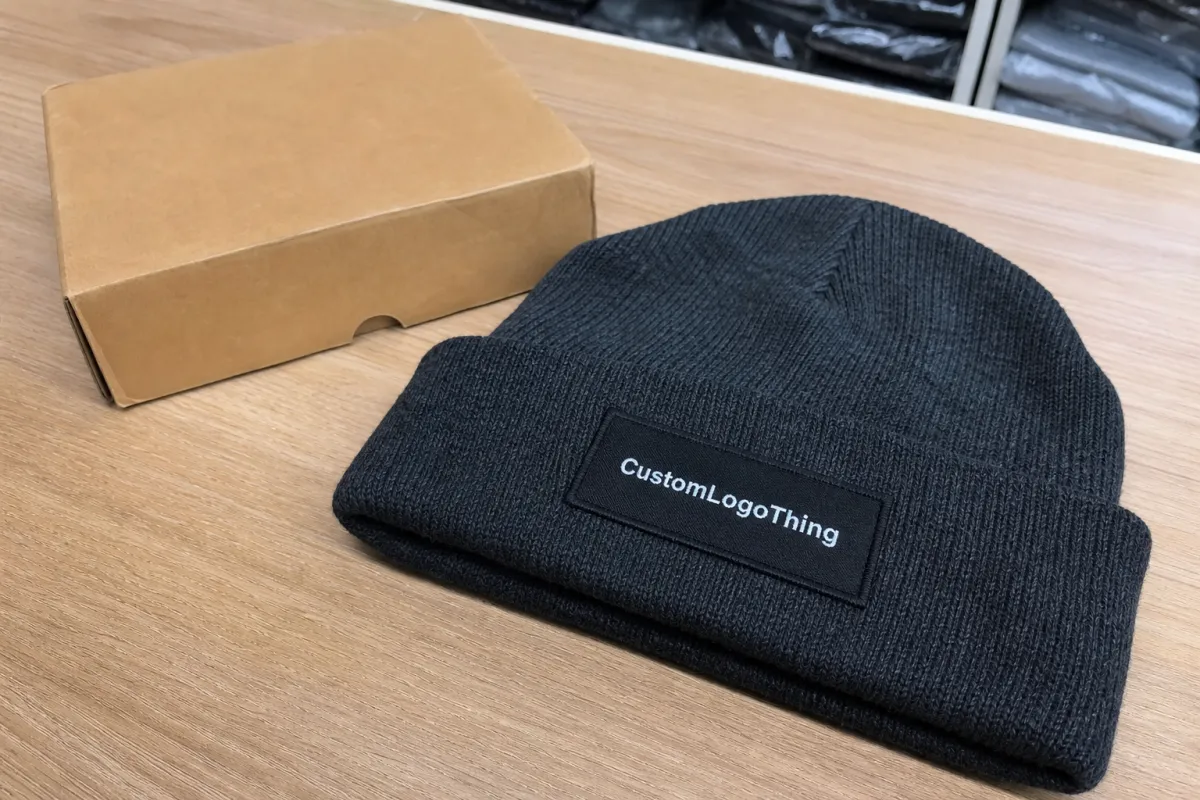
In practice, the patch is the detail that decides whether a beanie feels like merchandise or a real gift. A well-made patch frames the logo, controls the visual footprint, and avoids the stretched or distorted look that can happen when decoration fights against knit texture. For cold-weather employee gifts, dealer appreciation kits, or event handouts, that matters more than most buyers expect, because the item has to sit nicely in a box and still look good six weeks later on a commute or weekend trip.
Patch beanies also travel well in bulk programs. A stitched, woven, or molded patch sits on top of the knit instead of sinking into it, so the front panel stays cleaner through packing and wear. That gives you a better shot at consistency across cartons, especially if the order is being split for offices, regional teams, or a fulfillment center. If the goal is a controlled rollout, every cap should match the same placement, size, and color standard, not just the same SKU on paper.
From a buyer's point of view, the patch lets you choose the tone of the gift. A tonal patch with a low-contrast beanie reads understated and executive. A higher-contrast patch with a bolder logo reads more active and event-friendly. Either way, corporate gifting Logo Patch Beanies bulk order planning works best when the patch becomes the hero detail and the rest of the build supports it: the right yarn, the right cuff depth, and a finish that feels intentional rather than crowded.
If you are planning a winter recognition program, a customer welcome kit, or a trade-show thank-you, start by deciding what the beanie must communicate before you compare decoration methods. That order of thinking saves time later and usually leads to a cleaner quote, fewer approval rounds, and fewer surprises in production.
Patch styles, knit weights, and decoration details that hold up
Not every patch behaves the same on knitwear. A woven patch gives you crisp detail and a polished surface for smaller logos or fine lines. Leatherette reads warmer and more tactile, which can be a nice fit for premium gifts or outdoor brands. Embroidery-style patches add texture and a classic look, while TPU or molded patches can create a sharper, sportier edge with more shine. None of those choices is universally best; the right one depends on how you want the beanie to read in a box, in a photo, and on a person.
Knit weight matters just as much. A heavier rib knit often feels more substantial and holds a patch in a steadier visual zone, while a lighter knit can feel softer but may show more stretch variation from one piece to the next. Cuff height also affects the logo zone. A taller cuff gives the patch a larger, flatter canvas and usually helps the logo sit more cleanly. Crown shape and yarn texture matter too, because a loose knit or a very slouchy crown can make even a good logo look less deliberate.
| Patch style | Visual feel | Typical added cost per unit | Best fit | Notes |
|---|---|---|---|---|
| Woven patch | Clean, sharp, compact | $0.30-$0.65 | Fine logos, tidy corporate kits | Best for detail and flatter presentation |
| Leatherette patch | Warm, premium, slightly rugged | $0.35-$0.75 | Executive gifts, lifestyle brands | Looks strong with deboss or laser detail |
| Embroidery-style patch | Classic, textured, familiar | $0.40-$0.90 | Heritage looks, outdoor teams | Great for bold artwork and simple marks |
| TPU or molded patch | Modern, sporty, dimensional | $0.45-$0.95 | Active brands, event merch | Higher impact, but the design should stay simple |
Flat, low-bulk decoration usually stacks better in shipping cartons and photographs more cleanly in ecommerce or gift-promo layouts. Thicker patch materials can still work well, but the logo should be scaled carefully so the front panel does not feel crowded. A patch that is too large starts to fight the knit; one that is too small can disappear in a gift box or catalog image. A useful rule is to choose the biggest patch that still respects the beanie's shape.
Color approach should be practical, not theatrical. Tonal branding can feel elevated and restrained, which works well for internal recognition. High-contrast combinations help with readability for events, outdoor staff, or office groups where the logo needs to read fast. If the order includes apparel across a wider program, your Wholesale Programs page should sit alongside the beanie decision, because consistency across garments usually matters more than any single item in isolation.
Fit, sizing, color matching, and file prep for production
Beanies are often sold as one-size-fits-most, but that label hides real variation. Stretch recovery, cuff depth, and yarn density change how the cap sits on different head sizes. A softer knit may feel more forgiving, while a denser cuff holds shape better through repeated wear and packing. For mixed teams or large event groups, that is worth thinking through early, because a beanie that feels snug in sample form can behave differently once a full run is packed and distributed.
Color matching is another spot where buyers can save themselves headaches. Exact Pantone matching is usually more realistic on the patch than on the knit body, because yarn dye lots and knit structure can shift the final appearance slightly. That does not mean the beanie color is uncontrollable; it means the base knit should be treated as a close visual match rather than a laboratory-perfect one. If your brand book is strict, keep the patch as the precise brand anchor and let the knit body support it with a compatible tone.
Corporate gifting logo patch beanies Bulk Order Planning also depends on artwork prep. Vector files with clean edges are the safest starting point. Small type, thin outlines, and busy gradients tend to get muddy once reduced to patch scale, so simplifying the mark often improves the finished piece. If a logo was built for large signage or web headers, ask for a production-ready version before signing off on the patch shape. That step usually saves time in digitization or patch setup.
Approval checkpoints matter more than many teams expect. A good proof should show front placement, patch size, edge finish, and the relationship between the patch and the cuff seam. If the sample render looks off, fix it before the run starts. A fast yes on a weak proof can create a lot of back-and-forth later, and on a bulk order, that means schedule risk. For kits that include printed inserts or packaging sleeves, check whether the final presentation uses FSC-certified paper components from FSC to keep the material story clean and easy to explain.
Packaging should be decided at the same time as artwork. Folded, banded, polybagged, or boxed units all affect carton density and intake at the receiving dock. If a gift box is involved, the beanie height, fold method, and label placement should be fixed before production. That is especially true if the order will be split between direct-to-recipient mailers and bulk cartons for office distribution.
The orders that stay on schedule are usually the boring ones in the best way: clear artwork, one patch spec, one packing spec, and no last-minute color debates after production has started.
Pricing, MOQ, and quote variables that change unit cost
Unit price on a patch beanie is built from several moving parts. The body style is the base cost, then the patch material, patch size, color count, attachment method, and packaging each add their own weight. A simple woven patch on a stock cuffed beanie will price very differently from a molded patch on a custom knit with individual folding and insert cards. If a quote looks unusually low, check whether it assumes simpler artwork, looser packing, or a larger quantity than your actual need.
MOQ is practical, not abstract. A supplier may offer a favorable price at 500 or 1,000 units because the setup can be spread across more pieces, but a smaller run may push the per-unit cost higher. Add multiple patch variations, extra colorways, or special labeling, and the minimum can rise again. That is normal. The real mistake is comparing quotes with different specs and assuming the cheaper one is the better deal. For corporate gifting Logo Patch Beanies bulk order planning, the spec sheet should stay identical before you compare price.
Tiered pricing usually rewards quantity jumps. The step from 250 to 500 units can cut the unit cost more than the step from 500 to 750, depending on the factory setup and patch method. In many programs, the cost curve makes sense only if the order is repeated across several departments or a full event season. If that is your scenario, ask for a quantity ladder so you can see where the next price break lives before the order is finalized.
Watch the quote variables that first-time buyers miss:
- Setup charges for patch digitization or die creation
- Sampling or proof fees if a physical pre-production sample is needed
- Rush charges when the schedule compresses standard production windows
- Mixed carton costs if units must be split by size, color, or recipient list
- Custom labels or inserts for gift programs with a branded unboxing moment
If the order is part of a broader merchandise strategy, keep the conversation tied to landed cost, not just sticker price. Freight, packing, and receiving requirements can move the final number more than a small change in patch material. That is one reason buyers often start with corporate gifting logo patch beanies bulk order planning and then widen the discussion to packaging and distribution once the product is set.
For teams that order across multiple categories, a FAQ page is a good place to confirm terms on proofing, MOQ, and packing before you lock a purchase order. The fewer assumptions in the quote stage, the fewer surprises at the receiving dock.
Production process and timeline from mockup to delivery
The cleanest process starts with inquiry, artwork review, and a realistic schedule check. After that comes patch setup or digitization, then a mockup, then proof confirmation. Only after those steps should bulk production begin. A decent supplier will also build in quality inspection and carton packing before the shipment leaves. That sounds basic, but a lot of schedule problems happen because one of those steps gets rushed or skipped.
Lead time depends on the build. A stock beanie with a simple patch may move fairly quickly, while a fully custom knit or a complex patch shape adds days or even a couple of extra weeks. Rush orders can compress some of the timeline, but not all of it. Artwork approvals, material approvals, and patch setup still need real time if you want the finished goods to look right. In many cases, the most valuable thing a buyer can do is answer the proof quickly and clearly.
Corporate gifting logo patch beanies bulk order planning stays on track when the buyer confirms three things early: exact quantity, ship-to details, and packaging spec. Those three items sound simple, but they influence whether the job moves as one carton lot or several smaller drops. If the beanies are going to offices in different states, the packing and carton labels may need to be built around those destinations from the beginning.
Transit time should be treated as its own schedule line. Factory completion is not the same thing as delivery. If the campaign launch date is fixed, count backward from the in-hands date, not the production finish date. For orders that ship through distribution centers, carton drop and vibration checks modeled on ISTA guidance are worth asking about, especially if the beanies are moving with other gift items or through more than one handling point.
That extra planning pays off because mixed-kit shipments are more sensitive to delays than single-item orders. If the beanie is one component of a larger employee welcome kit, the entire program can slip if one carton spec or recipient list changes late. A good build schedule leaves room for proofing, production, transit, and intake, not just the manufacturing window.
How to compare suppliers on proofing, QC, and packing consistency
The best supplier is not the one with the flashiest mockup. It is the one that catches problems early and repeats the same result across every carton. Look closely at proof quality. The mockup should show accurate logo size, correct placement, clean edge treatment, and a true enough color reference to make a decision. If the render feels vague, the production result may be vague too.
Quality control on patch beanies should include knit consistency, patch alignment, trim cleanliness, and carton counts. Those details sound small until you have to hand them out at a leadership meeting or ship them to a tight distribution schedule. A cap with a crooked patch or loose threads can weaken the gift immediately, even if the logo itself is correct. For branded programs, the finishing work often says more than the artwork.
Packing consistency matters just as much. If the order is going to offices, trade-show teams, or a third-party fulfillment center, the cartons need to arrive labeled in a way the receiving team can handle without guesswork. If you are ordering through a supplier with wider apparel support, their Wholesale Programs should be able to handle repeat specs, carton splits, and reorder continuity without making you rebuild the job each time.
Communication style is a useful filter. Good suppliers send itemized specs, confirm revisions in writing, and assign a point of contact who can answer changes without slowing the run. That does not mean every answer arrives instantly; it means the order is handled with discipline. For a corporate program, reliability matters more than hype because every carton has a destination and a deadline.
One more practical check: ask how issues are handled if there is a patch placement variance or a label mismatch. A supplier that explains the correction process clearly is usually safer than one that only talks about speed. That is a real test of order control, and it tells you a lot about how the run will be managed once the machines are moving.
Next steps to lock the order and keep launch day on track
Before you request a quote, gather the essentials: logo file, preferred beanie color, patch style, quantity, in-hands date, and any gift-box or label requirements. If those pieces are already decided, the quote will be sharper and the production path will be easier to judge. If one of those pieces is still open, say so up front rather than letting it drift into the middle of approval.
Pick one clear sample direction before the run starts. Too many revisions spread across a bulk order can create delay and cost. For mixed-location shipments, confirm carton split instructions, receiving rules, and ship-to addresses as early as possible. That is especially helpful when the order will be sent to multiple offices or event sites, because one missed label can slow an entire distribution chain.
If your program includes other branded goods, keep the beanie spec aligned with the rest of the campaign. A premium knit cap paired with a flimsy insert card can weaken the package; a simple, well-built beanie with clean packing can feel stronger than a cluttered kit with too many finish layers. That is why corporate gifting logo patch beanies bulk order planning should be treated as part of the full gift experience, not just a decoration choice.
When the artwork is approved, the quote is locked, the timeline is confirmed, and the packing method matches the gifting plan, the rest of the job gets much easier. That is the point where the order stops being a loose idea and becomes a buildable program. Done well, corporate gifting logo patch beanies bulk order planning gives you a useful gift that ships cleanly, wears well, and lands on schedule without wasting budget.
How do I choose the right logo patch beanies for a corporate gifting order?
Start with the use case: employee gift, client welcome kit, event handout, or retail-style merch. Then match patch style, knit weight, and color contrast to the level of polish you want. Ask for a mockup that shows placement and scale before you approve the bulk run, because that small step usually prevents the biggest production mistakes.
What affects the price per piece on bulk logo patch beanies?
Beanie construction, patch material, patch size, and decoration complexity all affect unit cost. Packaging upgrades, setup charges, and rush timing can raise the total landed price. Larger quantities usually reduce per-unit cost, but only if the spec stays consistent from the sample through the full order.
What is the typical MOQ for branded patch beanies?
MOQ depends on the beanie style, patch method, and whether custom materials are involved. Simple stock options often allow smaller minimums than fully custom builds. If you need several colors or packing variations, expect the MOQ to rise because every added option adds setup and handling.
How long does a corporate gifting beanie order usually take?
Lead time depends on proof approval, patch setup, production queue, and shipping distance. Fast approvals can shorten the schedule, but custom details still need time to complete correctly. Build in separate time for transit so the delivery date reflects the full order cycle, not just the factory finish date.
Can we mix colors or sizes in one logo patch beanie bulk order?
Mixing colors is often possible, but each added option can affect pricing and minimums. Beanies are usually one-size, though cuff depth and stretch still matter for fit. Confirm carton splits and item counts early if the order will be distributed to multiple locations, because that is where most packing issues show up.


