For wine shops, a mailer has to do two things at once: protect what is inside and carry the brand with enough confidence that the order feels intentional from the first touch. That is why wine shops Waterproof Apparel Mailers Artwork Proof Checklist work matters before a single bag goes to press. One damp doorstep, one rushed file, and a package that was supposed to feel premium can start reading as an avoidable mistake.
These mailers are more than shipping sleeves. They are handled in stockrooms, loading areas, and delivery vans, then judged at the front door under bad lighting and limited patience. A polished screen file can still fail once it meets film, seams, folds, and adhesive. The material changes the whole conversation.
For wine shops that ship branded apparel, tasting-room merch, gift sets, or membership items, the same logic applies across Custom Packaging Products and other branded shipping formats. The safest orders are the ones built around the structure first and the artwork second.
Why Waterproof Mailers Matter for Wine Shops
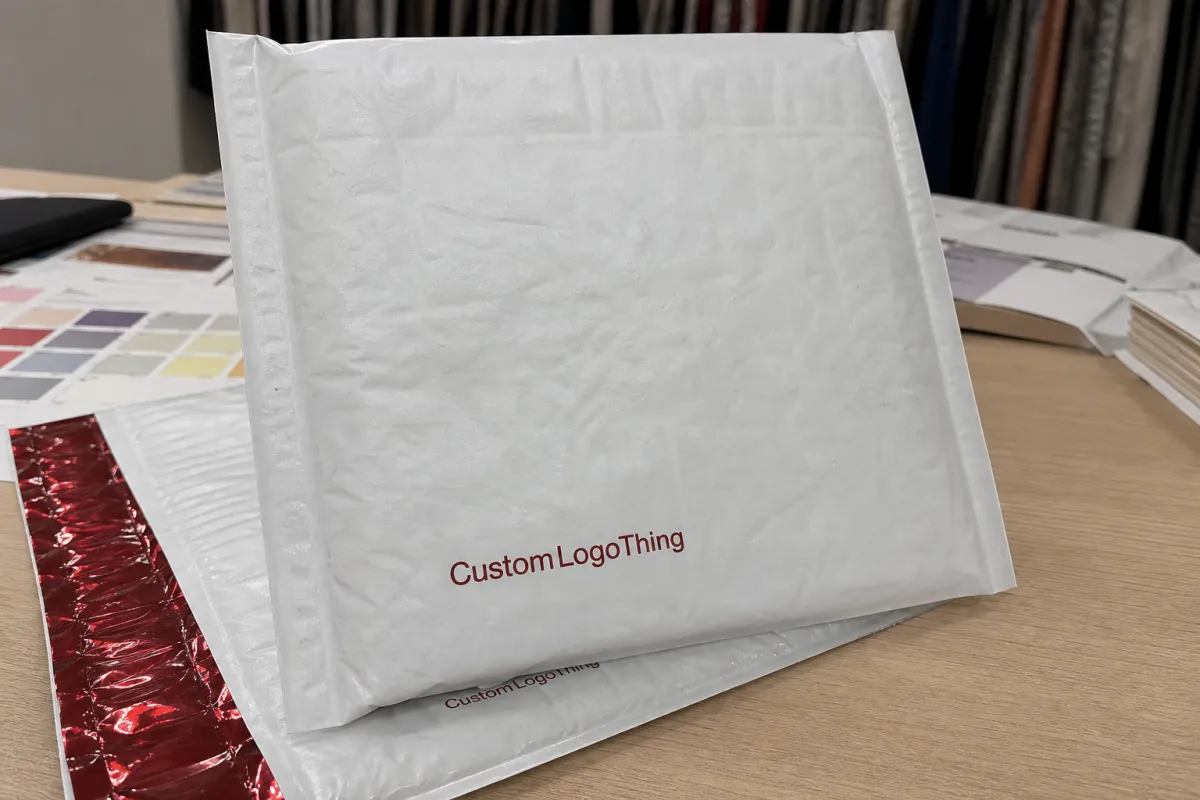
Wine shops rarely ship just one item. A typical order may include a sweatshirt, a corkscrew, a note card, and a small insert or membership piece that needs to arrive flat and clean. That mix is exactly where Waterproof Apparel Mailers earn their place. The outside has to resist moisture and handling, while the interior keeps the garment presentable.
Humidity is often the quiet problem. Back rooms run cool, truck cargo areas warm up, and porch deliveries sit through rain, mist, and condensation. Paper-based packaging starts to look tired fast under those conditions. Film-based mailers, laminated apparel bags, and coated poly structures hold up better because water is less likely to weaken the surface or smear the print. That does not make them indestructible. It just means they behave like shipping tools instead of decorative wrappers.
The finish changes the impression more than many buyers expect. Gloss, matte, soft-touch, and opaque white films all alter color, contrast, and readability. A deep red logo that looked perfect in a PDF can flatten on a dark substrate or glare on a shiny surface. Artwork is only one part of the job. The substrate decides whether that artwork still looks deliberate after the mailer is folded, sealed, and stacked.
There is also a branding reality that wine shops understand better than most retailers. Customers are not only buying the item inside. They are buying the feeling that the shop knows how to present it. If the mailer arrives dented, damp, or printed off-register, that polish disappears before the package is even opened.
“A proof is not just a preview. It is the last inexpensive place to catch a mistake.”
That is why the proof stage should start early. The goal is to confirm the mechanics before the team gets attached to the color. The order is simple: structure, fit, print setup, then visual finish.
How Waterproof Mailer Structure Protects Apparel and Artwork
Waterproof Apparel Mailers are built from structure first and artwork second. Film thickness, seal strength, closure style, and surface finish all affect performance. A lighter mailer can work for a folded tee, but heavier garments or bundled orders usually need a stronger gauge and a more secure seal. Basic poly mailers commonly sit around 2.5 to 3 mil, while heavier custom versions may go higher depending on the load and print method.
The closure matters more than many buyers expect. Adhesive strips, self-seal flaps, and tamper-evident closures all change how the package opens, re-closes, and survives handling. If the shop includes inserts or a thicker apparel fold, the opening width and flap depth need to match the packout. Otherwise the product fits in theory and fights the bag in real life. That is where the approval trouble usually starts.
Artwork also behaves differently on film than it does on paper. Full-bleed coverage on glossy material can look sharp and premium, but it exposes registration issues, edge distortion, and uneven ink density more clearly. On opaque films, a white underlay may be needed so color does not sink into the substrate. On clear or semi-transparent materials, reverse print and opacity checks become part of the approval, not an optional extra.
For general transport expectations, some buyers look to testing frameworks from the International Safe Transit Association. That does not mean every mailer needs a formal lab program. It does mean the package should be treated as a transit component, not just a flat design file.
There is another practical detail for wine shops that ship apparel alongside tasting notes, membership cards, or gift inserts. The package needs enough usable space for those pieces without crowding the artwork or interfering with the seal. When the opening area gets congested, the inserts shift and the finish starts to look improvised. That kind of small miss is easy to overlook on a mockup and hard to forgive in hand.
Here is a straightforward comparison buyers usually find useful when weighing print quality against function:
| Mailer Type | Typical Strength | Print Look | Best Use | Common Tradeoff |
|---|---|---|---|---|
| Standard poly mailer | Light to medium-duty | Clean with simple branding | Basic apparel shipping | Less premium feel |
| Heavy-gauge waterproof apparel mailer | Medium to heavy-duty | Better for full-bleed graphics | Merch, bundled orders, wet climates | Higher unit cost |
| Matte or soft-touch film mailer | Medium-duty | Muted, upscale finish | Gifted apparel, premium wine club orders | Can show scuffs more easily |
| Opaque white film with white ink support | Medium to heavy-duty | Bright color reproduction | Bright logos, dark brand palettes | More setup and proof scrutiny |
If you are comparing structures, browsing Custom Poly Mailers can help narrow the field. The better choice is not always the most elaborate one. It is usually the one that keeps the garment dry, the logo readable, and the unit price in a reasonable range.
Artwork Proof Checklist for Waterproof Apparel Mailers
This is where money gets saved. The wine shops Waterproof Apparel Mailers artwork proof checklist should begin with the mechanics, not the color. Confirm the dieline version, final size, bleed, safe zone, seam placement, and closure area before anyone comments on the shade of red. If the structure is wrong, a beautiful proof is still the wrong proof.
Start with the basics:
- Dieline version: Match the proof to the current template, not an older size or shape.
- Final dimensions: Check width, height, flap depth, and gusset if the design uses one.
- Bleed and safe zone: Keep copy and logos clear of trim, folds, and seal edges.
- Logo placement: Make sure the mark still reads after folding and stacking.
- Ink coverage notes: Confirm whether the file needs white underprint, reverse printing, or spot-color guidance.
Then look at the content itself. Final copy, final vector art, final contact information, and final colors all need to be on the proof. The number of times a team approves a file and then changes one line afterward is higher than it should be. Once the press file is set, even minor edits can change the output.
Text legibility is a frequent miss. Small type that reads fine on a white monitor can disappear on dark film, especially with matte finishes or busy backgrounds. QR codes and barcodes need a scan test, not a quick visual check. If the code is tied to returns, product registration, or a membership offer, the proof should show enough quiet space around it and enough contrast to scan reliably.
Seam and fold interference deserve special attention. A logo that looks perfectly centered in a digital mockup can end up split by a fold line or pushed too close to an adhesive seam once the mailer is formed. The proof should show panel orientation clearly so the buyer can see where the art lands on the real piece.
Color expectations need to stay practical. Screen color and printed color are not the same thing. On glossy or dark film, saturated reds and deep blacks often behave differently than they do on a coated paper proof. If color is brand-critical, ask for a printed sample or a press simulation and review it under neutral light instead of warm tasting-room lighting.
A few proof red flags are worth naming plainly:
- Mockups that ignore seam location
- Cropped logos or clipped copy
- Artwork scaled for one size but approved for another
- Color proofs that do not resemble the actual substrate
- Panel orientation that does not match how the bag opens in real use
If several people need to review the job, mark the proof directly. Side-by-side comments are easier to resolve than a long chain of vague emails. In packaging, “looks good” is not approval. It is usually the start of confusion.
For teams that also care about sourcing, it helps to verify whether paper inserts or other paper-based components are part of the packout. The Forest Stewardship Council is relevant when paper materials are involved, even if the mailer itself is a film structure.
Process and Timeline: From Quote to Production
The workflow looks simple on paper and messier in practice. Request specs. Confirm the material and size. Review the quote. Review the proof. Approve the revision if needed. Then production starts. Most delays happen before the press runs, which is why buyers should treat the quote stage and proof stage as one connected job.
Repeat orders usually move faster because the supplier already has the approved structure, print setup, and artwork history. New custom jobs take longer, especially if the shop wants special sizing, multiple print sides, white ink, or a finish that needs extra calibration. A straightforward custom order can take roughly 12 to 15 business days after proof approval. More complex jobs may need longer depending on plant load and freight distance. Rush work is sometimes possible, but it usually costs more and leaves less room for correction.
The cleanest approvals come from a complete brief. Send the size, quantity, print sides, finish, target ship date, and the exact brand elements that must stay fixed. If the shop is packaging apparel plus inserts, say so up front. Good production teams can work with that. Vague instructions only lengthen the email thread and weaken the proof.
The most common slowdowns are predictable:
- Missing artwork files or low-resolution logos
- Unclear closure or seal requirements
- Late copy edits after proofing starts
- Multiple internal approvers with no final decision-maker
- Quantity or ship-to changes after the quote is issued
One habit helps more than most teams expect: name one person to give final sign-off. Not “the team.” Not “whoever is free.” One person. That simple choice keeps small packaging orders from wandering through a dozen half-decisions.
For buyers building a broader packaging system, the mailer works best when it is treated as part of the whole packout rather than an isolated purchase. That is where the link between artwork, inserts, and Custom Packaging Products starts to matter. The proof should match the actual use case, not a polished version of one.
Cost, Pricing, and MOQ Tradeoffs
Pricing on Waterproof Apparel Mailers usually comes down to four things: quantity, material grade, print coverage, and setup complexity. Unit cost drops as quantity rises. That part is predictable. What catches buyers off guard is how fast custom sizing, full-bleed graphics, white ink, or extra proof rounds can raise the quote. A mailer that looks simple may cost more than a busier one if the print build is harder.
For rough planning, low-volume custom orders often sit in a higher unit-cost band because the setup has to be spread across fewer pieces. Once quantities move into the several-thousand range, the per-unit price usually improves. Buyers often see a noticeable step-down between a 1,000-piece run and a 5,000-piece run. That is not special pricing magic. It is just setup math.
The MOQ question is where people get tempted to chase the lowest minimum without checking the rest of the bill. A smaller order can be smart for testing a seasonal design, a regional store group, or a new wine club drop. But lower MOQ almost always means higher per-piece cost. If the shop already knows the design will sell through, ordering more usually makes better economic sense.
Here is the tradeoff in plain language:
| Decision | What It Helps | What It Costs | Best For |
|---|---|---|---|
| Higher MOQ | Lower unit price | More cash tied up in inventory | Stable programs and repeat designs |
| Lower MOQ | Less inventory risk | Higher unit cost | Testing, seasonal runs, new campaigns |
| Simpler artwork | Faster proofing and fewer print issues | Less design flexibility | Clean branded shipping |
| Full-bleed or specialty finish | Stronger shelf and unboxing presence | More setup and often more cost | Premium merch and gift orders |
The biggest cost drivers are usually the obvious ones once someone says them aloud: custom dimensions, specialty film, large print coverage, and extra revision rounds. Rush timing is another one. It is not free just because the calendar is tight.
When buyers evaluate price, landed cost matters more than unit price alone. A cheaper mailer that arrives late, scuffs easily, or needs a reprint is the expensive option. That is easy to buy and hard to explain later.
Common Proofing Mistakes That Cause Reprints
The repeat offenders are usually dull, which is exactly why they keep showing up. Wrong dieline. Missing bleed. Low-resolution artwork. A logo approved for one size and then stretched to fit another. These are not exotic production failures. They are proofing misses.
Color drift is another classic. Teams approve a file that looks printable but not quite on brand, especially on dark or glossy film. Then the first box arrives and someone says the blue is “off,” which is packaging shorthand for “we should have checked this more carefully.” If color matters tightly, ask for a sample or a clearer print expectation before approval.
Text errors are painfully common. One typo in a product description, one wrong QR destination, one outdated phone number, and the order turns into a giveaway instead of a shipment. That is why final proofreading should happen after the artwork is locked, not before. Otherwise the file gets approved by everyone and read by no one.
Panel orientation mistakes are sneaky. The proof may look clean in a flat mockup, but if the bag folds differently in production, the front panel can land somewhere no one expected. Always check how the package opens, folds, and displays when held in the hand. A nice layout on screen is not enough.
There is also a logistics mistake that causes more trouble than it should: approving artwork before the final quantity, ship date, or destination is set. That can change the production lane, the freight method, and the cost structure at once. Suddenly the “done” job is back in motion.
Most of these problems disappear when the buyer treats the proof like a manufacturing document instead of a design thumbnail. The file should answer one question clearly: will this exact package work in the real world?
Expert Tips and Next Steps for Faster Approval
If you want quicker approval, send one clean spec sheet. Include size, material, quantity, print color count, finish, deadline, and any brand elements that cannot move. That sounds basic because it is basic. Packaging moves faster when nobody has to guess what “approximately” means.
Ask for a marked-up proof if the design is dense or if the mailer has multiple print zones. Side-by-side notes are easier to review than comments buried in a thread. It also reduces the familiar situation where three people each assume someone else caught the issue.
Build an internal sign-off process with one decision-maker, one proof, and one deadline. The best approvals are usually boring. One person checks the mechanics, one person confirms the brand details, and the order moves on. That rhythm saves time and keeps the file from drifting.
For shops that ship apparel regularly, it helps to keep a standing packaging spec file. Over time, that file should hold approved sizes, finish notes, shipping targets, and any brand colors that need extra care. The next order then starts from facts instead of memory, and memory is a poor production system.
One final practical note: if the packaging program expands into different components, check whether any inserts, shippers, or material claims need testing or sourcing documentation. That is where references such as ISTA or FSC may matter, depending on the materials involved. Not every order needs the full set of paperwork. The point is to know which lane the order belongs in before it is scheduled.
For wine shops, the most reliable approach is to build the order around the wine shops waterproof apparel mailers artwork proof checklist, then request the quote and proof from the same spec set so everyone is working from the same facts. That is how you avoid the awkward middle ground where the mailer is technically approved but still wrong enough to cost money.
What should wine shops check first on a waterproof apparel mailer proof?
Start with the dieline, final size, and logo placement before focusing on color. Then confirm bleed, safe zones, seam areas, and the exact substrate so the proof reflects the real bag, not a generic mockup.
How long does production usually take after proof approval?
Simple repeat runs usually move faster than new custom jobs with fresh artwork or specialty finishes. A straightforward order can often run about 12 to 15 business days after proof approval, while more complex work may need longer depending on schedule and freight.
What drives the cost of custom waterproof apparel mailers most?
Quantity, material grade, print coverage, and setup complexity are the biggest levers. White ink, full-bleed graphics, custom sizing, and rush timing usually raise the quote, while higher quantities generally reduce unit price.
Can a wine shop lower MOQ without wrecking unit price?
Usually yes, but the per-piece cost will rise as the order gets smaller. It helps to simplify artwork, reduce coverage, or stay with a standard size, then compare a few quantity breaks before deciding.
What artwork file format is best for mailer proofing?
Vector files are best for logos, type, and clean shape work because they hold up at scale. High-resolution linked images work for photo-based designs, but the proof still needs a final size and contrast check before approval.


