For hotel teams buying winter headwear, hotel heavyweight winter Hats Unit Cost is usually determined before embroidery is ever discussed. Knit density, yarn choice, cuff depth, and packing method move the number more than most buyers expect. The logo is visible, but the garment spec does most of the financial work.
A front desk team, valet crew, shuttle driver, or guest welcome kit needs a hat that stays warm, looks tidy, and holds its shape after repeated wear. That means the buying brief should start with performance and presentation, then move to decoration, then price.
A lighter promotional beanie can look acceptable on paper and still fail in wind, wet weather, and daily handling. A denser knit usually lasts longer, looks sharper, and is more likely to be worn by staff instead of left in a drawer. That is the real procurement test.
Why a denser knit beats a cheap promo hat in hotel use
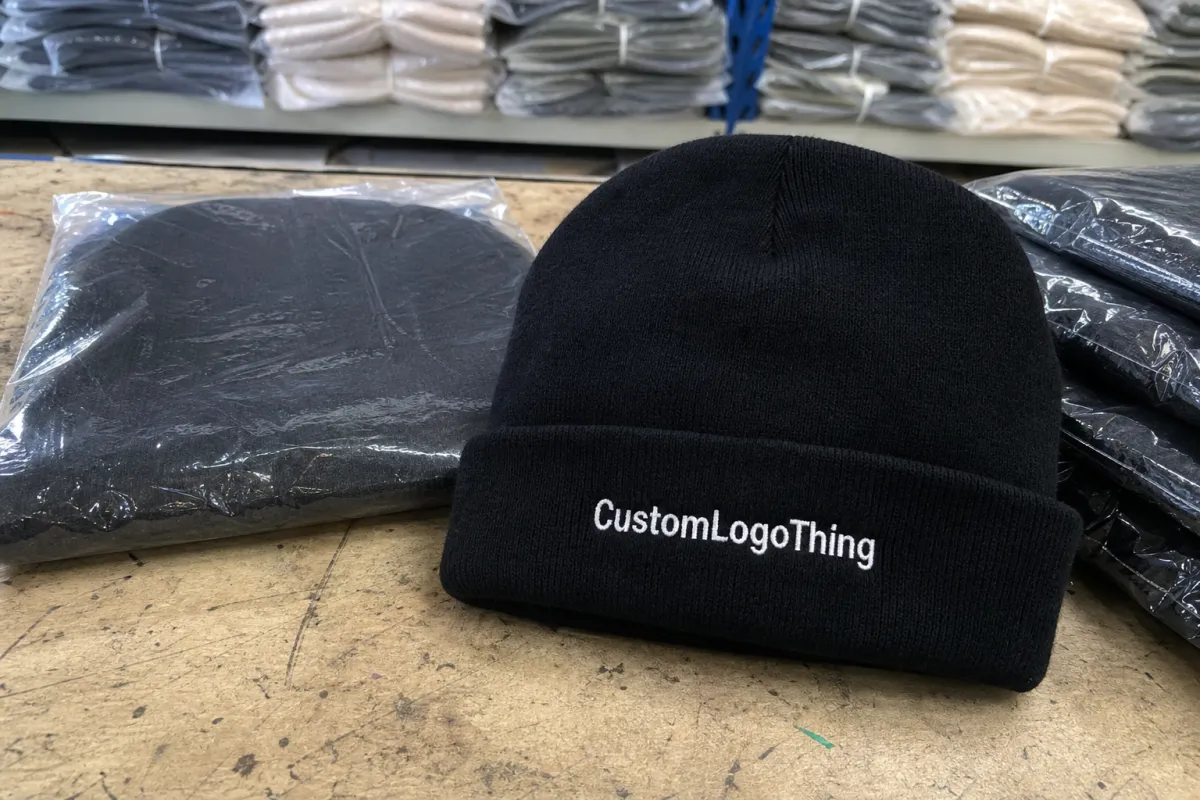
Hotel winter hats are not event swag. They are worn at the curb, in the driveway, and on early shuttle runs, so they need to function like a uniform item. A lightweight giveaway beanie may work for a one-day campaign, but it rarely survives a season of cold-weather use with the same appearance.
A heavier knit blocks wind better, keeps the cuff cleaner, and resists the sagging that makes a hat look worn out too soon. Budget styles often stretch at the opening, pill on the surface, and lose structure around the crown after a short period of use. Once that happens, the hotel is replacing hats earlier than planned.
The hidden cost is staff acceptance. If a hat feels flimsy or looks temporary, employees stop wearing it. That creates waste and forces a second purchase. A better knit is usually cheaper in practice because it gets used.
If the sample feels flimsy in your hand, it will feel worse after three cold weeks and a few wash cycles.
Treat the item like part of the uniform, not an afterthought. Check cuff thickness, rib density, stretch recovery, and logo scale with the same care you would use for a jacket patch or name badge. Once those details are fixed, the hat becomes a service tool instead of a seasonal giveaway.
Dense knits also protect the brand. A neat beanie reads as intentional; a thin one reads as temporary. Guests notice whether the team looks prepared for winter, even if they never measure yarn weight.
What makes a hotel winter hat feel premium on staff
Premium is mostly about fit, structure, and consistency. A heavyweight beanie typically uses thicker yarn, a tighter rib, and enough body to sit cleanly on the head instead of collapsing at the crown. The cuff should fold without curling, and the opening should recover after being stretched.
That matters most for outdoor staff, ski properties, city hotels with winter concierge teams, and guest kit programs where the hat is meant to be worn. In those settings, smaller embroidery, a woven label, or a low-profile patch usually looks better than a large graphic trying to dominate the garment.
The cheapest option is not always the lowest-cost option. A low invoice can become expensive if the hat is unpopular, wears out quickly, or arrives with a shape no one wants to wear. A stronger knit has a better chance of becoming part of the uniform rather than stockroom surplus.
Branding should support the garment, not fight it. On dark knit, a restrained logo often reads more expensive than oversized artwork. The goal is recognition from a distance, not noise at close range.
- Best for staff use: dense 2x2 rib or similar heavyweight knit with a folded cuff
- Best decoration: compact embroidery, woven label, or a small patch
- Best fit target: adult one-size with strong stretch recovery
- Best result: warmth, shape retention, and fewer replacements across the season
Materials, knit gauge, and fit specs to lock before quoting
Start with the fiber. Acrylic is usually the budget-first choice because it is economical, easy to source, and stable in production. Acrylic/wool blends cost more, but they often feel warmer and look more substantial. Recycled yarn can support sustainability goals, though it may limit flexibility on color and availability.
Knit gauge is a quiet but important variable. A tighter gauge usually gives cleaner lines and better shape retention. A looser gauge can feel bulkier, but it may look less refined. For hotel use, the right answer is usually the one that stays warm, fits well, and still looks sharp after repeated wear.
Fit specs should be written down before quoting. Ask for finished height, cuff depth, relaxed width, and stretch range. One-size usually works for staff headwear, but the supplier should confirm how far the opening recovers after being stretched. If the same hat will be used for guests, that tolerance matters even more.
Decoration requirements need to be locked at the same time because they affect both cost and appearance. Embroidery size, stitch count, patch placement, and seam finish all move the quote. A dense knit can carry embroidery well, but a large stitch area adds thread, time, and setup.
Packaging belongs on the spec sheet too. Individual polybags, size stickers, paper tags, inserts, and master carton counts all affect labor and freight efficiency. If paper tags are part of the presentation, ask for FSC-certified stock from FSC. For transit protection, ask how cartons are packed against compression and damage, and whether the supplier follows a test profile aligned with ISTA guidance.
The reason to be exact is simple: two quotes that look close can be built on different assumptions. One may include a loose knit and simple bagging, while another includes heavier yarn, tighter finishing, and custom packing. Without a controlled spec, the comparison is not reliable.
Color control should also be part of the brief. Hotels often want the hat to sit beside existing uniforms without clashing. Ask for yarn swatches or lab dips if the shade matters. Some colors are easier to match than others, and recycled or blended yarns can introduce more variation than buyers expect.
hotel heavyweight winter hats unit cost, MOQ, and quote drivers
hotel heavyweight winter Hats Unit Cost is the sum of the blank knit, decoration, label or patch, packaging, sample handling, setup, and freight. A useful quote should separate those parts. If the supplier only gives one all-in number, it is difficult to compare offers fairly.
MOQ changes the picture fast. Smaller runs usually cost more per piece because setup is spread across fewer units. Add a second decoration location, multiple colors, or custom packaging and the unit price rises again. A hat that looks inexpensive in a catalog can become less attractive once the real spec is written out.
| Option | Typical unit cost | Common MOQ | Best use | Notes |
|---|---|---|---|---|
| Stock acrylic heavyweight beanie with simple embroidery | $1.35-$2.40 at 1,000+ pcs | 100-300 pcs per color | Standard staff wear, faster budget approval | Usually the lowest-cost route; stitch count still moves the quote |
| Acrylic/wool blend with woven label and cuff embroidery | $2.30-$3.90 at 1,000+ pcs | 200-500 pcs per color | Premium hotel uniforms and gift kits | Warmer hand feel, better structure, more consistent presentation |
| Recycled yarn heavyweight beanie with patch and custom bag | $2.80-$4.80 at 1,000+ pcs | 300-500 pcs per color | Eco-positioned properties and upscale guest packs | May add tooling fees, tighter color control, and longer lead time |
Those ranges are useful only if the brief is consistent. If the order drops below common MOQ thresholds, the unit price rises. If the logo is complex, the quote rises. If the hotel wants custom packaging, it rises again. None of that is unusual; it is simply how the cost structure works.
Setup fees deserve attention. Digitizing for embroidery, woven label tooling, patch molds, and special packing all carry one-time costs. Those fees may be small on a large order and significant on a small one, so ask for them separately.
Freight matters too. Air shipment is fast but expensive. Ocean shipment is cheaper but slower. Domestic delivery is simpler, but it still needs to be included in the landed cost. A quote that excludes freight is only a partial quote.
Production steps and lead time from proof to shipment
The production path is straightforward: brief, artwork, digital proof, sample, bulk knit, finishing, inspection, packing, shipment. Delays usually happen when the brief changes late or the buyer assumes every step can happen instantly.
A digital proof is often ready within a day or two once the artwork is usable. Samples take longer. Plan for roughly 5-10 days if the hotel needs to check color, logo scale, or fit. Bulk production commonly takes 15-25 days after approval, depending on yarn availability, decoration complexity, and packing format.
Quality control is where hotel programs stay on track. Check knit density, stitch consistency, logo alignment, color match, cuff symmetry, seam finish, and stretch recovery. On the sample, pull the cuff several times and confirm that the shape comes back. On bulk production, spot-check carton counts and compare finished goods against the approved reference.
Most defects in this category are visible if someone is actually looking: crooked embroidery, uneven tension, loose threads, a twisted cuff, or a logo placed too close to the seam. Those problems do not require a lab to detect. They require a buyer who insists on a proper sample and a clean inspection.
Shipping time is separate from production time, and the two should be planned together. Factory lead time does not help if the cartons are still in transit during the first cold week. The most useful timeline includes sample approval, bulk run, inspection, freight, and final delivery in one view.
Why hotel buyers keep reordering heavyweight beanies
The reason is not fashion. It is dependable performance. A heavier knit gives better warmth-to-cost value than a flimsy promo hat that staff avoid wearing. Once the hat becomes part of the uniform, it starts paying for itself through actual use.
Reliable pieces reduce friction in the operation. Consistent sizing means fewer complaints. Stable dye lots mean the new batch still matches the old one. Durable embroidery means the logo stays intact. These are basic details, but they are usually where the savings live.
There is also the stockroom angle. Fewer emergency replacements during a cold snap means less scrambling for managers and less waste sitting on shelves. A light hat often gets bought twice because the first one did not hold up. A denser knit is usually the better long-term decision.
Repeatable programs are easier to manage. Same spec. Same logo position. Same carton count. Same approval path. That kind of consistency saves time, protects margins, and avoids reopening the sourcing process every winter.
Next steps to request specs, samples, and a clean quote
If you want a serious quote, send a tight brief: quantity, colors, yarn preference, decoration method, packaging format, and delivery destination. Include the logo file in a usable format rather than a screenshot. That alone reduces back-and-forth and keeps hotel Heavyweight Winter Hats unit cost from drifting because of missing details.
Ask for three options if budget flexibility matters: a low-MOQ version, a best-value version, and a premium spec. That creates a real comparison instead of a list of unrelated numbers. It also makes the tradeoffs visible, since lower MOQ usually means higher unit cost and better finishing usually means more upfront spend.
Do not approve production from a mockup alone if color matters. Sign off on a digital proof or physical sample first. If brand standards exist, this is the time to verify them. “Close enough” on yarn shade tends to become a problem only after the cartons arrive.
When comparing suppliers, ask each one to break out the same items: blank hat cost, decoration, packaging, tooling fees, setup charges, and freight. Once those are aligned, the real difference becomes obvious and the decision can be made on value rather than sales language.
FAQs
What drives hotel heavyweight winter hats unit cost the most?
Knit density and yarn type usually have the biggest impact before decoration enters the conversation. Embroidery size, stitch count, and whether you add a patch or woven label can move the price more than buyers expect. MOQ and packaging format matter too because smaller runs and individual packing raise labor and handling costs.
What MOQ should I expect for custom hotel heavyweight beanies?
A common starting point is 100-300 pieces per color or design, but it depends on the factory and the yarn setup. More colors, more logo placements, or custom labels can raise the MOQ because the line has to be reset for your job. Ask whether mixed sizes or mixed logos count as one run, since that detail changes the real minimum.
Which decoration keeps winter hat pricing under control?
A woven label or simple embroidery is usually the cleanest value play for hotel winter hats. Full-color patches, oversized stitch areas, and multiple logo placements add cost fast and rarely improve wearability. Keep the mark small and durable so the hat stays useful instead of turning into a walking ad nobody wants.
How long does production take after artwork approval?
Digital proofing can be done quickly, but samples often take 5-10 days if you need to confirm color or fit. Bulk production commonly lands in the 15-25 day range after approval, depending on the knit and finishing details. Shipping is separate, and the method you choose can matter as much as the production schedule.
Can you match hotel uniform colors exactly on heavyweight hats?
Close color matches are common, but exact matching depends on yarn availability and the factory's dye control. A swatch or lab dip approval helps prevent surprises before production starts. Color matching can affect MOQ and lead time, so build that into the quote instead of assuming it is free.


