Wedding Unstructured Dad Hats Unit Cost review sounds straightforward until the numbers arrive. The blank cap is rarely the part that moves the budget most. On small wedding runs, setup, decoration, packaging, and shipping can outweigh the hat itself, especially when the order is 24 to 50 pieces rather than a few hundred.
That matters because wedding buyers do not evaluate a hat the way a general promo buyer does. A bridal party gift, welcome-bag insert, rehearsal dinner favor, or planner merch run may all start with the same cap style, yet the acceptable finish is not the same. One order needs to photograph well beside a linen suit and florals. Another needs to survive distribution in a stacked event box. A third needs to be repeatable for reorders. Same object, different standard.
A useful wedding unstructured dad hats Unit Cost Review begins with the complete spec, not a teaser price. If a supplier quotes only the blank and leaves out digitizing, stitch count, packaging, and freight, the number is incomplete. That is not a quote. It is a starting point with the important parts missing.
Wedding Unstructured Dad Hats Unit Cost Review: What Actually Drives Price
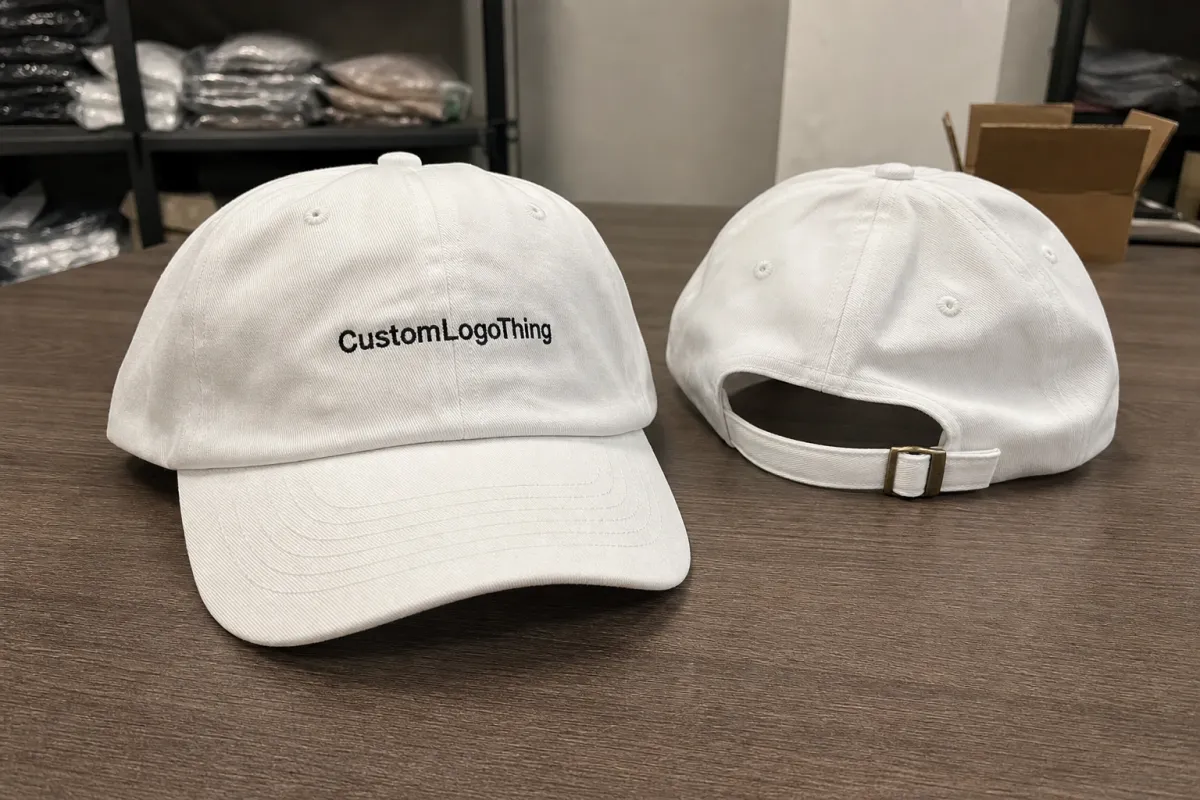
Labor is usually the first surprise. An unstructured dad hat is soft by design, which is why it looks relaxed and photographs well, but that same softness can make decoration less forgiving. The crown flexes under the needle. Artwork that stitches cleanly on a stiff five-panel cap may need more handling on an unstructured six-panel version. The blank itself may only vary by a few dollars; the decoration process can vary by much more.
Quantity changes the math fast. A 24-piece run, a 50-piece run, and a 200-piece run can all use the same cap color and the same logo, yet the per-unit price will not behave the same way. Fixed costs get spread across more units as volume rises. That is why small wedding orders often feel expensive even when the blank is modest.
Use case changes the acceptable ceiling too. Bridal party gifts can carry a higher unit cost because the order is sentimental and limited. Welcome bags are judged by consistency, since guests see them in quantity. Planner or venue merch usually puts more weight on reorderability and clean brand handling. A sensible buyer does not ask one number to do all three jobs.
To compare quotes fairly, line up the same variables:
- The same blank cap style, fabric, and closure
- The same decoration method and placement
- The same thread count, patch type, or print method
- The same packaging format
- The same ship-to destination and delivery speed
If one supplier quotes a washed cotton cap with embroidery and another quotes a brushed chino cap with a patch, the numbers are not comparable. That is how buyers accidentally choose the wrong offer. The lower price can simply be a different product in a different lane.
A complete quote shows the blank, decoration, packaging, and freight. Anything else is a partial number dressed up as certainty.
Working ranges help more than vague promises. Small wedding runs often land around $9 to $18 per unit once decoration is included. Better volume can move that closer to $6 to $11 per unit, depending on fabric, artwork, and packaging. Those ranges are not guarantees. A dense crest, multiple thread colors, or premium packaging can move a job up quickly. A simple monogram can move it down just as fast.
Fit, Fabric, and Finish Details Buyers Should Confirm
Unstructured Dad Hats work for weddings because they feel relaxed without looking careless. The soft crown drapes naturally, so the hat usually sits better in photos than a rigid promo cap. That matters more than it sounds. Wedding imagery is full of close-up moments, and a cap that collapses oddly at the front can spoil an otherwise polished set.
Fabric choice has a visible effect on both appearance and price. Washed cotton twill gives the softest, most casual hand feel. Brushed chino tends to look a little cleaner and more refined, which is useful for monograms and simple wedding crests. Heavier fabric can help the front panel hold shape during embroidery, but it can also make the cap feel less laid-back. Buyers should ask for the fabric weight or construction spec, not a vague phrase like “premium cotton.” That phrase can cover almost anything.
Several silhouette details matter more than most first-time buyers expect. Crown height changes how the hat sits on the head. Brim curve changes the profile from the side. Panel count changes how much uninterrupted space the logo gets. A lightly structured front panel often handles embroidery better than a fully floppy one, but some clients will trade that extra support for a softer drape. The right answer depends on the artwork and the event tone.
Closure style is another detail that shifts the presentation. A self-fabric strap with a metal buckle usually reads more elevated than a plastic snapback, and it tends to photograph better next to wedding attire. Velcro is inexpensive and practical, but it rarely feels right for a wedding order unless the brief is intentionally casual. For most event buyers, the cleanest look comes from understated hardware that matches the rest of the palette.
Color selection can save time and reduce revision loops. Neutral tones such as ivory, stone, black, navy, and dusty olive work across a wide range of wedding palettes. They do not fight with bridesmaid dresses, flowers, table linens, or printed inserts. Loud color can work, but only if the concept justifies it. Random bright caps often look like leftover stock once they are placed next to the rest of the event design.
Decoration Specs That Keep Wedding Logos Clean
Decoration method is where the wedding unstructured dad hats Unit Cost Review becomes concrete. Direct embroidery remains the default for many wedding orders because it is durable, tactile, and easy for buyers to understand. A monogram, date, or simple crest usually looks strong in thread. Woven patches can feel more refined and can handle finer detail better, while printed patches work when the artwork includes gradients or micro-detail that embroidery would flatten.
Stitch count affects both price and readability. A small two-initial monogram is cheaper than a dense floral crest, but shrinking the art is not always the best solution. On a soft crown, overly detailed artwork can blur visually and lose clarity at normal viewing distance. That is not a premium effect. It is a decorated hat that looks busier than it should. Good art simplification happens before production starts.
Placement shapes the quote and the finish. Front center is the standard because it gives the logo the best visibility. Side embroidery works well for initials or dates when the front needs to stay clean. Back placement is useful if the main wedding mark already lives on the front or if the buyer wants a quieter piece. If the design needs both a monogram and a date, one element should lead and the other should support. Two competing focal points on a soft cap usually look crowded.
Thread and patch color should be chosen deliberately. Matching the wedding palette is nice, but contrast is what keeps the artwork readable in photographs and low light. Ivory thread on a stone cap can disappear. Navy on stone usually performs better. The same rule applies to patch borders. They should frame the artwork, not vanish into the fabric.
For complex artwork, a proof on the actual cap template is worth requesting. Scale matters. Spacing matters. A logo that looks fine in a flat PDF can look tiny once it is placed on the front panel of a relaxed crown. If the mark cannot be read from a few feet away, it is probably too small for event use. If the spacing feels cramped on the template, it likely needs simplification.
Packaging teams often focus on the cap and forget the rest of the box. That is a mistake. If the order includes inserts or printed cards, paper stock should be chosen with the same care as the hat itself. Buyers who care about the presentation should ask for the cap spec, the decoration spec, the packaging spec, and the carton spec together. Separate answers create mismatched results.
For shipping resilience, carton handling should be treated as part of the product. Hat boxes should hold shape through transport, especially if the run includes folded inserts or presentation cards. A crushed brim or wrinkled front panel can undo an otherwise clean production job. The order is not finished until it arrives in the same condition it left.
Cost, Pricing, MOQ, and Quote Breakpoints
This is the part buyers actually use. Small wedding runs carry a higher unit cost because setup is spread over fewer hats. Once an order moves above 100 pieces, the per-unit number usually improves more noticeably. That does not mean the order becomes cheap. It means the fixed costs stop dominating every line item.
For a practical wedding Unstructured Dad Hats unit cost review, these ranges are more useful than a single quote:
| Order size | Simple embroidery | Woven or printed patch | What usually changes |
|---|---|---|---|
| 24-49 pcs | $10-$18 per unit | $12-$20 per unit | Setup, digitizing, and sample handling weigh heavily |
| 50-99 pcs | $8-$14 per unit | $10-$16 per unit | Fixed costs spread better across the run |
| 100-249 pcs | $6-$11 per unit | $8-$13 per unit | Labor efficiency improves and bulk pricing starts to matter |
| 250+ pcs | Often quoted lower | Depends on tooling and patch type | Freight, decoration complexity, and packaging become the swing factors |
MOQ depends on the decoration method and the amount of customization. A simple embroidered order can often start lower than a patch-heavy or private-label job. Custom colors, inside labels, and special trims raise the minimum because they add handling and sometimes tooling fees. If someone claims they can produce a tiny custom run at a boutique price with no minimums, the missing cost usually reappears somewhere else.
Common add-ons are predictable, and buyers should ask about them before approving a budget:
- Digitizing: often $20-$60, depending on artwork complexity
- Setup charges: commonly $25-$100 per design or placement
- Patch tooling: can run $40-$150 for custom construction
- Special packaging: usually adds $0.25-$1.50 per unit
- Rush service: varies, but it rarely comes free
The quote should be compared line by line. Check the blank quality, decoration method, thread colors, setup charges, and freight. Do not compare a lower number on a low-grade cap against a better cap with cleaner embroidery and stronger hardware. That is not a savings decision. It is a product downgrade with a flattering spreadsheet.
If cost needs to come down, reduce stitch complexity before reducing cap quality. A simpler logo or a single-location decoration usually saves more than switching from a decent blank to a flimsy one. Cheap hats look cheap in the hand, and they look cheaper in photos. Wedding guests notice that immediately, even if they do not say it out loud.
If the quote does not show where the money goes, it is not helping the buyer compare. It is only helping the seller look low.
Process and Timeline: From Art Proof to Delivery
The fastest quotes happen when the buyer sends five things at once: quantity, deadline, shipping ZIP, decoration method, and final artwork file. Leave out one of those and the supplier has to guess. Guessing is how timelines slip. For wedding orders, even a small delay can become a problem because the event date is fixed and the pickup window is not negotiable.
Good suppliers should send a proof quickly and revise it before production begins. The proof should show logo scale, thread color, hat color, and placement. If a sample or pre-production photo is available, that is a useful sign. It adds time, yes, but it reduces the chance of rework. A small order with one wrong monogram can be more expensive than the sample it skipped.
Timelines are usually straightforward. Proofing can take 1 to 2 business days if the artwork file is clean. Production often runs 10 to 20 business days, depending on order size and decoration method. Simple embroidery moves faster than patch construction or custom labeling. Peak wedding season can stretch the schedule further, so a buyer who waits until the last minute is betting against the calendar.
Shipping is where many orders lose margin. Domestic freight may be fast enough for a standard event timeline, but split shipments, remote destinations, and venue drop-offs need extra padding. A deadline is not the same thing as a target. If the hats need to arrive before a rehearsal dinner or welcome event, the schedule should include a buffer of several days.
One team handling the hats and the packaging usually lowers friction. Fewer handoffs mean fewer missed details, less backtracking, and less time spent reconciling spec sheets. It is not a glamorous operational advantage. It just works.
Packaging, QC, and Color Control for Wedding Hat Orders
Packaging is not an accessory on wedding hats. If the cap arrives crushed, wrinkled, or tossed into a generic polybag, the presentation falls apart before the event team opens the box. A wedding order should feel intentional from the carton to the last hat. That means the packaging spec needs to match the use case, not the seller’s easiest packing method.
Color control matters across the stack. Thread, cap fabric, labels, and paper inserts should be checked under consistent lighting so the final set does not look mismatched in photos. Ivory thread can read warmer than expected. Stone fabric can shift between daylight and indoor light. Paper that looked neutral on screen can feel off next to the cap if the white point is different. The buyer should approve the full presentation, not only the logo artwork.
QC checks should be simple and non-negotiable. Confirm logo alignment. Confirm stitch consistency. Confirm spelling. Confirm closure hardware. Confirm the count before shipment. That sounds basic because it is basic, and basic is where many production errors live. One misplaced monogram on a small order can force rework or replacement and can delay the entire shipment.
Packaging format should be tied to how the order will be used. Bridal-party gifts may call for individual bags or presentation boxes. Welcome-bag inserts may need flat packing to save space. Planner kits might need labeled cartons for quick event-staff distribution. The right format depends on who opens the box and where it will be opened.
On the sustainability side, paper packaging can be specified with FSC-certified stock if the buyer wants that claim documented. That does not make the cap itself sustainable by default. It only makes the paper side more transparent. Buyers who care about sourcing should ask for the cap spec, packaging spec, and carton spec in one document. Clean paperwork prevents a lot of avoidable confusion.
A supplier that manages both hats and packaging usually has an easier time controlling rework and timing. That is not marketing language. It is a practical production advantage, especially on event-bound orders where the margin for error is thin.
Next Steps to Lock a Clean Quote Before You Order
If you want a quote that means something, send the order details in a usable format. The five inputs that matter most are quantity, deadline, shipping ZIP, decoration method, and final artwork file. Without those, the price is guesswork with a polished font.
Ask for a tiered quote at 24, 50, 100, and 250 units. That shows where the real breakpoints sit and whether the order gets materially cheaper in the range you care about. If the quote shows only one number, you are missing the math that matters.
Choose one primary colorway and one backup before approval. That sounds minor, but it reduces revision loops and keeps the order from drifting past the event date. Wedding buyers often want three color combinations and two logo placements because everything looks good in theory. In production, more options usually mean more delay. The cleaner the decision, the cleaner the result.
Confirm exactly what is included:
- Setup charges and digitizing
- Packaging format and labeling
- Sample or pre-production approval
- Freight and delivery destination
- Any rush or split-ship costs
Then compare the final spec sheet against the quote line by line. If the cap body, decoration, packaging, and shipping match, the numbers can be judged honestly. If they do not match, the comparison is not useful. That is the real purpose of a wedding unstructured dad hats unit cost review: fewer assumptions, fewer surprises, and a cleaner buy.
For wedding orders, the smartest move is usually the least dramatic one. Choose a clean blank, keep the artwork readable, control the packaging, and verify freight before anyone approves the job. Do that, and the quote becomes a decision tool instead of a guessing game.
What affects wedding unstructured dad hat pricing the most?
Decoration method usually drives the biggest swing, followed by quantity and stitch complexity. A simple logo on 100 hats costs less per unit than the same design on 24 hats because setup gets spread across more pieces. Freight, packaging, and rush timing can add more than buyers expect, so those should be quoted separately.
What MOQ should I expect for wedding dad hats?
Many custom runs are workable at 24 to 50 pieces, but pricing improves once the order moves above that range. Custom colors, private-label labels, and premium decoration can raise the minimum order quantity. If the event is small, ask for quotes at two or three quantities so you can see the real breakpoints instead of guessing.
Which decoration method gives the best value for wedding hats?
Simple embroidery is usually the best balance of cost, durability, and clean presentation. Patches can look more premium, but they add cost and may require larger minimums. Very detailed art should be simplified before quoting, because tiny details raise stitch count and can hurt clarity on a soft crown.
How long does production usually take for a wedding hat order?
Proofing can happen in 1 to 2 business days if the artwork is ready. Production often runs about 10 to 20 business days, depending on order size and decoration method. Shipping time depends on destination, so buyers should build in a buffer for event deadlines instead of cutting it too close.
Can I see a sample before approving the full wedding order?
Yes, and for a wedding run it is smart to ask for one if the artwork, color, or packaging is important. A physical sample or detailed pre-production photo helps catch sizing, placement, and spelling issues early. Sample timing should be confirmed before paying the deposit so the schedule does not get squeezed later.

