Hotel buyers usually do not get burned by a single expensive quote. They get burned by the quote that looks efficient on paper, then cracks on a hanger, arrives with cloudy film, or needs replacing so often that the “cheap” option becomes the expensive one by the second replenishment cycle.
That is the real procurement problem behind a hotel PVC Garment Bags Unit Cost review. The bag has to protect garments, present well in a room or laundry workflow, survive repeated handling, and still fit a budget that may be spread across several properties. A difference of $0.05 or $0.08 per unit sounds trivial until it lands on 10,000 or 20,000 pieces. Then it becomes a budget line with consequences.
The right review does not start with price alone. It starts with use case, because a bag for guest-facing wardrobe storage has different demands than a reusable stock bag in housekeeping or a cover used for laundry return. One spec can look better in a quote and still perform worse in the building.
Cheap packaging is only cheap if it survives the job. In hospitality, that job is repeated handling, visual cleanliness, and low complaint volume.
Hotel PVC Garment Bags Unit Cost Review for Bulk Orders
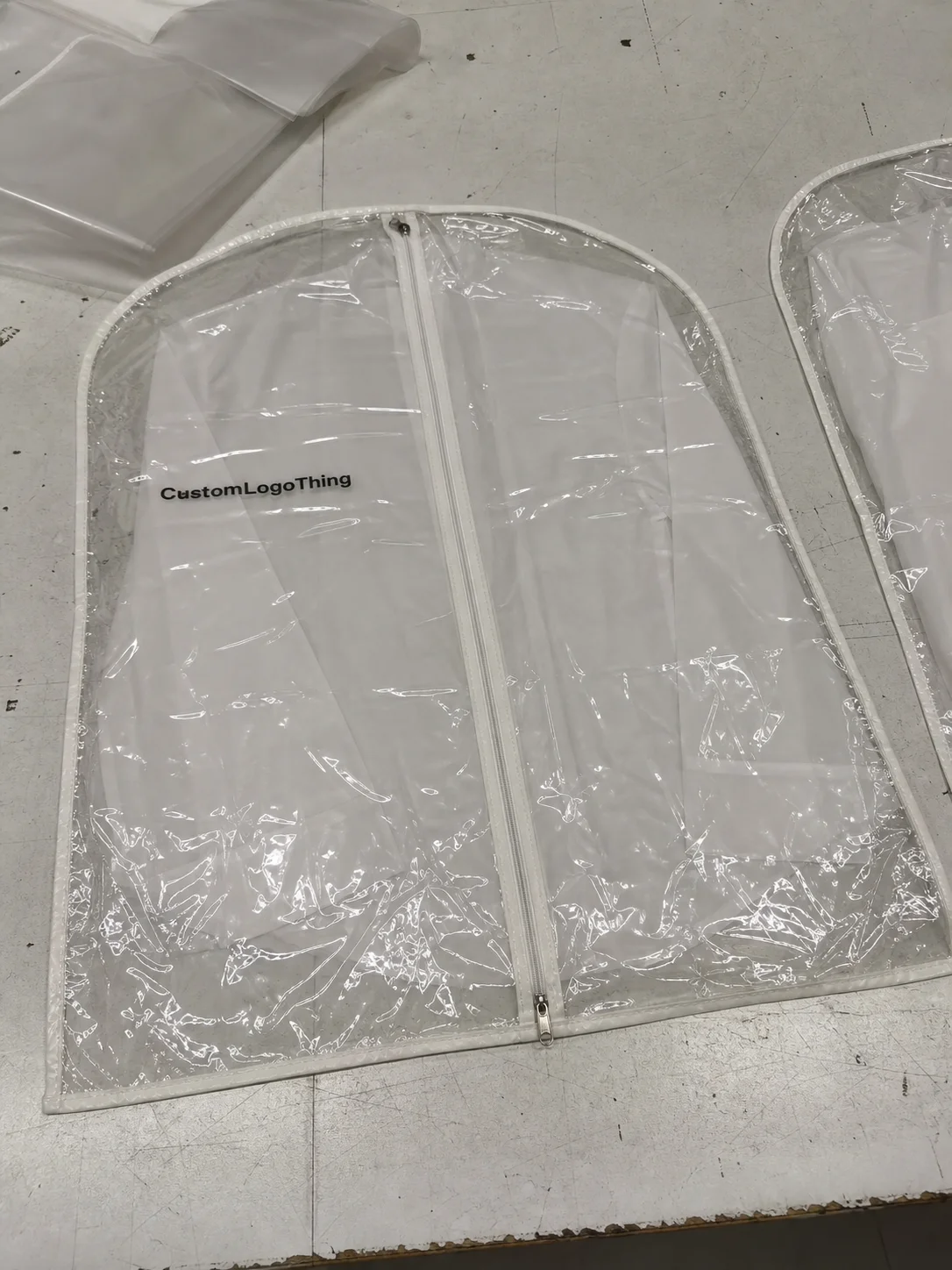
For bulk hotel orders, the first mistake is usually treating every PVC garment bag as interchangeable. They are not. Clear film, frosted film, open-top styles, zipper closures, and reinforced hangers can all sit in the same category while serving different operational needs. A bag used for short-term wardrobe cover may not need the same construction as one used for repeated garment movement between laundry and room service.
The second mistake is overpaying for features that do not improve day-to-day use. A heavier, more polished bag can look premium on a sample table, but if the staff only needs dust protection for a few hours, the extra resin, hardware, and print coverage may not return its cost. The opposite also happens. A weak film or undersized bag can create damage claims, housekeeping complaints, and replacement orders that erase the initial savings.
In hospitality procurement, the cost conversation has to include the probability of failure. A bag that lasts twice as long is not just “better quality.” It reduces reordering pressure, improves consistency across properties, and cuts down on the hidden labor of sorting out mismatched stock.
That is why the smartest buyers separate must-have construction from optional cosmetic upgrades. Ask what the hotel actually needs: full branding or no print, heavier gauge or standard gauge, zipper or open top, reinforced seams or basic cutting. A disciplined hotel PVC Garment Bags unit cost review should make those tradeoffs visible before purchase order approval, not after the first replenishment cycle.
There is also a packaging angle that is easy to miss. A quote can be made to look better by reducing carton quality, changing packing count, or tightening bundle compression. The bag price goes down while transit damage risk goes up. For products that need to arrive clear, flat, and clean, that is not a good trade.
Material Build and Finish That Affect Per-Bag Value
Material choice is where most quote differences begin. Clear PVC is usually selected for visibility and presentation. Frosted film softens the look and hides scuffs more effectively, but it can also reduce the crisp appearance some hotels want in guest-facing wardrobes. That is not a purely aesthetic distinction. A clear bag shows every defect, while a frosted bag is more forgiving, even when the underlying build is the same.
Thickness affects both price and function. Thinner film lowers unit cost, but only if the bag still holds shape under normal handling. Once the film gets too light, it starts to stretch at stress points, especially around hanger openings, side seams, and zipper tracks. A slightly heavier gauge often improves stability and reduces tearing, but heavier is not automatically better. A bag that is too stiff can be awkward for staff and more expensive than the workflow requires.
Finish quality matters more than many buyers expect. Edges should be even. Seams should lie flat. Hanger holes or hook openings should not distort the film. If the bag is zippered, the track should close cleanly without snagging. These details affect the customer experience indirectly. A hotel guest may never inspect the bag as a product, but they will notice when a garment is protected by something cloudy, wrinkled, or flimsy.
Odor control deserves attention too. PVC can arrive with a noticeable smell if the resin blend or post-production airing is poor. That smell may disappear later, but it can still trigger complaints on day one. Buyers often underestimate that issue because it is not visible on a spec sheet. In guest-facing applications, it matters as much as clarity or seam strength.
Good suppliers can explain the material in plain terms: film type, thickness tolerance, seam method, and whether the bag is intended for light protection or repeated use. If they cannot describe those things clearly, the quote may not actually reflect the product you will receive. That is a sign to slow down, not rush the order.
Size, Gauge, Closure, and Printing Specifications
Size should follow the garments, not the supplier’s stock template. A hotel that mainly handles suits and short jackets does not need the same dimensions as one covering long coats, uniforms, or banquet wear. If the bag is too short, hems bunch up. If it is too wide, the rack looks untidy and the hotel pays for extra material that adds no protection.
Gauge and closure style should be stated in the quote request, not left open to interpretation. One factory may quote a lighter film and another a more durable build, yet both may describe the bag as premium. That language does not help procurement. Ask for thickness in microns or mils, specify whether the bag is open-top, flap-closed, snap-closed, or zipper-closed, and ask how the opening is reinforced. Those details change both performance and cost per piece.
Closures are especially important because hotel use patterns vary. An open-top bag may be enough for quick wardrobe cover in a guest room. A zipper can be better for reusable stock or for garment movement between laundry and room service. Flap styles can work for dust protection, but only if the fold stays neat and does not split after repeated handling. The best closure is not the most expensive one. It is the one that fits the workflow without slowing staff down.
Printing is where buyers often spend more than they need to. A one-color logo can improve presentation and make stock easier to identify across properties. Full coverage print or decorative graphics usually add setup charges, increase the chance of registration errors, and lengthen approval time if the artwork needs revision. If the bag lives inside a wardrobe and is rarely seen by guests, no-print may be the better commercial choice. If it is visible during guest delivery, restrained branding usually earns its place.
Exact replacement jobs are where a sample matters most. A photo tells part of the story; it does not show film thickness, seam quality, or how the opening behaves under use. When a hotel is replacing existing stock, a reference sample is the fastest way to prevent expensive assumptions.
| Spec choice | Typical use | Indicative unit cost at bulk volume | Tradeoff |
|---|---|---|---|
| Clear PVC, lighter gauge, open-top | Short-term wardrobe cover, lower-touch stock | $0.22-$0.35 | Lowest cost, but more exposed to stretching and edge wear |
| Clear or frosted PVC, mid gauge, reinforced opening | Guest-facing hotel use, repeat handling | $0.34-$0.52 | Better balance of appearance and durability |
| Heavier film, zipper or flap closure, printed logo | Premium presentation, reusable stock, laundry return | $0.48-$0.78 | Higher setup charges and higher landed cost, but lower replacement risk |
These are indicative ranges, not fixed market prices. Real numbers move with resin costs, order size, print coverage, carton configuration, and freight. The pattern is consistent, though: more structure and more finishing controls raise the unit price, but they also lower the odds of a failure that costs more later.
Unit Cost, Pricing Bands, MOQ, and Quote Drivers
Factory price is only the opening number. A proper review has to separate factory price from landed price. Freight, duty, palletization, carton spec, testing, and local receiving charges can shift the final figure enough to change the decision. A quote that looks 8 percent lower at origin can end up more expensive once it lands in the warehouse.
The main price drivers are predictable. Material thickness comes first. Then size, because a longer or wider bag uses more film. After that come closure hardware, print coverage, and carton requirements. MOQ matters because setup charges and cutting labor spread more efficiently across larger runs. If a supplier has to prepare tooling, plates, or custom die work, those fixed costs need volume to make economic sense.
Bulk pricing deserves a careful read. If a quote drops sharply at 5,000, 10,000, or 20,000 units, ask what changed. Sometimes the answer is simple scale. Other times the supplier removed reinforcement, downgraded the print method, or shifted to a thinner film. The lower price may be real, but the spec may no longer be the same product.
There is a useful comparison here with hotel linen purchasing. A sheet that looks slightly cheaper but wears out sooner is never really cheaper, because replacement cycles matter more than the invoice line. Garment bags behave the same way. The hidden cost is not only the bag itself. It is the staff time, return freight, complaint handling, and the visual inconsistency of rooms that no longer match the standard.
One quality signal worth checking is whether the supplier understands transport testing language, especially if the bags will move through multiple handling points. Suppliers familiar with packaging test protocols from organizations such as ISTA tend to think beyond the production line and into the way a product behaves in transit. If the quote includes paper inserts or cartons with environmental claims, buyers often also verify certification chains through FSC when sustainability language is part of the brief.
Production Steps, Sample Timing, and Lead Time
The production path is usually straightforward, but delays pile up when the early steps are vague. A normal order moves from inquiry to spec confirmation, then artwork review, sample approval, mass production, final inspection, packing, and shipment booking. Every unanswered question at the front end tends to become a rush fee at the back end.
Sample timing should be set before the order is released. A plain reference sample is useful if the hotel is checking clarity, size, and closure behavior. A pre-production sample is better when branding, fit, or exact dimensions matter. If the supplier cannot produce a sample that matches the intended specification, the mass order will not suddenly become more accurate. The sample is the control point, not a courtesy item.
Lead time depends on material availability, print complexity, and order size. If film is in stock and the print is simple, production may move quickly. If the order needs custom hardware, special packaging, or a multi-color logo, the schedule expands. For bulk hotel orders, a practical planning range is often 12 to 18 business days after sample approval, with shipping added on top. Larger or more customized orders can take longer. Anyone promising a fixed turnaround without reviewing the spec is guessing.
Inventory planning is where hotel teams often lose leverage. Housekeeping stock should not run on a last-minute reorder cycle. The next order should begin while usage is still comfortably above minimum stock, not after the last carton is opened. Once replenishment becomes urgent, the buyer has less room to negotiate and may accept a weaker quote or slower transit mode simply to avoid a gap.
Multi-property programs need discipline here. If the same bag is going to three hotels, the spec should stay identical across all of them. Small differences in length, closure type, or print placement create avoidable inconsistency. One property can absorb that. A portfolio cannot.
Supplier Checks That Reduce Rework, Waste, and Delays
Price matters, but supplier behavior often tells you more. Ask for a clear spec sheet, material details, production photos, and a sample workflow before you commit. A vendor that answers with vague language is usually the one that will need extra approvals later. Slow replies and unclear dimensions are not just communication problems; they are early warnings of rework risk.
Quality control for a hotel order should focus on measurable points. Dimensions should stay within tolerance. Seam strength should match the handling pattern. Closure function should be tested with gloved and ungloved staff if the hotel uses both. Print registration should be clean. Odor should be acceptable out of the carton. Carton labels should match the packing list. None of that is optional if the bags are going into a live hospitality operation.
Direct manufacturing usually gives buyers fewer handoffs, which often means fewer errors. Trading layers can still work, especially for very small runs or unusual requests, but each extra layer adds a chance for spec drift. For repeat hotel stock, consistency beats clever sourcing. If a supplier cannot repeat the same bag across multiple orders, the first purchase price is not the real issue.
Ask for the landed-cost logic, not the headline unit price alone. Ask what is included, what is optional, and what would trigger a surcharge. That single question filters out weak offers before they become purchase orders.
Sustainability claims need the same discipline. If the bag is PVC, do not accept recycled-content or eco-friendly language unless the supplier can document it clearly. Hospitality buyers are right to ask for evidence. Loose claims create compliance risk and damage trust faster than a bad sample does.
What to Send for an Accurate Quote and Fast Approval
The fastest way to get a reliable quote is to give the supplier the exact buying brief. Include dimensions, thickness, closure type, logo or print details, quantity, delivery location, and the date the bags need to arrive. If the hotel is replacing an existing product, add a reference sample or clear photos with measurements. That prevents the back-and-forth that usually inflates both timeline and cost.
For artwork, send an editable file if possible, not a flattened image. Confirm print position, ink color, and whether the logo should be small and discreet or visible from a distance. Carton requirements should also be listed up front if the bags are going into housekeeping distribution rather than warehouse storage. That avoids a second round of revisions after the supplier has already started preparing the order.
Before approval, ask for three things: the final specification sheet, the sample sign-off path, and the shipment plan. If the supplier cannot explain those clearly, the quote probably has hidden gaps. A strong hotel PVC Garment Bags Unit Cost review is not only about getting the lowest number. It is about buying the right build, at the right volume, with enough clarity that the order arrives once and performs as expected.
For bulk hotel programs, that is the real win: a controlled unit cost, a sensible MOQ, and a bag spec that does not waste money on features the hotel will never use. Get that balance right, and the quote starts working for the operation instead of against it.
What drives hotel PVC garment bags unit cost the most?
Material thickness, bag size, closure hardware, and print coverage usually have the biggest effect on unit cost. MOQ also matters because setup charges and cutting labor spread more efficiently across larger runs.
How do I compare hotel PVC garment bag quotes fairly?
Compare the full specification, not just the headline price: thickness, dimensions, closure type, print method, carton spec, and packing count. Ask whether freight, customs, testing, and local handling are included so you can compare landed price, not just factory pricing.
What MOQ is typical for custom hotel PVC garment bags?
MOQ varies by size, print complexity, and hardware, but custom orders usually become efficient once the setup charges are spread over a few thousand units. If a supplier offers a very low MOQ, check whether the spec is simplified or the per-piece price is higher to offset tooling fees.
How long does production usually take after sample approval?
Lead time depends on stock material availability, artwork complexity, and order size, but sample approval is the point that usually locks the schedule. A common planning range is 12 to 18 business days after approval, with shipping added separately.
What should I include in a quote request for hotel PVC garment bags?
Include dimensions, thickness, closure type, logo or print details, quantity, target delivery date, and destination country or city. Add a reference sample or photo if you need an exact replacement so the supplier can quote against the real spec rather than a guess.


