For a buyer comparing coffee roaster PVC Garment Bags Unit Cost review options, the real issue is not whether a clear bag looks polished on a hanger. It is whether the bag protects the item, holds its shape, and lands at a sensible cost per piece after MOQ, freight, carton packing, and setup charges are all included. That broader view matters because packaging cost is rarely just the number printed on the quote sheet. It is the combination of material, process, transport, and how many times a bag will be handled before it reaches the customer.
Coffee roasters use these bags for branded apparel, staff uniforms, event merch, and gift sets. Clear PVC gives the item visibility, but it also adds structure. Compared with a soft sleeve, it tends to resist collapse better, which makes a difference on retail shelves and in tasting rooms where presentation is part of the product story. The practical question is simple: does the bag protect the garment without creating more work for the packing team?
Why coffee roasters order PVC garment bags for display and protection
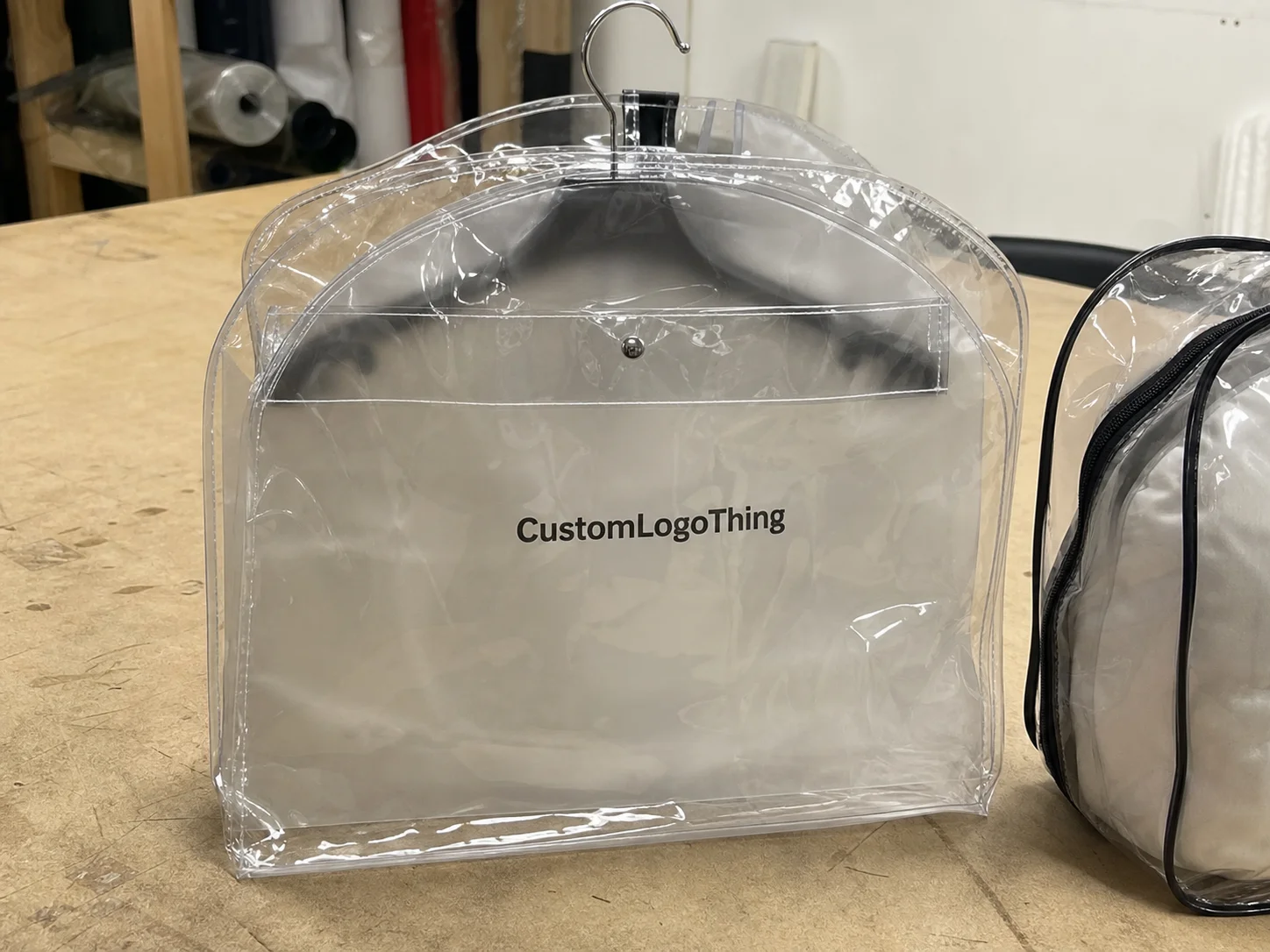
Most roasters are not buying garment bags for fashion packaging in the abstract. They are buying a functional display sleeve that can handle folded shirts, hoodies, aprons, caps, and bundled apparel kits. The clear format keeps the product visible while reducing dust, fingerprints, and shelf wear. That makes it useful for retail floors, seasonal kiosks, staff back stock, and trade events where items are picked up and moved repeatedly.
There is a subtle reason clear PVC gets chosen so often: it behaves more like a presentation material than a storage material. A lightweight poly sleeve can be perfectly adequate for shipping or warehouse use, but it often looks loose and unstructured once hung. PVC is firmer. That firmness helps the bag sit straighter and keeps the front panel from wrinkling into the garment underneath. On a crowded merch wall, that difference is visible from several feet away.
Packaging buyers also care about labor. A bag that is too narrow, too sticky, or awkward at the opening slows down every pack-out cycle. If staff have to fight the closure or re-fold the garment to make it fit, the packaging is costing more than the quote suggests. A good bag reduces handling steps rather than adding them.
“A clear garment bag is doing three jobs at once: it protects, it presents, and it should not slow packing down.”
Storage is another part of the equation. Back rooms, event kits, and seasonal inventory all benefit from sleeves that keep the product grouped and clean. The benefit sounds ordinary until you start tracking errors. Fewer scuffs, fewer returns for cosmetic issues, and fewer mismatched pieces in a kit all come from a package that fits the item properly and stays intact in transit.
For coffee brands, this is not decorative packaging. It is retail control. The bag should support the garment, keep the presentation consistent, and survive the handling that happens between production and sale.
PVC construction, bag style, and finishing options that affect performance
Clear PVC Garment Bags usually begin with transparent film, then move through cutting, sealing, and finishing steps that define the final user experience. The construction can be simple or surprisingly specific. Common formats include side seams with a bottom seal, a hanger hole or euro-slot opening, and a closure such as a zipper, adhesive flap, or open-top style. Each choice changes both performance and price.
Film thickness is one of the first decisions to settle. Thinner film lowers material usage, but it can also feel limp and be easier to puncture at the corners or near tags and clips. Thicker film improves stiffness and tear resistance, which is useful for retail merchandising or repeated handling. For many buyers, the useful range is somewhere between lightweight display film and heavier retail-grade material. The right choice depends on garment weight, fold size, and how much movement the bag will see after packing.
Thickness is usually discussed in mils or microns. That number matters because even a small increase can change both the feel and the cost structure. A 10-micron increase does not sound dramatic on paper, but across thousands of bags it becomes visible in material spend, shipping weight, and stiffness. Buyers often focus on the per-unit price and miss the way a thicker film changes carton volume and freight.
Finishing options also affect performance. High-clarity film is the default request, but some buyers ask for anti-static treatment to reduce dust attraction during packing. Others want a matte or frosted finish for a softer visual effect. Printing is possible too, although it adds setup time, color-matching work, and a new layer of quality control. A printed bag is more than a clear bag with a logo on it. It is a separate production workflow.
Sizing should be treated like a production decision, not an estimate. A bag needs enough room for folded bulk, shoulder width, and any insert card or accessory, but it still needs to look tidy on the hanger. If the fit is too tight, packing slows down and the seams are stressed. If it is too loose, the garment shifts around and the display looks unfinished. The best packaging designs sit in the middle: enough clearance to pack fast, enough structure to keep the presentation clean.
Before approving a run, I would check four things: seal straightness, puncture resistance, optical clarity, and consistency across the order. Those are the details that tell you whether the bag will hold up in real use. Photos rarely reveal them. A sample does.
Key specifications to compare before you request a quote
If you want quotes that can actually be compared, the spec sheet has to be specific enough for production, not just purchasing. The minimum useful details are material thickness, finished width, finished length, closure type, hanger opening, and carton pack quantity. Without that information, suppliers may quote different constructions and the numbers will not line up.
The more precise the spec, the less time you spend untangling assumptions. That is especially important for buyers who need to compare multiple factories. A vague request often produces three different interpretations: one supplier quotes a thin sleeve, another a thicker retail bag, and a third assumes printing that you never asked for. The result is confusion disguised as a price comparison.
Useful details to include:
- Material: clear PVC film, with thickness in microns or mils
- Bag size: width x length after sealing
- Closure: zipper, adhesive flap, press seal, or open-top style
- Hanging feature: hole diameter, euro-slot, or reinforced top
- Pack count: units per inner bag and per carton
- Print needs: logo, one-color mark, or full branding area
A few additional questions are worth asking before the quote is finalized. Does the garment need to include a folded insert card? Does the bag need vent holes so trapped air does not bulge the front panel? Will it hang on a standard hook or a pegboard display? Those details can change the cutting pattern or sealing method, which affects both lead time and unit price.
For teams that need compliance paperwork, ask early about material declarations, restricted-substance support, and any recycling guidance relevant to your market. Different retailers and import programs have different requirements, and it is easier to settle that before sampling than after goods are already on the water. For broader packaging references, the EPA recycling resources and the Packaging School and packaging industry resources are useful starting points.
Coffee roaster PVC garment bags unit cost review: pricing drivers and MOQ
A serious coffee roaster PVC Garment Bags Unit Cost review starts by separating the quote into its real drivers. Material thickness is one. Bag dimensions are another, because larger formats use more film and often take longer to seal and inspect. Printing, special closures, hanger-slot reinforcement, and custom carton packing all add cost in different ways. MOQ matters too, because tooling and setup charges are spread across the order.
That is why the cheapest-looking piece price is often not the best buy. A low unit cost with a high setup fee, heavier freight, or expensive carton packing can end up above a cleaner quote with a slightly higher per-piece rate. The math only works if you look at the total landed cost.
Illustrative price behavior usually looks like this:
| Option | Typical use | Price behavior | Buyer impact |
|---|---|---|---|
| Standard clear PVC, no print | Basic merch storage and display | Lower unit cost at moderate volume | Best for simple presentation and budget control |
| Thicker clear PVC with reinforced top | Retail apparel and frequent handling | Higher material cost, better durability | Cleaner look, fewer handling issues |
| Printed PVC garment bag | Branded merchandise and events | Higher setup charges and print-related costs | Stronger branding, longer approval cycle |
| Custom size with special closure | Non-standard garments or kits | Tooling fees may apply | Better fit, but more quote variables |
As a practical matter, buyers should ask for tiered pricing. Not just the target quantity, but the next two or three volume breaks as well. That reveals the point where the unit cost starts to flatten. Sometimes it is better to buy a little more than planned to avoid a disproportionately expensive small run. Sometimes it is better to reorder more often because storage and freight wipe out the discount. The quote should make that decision visible.
For comparison purposes, ask for these line items separately:
- Sample or prototype cost
- Unit cost at your target MOQ
- Unit cost at the next volume tier
- Tooling or plate charges, if any
- Estimated freight and carton packaging cost
That separation matters because a price that looks low on the page may not survive freight, carton overages, or extra rework. Landed cost is the real number. Anything else is just a partial quote.
For buyers who need a rough planning range, simple unprinted clear bags usually sit lower than thicker or printed versions, while custom sizes and special closures push the price up. Exact numbers depend on film gauge, dimensions, and order volume, so a quote should always be read as a package of assumptions, not a single fixed figure.
Production steps, sample approval, and lead time planning
The production path is straightforward, but each step has consequences. It usually starts with spec review, moves into sampling, then sample approval, then mass production, inspection, and packing. If one stage is compressed, the risk of fit issues rises. For clear PVC garment bags, the sample is not a formality. It is the only reliable way to verify clarity, seal behavior, and actual garment fit.
During sampling, the team selects a film gauge, sets sealing temperatures, and cuts the intended dimensions. They will usually test closure performance and fit the bag against the folded garment or a realistic substitute. That is where the issues appear. A bag can look correct in a flat drawing and still be too tight around the shoulders, too short for a folded hoodie, or too loose to hold a sharp front panel.
Lead time depends on complexity. A simple clear bag with standard dimensions can move faster than a printed bag with special finishing or extra approval rounds. As a planning reference, many straightforward custom packaging orders land around 12-15 business days from proof approval, though that can extend if art revisions, material sourcing, or seasonal capacity slow the line. Buyers should build in some buffer. The first sample is often not the final sample, and the schedule should assume at least one correction cycle if the fit matters.
Good documentation keeps the process moving. Final art files, exact measurements, closure choice, carton counts, and packing instructions should all be locked before production starts. Once the order enters the line, changes are possible, but they are rarely cheap. A late color change or a revised hanger opening can ripple through cutting, sealing, and packing.
That is why experienced buyers treat approval time as part of lead time. If the bags are tied to a seasonal launch, a store refresh, or a trade show, the schedule should include room for dimension confirmation and a final pre-production check. The bags do not care about the deadline. The factory queue certainly does not.
How our factory approach improves consistency, packaging fit, and order control
In packaging manufacturing, consistency comes from process control, not from promises. A clear PVC bag may look simple, but if the film gauge drifts, the sealing temperature fluctuates, or the cut line moves, the result can be crooked seams, cloudy panels, or closures that sit unevenly. Buyers notice those defects quickly, especially in retail where the packaging is part of the shelf impression.
Our factory approach focuses on stable dimensions, in-process checks, and repeatable packing. That means confirming the seal line during the run, checking that the bag opens and closes as intended, and verifying that the final product packs efficiently in cartons without crushing the film. It also means setting tolerance ranges clearly so the buyer knows what is acceptable before production begins. Unclear tolerance is where disputes start.
Order control extends beyond the bag itself. Inner pack counts, carton labels, and palletization all affect receiving speed. A well-packed carton reduces handling time and makes it easier for warehouse staff to count, inspect, and store the goods. Small details matter here. If the carton labels are inconsistent or the inner count varies, the receiving team loses time before the bags even enter the merch flow.
“Lower waste and fewer delays usually come from boring discipline: stable gauges, clean seals, correct counts, and clear labels.”
That discipline also helps when buyers compare material options. If you are considering a clearer film, a different finish, or a recycling-oriented alternative, the decision should start with the application. A sleeve meant for retail display is not the same as a sleeve meant for long-term storage. Shipment handling, shelf life, and presentation standards all matter. For testing and transit-related checks, the ISTA testing resources can be useful when distribution damage needs verification.
Next steps to place an order with the right spec and budget
If you are preparing a quote request, gather the essentials first: garment dimensions, target thickness, closure preference, logo file, and planned order quantity. That sounds basic, but it removes a lot of avoidable back-and-forth. A supplier can only price accurately if the bag size and construction are clear enough to build from.
If the fit or presentation matters, request a sample or pre-production proof. That matters most for thicker garments, folded sets, and retail items that need to sit neatly on a hook or in a display bin. A sample lets you check the closure feel, bag clarity, shoulder fit, and how the front panel behaves when the garment is inserted and removed several times.
When comparing suppliers, keep the spec sheet identical across quotes. If one quote assumes a lighter film and another assumes a thicker one, the comparison is not meaningful. The same is true for printing, length, carton count, and freight assumptions. The cleanest way to review options is to compare them on the same geometry, the same material, and the same packing assumptions.
A practical decision path usually works best:
- Confirm the use case and display need
- Approve the bag size, thickness, and closure style
- Review sample quality and fit
- Compare price tiers and freight
- Lock the production schedule and packaging instructions
That process keeps the budget under control without sacrificing appearance. It also turns a vague sourcing exercise into a measurable one. A solid coffee roaster PVC garment Bags Unit Cost Review should let you judge clarity, durability, MOQ, and landed cost together. If those four pieces line up, the purchase is usually defensible. If one of them is off, the cheapest quote often stops being the cheapest quote very quickly.
FAQ
What affects coffee roaster PVC garment bags unit cost the most?
Material thickness, bag dimensions, closure style, and print requirements usually drive the biggest price changes. Order volume also matters because setup charges are spread across more pieces at higher quantities. Freight and carton packing should be included when comparing total landed cost.
What MOQ should I expect for custom PVC garment bags?
MOQ depends on size, printing, and whether the bag uses standard or custom tooling. Simple clear bags can often start lower than fully printed or specially finished versions. A tiered quote helps show the tradeoff between minimum order and lower unit pricing.
Can I request a sample before placing a bulk order?
Yes, sampling is the best way to confirm fit, clarity, and closure performance. A pre-production sample is especially useful when the garment has bulk, inserts, or a retail presentation requirement. Use the sample to verify dimensions and seal quality before mass production starts.
How long does production usually take for custom PVC garment bags?
Lead time depends on artwork approval, material availability, and order complexity. Simple orders move faster than printed or highly customized bags. Build in extra time if you need revisions, special packing, or a fixed launch date.
What details should I send to get an accurate quote?
Send bag dimensions, material thickness, quantity, closure style, and whether printing is needed. Include garment size or folded sample measurements so the fit can be judged correctly. A clear spec sheet reduces revisions and speeds up pricing.


