For hotel retail buyers, the hotel retail Custom Poly Mailer Bags packing requirement guide starts with a practical truth: the mailer is often the first branded surface a guest touches after checkout. That makes it more than a shipping pouch. It has to fit the product, protect the contents, carry the brand clearly, and let staff pack quickly without creating dead space or a sloppy handoff.
From a packaging buyer’s point of view, the decision is rarely between “mailer or no mailer.” It is usually a comparison between details that seem small on paper and matter a lot in use: film thickness, seal type, print placement, and whether the bag behaves well in a stockroom that moves fast. The right spec can reduce labor, improve presentation, and make the entire retail package feel deliberate instead of improvised.
Hotel retail custom poly mailer bags packing requirement guide
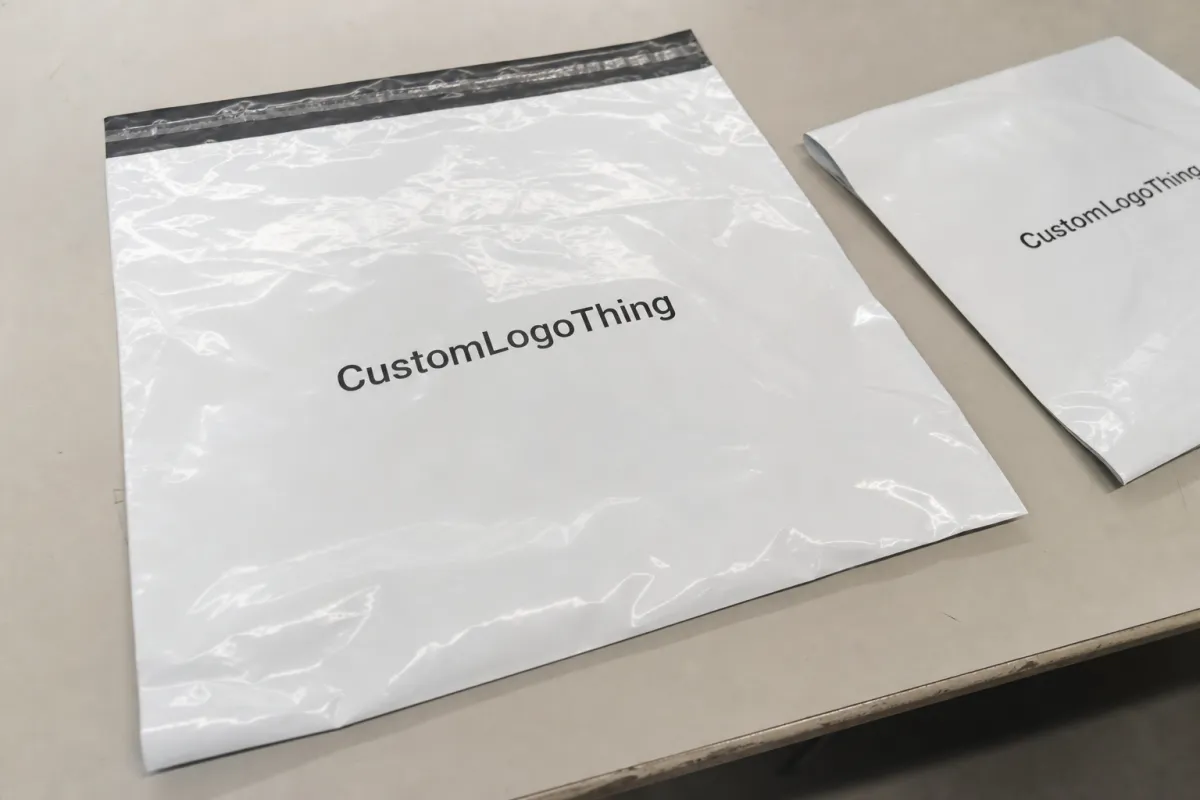
Custom Poly Mailers are lightweight plastic bags used for apparel, gifts, accessories, and amenity kits that do not need the rigidity of printed cartons. In hotel retail, that matters because the product mix is often soft, folded, or uneven in shape. A rigid box adds material cost and bulk, and it does not always improve the guest experience.
The packing requirement is the real spec driver. A good mailer has to match the actual folded item, not the flat product photo. A shirt with a hang tag, an embroidered robe, or a bottled amenity kit all create different depth and handling needs. If the bag is too tight, staff fight the seal and crease the merch. If it is too large, the item shifts around and the presentation loses its premium feel.
That is why hotel retail packaging decisions should begin with the contents, not the artwork. The best branded packaging protects the product and speeds the operation at the same time. In a hotel shop or back-of-house fulfillment area, those two goals are linked. Less wasted space means easier stacking. Easier stacking means fewer packing errors. Fewer errors mean better margins.
Most hotel retail programs perform best when they standardize around a small set of sizes. That keeps procurement simpler, helps new staff learn the process faster, and makes reorders easier to approve. It also prevents the common trap of designing a unique bag for every SKU, which is how costs climb without producing a better result.
One useful way to think about the spec is to separate three layers: fit, handling, and appearance. Fit answers whether the product enters and closes cleanly. Handling asks whether staff can pack without slowing down. Appearance decides whether the bag feels premium enough for a guest to carry through a lobby or retail space. A bag that solves only one of those three problems is usually not the right bag.
How the pack-out and branding workflow works
The pack-out flow is usually straightforward, but small details decide whether it feels smooth or awkward. Staff pull the item, fold or stage it to the target depth, insert it into the mailer, seal the flap, and then apply any label or carton identification needed for shipment or guest pickup. If the bag is well sized, that sequence takes seconds. If it is not, every step takes longer.
- Confirm the item count and pack list.
- Fold or stage the product to the agreed depth.
- Insert the item with enough room for a clean seal.
- Place the brand panel and barcode zone in the right position.
- Seal, inspect, and cartonize for dispatch or handoff.
Hotel retail differs from standard ecommerce in a few meaningful ways. The runs are smaller. Restocks happen more often. Presentation rules are tighter because the bag may be seen by a guest, not just a parcel receiver. That means the packaging design has to stay simple enough for quick handling while still carrying a strong visual cue. A clean logo, a restrained color field, and a readable label zone usually outperform heavy artwork.
Branding can show up in several places: printed panels, matte or gloss finishes, subtle tone-on-tone logos, or label-ready areas that leave room for barcodes and price stickers. The important part is that the print never interferes with the pack-out. A beautiful design that covers the seal area or barcode space creates friction. A restrained layout often works better and looks more premium because it feels intentional.
“The fastest way to damage a mailer program is to spec the bag around the artwork first and the product second.”
That is especially true for hotel retail where staff may handle dozens or hundreds of units a day. If the bag is easy to fill, easy to seal, and easy to stack, labor falls and presentation improves almost automatically. If any one of those steps feels awkward, the problems repeat on every shift.
Film, size, closure, and print specs that matter most
Film choice is the first technical decision. Thicker film is usually the safer route for heavier contents, sharp edges, or longer storage time before use. Lighter film can work for soft goods, lighter gifting items, and lower-cost runs where the contents are not likely to puncture the bag. A common buying mistake is assuming all poly mailers feel the same once printed. They do not. A 2.0 mil bag and a 3.0 mil bag can behave very differently under handling.
As a rule of thumb, many hotel retail programs land in the 2.0 to 3.0 mil range, though the actual number depends on the product mix. If the bag carries a folded sweatshirt plus inserts, a thicker gauge often makes sense. If it carries soft socks or a lightweight amenity kit, a lighter film may be enough. For programs that need more technical comparison, ask for data tied to tensile strength and dart impact, not just “premium” language. Film testing tells you more than a polished sample ever will.
Size starts with the folded product depth. Measure that first. Then add enough margin for loading and seal closure without creating a bag that looks baggy or wastes shelf space. A mailer that is 20 to 30 mm too deep can create visible slack, especially in a retail setting where customers notice presentation quickly.
Closure style matters just as much. Self-seal and peel-and-stick closures are fast and familiar. Tamper-evident strips add security and a more controlled feel, but they can slow the pack-out slightly and increase price. If staff seal hundreds of units per week, a closure that saves even two or three seconds per pack adds up fast over a season.
| Spec option | Best use | Typical unit price at 5,000 pcs | Tradeoff |
|---|---|---|---|
| 2.0 mil, unprinted, self-seal | Light apparel and soft goods | $0.09-$0.14 | Lowest cost, least visual impact |
| 2.5 mil, 1-color print, peel-and-stick | Most hotel retail basics | $0.14-$0.22 | Better branding, moderate labor speed |
| 3.0 mil, 2-color print, tamper-evident | Heavier items or premium presentation | $0.22-$0.36 | Higher cost, stronger perceived quality |
Print constraints are easy to underestimate. Seam area, barcode space, label clearance, and color count all affect manufacturability. A design with three or four colors, a full-bleed background, and tiny type may look elegant on screen but can create waste on press. A tighter packaging design often prints cleaner and holds up better in production.
Quality control should include more than a visual check. Ask for seal-width verification, print registration checks, and a quick fit test with the real packed product. If the bag is meant to sit on a shelf, a front-of-house counter, or inside a retail basket, even small distortions become visible. Buyers tend to notice these things only after the first shipment is opened, which is usually too late to fix them cheaply.
If the order also includes inserts, hangtags, or paper sleeves, keep in mind that custom printed boxes may still be the better choice for fragile pieces. For folded apparel and most guest retail items, though, a good mailer is usually faster, lighter, and cheaper to move through the system.
Cost, pricing, and MOQ drivers for hotel retail orders
The biggest pricing levers are predictable: bag size, film gauge, print colors, closure type, finish, and total quantity. There is no mystery around it. Larger dimensions use more material. Thicker film uses more resin. More print colors mean more setup and more press time. Specialty finishes, like matte soft-touch effects or high-opacity film, add cost as well.
MOQ is the other side of the equation. Lower minimums are helpful if the hotel retail program is still changing, but a smaller run often carries a higher per-unit cost because the setup gets spread across fewer bags. A larger MOQ can bring the unit price down, though only if the inventory will actually move. Storing 20,000 bags to save a few cents each is not a good trade if the retail line changes every season.
A useful quoting habit is to compare vendors apples to apples. Ask for the same dimensions, same thickness, same print coverage, same carton count, and the same freight assumption. Otherwise the quotes are not really comparable. One supplier may look cheaper simply because the quoted bag is smaller or the freight is omitted.
If you are still narrowing the spec, review a few options under Custom Poly Mailers and then compare them against the broader mix in Custom Packaging Products. That kind of comparison helps buyers see where poly mailers beat heavier alternatives on landed cost and speed.
For many hotel retail buyers, the most practical savings come from standardization. Two or three bag sizes can cover most SKUs. Print only what the guest sees. Avoid expensive finish upgrades unless they solve a real problem. In blunt terms, the bag should earn its cost through better handling, better branding, or both. Decorative complexity rarely pays for itself in this category.
A final pricing caveat: freight and sampling can distort the true landed cost if they are not pulled into the quote early. A low unit price does not help if a rush sample, carton split, or air shipment quietly doubles the overall spend. Buyers who track landed cost rather than print price usually make cleaner decisions.
Production process and lead time checkpoints
A clean production process usually follows the same sequence: spec confirmation, artwork proofing, sample or pre-production approval, manufacturing, quality checks, and final packing. Delays tend to happen before the press starts running, not after. That is why the approval stage deserves more attention than many buyers give it.
Lead time depends on four variables: artwork complexity, tooling needs, material availability, and quantity. A repeat reorder with a simple one-color print can move much faster than a first-time launch that needs new dimensions, new artwork, and a sample sign-off. A typical custom run may take 12 to 20 business days after proof approval, then another 3 to 7 days for domestic transit, depending on the route and carrier. International freight can stretch that window far longer.
For high-volume or time-sensitive programs, ask the supplier how they test the bag for transit abuse. ISTA protocols are a better reality check than a visual inspection. See the testing framework at ISTA if you want a benchmark for shipment handling. The point is not to over-engineer a mailer. It is to make sure the product survives real movement, stack pressure, and handling without split seams or scuffed print.
Material sourcing also matters. If the order uses recycled content, ask for the exact percentage and the method used to verify it. If paper inserts are part of the pack-out, FSC documentation may be relevant for those components, though it does not apply to the plastic film itself. That distinction matters. Buyers get better compliance outcomes when the paperwork matches the material.
Keep manufacturing time separate from shipping time in your calendar. A room opening, seasonal retail reset, or gift shop launch can slip quickly if those two clocks get mixed together. A quote that says “three weeks” without clarifying whether freight is included is not a complete plan. It is a rough estimate, and rough estimates are where delays hide.
Common mistakes that trigger waste, delays, or reprints
The most common mistake is sizing by instinct. A bag can look fine on paper and fail the first time the actual item is folded, tagged, and slipped inside with an insert card. That is why a real packed sample matters more than a flat sketch. The sample exposes the true depth, seal margin, and handling friction.
Label space is another easy miss. Barcodes, price stickers, and compliance marks need a planned zone before artwork is finalized. If the print wraps too far or the background is too dark, the label may read poorly or look messy. For retail packaging, that small error can make the whole presentation feel cheap.
Over-design is a surprisingly expensive habit. A low-volume SKU with five print colors, a specialty finish, and a unique bag size can inflate spend without improving performance. In many programs, one well-executed one- or two-color package branding treatment beats a complicated layout that is hard to repeat consistently. Simpler files also reduce the chance of proof mistakes.
The pack-out environment matters too. Humidity changes how some films behave. Static can make lightweight bags cling and misfeed. Fast handling can expose weak seals. Carton dimensions can also create pressure points if the bags are packed too tightly. All of that is part of the spec, even if it never appears in the artwork file.
Another trap is ignoring the reorder cycle. If the item sells steadily but the brand refreshes every quarter, a large MOQ may turn into dead inventory. That is one reason hotel retail Custom Poly Mailer Bags packing requirement guide decisions should stay tied to realistic sales velocity, not just the lowest quoted price. Cheap inventory that cannot move is still expensive.
Expert tips for stronger packing and better presentation
Standardize around two or three sizes. That sounds ordinary, and it is. Ordinary is useful in packaging operations. Fewer sizes mean less confusion for staff, less chance of picking the wrong bag, and faster reorder decisions. It also makes the procurement team look more disciplined because the line behaves predictably.
Use the actual product for testing, not a similar one. Folded depth changes more than most teams expect once seams, hangtags, folded sleeves, and insert cards are included. A mockup can tell you whether the logo is centered. It cannot tell you whether the flap seals cleanly after the item goes in.
Finish choice should match the brand mood. Matte feels quieter and often more upscale. Gloss makes color pop and can look energetic on a retail wall. Opaque film can improve privacy, which matters if the guest is carrying the item through a lobby or airport. That is part of package branding too: the bag should look good in motion, not only on a sample table.
Design for the handoff moment. Guests notice whether the bag lies flat in a tote, carries without wrinkling, and looks clean when someone holds it at the counter. That is the real retail packaging test. A bag that performs in stockroom handling and still looks composed at handoff earns its place.
For sustainability messaging, keep claims narrow and accurate. EPA guidance on reducing waste at the source is a useful reference point: EPA recycling guidance. In this category, the cleanest sustainability gain often comes from right-sizing the bag and avoiding unnecessary material, not from adding decorative extras.
If the packaging line includes more than one format, compare the mailer against other Custom Packaging Products already in use. Sometimes the bag is the right answer. Sometimes the box wins because the contents are fragile or the retail story depends on a more structured reveal. The best choice is the one that protects margin and presentation together.
Next steps: build a quote-ready order spec
The easiest way to get accurate pricing is to send a spec sheet that removes guesswork. Include item dimensions, folded depth, estimated weight, quantity by SKU, print artwork, closure preference, destination, and the date you need the bags in hand. If you can, add a photo of the real packed product. A supplier can often judge fit in seconds from that alone.
- Item dimensions and folded depth for each SKU
- Estimated weight and any sharp or rigid components
- Preferred film thickness, closure style, and finish
- Print colors, logo placement, barcode zone, and label area
- Quantity split by SKU and target delivery date
A strong quote request also states whether sampling is needed, whether freight is included, and whether the price covers artwork setup. Those details change landed cost more than buyers expect. If the order is urgent, say so early. If the bag needs to match a room-opening calendar, seasonal retail reset, or hospitality gift launch, build the timeline backward from the ship date, not the order date.
From a buying perspective, the best results come from locking the spec before the art gets too polished. That keeps the design honest. It also avoids rework after someone discovers the flap is too short or the label panel is in the wrong place. The package works only if the bag, the artwork, and the packing sequence all agree with each other.
Clear dimensions, realistic quantities, and a tested pack-out are what turn a mailer from a commodity into useful branded packaging. If the goal is an on-time delivery that looks right at the counter, treat the quote like a production document, not a casual purchase. That is the difference between a bag that merely ships and a bag that supports the sale.
What size hotel retail custom poly mailer bags do I need for folded apparel?
Measure the folded garment depth, not just the flat width. Bulk from seams, labels, and insert cards changes the fit more than buyers expect. Leave enough room for easy loading, but do not oversize the bag so much that the item shifts and looks loose in transit. If your program includes multiple garment types, test the thickest item first and size the bag around that sample.
How thick should custom poly mailer bags be for hotel retail packing requirements?
Thicker film makes sense for heavier pieces, sharp edges, or orders that may sit in storage before use. Lighter film can work for soft goods and lower-risk items, but it may not hold up as well under repeated handling. The right thickness depends on the real pack-out, not on how premium the sample looks on a desk.
What affects custom poly mailer bag pricing the most?
Size, film gauge, number of print colors, closure style, and quantity usually drive the biggest price swings. A larger MOQ can lower unit cost, but only if the extra inventory will move through the program. Freight, sampling, and special finishes can also change the landed price more than many buyers expect.
How long does the production process and lead time usually take?
Timing depends on artwork approval, tooling, material availability, and whether the order is a first run or a repeat. Simple reorders usually move faster than new launches that need proofs or sample approval. Always separate production time from shipping time so the delivery window is realistic.
What should I send for an accurate quote on hotel retail custom poly mailer bags?
Send item dimensions, folded depth, estimated weight, how many sizes you need, closure preference, print artwork, destination ZIP or port, and the quantity split by SKU. If possible, include a photo or packed mockup so the supplier can verify fit before pricing. That one extra step usually saves back-and-forth later.

