Hotel Retail Poly Mailer Bags Print Method Comparison matters more than most buyers expect. A bag can have the right size and still look wrong if the printing is weak, inconsistent, or too costly for the quantity. In hotel retail, the mailer is part of the brand experience: it gets handled by staff, displayed in the shop, and seen by guests who notice quality quickly. If you are evaluating hotel retail Custom Poly Mailer Bags print method comparison options for a resort store, spa boutique, or gift shop, the goal is to match the print method to artwork, budget, MOQ, and Lead Time before the first proof is approved.
Why Print Method Choice Changes Everything
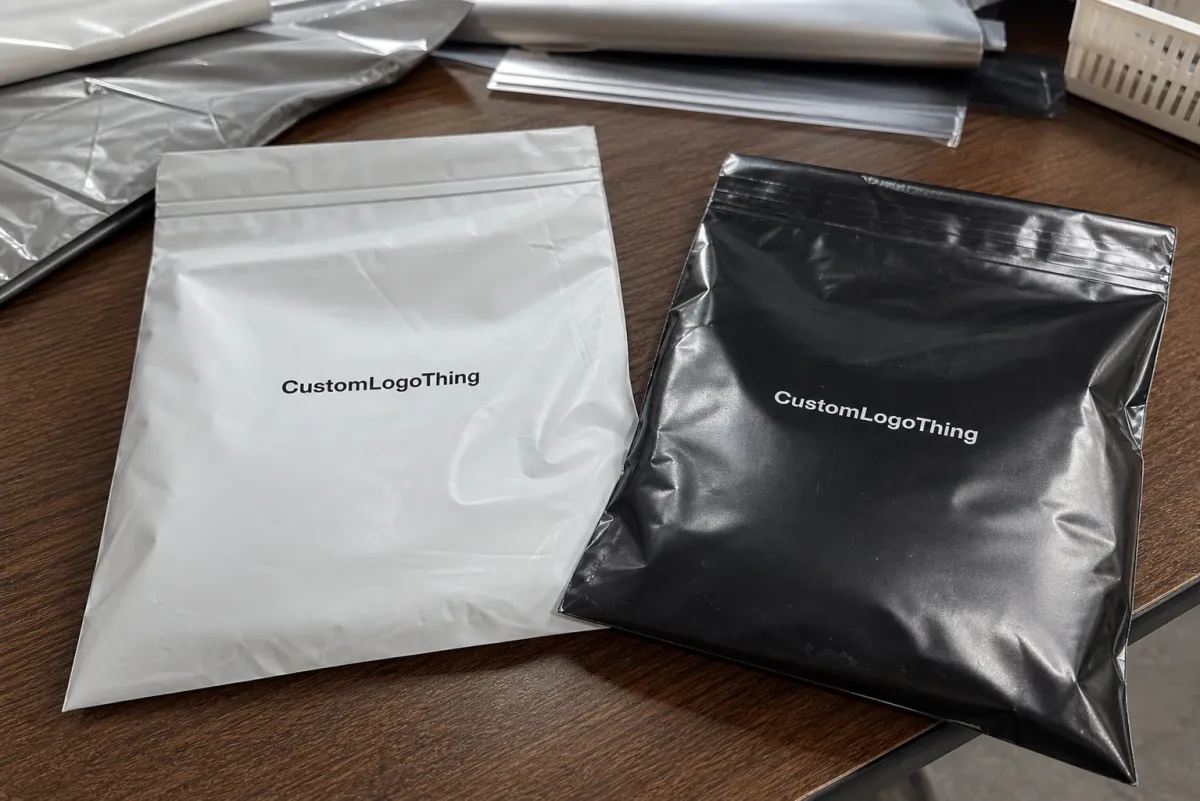
Many buyers start with bag size, but print method usually has a bigger effect on the final look. The same logo can appear crisp and premium on one process and dull or uneven on another. On flexible film, the ink layer, opacity, and finish matter as much as the artwork itself.
Hotel retail packaging also has to fit a broader brand system. If you already use custom printed boxes, inserts, or hang tags, the mailer should feel like part of the same program. Inconsistent color or a cheap-feeling finish can make the entire retail package look less polished.
From a buying standpoint, the key questions are straightforward:
- How many bags do you need?
- How many colors does the art truly require?
- How refined does the finished bag need to look?
- How much setup cost can the order absorb?
Custom Poly Mailers are not paper goods. They flex, reflect light, and respond differently depending on film finish. That makes the print method part of the product spec, not a detail to settle later.
The most useful comparison is usually not the fanciest process name. It is the method that fits the order size, artwork, and presentation standard without creating avoidable cost.
How Printing On Poly Mailers Actually Works
Poly mailers behave differently from cardboard or coated paper. The film is slick and flexible, so it often needs surface treatment to help the ink bond properly. Depending on the method, the print may be dried, cured, or transferred using plates and pressure. If the process does not match the film, the result can be scuffing, weak adhesion, or color that looks fine on screen but disappoints in the carton.
Finish matters too. Glossy film usually makes colors feel brighter, while matte or soft-touch-style film can mute the same design slightly. Dark or tinted film may need a white underbase to keep logos readable. That becomes especially important when the design includes small type, fine lines, or photo-style artwork.
Artwork prep should happen before pricing, not after. Vector logos, correct separations, and clear Pantone references reduce back-and-forth and help avoid reproofing. A one-color mark may be easy to print cleanly, while a full-color layout with gradients and tiny text needs a method that can hold detail without soft edges.
If you are comparing suppliers, first decide whether the design is a simple brand mark or a full packaging system with multiple color layers. That answer drives setup cost, color control, and lead time.
For broader packaging standards and terminology, industry references from packaging.org help teams align on specifications before quoting.
Hotel Retail Custom Poly Mailer Bags Print Method Comparison
Here is the practical comparison buyers need. Each method wins in a different range, and the best choice depends on volume, artwork complexity, and how much the bag must carry the brand on its own.
| Print Method | Best Fit | Typical MOQ | Unit Cost Range | Main Strength | Main Tradeoff |
|---|---|---|---|---|---|
| Digital printing | Small runs, frequent artwork changes, test launches | 100-3,000 bags | $0.35-$0.90 each | Low setup and fast proofing | Higher unit cost at scale |
| Flexographic printing | Mid-size to large reorder programs | 3,000-30,000+ bags | $0.10-$0.30 each | Good unit economics and crisp spot colors | Plate cost and less flexibility for revisions |
| Gravure printing | High-volume seasonal or national programs | 50,000+ bags | $0.05-$0.20 each | Excellent consistency and solid coverage | Heavy tooling and longer lead time |
| Screen printing | Simple logos, bold art, limited color count | Small to mid-size runs | $0.18-$0.45 each | Strong ink build and good opacity | Slower on complex artwork |
Digital printing is the easiest option for short runs and design testing. It keeps setup light and makes artwork changes less painful. The tradeoff is that the price can climb quickly as volume increases.
Flexographic printing is the workhorse for many branded packaging programs. It is usually the best balance for a standard hotel retail reorder with one or two colors, especially when the art is simple and the quantity is large enough to spread out the setup cost.
Gravure printing makes sense when the order is large enough to justify tooling. It can deliver smooth solids and consistent output across long runs, but the upfront cost and schedule are harder to absorb on modest volumes.
Screen printing works well for bold, simple graphics. It is not the best choice for fine detail or gradients, but it can create strong opacity on darker film and a clean look for limited-color art.
In short, digital buys flexibility, flexo buys balance, gravure buys scale, and screen buys simplicity. The quote changes with each one, so the method choice is not cosmetic.
For buyers comparing transit durability and handling, the ISTA testing framework is useful because it keeps the focus on shipping performance, not just the proof image.
Cost, Pricing, MOQ, and Unit Cost
Printed poly mailer pricing comes from several drivers, and they do not always show up clearly on the first quote. Setup, plates or cylinders, ink coverage, bag size, film thickness, and freight can each change the total in a meaningful way.
For a hotel retail order, the main cost factors are usually:
- Setup and tooling: digital stays lighter here; flexo and gravure do not.
- Print coverage: a small logo costs less than a full-bleed design.
- Bag spec: size and mil thickness affect both material and print handling.
- Quantity: higher volume lowers unit cost only after setup is spread out.
- Freight: carton weight and shipping distance can change landed cost.
As a rough benchmark, a 5,000-piece flexo run may land around $0.12-$0.30 per unit depending on size and color count. Digital on the same order can sit closer to $0.35-$0.90 per unit if the artwork is dense or coverage is large. Those numbers move with the market, but the pattern stays the same: a low-setup method can become expensive at volume, while a plated method can look unattractive on short runs and then win at scale.
MOQ matters as much as unit price. A quote with a lower per-bag cost is not automatically the better deal if the minimum order is much larger than the store can use. Inventory you do not need is still cash tied up.
Ask suppliers to quote the same spec every time: bag size, film thickness, print area, color count, and shipping destination. If plate fees or freight are included in one quote and excluded in another, the comparison is not reliable.
Production Steps, Timeline, and Lead Time
A typical order follows the same path: spec confirmation, artwork setup, proofing, production, inspection, packing, and freight. Miss one step and the schedule usually slips.
Lead time depends on the print method and how quickly artwork gets approved. Digital printing can often move faster on small jobs, sometimes in 7-12 business days after proof approval. Flexo commonly needs 12-18 business days once plate work and file setup are complete. Gravure often takes 20-35 business days or more because tooling and ramp-up are heavier. Screen printing varies with color count and whether the shop runs it manually or with automation.
Delays usually come from three places: revisions, proof approval, and tooling. If logo placement or brand colors keep changing after the proof is in motion, the schedule slips fast. Rush orders are possible, but they usually cost more and leave less room for correction.
For seasonal hotel retail programs, plan reorder timing early. If sales peak during holidays or events, the warehouse should not run empty while a two-week production window is still open.
If the mailers will move through a distribution network, it is worth asking whether the packaging has been evaluated for handling stress as well as appearance. A good print job still needs to survive shipping and storage.
How To Choose The Right Method For Your Order
The cleanest way to choose is to work backward from the order. Start with quantity, artwork, and the level of polish the bag needs to carry. Do not start with whatever process sounds most impressive.
- Confirm volume. Under 3,000 bags, digital or screen usually deserves a look. Above that, flexo often becomes more efficient.
- Measure artwork complexity. One-color logos are simple. Full-color art, gradients, and tiny type need tighter print control.
- Define the brand standard. If the mailer must match other retail packaging, color consistency matters more than a slightly lower headline price.
- Check the timeline. If the launch date is fixed, avoid heavy tooling unless you have enough lead time.
- Compare landed cost. Include freight, setup, and plate or cylinder charges before making the call.
For a low-volume test, digital usually makes the most sense. For a standard hotel shop reorder, flexo often offers the best balance of cost and appearance. For a large seasonal program, gravure can work if the run is big enough to justify the tooling. Screen printing fits best when the design is bold and simple.
If you are building a broader branded packaging system, keep the same color logic across Custom Packaging Products so the mailer feels like part of the same brand family.
The best result is not the method with the longest name. It is the method that fits the run size, the artwork, and the real use case.
Common Mistakes That Cause Expensive Reprints
The first costly mistake is approving artwork on a screen and assuming it will translate cleanly to flexible film. A design can look crisp in a file and still break apart at production scale.
Another common problem is failing to specify the substrate clearly. White glossy film prints differently than tinted or matte film, and 1.5 mil material behaves differently than 3 mil. If the quote does not state the bag spec, the supplier is guessing.
Bad file prep causes plenty of issues too. Low-resolution images, tiny text, and thin reversed type are all risky on poly. Fine detail that would survive on a paperboard package may fail here if the line work is too delicate.
The last big mistake is comparing quotes that are not built on the same spec. If one supplier quotes a 2 mil one-color bag and another quotes a 2.5 mil bag with a white underbase and freight included, those are not interchangeable offers.
Most print disappointments start in the spreadsheet, not the press.
Expert Tips And Next Steps For A Cleaner Quote
If you want a quote that is actually useful, send one spec sheet and keep it consistent. Include bag size, film thickness, print area, number of colors, quantity, file type, and delivery window. If the supplier needs multiple follow-up emails before pricing, the quote is already drifting.
For color-sensitive programs, ask for one of these:
- a printed sample from a similar substrate
- a pre-production proof
- a production sample before the full order ships
That extra step is worth it for hotel retail use, where the bag is visible to guests. Small color shifts can make the whole program look inconsistent.
If the design is still flexible, simplify it before you spend money. A clean logo usually prints better than a crowded layout with too many tiny elements. That helps both brand clarity and production reliability.
Before placing the order, finalize these four items:
- vector artwork and Pantone references if color accuracy matters
- target quantity and expected reorder schedule
- delivery window, including any seasonal launch date
- the exact use case: shelf display, guest purchase, shipping, or gift-with-purchase
Once those details are locked, the quote becomes cleaner and the risk drops. That is usually the fastest path to a result that looks right and stays within budget.
Which print method is best for hotel retail custom poly mailer bags in small quantities?
Digital printing usually fits small runs best because setup costs are lower and artwork changes are easier. If the design is simple and the budget is tight, compare it against flexo before deciding. Ask for the true MOQ and landed cost, not just the headline unit price.
What affects the price of hotel retail poly mailer bag printing the most?
The biggest drivers are print method, number of colors, bag size, film thickness, and total quantity. Setup and plate charges can matter more than ink on smaller orders. Freight and rush timing often change the final price more than buyers expect.
How long does production usually take for printed poly mailers?
Lead time depends on the method, proof approval speed, and order size. Digital can move faster on smaller jobs, while plated methods usually need more prep time. Build in extra time for proof changes, especially if color matching matters.
Can I print full-color artwork on hotel retail custom poly mailer bags?
Yes, but full-color art usually performs best on methods that handle gradients and fine detail cleanly. White ink, film color, and finish will affect how vibrant the artwork looks. Ask for a sample or proof if the design relies on photography or subtle shading.
What artwork files should I send for a quote?
Send vector files when possible, plus Pantone references if brand color accuracy matters. Include bag size, print area, quantity, and any special finishes so the quote is accurate. If you only have a rough concept, ask the supplier what file format they need before they begin sampling.

