If you manage guest amenities, retail shelves, or seasonal gifting, a hotel woven label Beanies Reorder Plan should solve one problem above all others: keeping the second order faithful to the first. Most failures are not dramatic. They show up as a label that is a few millimeters wider, a knit that feels slightly looser, or a shade that looks close in a spreadsheet and wrong under lobby lighting. That is enough to make a clean product feel off.
The first order is usually easier than the repeat. The first run has fresh artwork, everyone remembers the brief, and a sample is still on the table. The reorder has memory loss, revised emails, and at least one person who thinks "same as before" is a complete specification. It is not.
Hotels, spas, and gift shops need repeatable inventory, not a design conversation every season. A solid reorder process protects the approved sample, keeps production records intact, and cuts the time between quote and shipment. For related trim options and labeling references, see Custom Labels & Tags and the ordering notes in our FAQ.
Hotel woven label beanies reorder plan: what usually goes wrong
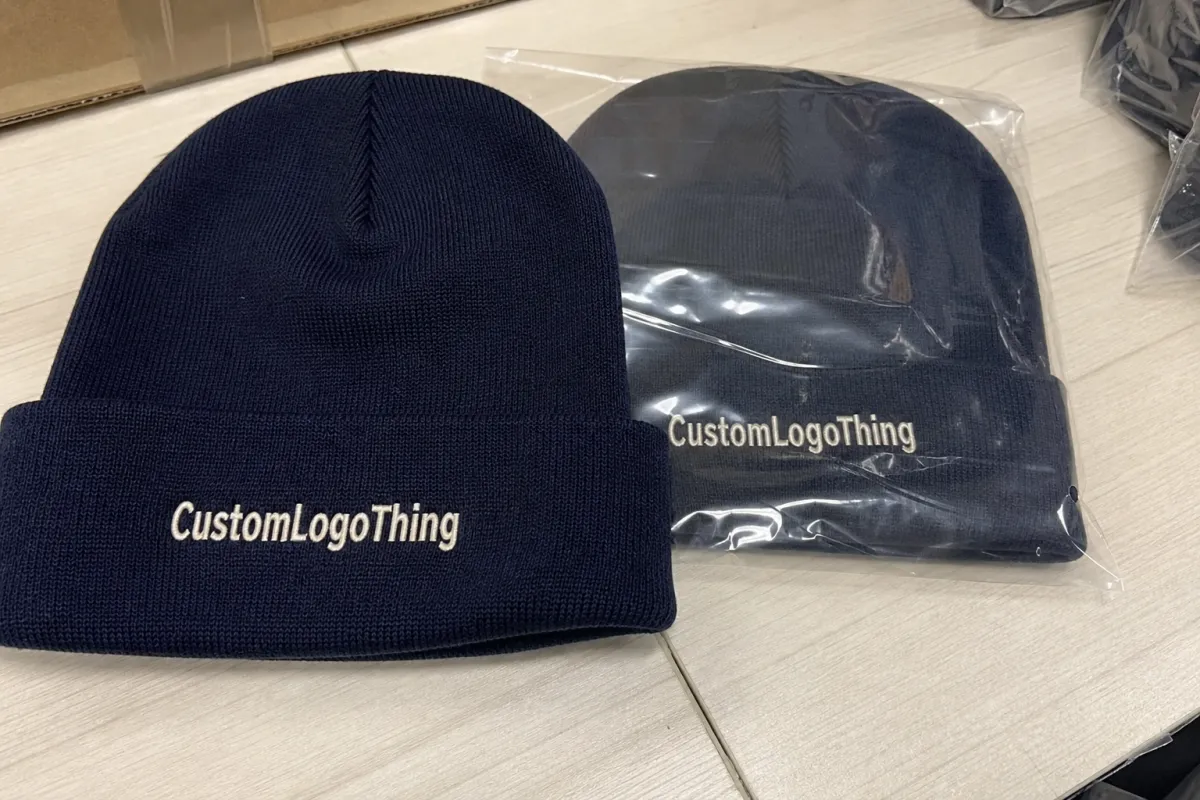
Woven labels are popular for hospitality beanies because they hold detail well and look more finished than many printed alternatives. The catch is that the label only performs if the size, border, stitch density, and placement stay consistent. Change one of those inputs and the product reads differently, even if the logo artwork itself never changed.
The most common error is not keeping the original build sheet. The second is relying on a product photo as if it were a factory spec. Photos hide too much: fold height, label width, edge finish, and the way the cuff sits after packing. A physical sample or a verified tech pack is more reliable. If the first order was right, match that build instead of trying to reconstruct it from memory.
For hotels and spas, the visual test is simple: does the beanie look branded without feeling promotional, and does it sit comfortably beside other paid retail items? If yes, keep the spec tight. If no, revise the spec before the reorder, not after. A lot of time gets wasted when buyers ask production to "make it cleaner" without identifying which dimension is actually causing the problem.
Color causes more reorder friction than people expect. "Same black" is not a production instruction. Neither is "close to navy." Use the approved Pantone reference, the accepted yarn code, or the last physical sample if that was the final sign-off. The same caution applies to charcoal, heather gray, oatmeal, and other shades that look interchangeable until they sit under retail lighting.
A good reorder plan also starts with the use case. Amenity beanies for rooms usually need a softer presentation, simpler packing, and a shape that recovers well after folding. Retail beanies need shelf appeal, neat stacking, and packaging that helps the item look deliberate. The knit may be identical. The way it is packed and displayed should not be.
A reorder is not the place to improvise. It is the place to reproduce.
The real question is not whether a supplier can make another batch. It is whether they can match the approved version without guessing. If they can, the rest of the job gets easier. If they cannot, do the paperwork before production starts and avoid paying for confusion later.
Label placement, knit build, and finish details to match
Start with the body of the beanie. Confirm yarn content, knit gauge, cuff style, fold height, and whether the label sits on the cuff or the main body. These details are small in a meeting and obvious on a shelf. A woven label on a dense rib knit feels different from the same label on a softer, looser crown. That is not a flaw. It is how textiles behave.
Placement is one of the easiest ways to lose consistency. Center front on the cuff is common in hospitality retail because it is clear and easy to brand. Side placement can feel quieter and more premium, which suits some boutique properties. Body placement works too, but the visual balance changes enough that the label can appear smaller than expected. If the previous run worked, keep the same position and the same attachment method.
Finish quality is where a reorder either looks polished or merely acceptable. Check for straight stitching, clean label edges, even fold height, and no puckering around the attachment point. Woven labels hold fine detail, but they do not hide bad sewing. If the seam tension is uneven or the label sits slightly twisted, buyers notice. Guests may not name the defect, but they feel it.
Packing method matters more than most buyers allow for. Flat fold, belly band, hang tag, polybag, and insert card each change how the beanie reads before anyone touches it. A tidy retail pack can make a modest knit look considered. A sloppy pack makes a premium piece look cheap. If the item will be sold, given as a gift, or placed in a room with other branded goods, lock the pack method before sampling starts.
If the program uses paper inserts or shelf cards, clarify the paper stock and certification requirements early. FSC certification is one common request in hospitality retail; the standard is published at fsc.org. If shipments need carton-level controls or transit expectations, the International Safe Transit Association lists test profiles at ista.org. The label itself does not need a shipping test. The carton sometimes does.
Practical matching steps usually look like this:
- Use the last approved sample as the master reference whenever possible.
- Confirm label dimensions, placement, and border finish before final pricing.
- Lock knit density and cuff height so the beanie feels the same in hand.
- Approve packaging early if the product is sold, gifted, or shelf displayed.
Specs that matter for wear, warmth, and shelf appeal
Repeat orders live or die on a narrow group of specs: yarn weight, knit density, cuff depth, stretch range, and seasonality. A light promotional beanie and a winter retail beanie are not the same product, even if the label art is identical. One is built to sit in a basket. The other is built to be worn outside without collapsing into a limp shape after one use.
Thickness is usually oversimplified. Too thin, and the beanie looks inexpensive on the shelf. Too thick, and the label can pull against the knit or sit awkwardly high. Packing gets less efficient too, which matters for carton count and display. The best option is not the warmest one or the softest one. It is the one that balances structure, comfort, and presentation.
Sizing is less complicated than buyers fear, but it still deserves a check. "One size fits most" works for many adult programs, although the stretch range should be confirmed if the beanie is for a broader guest base or for resale across multiple property types. If the first sample fit well at the cuff and recovered after stretching, keep that spec. Reorders are not the right time to tweak a shape that already behaves.
Durability should be judged by actual use, not optimism. Hospitality beanies get folded, stored in bags, worn repeatedly, and sometimes washed more than the original spec expected. Stitch consistency, yarn stability, and recovery after compression matter more than a glossy product shot. If the first run held up, use it as the benchmark. If it did not, identify the weak point and correct it before the next order is released.
For branded programs, confirm fiber content, care instructions, and any market-specific label language before production. Textile labeling rules vary by region and sales channel. A retail-facing item may need a different compliance treatment than a guest amenity. If the beanies are part of a uniform kit or a multi-item gift set, the knit spec should also fit the rest of the presentation instead of fighting it.
Buyers can use a simple checklist before approving a reorder:
- Yarn content and weight
- Knit gauge or density
- Cuff depth and fold height
- Label size, placement, and stitch method
- Color reference for body and label
- Pack method and carton count
If you have ordered from Wholesale Programs before, the safest choice is usually to keep the same structure unless the prior batch caused a clear problem. Changing a spec just to feel proactive is expensive, and it rarely improves the product.
Pricing, MOQ, and quote drivers for reorder buyers
Unit cost moves with quantity, label complexity, yarn selection, and whether the order stays identical to the last one. That is the clean version. If the buyer changes label placement, switches knit weight, adds a second colorway, or asks for a rushed delivery window, the price changes too. Production is not being difficult. The job is different.
MOQ should be treated as a setup reality, not a penalty. A factory still needs to run yarn, set machines, align the woven label spec, and confirm finishing. If the reorder matches the approved sample, a buyer can often avoid paying for a redesign or a fresh round of prototyping. But there is still a minimum tied to machine time, color counts, and packing efficiency.
The quote is only useful if it reflects the actual order. Quantity, target ship date, artwork, current sample photos, label size, pack method, and whether the shipment needs to split across multiple properties all matter. Leave one out and the first quote may look attractive, then expand once logistics are clarified. That creates the worst kind of procurement work: repeated revisions with no real improvement.
Common cost drivers are predictable:
- Artwork changes after the first approval.
- Rush sampling when the approval window is tight.
- More label colors or a tighter weave with finer detail.
- A different yarn or knit density than the previous run.
- Split delivery to multiple hotels, warehouses, or seasonal storage points.
Below is a practical comparison of common reorder scenarios. The numbers are a buying frame, not a promise, but they reflect how tidy beanie jobs usually price out.
| Reorder scenario | Typical unit range | Lead time tendency | What usually changes |
|---|---|---|---|
| Exact repeat of approved sample | $2.10-$3.40 | Fastest | Nothing beyond quantity and packing count |
| Repeat with minor trim update | $2.35-$3.85 | Moderate | Label size, fold method, or pack format |
| Repeat with knit or color change | $2.70-$4.50 | Slower | Yarn sourcing, sample confirmation, and QC review |
| Rush reorder with split delivery | $3.00-$5.20 | Most expensive | Expedite fees and extra logistics handling |
Ask exactly what is included in the quote. Some suppliers bundle packing and basic proofing; others do not. Some include a simple approval image set; others charge for a formal pre-production sample. If the scope is vague, the final invoice usually clarifies it in the least pleasant way.
Production steps and lead time for repeat orders
A repeat order should move in a straight line: spec review, artwork check, sample or photo confirmation, yarn and label confirmation, knitting, finishing, packing, and final QC. Skip a step and the timeline stretches. That is true even when the order looks simple from the outside.
The fastest reorders happen when the buyer has the previous purchase order, the approved art file, and a physical sample. That trio resolves most questions before they become delays. If one of those pieces is missing, the supplier has to rebuild part of the record. That takes time no matter how familiar the product is.
For lead time, use ranges rather than promises. A clean repeat run is usually faster than a first order, but timing still depends on quantity, season, and approval speed. A small reorder might move in roughly 10-15 business days after approval. A larger run, or one with packaging changes, can take longer. If the order is tied to guest arrivals, a property opening, or a retail reset, leave extra room. Shipping schedules rarely improve because a calendar is tight.
Delays usually show up in the same places:
- Logo corrections after the first proof
- Label placement changes after approval
- Missing sample references from the prior supplier
- Late decisions on packaging or cartoning
- Unclear internal sign-off on art and quantity
A useful habit is to ask for a match check first. That can be photo-based or sample-based, depending on what you have. Then confirm the production window. Then lock the ship date before the stock level gets uncomfortable. Waiting until the shelf is empty is how buyers end up paying for urgency instead of planning for it.
Communication should be short and coordinated. The person approving art, the person approving spend, and the person receiving the shipment should all know the same timeline. If those roles are split across departments, the reorder slows down from admin friction long before production becomes a problem.
Why repeat buyers keep the same knit spec
Repeat buyers stay with the supplier who can reproduce the same look, feel, and label placement without extra coaching. That is the advantage. Not a polished pitch. Not a long explanation. Repeatability. In hospitality, it matters because the guest should not be able to tell which batch came first.
Keeping the spec also saves internal time. There are fewer samples to review, fewer debates about shade variation, fewer production clarifications, and fewer questions from procurement. A clean reorder cuts approval churn, which matters when the buyer is managing several properties or restocking on a seasonal schedule.
Communication quality matters as much as pricing. Fast answers on art, timeline, and minor changes are more useful than a perfectly worded sales email when stock is moving. If a supplier can tell you what changed, what stayed fixed, and what the realistic ship date is, they are doing the work that actually helps the buyer.
The best reorder supplier is the one who makes the next order feel uneventful.
Quality control should be uneventful too. Color consistency, label alignment, clean sewing, correct pack counts, and accurate carton marks are the basic checks. If those are right, the job is on track. If one fails, the issue is usually visible before the carton leaves the building. Buyers do not need drama. They need the right hats in the right box.
That is why a strong hotel woven label Beanies Reorder Plan is more about discipline than sales language. Protect the spec. Keep the records tight. Make the next run match the one that already worked. That is what repeat buyers pay for.
Next steps to lock the reorder before stock runs low
Send the previous PO, current sample photos, logo file, quantity split, target delivery date, and any notes from the last run. That is the shortest path to a quote that reflects the job instead of a guess. If you have a physical sample, even better. It reduces uncertainty around label size, placement, and finish.
If the last order came from a different vendor or the artwork changed at some point, ask for a quick match check before committing to full production. One small check can save a lot of rework. It also tells you whether the spec is stable enough to reorder as-is or whether the buyer should correct something first.
Then clarify the approval path. Who signs off on art? Who approves spend? Who receives the shipment? If those people are not aligned, the order can stall while everyone assumes somebody else already answered. That kind of delay is common, and it is usually preventable.
A clean reorder sequence usually looks like this:
- Confirm specs against the prior sample
- Approve the quote
- Review and sign off the proof or sample match
- Release production
- Track the ship date against the restock window
If you need a broader buying path, our Wholesale Programs page is a useful starting point for repeat orders and multi-property planning. The cleaner the input, the cleaner the quote. The cleaner the quote, the fewer headaches later.
Send the old sample and the exact quantities now, not when the shelf is empty. That is how a hotel woven label Beanies Reorder Plan turns from guesswork into production.
How early should I start a hotel beanie reorder?
Start as soon as you know the restock window. Do not wait until inventory is gone. If the beanies are seasonal or tied to guest arrivals, build in extra time for approvals, sampling, and shipping.
What do you need to quote woven label beanies again?
Send the last PO, logo artwork, quantity, target ship date, and any sample photos or physical references. If something changed, say so up front so the quote reflects the real spec instead of a guess.
Can you match the same woven label on a repeat order?
Yes, if the original artwork, label size, and placement are clear. A physical sample or approved photo makes the match check faster and lowers the chance of a mismatch.
What affects MOQ and unit cost for hotel beanie reorders?
Quantity, label complexity, yarn choice, and whether the run stays identical to the last order. Any redesign, color change, or rush schedule usually pushes the cost up.
How long does a repeat production run usually take?
Repeat orders are faster than first-time runs, but timing still depends on quantity, approval speed, and season. The quickest path is to approve the quote and proof quickly and keep the spec unchanged.


