subscription logo patch Beanies Reorder Plan sounds like a narrow procurement task, but the decisions behind it affect cash flow, lead time, and how consistent the product feels six months later. A repeat order is not just another PO with the same artwork attached. It is a test of whether the original spec was written clearly enough to survive time, staff changes, and a supplier's production calendar.
The risk shows up fast. If the reorder is late, a team may accept a substitute body, a different patch material, or a rushed freight option that erases any savings from the original run. The result is usually subtle rather than dramatic: the cuff sits a little differently, the patch edge is a little stiffer, the color is a shade off under indoor light. Those differences matter more than buyers sometimes admit because customers compare the second run against the first, not against a spec sheet.
The best programs treat a subscription Logo Patch Beanies reorder plan as a controlled replenishment cycle. Inventory triggers are based on sell-through, not optimism. The approved details are locked early. Any part that can drift is isolated before the next order begins. That approach is dull in the right way. Dull usually means predictable, and predictable is what keeps a subscription line from turning into a rush job.
Recurring beanie orders also work best when someone owns the timeline. Not a vague owner. A real one. Weekly inventory checks, sample tracking, and a record of what changed, if anything, from the prior run. A lot of confusion disappears once the product is treated like a repeatable asset rather than a fresh design every time.
How a subscription logo patch beanies reorder plan prevents stockouts
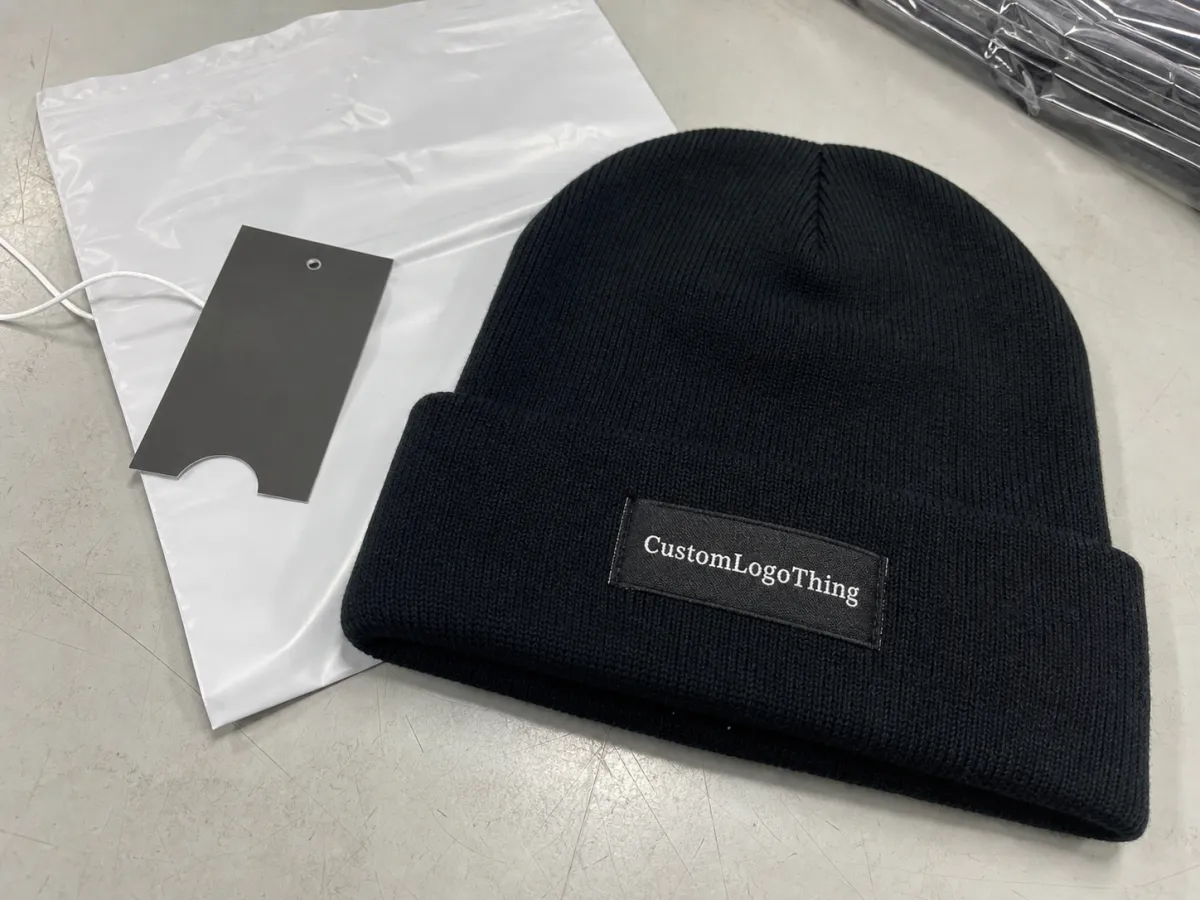
Stockouts rarely begin with a failed factory run. They usually begin with a bad assumption about how long the next replenishment will take. If a beanie line sells 120 units a month and the replenishment cycle runs five weeks, a reorder point at 60 units is not very safe. There is no room there for approval lag, patch production, material sourcing, or the small delays that make timelines slip by several days at a time.
A practical reorder point should be set from real consumption. Weekly sell-through, seasonality, and campaign dates matter more than a round number on an inventory dashboard. If a holiday drop or event bundle sits inside the replenishment window, the trigger should move earlier. Waiting for a lower stock level often creates the very rush fee the team was trying to avoid.
The hidden cost of a late reorder is consistency loss. Buyers may focus on unit price, but the customer notices whether the new batch still matches the old one. A patch that sits 3 to 5 mm higher, a cuff that is slightly shorter, or a different shade of navy can be enough to make a repeat program feel less intentional.
Three controls keep the program stable:
- Fixed elements: beanie style, patch artwork, patch placement, color reference, and packaging format.
- Flexible elements: quantity tiers, freight method, and optional extras such as a hang tag or insert.
- Trigger points: sell-through threshold, launch date, or a calendar deadline tied to shipment needs.
For buyers managing several replenishment lines at once, the discipline is simple but not easy. Write down the approved spec, keep the stock count current, and reorder before the comfort level becomes a panic point. A plan that exists only in someone's head is not a plan. It is a liability with a logo on it.
If an internal team needs a reference point before a purchase order is released, the FAQ page can help standardize the basics. Larger repeat programs usually fit better under Wholesale Programs, since the structure pushes the buyer to think in cycles rather than one-off buys.
The cleanest reorder is the one that does not need a rescue. That usually means the same body, the same patch method, the same placement drawing, and enough stock on hand to absorb a delay without making the entire program wobble.
Patch construction choices that hold up on repeat runs
Patch construction affects more than appearance. It shapes repeatability, pricing, and how forgiving the final product will be if the same art is produced again months later. A subscription logo patch Beanies Reorder Plan works best when the patch style is selected for durability in production, not just visual preference.
Woven patches are strong when the logo includes small text or fine linework. They hold detail better than dense embroidery and tend to repeat cleanly once the file is approved. Embroidered patches give the product a more tactile, familiar retail look, though tight stitching can soften very small features. Faux leather patches create a quieter, premium finish. PVC-style patches are good for bold shapes, high contrast, and weather exposure, but they depend on good tooling and disciplined color control. Each method can work. The question is how stable it will be on the second and third run.
| Patch type | Best use | Typical strengths | Repeat-order risk |
|---|---|---|---|
| Woven | Small text, sharp logo detail | Fine line retention, clean edges | Color drift if approvals are vague |
| Embroidered | Bold branding, textured look | Durable, familiar retail feel | Fine detail can soften over time |
| Faux leather | Premium, minimal branding | Strong shelf presence, clean contrast | Deboss depth and finish can vary |
| PVC-style | Graphic logos, hard-edged artwork | High contrast, weather-friendly | Tooling and color matching need discipline |
Shape and edge treatment matter more than many buyers expect. A simple circle with a merrowed border may repeat more reliably than a complex die-cut with tiny points that are harder to trim consistently. Thread density, border width, backing type, and edge finish all influence how the patch sits on the beanie cuff. If the first run used heat-seal backing and the reorder switches to sew-on only, the placement may look slightly different even if the artwork is unchanged.
That is why patch approvals should live in a clear file. Save the vector art, color references, patch dimensions, placement drawing, and any notes about border style or backing. The more the supplier has to infer, the more room there is for a second-run mismatch. Repeat orders should be a manufacturing replay, not a fresh creative exercise.
For shipments that need packaging materials with a traceable sourcing story, the FSC standard can be relevant for cartons, paper inserts, and hang tags. If the goods will move through a more demanding distribution path, ISTA test methods give a useful framework for thinking about vibration, compression, and transit handling.
Beanie body, fit, and color specs to lock before reorder
The beanie body is where recurring orders often drift. Buyers remember the logo and forget the knit details, which is a quick way to end up with a product that feels almost right and still fails the repeat test. The spec needs to cover style, cuff height, crown depth, yarn blend, knit gauge, stretch profile, and finish. If the first run was a 12-inch cuffed beanie in a medium-weight acrylic blend, that should be written down exactly. Memory is not a spec system.
Color deserves the same level of control. Describing a shade as “charcoal” or “navy” may be enough for casual ordering, but it is weak for replenishment. PMS references help, yet material limits still apply. A knit yarn will not reproduce every color the way coated paper or printed packaging can. For large repeat programs, a physical sample or approved swatch is usually more dependable than a loose description. On a subscription Logo Patch Beanies Reorder Plan, the cost of a color mismatch tends to be higher than the cost of locking the right reference early.
Fit also depends on audience. A giveaway item for staff or event use may call for a softer hand and more forgiving stretch. A retail or subscription bundle piece often benefits from a cleaner shape and a slightly more substantial feel. Those are not cosmetic differences. They change how the product behaves on head size variation, how the cuff holds its shape, and how premium the item feels straight out of the package.
What belongs on the spec sheet
- Beanie style, cuff height, and overall length.
- Fiber content and knit gauge.
- Approved color reference and acceptable tolerance.
- Patch size, shape, finish, and exact placement.
- Packaging format, fold method, and carton count.
A clean spec sheet saves time at every stage after the first order. It cuts down on revision emails, removes ambiguity from proofing, and reduces the chance that one person interprets “centered” differently from the next. It also helps with inventory planning. Once the body style is fixed, buyers can compare performance across colors and quantities without wondering whether the product itself changed.
That detail matters in subscription and seasonal programs where the same beanie appears in multiple campaigns. A color that moves faster than the others can be reordered earlier, while slower shades can stay lean. A good spec sheet makes that kind of decision possible without rebuilding the order from scratch each time.
Pricing, MOQ, and quote inputs that set unit cost
Pricing on repeat beanie orders is a stack of smaller choices, not one flat number. The blank body, the patch type, setup charges, packaging, and freight all shape the final cost. To get a quote that means anything, ask for each component separately. If the supplier only sends a single all-in number, it is harder to see whether the difference came from the product, the decoration, or a late-stage add-on.
MOQ, or minimum order quantity, depends on whether the body is stock-supported, the patch is custom, and the finish is standard or specialty. A stock beanie with a woven patch can often support a lower MOQ than a fully custom body with specialty yarn or a molded patch. Lower quantities usually carry a higher unit cost because setup is spread over fewer pieces. That is not a warning sign. It is how production works.
Quote requests are more useful when they include a few concrete points:
- Quantity tiers with unit pricing at each level.
- Sample cost and whether it is refundable.
- Decoration setup or patch tooling charge.
- Lead time from approved spec to shipment.
- Landed cost if freight is included.
Ask for multiple quantity breakpoints. The difference between 250, 500, and 1,000 units can show where the real value sits. Sometimes a slightly larger order reduces unit cost enough to justify a bit of buffer stock. Other times the savings are too small to matter. The buyer should know that before the order is locked, not after the stock is already on the water or sitting in a depot.
| Quote element | Why it matters | What to ask for |
|---|---|---|
| Blank beanie cost | Sets the floor price | Material blend, weight, and color availability |
| Patch setup | Drives recurring cost on small runs | Tooling, digitizing, or mold charges |
| Packaging | Impacts presentation and freight weight | Fold style, bagging, inserts, carton count |
| Freight | Can erase savings from a lower unit price | Transit method and landed-cost estimate |
The cheapest unit price is not always the best replenishment move. A large run can look efficient on paper and still create dead stock, excess warehouse use, or an awkward cash squeeze. Reorder planning works better when it follows actual sell-through instead of trying to win a single quote comparison. Small, disciplined replenishments often beat speculative volume buys that sit too long.
Production steps, timeline, and lead time checkpoints
Lead time should not be treated as a single number. A repeat patch beanie order moves through distinct steps: art approval, patch proof, body sourcing, production, inspection, packing, and freight booking. Any one of those can slow the schedule. The clock should begin only after the spec is locked. Starting early creates false confidence and bad planning downstream.
For straightforward repeat runs, the fastest path is usually the one where the body style already exists and the patch design stays unchanged. If the supplier already has the same yarn color and patch material on hand, production can move quickly. If one of those materials needs to be reordered, the timeline stretches. The difference can be a few days or a few weeks depending on quantity and season.
A practical lead-time target for a repeat order is often 12 to 15 business days after proof approval, though larger runs and busier production periods may require more time. Seasonal demand adds pressure. So do short shipping windows. If the beanies are meant for a launch, event, or holiday bundle, the reorder calendar should include a buffer before the real deadline, not right on top of it.
Where schedules slip
- Delayed internal approvals after the quote is already accepted.
- Changes to patch position, thread color, or packaging after proofing.
- Unexpected stockouts in the exact beanie color originally used.
- Late freight booking during peak shipping windows.
Most recurring programs fail for a simple reason: the next order starts too late. The fix is not guesswork. It is a reorder calendar tied to actual consumption and known events. If current stock covers six weeks and the replenishment cycle takes three, the trigger point should be earlier than the point where the team starts getting nervous. Safety stock exists for a reason.
Shipping method and carton quality deserve attention too. A display-friendly package may not survive distribution handling unless the carton spec is strong enough for the route. For some buyers, a simple compression or vibration screen modeled on ISTA-style thinking is enough to catch a weak shipper design before it becomes a damage claim.
What a reliable beanie partner should prove before you reorder
Repeat-order trust is built on process, not promises. A dependable partner can show how the same product will be recreated. They keep approvals organized, explain constraints early, and avoid pretending every rush request can be absorbed without consequence. That kind of honesty saves time later, especially when the order is already under pressure.
Before you place another order, check whether the supplier can retrieve prior approvals, sample photos, and production notes without rebuilding the file from scratch. If they can, the next run is easier. If they cannot, the risk of spec drift rises. A subscription logo patch beanies reorder plan is only as dependable as the documentation supporting it.
Good suppliers also call out problems before production starts. If a yarn color is unavailable, that should surface during quote review. If a patch style is not suitable for the artwork, that should be said before proofing. The best vendors protect the buyer from hidden cost, even if that means slowing the conversation for a day.
A few proof points help separate a capable partner from a hopeful one:
- Sample photos from prior production runs with similar patch methods.
- A documented approval trail for art, color, and placement.
- Clear quantity tiers and a quote that separates product cost from freight.
That level of transparency helps procurement, merch, and operations stay aligned. It also reduces the number of times a reorder has to be explained all over again. The strongest repeat programs are the ones where the spec is so clear that the conversation gets shorter, not longer, each time the order comes back.
Next reorder actions to take before inventory dips
Start with an inventory audit. Check current stock, weekly sell-through, the next planned drop, and any event or seasonal date that could pull demand forward. If the numbers show a shortfall before the next replenishment window, waiting for another report rarely improves the outcome. Place the reorder while there is still room to book production cleanly.
Then freeze the core spec. Lock the beanie body, patch size, color, placement, packaging, and quantity tiers in one record. If the previous order worked, preserve the parts that made it work. Reorder programs reward discipline more than constant tinkering. A team can spend a lot of time improving a product that did not need improving in the first place.
Finally, Request a Quote that separates unit cost, MOQ, and freight. Compare the current run against the next realistic reorder size. That gives you a better sense of whether to keep the order lean or add a buffer. The value of a subscription logo patch beanies reorder plan is not the phrase itself. It is the ability to replace uncertainty with a repeat process that lands before inventory gets thin.
Bottom line: when the patch method is fixed, the body spec is documented, and the reorder trigger is tied to actual consumption, the next run becomes faster and easier to budget. That is the practical advantage of this kind of planning: fewer surprises, less rush freight, and a repeat order that behaves like a repeat order.
How does a logo patch beanie subscription reorder plan work?
Set a stock trigger based on weekly sell-through and the time required to approve, produce, and ship the next run. Keep the beanie body, patch art, and placement fixed so the repeat order matches the approved sample. The process works best when the same SKU family is used every time.
What MOQ should I expect for repeat patch beanie orders?
MOQ depends on whether the body is stock-supported, the patch is custom, and the color or finish is standard. Lower quantities usually raise unit cost because setup gets spread across fewer pieces. Tiered pricing is the clearest way to compare a small reorder against a more efficient run size.
What affects unit cost on subscription beanie reorders?
Blank body cost, patch construction, setup, packaging, and freight all change the final number. Rush timing can add cost even when the product spec stays the same. A useful quote separates those pieces so the buyer can see where the money is going.
How long is the lead time for recurring logo patch beanies?
Repeat orders are usually faster when the spec is locked and the supplier already has the same materials. A straightforward run may move in about 12 to 15 business days after proof approval, though quantity and season can stretch that. Build a buffer before the real deadline, not after it.
What do I need ready before placing a reorder?
Have approved logo art, patch size, color references, beanie style, and quantity ready. Keep records of the previous order number, sample approval, packaging details, and any notes about placement or backing. The more complete the input, the fewer revisions the quote usually needs.


