Buyer Fit Snapshot
| Best fit | Budget Packaging for Small Ecommerce Brands projects where brand print, material claims, artwork control, MOQ, and repeat-order consistency need to be specified before quoting. |
|---|---|
| Quote inputs | Share finished size, material target, print colors, finish, packing count, annual reorder estimate, ship-to region, and any compliance wording. |
| Proofing check | Approve dieline scale, logo placement, barcode or warning zones, color tolerance, closure strength, and carton packing before bulk production. |
| Main risk | Vague material claims, crowded artwork, missing packing details, or unclear freight terms can make a low unit price expensive after revisions. |
Fast answer: Budget Packaging for Small Ecommerce Brands: Material, Print, Proofing, and Reorder Risk should be specified like a repeatable production item. The safest quote records material, print method, finish, artwork proof, packing count, and reorder notes in one written spec.
Production checks before approval
Compare the actual filled-product size with the drawing, then confirm tolerance on folds, seals, hang holes, label areas, and retail display edges. Reserve space for logos, QR codes, warning copy, and material claims before decorative graphics fill the panel.
Quote comparison points
Review material grade, print process, finish, sampling route, tooling charges, carton quantity, and freight assumptions side by side. A quote is only useful when the supplier can repeat the same color, closure quality, and packing count on the next order.
How to budget Packaging for Small ecommerce looks straightforward until the first real fulfillment cycle starts showing its teeth. A box that seemed inexpensive on the quote sheet may push shipments into a higher dimensional weight band. An insert that takes 20 extra seconds to assemble can quietly eat labor. A carton that arrives slightly too large can force more void fill, more freight, and more damage than anyone expected. I have watched brands chase the lowest unit price and end up with the highest total cost. That happens more often than people admit.
The better way to think about how to budget Packaging for Small ecommerce is as a system cost, not a material cost. Packaging includes protection, storage, assembly time, freight, replacements, and the price of fixing mistakes after the parcel has already left your hands. For fragile products, premium goods, and awkwardly sized SKUs, packaging is part of the product economics. Treat it like decoration and it will drain margin. Treat it like an operating input and it becomes much easier to control.
Small brands miss this constantly. They count the carton, skip the tape, underprice labor, and ignore the cost of damaged items. Across 300 orders, those slips feel minor. Across 3,000 orders, they turn into a margin leak you can practically trace by smell. The goal is not to spend as little as possible. The goal is to spend the right amount so packaging supports profit, consistency, and growth without becoming a hidden tax.
The cheapest packaging line item is rarely the cheapest shipment. Oversized boxes, weak inserts, and sloppy fit often move the cost downstream into freight, damage, and labor.
How to budget packaging for small ecommerce: why the first number is usually wrong
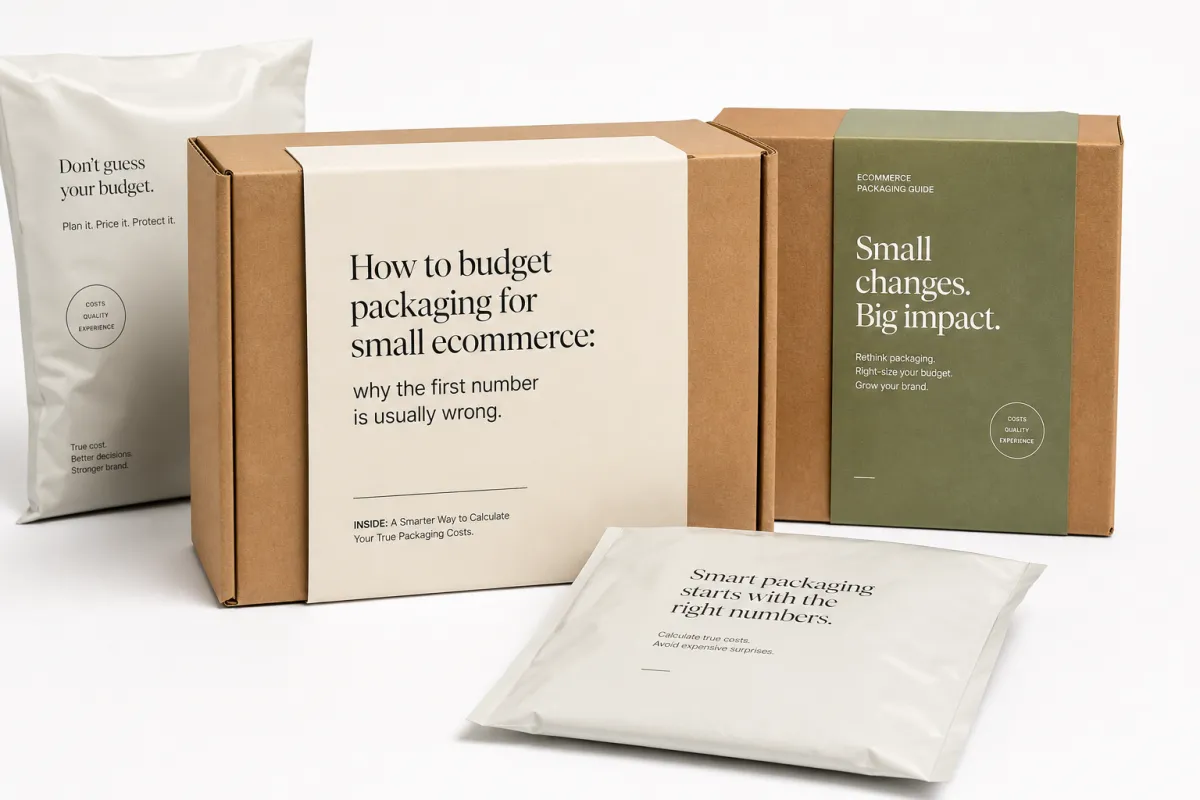
How to budget packaging for small ecommerce begins with an annoying truth: the first quote is usually incomplete. A mailer may look affordable at 250 units, then custom print, inbound freight, labels, and pack-out labor show up and change the math. Add a protective insert or a second layer of corrugate and the budget shifts again. The first number is often a headline, not a real plan.
A cleaner approach is to treat every packaging decision as a chain of trade-offs. The product has to survive transit. The package has to fit the item. The design has to support the brand. And the pack-out has to stay quick enough that labor does not become a silent penalty. Every component should earn its place. If it does not protect, present, or speed up fulfillment, it is probably excess. That sounds blunt, but the math usually agrees.
Many sellers stop at the box price and call it a day. That is where the margin gets fuzzy. A custom printed 10 x 8 x 4 carton can cost more than a plain mailer, yet if it reduces void fill, lowers breakage, and tightens the unboxing experience, it may still be the smarter choice. The real question inside how to budget packaging for small ecommerce is not “What does the box cost?” It is “What does this choice do to the full cost of a shipped order?”
Storage matters too, and it is the part people forget because it does not appear on the first sample invoice. Small businesses often buy packaging in awkward quantities to protect cash flow. That is reasonable, but the trade-off is higher unit pricing, more supplier minimums, and occasional second freight charges. If a brand needs five box sizes to cover a handful of products, the system starts spending money on complexity. How to budget packaging for small ecommerce only works when variety stays intentional.
A practical rule helps: if a packaging choice cannot be tied to a measurable result, it probably belongs on the chopping block. That result might be lower breakage, faster packing, better shelf appeal, or lower dimensional weight. If the material does none of those things, it is decoration. Decoration can get expensive quickly when volume is still low.
For brands that want a grounding reference, the educational material at Packaging.org is useful for terminology around substrates, converting, and supply chain basics. It helps cut through supplier language when several options sound similar but behave very differently in real use.
How to budget packaging for small ecommerce orders by cost stack
The cleanest version of how to budget packaging for small ecommerce is a cost stack. Each shipped order is a bundle of separate costs, not one vague packaging line. The stack usually includes primary packaging, protective packaging, branding, shipping supplies, labor, freight, and a reserve for overages or replacements. Once those pieces are visible, savings become easier to spot and much harder to fake.
Primary packaging is the carton, mailer, pouch, tube, or folding carton that holds the product. Protective packaging is the material that keeps the item from moving or breaking, such as molded pulp, corrugated inserts, paper void fill, or air pillows. Printed branding includes logos, inks, coatings, and finishes. Anyone serious about how to budget packaging for small ecommerce should separate those buckets in the spreadsheet instead of burying them together.
Labor carries more weight than many new brands expect. If one carton takes 40 seconds to assemble and another takes 15, that difference scales fast. A slightly more expensive material can be the cheaper option if it shortens pack-out time. Tape usage matters too, along with fold count, adhesive strips, and label placement. How to budget packaging for small ecommerce should reflect the speed of the packing line, not only the materials on the shelf.
Three levels help keep the discussion honest: lean, balanced, and premium. The lean version protects at the lowest possible cost. The balanced version usually gives the best mix of cost, brand feel, and damage resistance. The premium version supports a higher perceived value, but only pays off when margin and customer expectations justify it. For many brands, how to budget packaging for small ecommerce is the work of matching those levels to the right SKU.
Below is a simple way to think about that stack.
| Packaging profile | Typical materials | Estimated per-order packaging cost | Best fit |
|---|---|---|---|
| Lean | Stock mailer, minimal label, light fill | $0.35-$0.90 | Light, durable, low-friction SKUs with low breakage risk |
| Balanced | Custom printed box, insert, paper fill, branded label | $0.95-$2.25 | Most consumer goods, subscription orders, and giftable items |
| Premium | Rigid setup, specialty insert, premium finish, multi-piece presentation | $2.50-$6.00+ | Higher-margin products, luxury retail packaging, fragile goods |
The exact figures move with volume, finish, freight, and labor, yet the table still does useful work because it keeps the conversation grounded. A brand can quickly see whether how to budget packaging for small ecommerce calls for a lean daily system and a more refined version for gift sets or higher-value products.
Contribution margin is the other half of the story. A slightly better insert can pay for itself if it cuts damage claims. A sturdier carton can protect gross profit if it prevents crushing and lowers returns. A better unboxing moment can push repeat purchase behavior, which shows up later rather than immediately. Good how to budget packaging for small ecommerce work tracks the financial effect after the parcel has shipped, not just the invoice from the supplier.
For brands watching broader packaging design and transit performance trends, ISTA shipping test standards are worth reviewing. A package that looks polished but fails in distribution is expensive no matter how elegant the quote looked.
Monthly review belongs in the cost stack too. A new SKU, a bundle launch, or a shift in order mix can move average box size, void fill use, and labor without anyone noticing for weeks. That is why how to budget packaging for small ecommerce should include a simple monthly comparison: planned cost per order versus actual cost per order.
What does how to budget packaging for small ecommerce include?
How to budget packaging for small ecommerce includes more than cartons and mailers. It covers the full pack-out system: the primary package, protective materials, branding elements, inbound freight, labor, storage, and a contingency for damage or rework. That wider view is what keeps a budget from looking precise on paper and drifting off target in the warehouse.
In practice, the budget should track both direct and indirect costs. Direct costs include corrugated boxes, custom inserts, void fill, labels, tape, tissue, and printed finishes. Indirect costs include the time needed to assemble the order, the space packaging takes up on shelves or pallets, and the cost of fixing mistakes after shipping. If a box saves ten cents but adds thirty seconds of labor, how to budget packaging for small ecommerce becomes a labor question as much as a materials question.
That is why a useful budget ties packaging to one order type at a time. A fragile candle, a pair of shoes, and a subscription kit should not share the same assumptions. Each one has a different protection need, a different pack-out rhythm, and a different risk of damage. Clear segmentation makes how to budget packaging for small ecommerce easier to audit and a lot easier to improve.
For a small brand, the goal is not to build the most elaborate package. It is to Choose the Right balance between protection, presentation, and cost per order. That balance is what turns packaging from a vague expense into a controlled operating system.
Packaging costs and pricing factors that shape your budget
How to budget packaging for small ecommerce gets much clearer once the pricing drivers are named directly. Material choice leads the list. Corrugated board, SBS paperboard, kraft mailers, molded pulp, polyethylene mailers, and rigid board all behave differently in cost, print quality, and protection. A 32 ECT corrugated mailer does not price like a 350 gsm C1S folding carton, and a custom insert adds another layer because it has to be engineered and cut to fit.
Print method matters just as much. One-color flexographic print on kraft board is not the same as full-coverage digital print with varnish or soft-touch lamination. More coverage, more color matching, and more finishing usually mean a higher unit cost. Shape changes the price too. In how to budget packaging for small ecommerce, a flat stock-size mailer is usually easier to buy than a custom-fit carton with a specific dieline and tighter production tolerance.
Minimum order quantities can change the math quickly. A small run carries a higher unit cost because setup charges, plates, dies, or tooling have to be spread across fewer pieces. That is where newer brands get surprised. Sampling, proofing, and setup often look small next to the final print run, but they are still part of the actual packaging spend. If a supplier charges a die fee, insert tooling fee, or one-time proof charge, how to budget packaging for small ecommerce needs to capture those lines immediately.
Freight is another quiet variable. A heavy corrugated order can look inexpensive until the truck rate arrives. A supplier located hundreds or thousands of miles away can add a meaningful percentage to the landed cost. That is one reason some brands prefer regional vendors or stock packaging with quicker replenishment. Budgeting for how to budget packaging for small ecommerce means asking for delivered cost, not only the box price.
Volume breaks can help, but only if the demand is steady enough to justify the inventory. Larger orders often lower unit cost, yet the cash sits in boxes on a pallet. Order too little and the per-unit price stays high. Order too much and money gets trapped in packaging that may not move for months. Good how to budget packaging for small ecommerce decisions live in that middle zone where savings are real and inventory risk stays manageable.
Protection is part of pricing too. Heavier corrugate, molded pulp trays, and reinforced inserts cost more upfront, but they can reduce breakage and replacement shipments. A premium shipping box may also support branding, especially when the item is purchased as a gift. In retail packaging, appearance and protection are not competing ideas. They often work together, and the budget should reflect both.
Comparing quotes only works when the specifications match exactly. Same dimensions, same board grade, same print coverage, same coating, same quantity, same delivery terms. Otherwise the quotes are not comparable. That sounds obvious, yet in how to budget packaging for small ecommerce, hidden specification changes are one of the fastest ways a supplier appears cheaper than another when the product is not actually the same.
Ask suppliers for landed-cost quotes that include unit price, freight, setup charges, and special handling. If the packaging needs FSC-certified paperboard, confirm the certification chain. If the item requires ISTA-style testing, make sure the test package and the production package align. Those checks keep how to budget packaging for small ecommerce from drifting into guesswork.
Step-by-step guide to building a packaging budget
The most useful version of how to budget packaging for small ecommerce begins with an audit, not a forecast. List every item used in the pack-out process: cartons, mailers, inserts, tissue, labels, tape, void fill, stickers, thank-you cards, and any protective wrap. Then tag each item by SKU or order type. A small store with ten products may only need three packaging configurations. A more complex brand may need five or six. The point is the same: know which supplies touch which order.
Then gather actual operating data. Pull order counts, damage rates, repack rates, and customer service notes about crushed corners, loose contents, or poor presentation. Time the pack-out process. If one order type takes 18 seconds and another takes 42, that difference belongs in the budget. How to budget packaging for small ecommerce gets sharper when real shipping data replaces guesses.
After that, build a spreadsheet with one row per order type. A useful layout includes unit cost, quantity per order, freight allocation, labor estimate, and contingency. Think of it this way:
- Direct materials: box, insert, fill, label, tape, and printed elements.
- Freight allocation: inbound shipping from the supplier, divided across units.
- Labor estimate: pack-out time multiplied by labor rate.
- Overrun reserve: a small buffer for spoilage, rework, and replacement shipments.
That spreadsheet becomes the backbone of how to budget packaging for small ecommerce because it shows how one SKU can be profitable while another quietly drains margin. A lightweight accessory may need only a thin mailer and a barcode label. A glass item may need double-wall corrugate, a molded insert, and paper void fill. Those should never be treated as the same order in the budget.
A useful discipline is to build three scenarios: conservative, expected, and scaled. The conservative case assumes lower volume and slightly higher unit pricing. The expected case uses current order counts and normal supplier pricing. The scaled case assumes higher volume and better pricing, but also more cash tied up in packaging inventory. How to budget packaging for small ecommerce gets less stressful when the brand can see all three paths before committing to a large print run.
Before placing a larger order, run a pilot. Buy a small batch, pack a real set of items, ship them to a test address, and inspect the results. Look for scuffed corners, box bulge, seal failure, and whether the unboxing still feels polished. If the package protects fragile products, a drop-test approach modeled after ISTA distribution testing helps expose weak points before the first customer does. That is a much cheaper lesson than a wave of replacements.
Finally, compare the budget to contribution margin. If a package choice adds $0.32 and cuts damage claims by 2 percent, the savings can outweigh the extra spend by a wide margin. If a branded insert lifts repeat orders or supports a giftable presentation, the value may show up later, which is still value. The point of how to budget packaging for small ecommerce is to make those trade-offs visible before the orders leave the building.
Process and timeline: from quote to packed order
How to budget packaging for small ecommerce is also a timing exercise. A cheap box that arrives late is not cheap. The process usually starts with a written brief that names the product size, weight, fragility, brand goals, target volume, and any print or finish requirements. If the brief is vague, the quote will be vague too, and the budget will wobble from the start.
After the brief comes art or dieline review. This is the point where custom printed boxes and inserts either move forward cleanly or get stuck in revision loops. Artwork that looks fine on a screen may fail once folds, glue flaps, and barcode placement are considered on the actual panel. How to budget packaging for small ecommerce has to include revision time because each change can affect launch timing and sometimes the price.
Sampling is the next place where budget and timeline meet. A sample run looks small, yet it often prevents a much larger mistake. The sample should be checked for fit, assembly speed, print fidelity, and protection. If the brand uses retail packaging or presentation boxes, sample review also confirms whether the unboxing sequence feels deliberate or awkward. In practice, how to budget packaging for small ecommerce improves when the sample is treated as a decision tool rather than a formality.
Production lead time depends on complexity. Stock packaging may be available quickly, while custom work takes more coordination. A simple printed mailer might ship sooner than a custom-fit insert system or a premium rigid setup box. Freight booking, receiving, and warehouse staging add time too. For many small brands, how to budget packaging for small ecommerce means planning for 2 to 6 weeks of total lead time, depending on the spec and the supplier’s queue.
Set a reorder trigger before inventory gets thin. If a packaging item is used at 500 units per week and the supplier lead time is 3 weeks, the reorder point needs to sit comfortably above 1,500 units, with buffer for delays and damaged stock. A good buffer prevents panic freight and emergency substitutions that break the brand look. That is exactly the kind of scramble strong how to budget packaging for small ecommerce planning is designed to avoid.
Clear demand forecasts make supplier conversations stronger. If a brand can say, “We use 800 units per month and expect modest growth,” a vendor can often suggest a better production schedule or a more efficient quantity break. Vague requests usually produce vague quotes. Clear planning makes how to budget packaging for small ecommerce easier to defend and easier to execute.
Receiving at the warehouse matters too. Packaging should be counted, inspected, and staged by SKU before the rush starts. If the boxes arrive and the artwork is off, the board is too weak, or the dimensions are wrong, catching that early avoids a painful repack. That is another reason the timeline matters inside how to budget packaging for small ecommerce: the earlier a problem appears, the cheaper it is to correct.
Common mistakes when budgeting packaging for small ecommerce
The first mistake in how to budget packaging for small ecommerce is chasing unit price without looking at the shipment as a whole. A seller finds a cheaper carton, switches over, and then discovers the new box needs more void fill, takes longer to pack, and triggers a higher dimensional weight charge because of the outer size. The supposed savings disappear fast.
The second mistake is over-customizing too early. Custom inserts, specialty coatings, and multiple box sizes can make sense, but they also create complexity. Too many packaging SKUs make purchasing harder, storage messier, and replenishment more fragile. If the business is still changing product dimensions or testing offers, how to budget packaging for small ecommerce should usually begin with fewer packaging families, not more.
Labor is another common blind spot. A beautiful package that takes twice as long to assemble is not a style win; it is paid time. Tape application, tissue folding, label placement, and insert assembly all cost labor. For a small team, labor can become one of the largest hidden costs in how to budget packaging for small ecommerce.
Damage gets under-budgeted too. Brands often assume a low breakage rate because the sample size is too small to reveal the full pattern. Then a heat wave, rough carrier handling, or a slightly heavier product exposes the weakness. Each replacement shipment carries product cost, freight, customer service time, and sometimes a return label. Real how to budget packaging for small ecommerce planning includes a reserve for damage and re-ships.
Testing is another place where smaller stores get burned. They buy in volume before they put the package through real use. A carton might fit on paper and still bow under load or allow too much movement inside the box. In branded packaging, presentation can suffer just as much as protection. A loose fit looks careless. A too-tight fit can crease corners or scuff finishes. Good how to budget packaging for small ecommerce work means testing on real products before buying large quantities.
Brands also forget to revisit packaging after a product or shipping change. A new heavier SKU, a new shipping zone mix, or a carrier rate update can make the old budget obsolete. The package that worked six months ago may now be underbuilt or overpriced. A living how to budget packaging for small ecommerce model matters more than a one-time estimate.
Sustainability should not sit in a separate drawer from cost. FSC-certified paperboard, paper-based void fill, and right-sized cartons can reduce waste while improving customer experience. Not every sustainable option is cheaper, and not every cheap option is better for the planet. Even so, how to budget packaging for small ecommerce should include material recovery and waste reduction alongside cost. That is basic business discipline.
Expert tips and next steps for a tighter packaging budget
Standardization is one of the fastest ways to improve how to budget packaging for small ecommerce. Fewer box sizes usually means better purchasing power, easier warehouse picking, and fewer stocking mistakes. A brand that can cover 80 percent of orders with two or three packaging formats is usually in a stronger position than one that uses a different box for every slight product variation. Standardized packaging design also makes the system easier to train and easier to audit.
A packaging scorecard helps even more. Track cost per order, damage rate, pack-out time, customer feedback, and reorder frequency. Those five metrics tell a clear story. Low cost and high damage means the package is too fragile. Low damage and high labor means the package is too slow. Strong customer feedback but weak repeat purchase behavior can signal that the presentation is not doing enough. How to budget packaging for small ecommerce improves when the business measures more than invoice price.
Negotiation works better when it is tied to forecast. Suppliers can often improve pricing when they know annual volume and reorder rhythm. They may suggest a smarter spec, a better board grade, or a quantity break that lowers unit cost without sacrificing performance. A clear forecast beats three random quotes every month. That kind of discipline is what makes how to budget packaging for small ecommerce durable over time.
A quarterly review is usually enough once the system settles. Look at material spend, freight, labor, and damage claims. Then ask what changed: product size, carrier behavior, supplier pricing, or order mix. If the packaging mix has drifted, trim it. If a premium finish is paying for itself through repeat orders or gift appeal, keep it. If it is not, simplify. The best how to budget packaging for small ecommerce plans stay alive; they do not gather dust in a folder.
If you are starting from zero, one sensible next step is to choose a single SKU and calculate its full packaging cost end to end. Include the box or mailer, insert, tape, labels, fill, freight, and labor. Compare that figure to the margin on the item. Then decide whether the package needs to be leaner, more protective, or more branded. If you need a place to compare stock and custom options, the Custom Packaging Products page is a practical starting point for exploring formats that fit different order profiles.
From there, use the same method on the next SKU, then the next. That steady approach keeps the numbers honest and avoids the trap of designing packaging in the abstract. A lot of small businesses think they need one perfect answer for every product. They usually do not. They need a repeatable way to make the next right decision. That is the real work of how to budget packaging for small ecommerce.
For brands that want packaging to do more than protect the product, materials and presentation should pull in the same direction. Printed cartons, thoughtful inserts, and cleaner assembly can improve package branding without forcing a costly overhaul. If a product line is moving into gift sets or subscription-style shipping, the printed packaging options chosen now can shape how the brand feels later. Small changes in packaging design often create outsized changes in perceived value.
Keep one final operational habit in place: maintain a simple packaging change log. If you switch board grade, adjust insert thickness, or move to a different mailer, record the reason and the impact. Over time, that log becomes one of the most useful tools in how to budget packaging for small ecommerce because it shows what saved money, what reduced damage, and what only looked good on a quote sheet.
How do I start to budget packaging for small ecommerce if I have no data yet?
Begin with one representative SKU and estimate the full pack-out cost, including the box or mailer, protection, labels, tape, and labor. Use supplier quotes plus a small test run so you can replace assumptions with real numbers before scaling. Set a temporary per-order cap, then revisit it after the first 30 to 50 orders once you know what the packaging actually costs in practice. That is the simplest way to begin how to budget packaging for small ecommerce without waiting for perfect data.
What packaging costs should small ecommerce stores include in the budget?
Include direct materials, freight to your warehouse, pack-out labor, and any setup or sampling fees tied to custom work. Add a reserve for damaged orders, replacements, and small overruns so the budget matches real-world operations. Do not forget storage space and inventory carrying cost if you buy packaging in larger quantities. In other words, how to budget packaging for small ecommerce is a full-system calculation, not just a line for boxes.
How can I lower packaging costs without hurting the customer experience?
Standardize box sizes, reduce unnecessary inserts, and choose packaging that matches the product instead of oversizing every shipment. Test lighter options only after confirming they still protect the product during transit. Improve the fit and pack-out process so you spend less on void fill, labor, and re-ships. That approach keeps how to budget packaging for small ecommerce focused on efficiency rather than false savings.
How often should I review my packaging budget for small ecommerce?
Review it monthly at first so you can catch cost creep, supplier changes, and packaging waste early. After the budget stabilizes, move to quarterly reviews and compare actual cost per order against the target. Recheck immediately after a product change, shipping rate change, or spike in damaged deliveries. That rhythm keeps how to budget packaging for small ecommerce aligned with what is actually happening in the warehouse.
When is custom packaging worth the higher cost for small ecommerce?
Custom packaging makes sense when it reduces damage, supports premium branding, or simplifies pack-out enough to offset the higher unit price. It is most useful for repeatable products with steady demand and enough order volume to justify setup and production costs. If orders are still volatile, start with stock packaging and upgrade selectively rather than customizing everything at once. Done well, how to budget packaging for small ecommerce turns custom work into a margin tool instead of a vanity expense.
If you keep the system simple, measure the real costs, and review the numbers on a regular schedule, how to budget packaging for small ecommerce becomes far easier to manage. The packaging starts doing its real job: protecting the product, reinforcing the brand, and leaving enough margin behind to grow with confidence. The clearest takeaway is also the least glamorous one: build the budget from the package backward, not from the box price forward. That is usually where the money hides.


