Buyer Fit Snapshot
| Best fit | Design Subscription Box Insert That Feels Premium projects where brand print, material claims, artwork control, MOQ, and repeat-order consistency need to be specified before quoting. |
|---|---|
| Quote inputs | Share finished size, material target, print colors, finish, packing count, annual reorder estimate, ship-to region, and any compliance wording. |
| Proofing check | Approve dieline scale, logo placement, barcode or warning zones, color tolerance, closure strength, and carton packing before bulk production. |
| Main risk | Vague material claims, crowded artwork, missing packing details, or unclear freight terms can make a low unit price expensive after revisions. |
Fast answer: Design Subscription Box Insert That Feels Premium: Board, Finish, Dieline, and Unit Cost should be specified like a repeatable production item. The safest quote records material, print method, finish, artwork proof, packing count, and reorder notes in one written spec.
Production checks before approval
Compare the actual filled-product size with the drawing, then confirm tolerance on folds, seals, hang holes, label areas, and retail display edges. Reserve space for logos, QR codes, warning copy, and material claims before decorative graphics fill the panel.
Quote comparison points
Review material grade, print process, finish, sampling route, tooling charges, carton quantity, and freight assumptions side by side. A quote is only useful when the supplier can repeat the same color, closure quality, and packing count on the next order.
For a brand that ships month after month, how to Design Subscription Box insert is never just a visual question. It sits right where protection, packing speed, and customer experience meet, and that mix is usually where the real decisions get made. The insert is often the first interior piece a person touches, so the fit, the finish, and the way it opens all shape that first impression.
A strong insert has four jobs at once: it keeps products from shifting, separates items so surfaces stay clean, stabilizes the carton during transit, and gives the unboxing a clear, intentional reveal. That is why how to design subscription box insert should start with the product, the shipping test, and the packing line before anyone opens a layout file. If you skip those three things, you end up designing for the mockup instead of the box.
In real production, the best Subscription Box Inserts are rarely the fanciest ones. They are the ones that fit with a little breathing room, load quickly, hold up through vibration and drop stress, and still look composed when the lid opens. I have watched plenty of clean-looking concepts turn into headaches once they hit the pack table, and the pattern is almost always the same: the structure was treated like a graphic instead of a working part.
Most teams stumble early because they start with artwork instead of measurements. How to design subscription box insert gets much easier once the outer carton, the product footprint, and the fill sequence are treated as one system. That shift saves time, saves material, and usually makes the package feel more refined, not less.
A pretty insert that packs badly is still bad packaging. A simple insert that holds steady, loads fast, and opens with a clean reveal is the kind customers remember for the right reasons.
What a Subscription Box Insert Is and Why It Gets Noticed
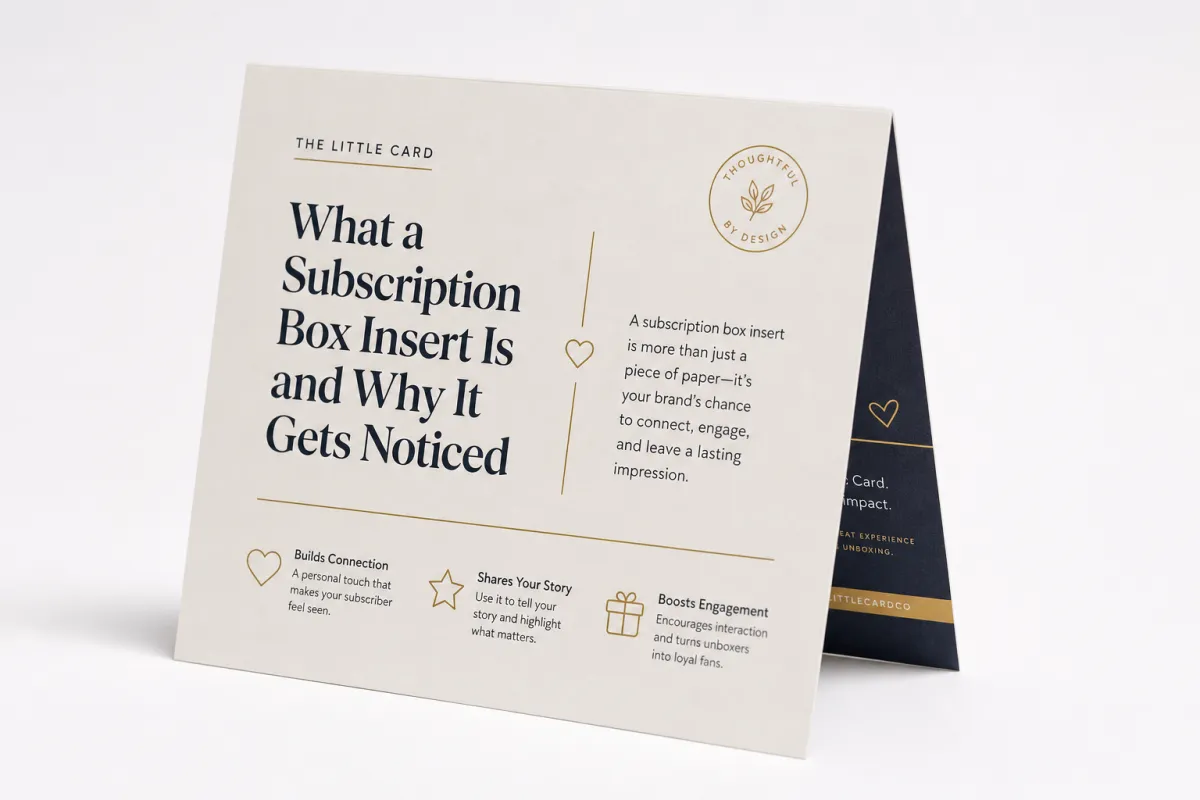
A subscription box insert is the internal packaging piece that organizes products inside the outer carton. It may be a folded paperboard tray, a die-cut frame, a corrugated support, or a layered structure with pockets and retention tabs. The piece can be plain white, printed with branding, or kept intentionally quiet so the product stays in focus. Either way, how to design subscription box insert starts with the idea that the insert is structural first and decorative second.
It gets noticed because the customer handles it. Exterior graphics may help earn the sale, but the interior is where the package becomes physical and immediate. A stiff, aligned, tidy insert makes the whole subscription feel more deliberate. A loose, crushed, or floppy insert does the opposite quickly, and there is no art direction that can hide that. That is why how to design subscription box insert is really about shaping a tactile first impression that supports the brand promise.
There is a practical side too, and operations teams usually feel it first. The insert separates bottles from cards, jars from samples, and fragile items from heavier ones. It reduces rattling, keeps closures from rubbing, and lowers the chance of corner crush. On the packing table, the insert should help the operator place products in the same order every time. A stable layout speeds fulfillment because workers do not need to improvise around each shipment.
One helpful way to think about how to design subscription box insert is to split the insert into four jobs:
- Protection: keep products from moving, tipping, or scuffing during transit.
- Presentation: create a reveal that feels organized and well considered.
- Separation: keep multiple items from touching each other.
- Stability: support the outer carton so it resists crushing and vibration better.
That combination is what makes inserts feel deceptively simple. A cavity that is 2 mm too tight can slow packing and deform a cap. A cavity that is 3 mm too loose can rattle during carrier handling. Good insert design usually lives in the narrow band between those problems, where fit feels secure without feeling forced.
Recurring programs add another layer. Monthly kits often need repeatable assembly, efficient refill handling, and consistent stock-room stacking. A clean insert design can reduce the number of unique pieces in the line, which matters when thousands of kits need to move on schedule. That is one more reason how to design subscription box insert is as much about operations as it is about style.
For shipping validation and distribution testing, ISTA standards are a practical reference point, and many packaging labs use them to decide whether a structure is ready for parcel handling. If you are making recyclability or sourcing claims, the best move is to confirm the material spec and the finish with your converter Before You Print anything fancy.
How to Design Subscription Box Insert for Fit and Function
How to design subscription box insert starts with the inside of the carton, not the printed outside dimensions. That point gets missed more often than it should. Outer cartons have score thickness, board caliper, and manufacturing tolerances that reduce usable space. A box listed at one size may have a slightly smaller interior once board and fold lines are counted. Measure the inside length, width, and depth first, then map the product into that space with real clearance values, not optimistic ones.
From there, the product shape drives the build. A single bottle may only need a die-cut ring or a locking tray. Two or three cosmetic items may need partitions that create separate pockets. A fragile item with a pump or cap may need a top constraint that keeps the closure from taking the impact load. The goal is not to make the insert fancier than it needs to be; you are not gonna win points for extra folds that slow the line. The aim is to match the structure to the object. That is the cleanest path in how to design subscription box insert.
There are several common structures to choose from, and each one behaves differently on press and on the packing line:
- Simple cavities: best for regular shapes and fast assembly.
- Folded paperboard forms: good for moderate protection and lower weight.
- Corrugated supports: stronger for heavier products or transit-heavy programs.
- Die-cut partitions: useful for separating multiple items in a tidy grid.
- Tabbed sleeves and pockets: helpful when the product needs to feel nested rather than exposed.
Retention details matter more than many teams expect. A tuck lock can keep a tray from springing open during pack-out. Friction-fit pockets can hold rigid items firmly without added glue. Tabs can keep inserts from drifting inside the carton. Cutouts around corners or shoulders can give delicate products enough room to avoid pressure points. In this part of how to design subscription box insert, the aim is not just containment; it is controlled contact.
The loading sequence matters just as much as the geometry. A well-designed insert should let the packer place the most stable item first and finish with the accessory or sample last, or whatever sequence reduces hand motion and misalignment. If the operator has to rotate the carton three times or wrestle the insert to get product into the cavity, the design is costing money every day. Good structural design makes the line calmer, and that is a real savings even if it never appears in the render.
The reveal deserves attention too. Open the lid, and what should the customer see first? Maybe the hero product sits in the center and the accessories frame it. Maybe the first view is a printed message on the insert, with products partially hidden to create a staged opening. The strongest versions of how to design subscription box insert give the user a clear visual path without making the package feel theatrical in a forced way.
One practical rule helps a lot: prototype before committing to graphics. A blank structure tells you more about fit than a polished mockup ever will. If the insert needs board thickness changes, cavity widening, or a deeper tray, it is better to learn that before print. In real production, structure usually drives the art, not the other way around.
How to Design Subscription Box Insert Around Product Variables
There is no single best insert because the product itself sets the rules. Weight, fragility, finish, and the way an item is used all shape the build. A glass bottle with a shoulder and cap needs different support than a matte aluminum tube. A soft-gel pouch can tolerate a looser cavity than a brittle jar label that scuffs easily. This is why how to design subscription box insert has to start with the object, not the brand mood board.
Product sets change the strategy too. A one-piece subscription can use a clean single cavity, while a three-piece set may need partitions that keep each item visible and easy to remove. If the box contains replenishment items, the insert may need more open access so a customer can remove and replace products without crushing the board. If the contents are sold as a giftable set, presentation may matter more than reuse. That difference changes the answer to how to design subscription box insert in a meaningful way.
Material choice follows the same logic. SBS paperboard is often chosen for a clean print surface and light-to-moderate support. Chipboard can feel more economical and compact. Corrugated board adds more crush resistance, especially when product weight climbs or shipping conditions get rough. Molded fiber can make sense for eco-focused programs, though the finish and tolerances are different from cut-and-fold board. There is no universal winner, only the material that fits the product, budget, and distribution route.
Branding decisions matter too. Some inserts should fade into the background so the product feels like the hero. Others should carry printed instructions, ingredient callouts, or a short thank-you line. A stark white insert can feel clinical or premium depending on the brand system, while a full-color printed insert can feel energetic but may also raise ink coverage cost and create visual clutter. In how to design subscription box insert, the interior should support the brand story without competing with the contents for attention.
Sustainability claims call for care. If the insert is meant to be recyclable, the materials, inks, coatings, and adhesives need to match the claim. FSC-certified board can support responsible sourcing narratives when that certification fits the program. A high-gloss laminate may look sharp, but it can complicate recyclability expectations in some markets. If the package is supposed to be curbside recyclable, confirm the whole structure rather than guessing. For certification guidance, FSC is a useful reference point.
The operational side matters just as much. A structure that nests efficiently in a carton stack can save warehouse space. A design that uses a single die-line with minimal gluing often packs faster than a layered construction with multiple folds and tabs. When teams ask how to design subscription box insert, I usually remind them that a beautiful insert that takes too long to build may not feel premium at all; it may simply feel expensive.
Subscription Box Insert Cost and Pricing Factors
Pricing for an insert comes down to a handful of predictable levers: board type, print coverage, die complexity, finishing, quantity, and the number of unique sizes the program needs. That is why one team may pay less than twenty cents per unit while another sees a much higher number for a similar-looking piece. The real story usually lives in the details behind the layout. Once those details are clear, how to design subscription box insert becomes as much a budgeting exercise as a structural one.
Simple single-piece inserts are usually the least expensive option because they use less tooling and fewer assembly steps. Multi-layer builds, hidden compartments, decorative cutouts, or multi-step folding sequences raise the cost quickly. A design that looks elegant on screen may require more press time, more setup, and more packing labor than the team expected. The better question is not “What does it look like?” but “How many operations does it require?” That is a practical way to think about how to design subscription box insert.
Volume changes the math too. At 5,000 units, a common paperboard insert might land somewhere around $0.18-$0.45 per unit depending on print coverage, board selection, and cut complexity. At higher quantities, that unit cost often drops because setup and tooling are spread across more pieces. Low-volume launches can be much more expensive per unit because the die, prepress work, and sample rounds do not shrink just because the run is small. If you are asking how to design subscription box insert for a launch, think in terms of total program cost, not just piece price.
| Insert Option | Typical Use | Relative Unit Cost | Strength | Best Fit |
|---|---|---|---|---|
| Flat die-cut paperboard tray | Light products, simple kits | Low | Light to moderate | Fast assembly, lower weight |
| Folded SBS insert with printed graphics | Retail-style presentation boxes | Low to medium | Moderate | Refined look with controlled cost |
| Corrugated insert with partitions | Heavier goods, transit-heavy shipments | Medium | High | Protection and stability |
| Molded fiber insert | Eco-focused programs, formed cavities | Medium to high | Moderate | Natural look, responsible sourcing |
| Multi-part custom build | High-end subscription kits, complex sets | High | High | Controlled reveal and strong branding |
Hidden cost drivers often show up late if nobody asks early enough. Sample revisions can add time and freight cost. Tight tolerances may require more proofing. Special coatings, foil, or heavy ink coverage can add finishing expense. If the insert needs to be packed by hand, labor may matter more than material. In other words, how to design subscription box insert should always include the production team in the pricing conversation.
When comparing options, I like to think in terms of total impact. A cheaper insert that slows pack-out by a few seconds per unit can cost more over the life of the program than a slightly more expensive design that packs cleanly. A board that reduces damage claims can pay for itself quickly too. Cost is not only the purchase price. It is material, labor, reject rate, and transit performance all working together.
How to Design Subscription Box Insert Step by Step
If you want a practical path for how to design subscription box insert, start with measurement. Record the product at its widest point, tallest point, and most fragile point. A jar may have a wide label but a narrow neck; a pump bottle may need extra clearance above the cap; a set of tools may need room for handles that flare outward. Measure the actual packed state, not the marketing shot.
Next, map the outer carton interior and define the pack-out sequence. Where does the hero product sit? Which item needs to come out first? Does the customer open the box and lift a flap, or is the insert exposed right away? These choices shape cavity placement and insertion direction. A good sequence makes the unboxing feel like a controlled reveal, which is why how to design subscription box insert is partly a choreography exercise.
Then choose the structure. Use the simplest construction that solves the problem. If the product is stable and light, a single die-cut tray may be enough. If the item is fragile or the shipment is rough, add retention features before adding more artwork. Many projects improve when the team simplifies the geometry instead of decorating a weak structure. That lesson shows up repeatedly in how to design subscription box insert.
Once the structure is chosen, build a dieline and prototype it. The prototype should use the correct board thickness, or at least something close enough to reveal the real fit behavior. Test the cavity with the actual product, not a dummy block unless the product itself is unavailable. Check for side-to-side movement, top clearance, corner pressure, and whether the product can be removed without tearing or bending the insert. If the operator has to fight the cavity, the design is not ready.
After that, inspect the pack line behavior. Can the packer load every piece in one smooth motion? Does the insert stand up to repeated handling? Does the product sit flush, or does it spring up and break the intended tray level? Small changes in tab length or fold depth can make a surprisingly large difference. This is the point where how to design subscription box insert moves from concept to production reality.
After the structure proves itself, add the graphics. Keep messaging readable, but do not overprint every surface unless the brand story truly needs that much coverage. A clean logo, a short note, or a simple instruction line often does more than a crowded layout. If the insert includes mailer language, recycling instructions, or ingredient information, keep those elements clear and legible. Function should still lead the design.
A useful preflight checklist looks like this:
- Confirm product dimensions and tolerances.
- Verify outer carton interior size.
- Select board thickness and construction style.
- Build a prototype with the actual product.
- Test insertion speed, movement, and removal force.
- Approve graphics only after structural fit is stable.
That sequence keeps the project grounded. It also reduces the chance that a beautiful insert gets approved before anyone notices a bad fit. How to design subscription box insert gets easier once structure, line speed, and presentation are treated as one system instead of three separate projects.
Production Process and Timeline for a Subscription Box Insert
Most insert projects follow a familiar sequence: brief, measurement, dieline development, proofing, sampling, approval, production, and delivery. The timing changes with complexity, but the order rarely does. The more complete the brief, the faster the work tends to move. If the team already knows the product count, box size, board preference, and shipping method, how to design subscription box insert becomes a much shorter path.
Delays usually appear when measurements are incomplete or when the insert has to coordinate with a new carton size. A product may be ready for sampling, but the outer box might still be in development. That creates a revision loop because the insert and carton influence each other. If the tray depth changes by even a few millimeters, the lid presentation and packing pressure can shift too. In production terms, how to design subscription box insert is often about controlling those dependencies early.
Prepress matters more than many teams expect. A dieline may look simple, but if the folds, cut paths, or glue areas are wrong, the sample can fail immediately. Tooling and die creation can take longer than an artwork tweak, especially when the structure is new. If there is a color match requirement, a printed proof may add another round. That is why launch calendars should include buffer time rather than assuming every step will land on the earliest possible date.
For a subscription program, the lead time needs to match the order cycle. If the kit ships monthly, the insert should be approved well before the fulfillment window opens. If the product launches near a holiday, buffer stock becomes even more important because freight, print queues, and carrier schedules all tighten. A practical rule is to build room into the timeline for at least one sample revision, even when the project seems straightforward. In packaging work, straightforward is often a temporary feeling.
Shipping validation deserves a place here too. If the box will move through parcel networks, use a test plan that reflects actual distribution stress. ISTA-style protocols are common references, and some teams also use ASTM-based methods depending on the product and lab setup. The point is not to chase a certificate for its own sake. The point is to prove the insert can protect the product through handling, vibration, and drop events. That is one of the most practical answers to how to design subscription box insert.
If you want a clean production rhythm, keep the approval path narrow. Fewer last-minute changes mean fewer sample rounds. Fewer sample rounds mean lower cost and a faster path to fulfillment. In subscription packaging, timing is part of the design brief. When the insert arrives too late, the best layout in the world cannot help the launch.
Common Subscription Box Insert Mistakes to Avoid
The first mistake is designing from the outside box alone. A carton may look large enough on paper and still be too tight once board thickness, inserts, and closures are included. Another problem is ignoring how the product actually sits in the carton. A label seam, a pump head, or a lid flange can create a pressure point that only shows up when ship testing begins. How to design subscription box insert becomes much less risky when the actual object is measured and handled early.
A second mistake is chasing a rendering instead of a pack-out. Beautiful mockups can hide weak retention. They can also hide awkward loading motions, overstuffed cavities, and unnecessary material layers. I have seen more than one design look excellent in presentation mode and then fail the moment a real packer tried to load the product five times in a row. That is why how to design subscription box insert should always include a physical sample.
Overcomplication causes trouble too. Extra folds, extra windows, extra printed panels, and extra compartments can make the insert feel premium on a screen, but they also raise assembly time and waste. More parts are not automatically better. Sometimes a cleaner tray with one or two smart retention points does a better job, costs less, and survives transit more reliably. That tradeoff sits at the heart of how to design subscription box insert.
Weak material choice is another failure point. Thin board can flex too much. Corrugated can be overkill if the product is light and the outer carton is already rigid. A cavity that is too tight can crush corners or scuff surfaces, while a cavity that is too loose can allow vibration damage. None of that sounds dramatic, but small fit problems create returns, complaints, and rework. In packaging, the expensive mistake is often the subtle one.
Ignoring shipping vibration is especially risky for subscription programs. A product may seem stable in a static photo but shift after a few hours in a truck or parcel network. That is why testing should include movement, not just a single hand-fit check. If the insert is meant to hold fragile, glass, or pump-style products, ask for a sample and run it through the same handling expectations the final shipment will face. That is the disciplined side of how to design subscription box insert.
Here are the errors I would flag first:
- Using exterior dimensions instead of actual interior measurements.
- Choosing an insert style before confirming product tolerances.
- Ignoring packer ergonomics and line speed.
- Overprinting the insert until it competes with the product.
- Skipping a physical sample for fragile or oddly shaped items.
None of these mistakes are exotic. They are common, which is exactly why they matter so much. The good news is that they are fixable early. A careful preflight check catches most of them before the die is cut and before the schedule gets expensive.
Expert Tips, Preflight Checks, and Next Steps
If you want the insert to feel premium without making production miserable, keep one eye on the brand and one eye on the line. That balance is the real skill in how to design subscription box insert. A premium insert does not need to be elaborate; it needs to feel precise. Precision shows up in the fit, the fold quality, the print alignment, and the way the contents sit in the tray.
My strongest recommendation is to use a preflight checklist before approval. Confirm product count, cavity size, board thickness, carton depth, and loading order. Check whether the customer should see the branding first or the product first. Ask how much resistance is acceptable during removal. If the item is fragile, plan a sample and test it, even if the artwork is already approved. That discipline usually leads to better decisions about how to design subscription box insert.
It also helps to compare two construction paths instead of one. For example, you might compare a printed SBS tray against a corrugated insert with fewer graphics. One may be cheaper on materials, while the other may be faster to pack or more resilient in transit. You might also compare a clean white interior against a full-coverage brand experience. The right answer depends on what the subscription is trying to communicate and how much handling the package will see. In practice, how to design subscription box insert often comes down to choosing the better tradeoff, not the perfect fantasy.
For brands still early in development, the next move is straightforward: collect accurate dimensions, decide on a realistic budget, request a dieline, and ask for at least two material options. If the product is delicate, request a physical sample and inspect it before full production. If the carton size is still changing, lock that down before finalizing the insert. Those steps reduce risk, shorten the approval cycle, and help the final package feel calm and well made.
If you want the short version, here it is: how to design subscription box insert is easiest when structure, cost, and brand experience are developed together. Separate them, and the project gets messy. Keep them connected, and the box has a much better chance of feeling polished, shipping safely, and packing efficiently from the first run through the last replenishment order.
How do I design a subscription box insert for fragile products?
Measure the product at its widest, tallest, and most vulnerable points, then add enough clearance to avoid pressure on corners, caps, and closures. Choose a board or corrugated structure that creates snug retention without forcing the product into the cavity, and test for movement during shipping simulation, especially if the item has glass, pumps, or delicate decorative parts. That approach is the safest starting point for how to design subscription box insert around fragile contents.
What size should a subscription box insert be?
Base the insert on the actual interior size of the outer box, then subtract for board thickness and fit tolerances. Size each cavity to the product plus a small allowance for loading and removal, not to the marketing image or the exterior carton size. If the product has unusual shapes, stacked pieces, or accessories, ask for a sample or prototype before approval. That is the most practical answer to how to design subscription box insert without creating a tight or loose fit.
How much does subscription box insert design usually cost?
Cost depends on material type, print coverage, die complexity, finishing, and order quantity. Low-volume projects often cost more per unit because setup and tooling are spread across fewer pieces, while multi-part inserts, special coatings, and tight custom tolerances can raise both design and production costs. If you are budgeting how to design subscription box insert, compare total program cost instead of just the piece price.
How long does it take to make a subscription box insert?
Simple projects can move quickly, but the timeline usually depends on dieline approval, sampling, and production scheduling. Expect extra time when measurements need to be confirmed or when the insert must fit a new box format. Build in buffer time for proof revisions and freight, especially before a subscription launch or seasonal shipment. That timeline mindset keeps how to design subscription box insert from becoming a schedule problem.
Should the insert match the outer box or stand out?
Match it when you want a cohesive premium reveal and a clean branded interior moment. Make it stand out when the insert needs to guide attention, explain usage, or separate multiple products visually. Choose contrast carefully so the insert supports the brand story without competing with the product itself. In practice, how to design subscription box insert often comes down to whether the interior should whisper or speak.

