Buyer Fit Snapshot
| Best fit | Forecast Packaging Demand for Planning projects where brand print, material claims, artwork control, MOQ, and repeat-order consistency need to be specified before quoting. |
|---|---|
| Quote inputs | Share finished size, material target, print colors, finish, packing count, annual reorder estimate, ship-to region, and any compliance wording. |
| Proofing check | Approve dieline scale, logo placement, barcode or warning zones, color tolerance, closure strength, and carton packing before bulk production. |
| Main risk | Vague material claims, crowded artwork, missing packing details, or unclear freight terms can make a low unit price expensive after revisions. |
Fast answer: Forecast Packaging Demand for Planning: Material, Print, Proofing, and Reorder Risk should be specified like a repeatable production item. The safest quote records material, print method, finish, artwork proof, packing count, and reorder notes in one written spec.
Production checks before approval
Compare the actual filled-product size with the drawing, then confirm tolerance on folds, seals, hang holes, label areas, and retail display edges. Reserve space for logos, QR codes, warning copy, and material claims before decorative graphics fill the panel.
Quote comparison points
Review material grade, print process, finish, sampling route, tooling charges, carton quantity, and freight assumptions side by side. A quote is only useful when the supplier can repeat the same color, closure quality, and packing count on the next order.
How to Forecast Packaging Demand for Smarter Planning
Packaging teams do not usually lose sleep over the sales forecast itself. The trouble starts when cartons, mailers, inserts, labels, and protective components drift out of sync with what the business is actually shipping. That mismatch is the real problem behind how to forecast packaging demand. A product can sell steadily and still create chaos in procurement because artwork revisions, channel changes, supplier minimums, and seasonal promotions all pull materials in different directions. One quarter looks calm on paper, then the warehouse fills with the wrong box size or the printer misses a changeover window by three days. Those three days can delay a launch, frustrate a customer, and trigger a lot of avoidable freight charges.
Packaging demand is more than finished goods volume. It includes the quantity of cartons, mailers, labels, inserts, rigid boxes, tape, void fill, and protective components needed over a period of time, plus scrap, setup waste, and safety stock. A custom branded program can add another layer: versioned artwork, channel-specific packouts, and extra overage for proofing or press checks. Once the definition is clear, how to forecast packaging demand stops looking like guesswork and starts looking like a planning method.
Cash flow sits in the middle of all of it. Order too little, and the line stops while someone hunts for a rush shipment. Order too much, and capital gets trapped in board, ink, and floor space for months. That tradeoff shows up in manufacturing, in customer service, and in the weekly budget review. A useful forecast draws from historical usage, near-term demand signals, and supplier constraints together, because a single average may look tidy while hiding the real story.
I have watched teams with a perfectly respectable sales forecast get blindsided by packaging because the plan ignored lead time. One apparel brand I worked around had enough demand visibility to sell through a seasonal run, but the cartons arrived after the shipment window had already opened. The problem was not the sales number. It was the timing. That kind of miss is painfully ordinary, kinda sneaky, and completely preventable if packaging gets its own forecast discipline.
What Is the Best Way to Forecast Packaging Demand?
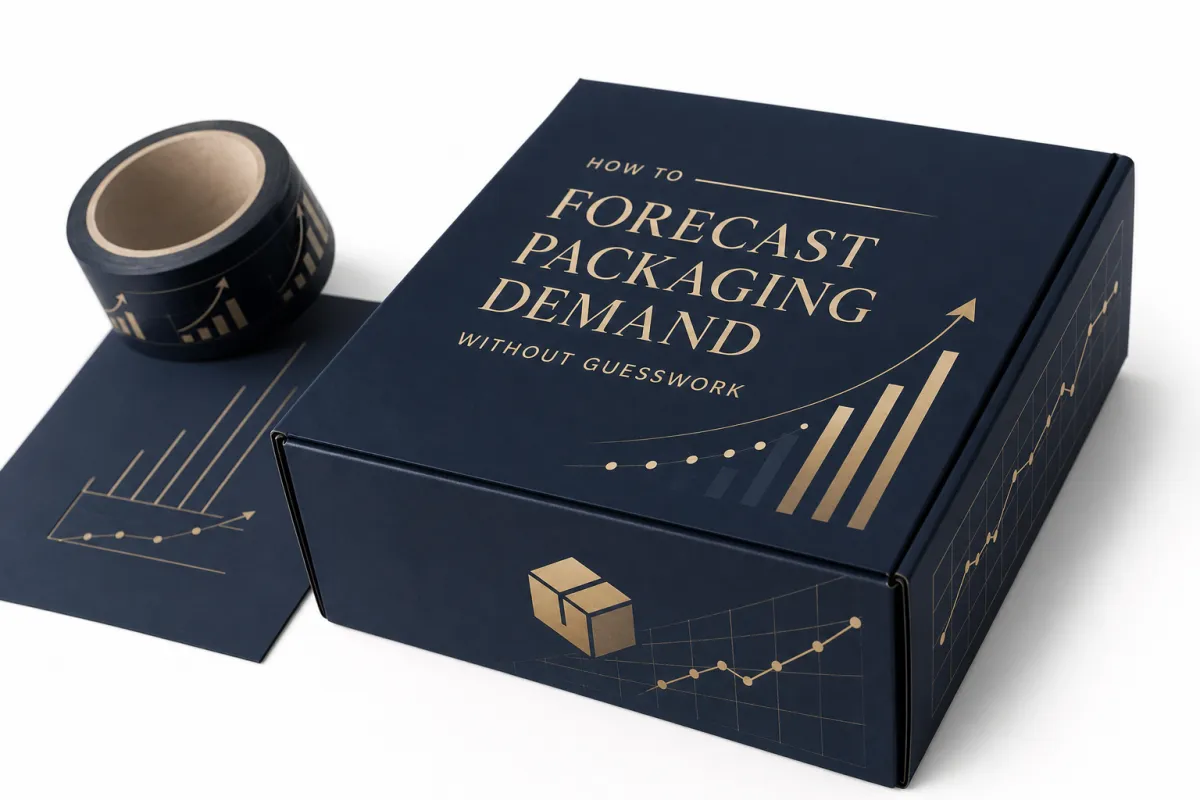
The best way to forecast packaging demand is to start with actual usage by SKU, then layer in seasonality, promotions, lead times, waste, and inventory on hand. For most teams, a rolling monthly forecast with weekly checks on launch items gives the best balance of speed and accuracy. That approach keeps demand planning grounded in reality instead of relying on a single average that may hide a shift in product mix or channel demand.
For custom packaging, the smartest forecast also includes artwork approval timing, production setup, and any supplier minimum order quantities. Those details matter because packaging lead times are often longer than the sales cycle that triggered the order. A strong forecast can spot the gap before a shortage turns into expedited freight, line downtime, or an awkward call to a customer. I have seen a launch saved by ordering the right insert size three weeks earlier than planned. I have also seen the opposite, and that one is not fun for anyone.
There is no single magic method, despite what some software demos would like you to believe. In practice, how to forecast packaging demand depends on the stability of the SKU, the variability of the channel, and how painful a miss would be. A stable mailer can be forecast with a simple trailing average. A Custom Folding Carton tied to a promotion needs more context and, usually, more than one scenario.
How to Forecast Packaging Demand Without Guesswork
The best way to think about how to forecast packaging demand is to tie it to usage, not just sales. Ten thousand units sold does not always mean ten thousand cartons. One product may need a folding carton and a label. Another may need a mailer, an insert, and void fill. A third may split between retail and e-commerce packaging, which changes the material mix even when sales look flat. A sales graph can stay level while packaging demand swings by double digits. That mismatch catches people off guard because the top line looks obedient.
Start with the packaging bill of materials. One finished unit might consume one printed carton and one label, plus a 3% allowance for spoilage or setup loss. From there, sales can be translated into packaging demand with much better accuracy. The formula is not exotic. The discipline is in keeping the inputs current. New artwork, a different case count, or a move from wholesale to direct-to-consumer changes the materials profile right away. The plan needs to notice that shift before the plant does.
Lead times matter just as much. Stock mailers can be ordered with less ceremony. Printed cartons are a different animal: proofing, tooling, scheduling, transport, and approval all add time. A twelve-business-day production cycle plus three or four days in transit changes the decision point dramatically. That is why how to forecast packaging demand is partly a timing problem. Sales may think a product is "two weeks away." Packaging may need to be committed six weeks earlier.
A practical forecast usually answers five questions before anyone places an order:
- How much packaging did we actually use last month, not just how much did we buy?
- What known sales or shipping changes are already on the calendar?
- What inventory is on hand, including committed stock and safety stock?
- Which SKUs carry long lead times, high scrap, or setup waste?
- Where can a small demand swing turn into a service failure?
That list sounds simple, and it is. Simple does not mean easy. Packaging tends to be more sensitive than finished goods inventory because a 5% change in units sold can become an 8% or 10% change in carton demand once seasonal versions, channel packs, and insert changes are counted. A small shift in the product mix can echo through the whole packaging line.
A forecast is not a promise to the warehouse or the pressroom. It is a working assumption, and it should only move when the evidence changes, not because someone forwarded a new email.
History matters, but only after you know why the history happened. A moving average can smooth the noise. It can also blur a permanent change, such as a package redesign or a new distribution channel. That is where how to forecast packaging demand starts to look less like accounting and more like production intelligence.
For teams managing branded packaging and retail packaging together, forecasting at the component level is usually the cleanest route. Roll the parts back up after that. The result shows actual board grades, print coverage, labels, and inserts rather than a vague total. It also prevents the familiar mistake of saying sales are stable, so packaging must be stable. The carton may disagree quietly until the warehouse is full.
One practical trick is to separate demand into three buckets: steady-state use, planned events, and exceptions. Steady-state use is the base line. Planned events cover promotions, launches, and retailer resets. Exceptions cover rework, damage, quality holds, and replacement stock. Once those buckets are visible, it gets much easier to tell whether a spike is real or just noise from a bad week.
| Forecast Method | Best For | Setup Effort | Strengths | Watchouts |
|---|---|---|---|---|
| Simple moving average | Stable packaging SKUs with repeat orders | Low | Quick to build and easy to explain | Can lag behind real trend shifts |
| Trailing twelve months | Seasonal packaging with a full cycle of history | Low to moderate | Captures a full seasonal pattern | May hide recent changes in demand |
| Weighted recent periods | Lines where the latest usage is more relevant than older data | Moderate | Responds faster to current demand | Needs disciplined review so it does not overreact |
| Scenario planning | Launches, promotions, and custom packaging programs | Moderate to high | Shows upside, downside, and base case demand | Requires cross-functional input |
That table is the plain-English answer to how to forecast packaging demand: begin with a method that everyone can see, then add complexity only where the business truly needs it. A forecast nobody trusts is just decoration. A forecast that gets reviewed monthly can be surprisingly effective.
How to Forecast Packaging Demand Using a Simple Model
A simple model for how to forecast packaging demand does not need specialized software. Clean inputs, a repeatable formula, and enough detail to separate actual demand from temporary noise will get most teams a long way. The core equation is straightforward: baseline demand from history + expected growth or decline + seasonal lift + launch or promo spikes - inventory on hand. That is enough to build a useful starting point for packaging buyers and planners.
Historical usage works better than purchase history whenever it is available. Purchase history gets distorted by bulk buys, delayed deliveries, and end-of-quarter stockpiling. Usage is cleaner because it reflects what actually moved into production or shipping. If a carton line consumed 18,400 units over the last twelve months and the last three months are up 6%, that already gives you a baseline for how to forecast packaging demand without pretending every month behaves the same way.
Product demand and packaging consumption should be separated early. One product line may use one carton per unit. Another may need a carton, a printed sleeve, and an insert. E-commerce packaging may add a mailer or a layer of void fill, while wholesale packaging may require a master case. Put those together incorrectly and the forecast may look neat, but it will fail in the real schedule.
Waste has to be built in. There is always some loss: press setup sheets, die-cut waste, spoilage from print defects, overage for inspection, and the occasional crushed box in handling. A small custom run may justify a 2% to 5% allowance. Complex branded packaging with multiple print passes or tight registration can need more. Real production feedback matters here more than theory. That is the difference between a paper forecast and one that survives contact with the pressroom.
If the program includes multiple packaging types, build the forecast at the component level and then roll it up. For example:
- 1 finished product unit may consume 1 folding carton
- Each carton may require 1 label plus 1 insert
- One out of every 40 units may need a replacement pack due to damage or rework
- Seasonal versions may add a second SKU for package branding
That level of detail improves how to forecast packaging demand because it reveals the true consumption driver instead of only the shipping result. It also makes design changes easier to evaluate. A switch from a plain sleeve to a fully printed carton affects board grade, ink coverage, and finish requirements at the same time. One change can pull three materials in different directions.
For stable SKUs, a trailing twelve-month view often works well. It catches the full seasonal pattern and gives a fairer picture than a single quarter. Fast-changing programs usually need a weighted average with more emphasis on the latest two or three periods. That keeps how to forecast packaging demand responsive without becoming twitchy. If the last two months reflect a real shift, the model should react. If the spike was a one-time promotion, the next six months should not inherit it blindly.
A simple planning rhythm often looks like this:
- Pull the last twelve months of packaging usage by SKU.
- Add or subtract known changes from launches, channel shifts, and promotions.
- Adjust for current inventory and open purchase orders.
- Apply a waste allowance based on scrap or setup history.
- Review the result with sales, operations, and purchasing before any order is placed.
That workflow gives the team a forecast that can survive a meeting. Nobody needs a decoder ring. It also makes how to forecast packaging demand a shared habit instead of a lonely spreadsheet exercise.
Custom packaging adds another timing wrinkle. Artwork approval, plate or die creation, and final proofing can eat ten business days before production even starts. The forecast should lock earlier than the sales team expects, especially for launch programs or seasonal rebrands. A simple model that respects those timing realities is more useful than a fancy model that ignores them.
Packaging demand is not always linear. A brand may sell quietly for ten weeks and then spike because a retailer features the product, a subscription box launches, or a post takes off online. The packaging plan has to leave room for those shifts. How to forecast packaging demand should include the normal run rate and the likely exception, because the exception is often what breaks the schedule.
Scenario planning helps here. A base case can assume steady sales. An upside case can assume a new account lands early or a campaign outperforms. A downside case can assume a delayed launch or a lost order. That is often enough to protect Custom Printed Boxes and other higher-touch packaging programs from surprise.
One warning, because honesty matters here: a forecast built from clean math can still be wrong if the inputs are stale. If the case count changed last month and nobody updated the master data, the model will look sharp right up until it fails. That is not a modeling problem. That is a data hygiene problem, and the fix is slower but simpler than people think.
Key Factors That Change Packaging Demand
The historical average is the skeleton of how to forecast packaging demand. The drivers give it movement. Seasonality, promotions, channel mix, SKU proliferation, launches, returns, and changes in case pack or pallet requirements all reshape consumption in ways that do not always show up right away in sales reports. Packaging is usually the first place those shifts become visible, not the last.
Seasonality is obvious, but it is not the only force at work. Holiday periods, back-to-school windows, and campaign-heavy months often pull packaging demand forward or compress it into a shorter ordering window. If the line uses retail packaging with seasonal versions, the unit volume may stay steady while SKU count climbs. That is a classic reminder that how to forecast packaging demand has to look past finished goods alone.
Promotions can be small on the calendar and large in the warehouse. A two-week promotion may create a six-week packaging problem if the cartons or labels have a longer production lead time than the campaign itself. The demand spike might be temporary, but the ordering decision is not. Marketing calendars belong in the planning review, not in a separate folder nobody opens until it is too late.
Channel mix changes packaging more than many teams expect. E-commerce packaging usually needs more protection and more customization than wholesale packaging, so the same product can consume different materials depending on where it ships. Subscription programs can also alter the order rhythm, because shipments may be batched monthly instead of consumed evenly. In how to forecast packaging demand, a shift in channels can matter as much as a shift in sales.
SKU proliferation is quieter and just as disruptive. A brand may begin with three cartons and end with nine because of language variants, size updates, seasonal artwork, or retailer-specific requirements. Each new SKU adds setup time, MOQ pressure, and inventory complexity. A forecast that ignores SKU growth often underestimates total demand, especially for branded packaging aimed at more than one customer segment.
Product design also shapes packaging demand. Fragile goods need stronger board grades, inserts, or suspension features. Heavier items may call for double-wall corrugate or a more aggressive glue pattern. If the design changes from a one-piece mailer to a two-piece setup, the demand for each component changes too. That is why how to forecast packaging demand has to include product size, fragility, and shipping method. Packaging is not an accessory. It is part of the product experience and part of the freight bill.
Supplier constraints matter as well. Minimum order quantities, board availability, print complexity, and tooling lead time can all influence both quantity and timing. A supplier may want larger releases to keep the line moving efficiently, while a short board supply may force the forecast into smaller lots. A plan that ignores those realities may look accurate in the spreadsheet and fail in the plant.
For sustainability-sensitive brands, material choice can affect planning discipline too. FSC-certified paperboard can require tighter documentation and a more deliberate sourcing process. That does not make it difficult; it just makes the process less forgiving. If chain-of-custody matters to the brand, the paperwork should be checked early through the FSC system, not after the purchase order is already moving.
Quality control belongs in the demand conversation as well. A carton that passes visual inspection can still fail in transit if it is not tested properly. Many teams use transport testing references such as ISTA methods alongside internal spec checks and ASTM material standards. That matters for how to forecast packaging demand because damaged packaging creates replacement demand, and replacement demand still counts.
The smartest planners rank these factors by impact. Not every edge case deserves equal attention. A brand shipping 80% of its volume through one channel should spend more time modeling that channel than the 20% tail. A product line with a large seasonal spike deserves more attention than a slow-moving SKU that changes once a year. That is the practical side of how to forecast packaging demand: focus on what moves the number most.
There is also a human factor that rarely appears in the spreadsheet. Sales teams are optimistic, operations teams are cautious, and procurement sits in the middle trying to keep both sides honest. If the forecast process does not create a shared language, those biases can creep in quietly. A good packaging forecast gives each group a place to speak without letting any one group own the whole truth.
How to Forecast Packaging Demand: Process and Timeline
A good process turns how to forecast packaging demand from theory into a repeatable routine. The cadence should be simple enough for operations to maintain and disciplined enough to catch changes before they turn into shortages. The cleanest flow is: collect the data, build the baseline, review it with sales and operations, lock the plan, place orders, then compare actual usage against forecast. It sounds plain. It works because plain is easier to repeat.
Monthly is a sensible rhythm for many programs. It gives teams enough time to correct course without rebuilding the model every few days. Fast-moving SKUs or high-risk launches need a weekly review. Volatile lines tied to major promotions need a shorter review loop and tighter change control. In those situations, how to forecast packaging demand is less about elegance and more about keeping the plan alive.
The timeline should match the packaging type. Stock packaging can be quick to replenish if the supplier has inventory. Custom printed boxes take longer because artwork, proofing, plates or dies, and scheduling all sit in the path. A realistic planning window often looks like this:
- Artwork review and final approval: 2 to 5 business days
- Proofing and corrections: 2 to 4 business days
- Tooling or setup: 3 to 7 business days
- Production and finishing: 5 to 12 business days
- Freight and receiving: 2 to 5 business days
Those ranges are not universal, because supplier capacity and print complexity change them. The point is simpler: how to forecast packaging demand has to begin before the warehouse starts to look empty. If a launch is set for the first week of the month and the packaging approval is still sitting in email, the forecast is already behind.
Cross-functional handoff matters too. Sales knows customer commitments and channel shifts. Marketing knows promotions and package branding changes. Operations knows line speed, warehouse space, and changeover time. Purchasing knows MOQ breaks and Supplier Lead Times. When all four groups feed the same forecast, it becomes a business process instead of a departmental rumor.
A frozen window helps keep the process honest. Quantities inside a near-term period should not change casually unless a real event occurs. Some teams freeze the next two weeks. Others freeze the next month for custom packaging with long lead times. A frozen window is not there to be stubborn. It exists so the plant can schedule labor, the supplier can schedule materials, and the buyer can avoid rush freight.
Change control belongs beside the frozen window. If a promo gets pulled forward, a customer increases volume, or an artwork file changes late, the forecast should be updated with a note explaining why. That record matters because how to forecast packaging demand improves fastest when the team can see which assumptions were wrong and why they failed.
Many companies build a simple dashboard showing on-hand stock, open purchase orders, projected consumption, and weeks of coverage by SKU. That view is often enough to keep everyone aligned. A carton line with eight weeks of supply on hand may not need panic. A carton line with one week of supply and a proof still pending is another story. Seeing the numbers together keeps the forecast grounded in reality.
During the review meeting, the focus should stay on exceptions. What changed since the last review? Which packaging items are now at risk? Which SKUs can wait? That keeps how to forecast packaging demand centered on decisions instead of endless reporting. A planning meeting should end with actions, not just observations and polite nods.
For brands with multiple packaging formats, split the cadence by risk. Fast movers and promotional items can be reviewed weekly. Stable stock packaging can be reviewed monthly. Seasonal or high-setup items may need a quarterly reset. That layered approach avoids spending too much time on low-risk items while still protecting the critical ones.
I have seen teams get better results just by adding a ten-minute exception review to the front of the meeting. No slide deck, no theatrics, just the items that moved more than expected. That small habit keeps everyone honest and cuts through the fog fast. It is not fancy, but it works. Sometimes the boring fix is the right one.
How Forecasting Affects Packaging Cost and Pricing
How to forecast packaging demand is also a cost question. Forecast quality affects what the business pays for board, ink, freight, tooling, and labor. Larger, steadier runs usually lower unit cost because changeovers shrink and material yield improves. Smaller, unpredictable orders tend to raise the per-piece cost because setup gets spread across fewer units. In packaging, the math shows up fast and rarely asks permission.
A 5,000-piece custom carton run might land around $0.18 to $0.28 per unit depending on board grade, print coverage, finishing, and setup complexity. At 20,000 pieces, the per-unit price often drops because the press runs longer and the setup is diluted across more cartons. That is one reason a cleaner forecast matters. It lets buyers place orders in a way that supports better economics without drifting into overbuying.
Poor forecasting creates hidden costs. Rush freight can erase savings from a lower print quote. Split shipments can add handling fees. Overtime can increase internal labor cost. Reprints can happen if artwork changes late and old inventory becomes obsolete. Those costs do not always appear on the packaging invoice, but they hit the margin anyway. That is why how to forecast packaging demand belongs in pricing discussions, not only in supply planning.
Forecasts also support budget planning. Buyers need to estimate paperboard, corrugate, coating, inks, dies, tooling, and decoration costs before a packaging program gets approved. If the forecast says a printed sleeve will run 50,000 units over the next two quarters, purchasing can compare that volume with supplier tiers and see where price breaks sit. A forecast that is too low can force smaller, more expensive buys. A forecast that is too high can trap cash and storage space for no good reason.
That matters especially for custom packaging and branded packaging programs. Unit cost is not just a material cost; it is also a planning cost. The more often a design changes, the more often the supplier has to restart the work. The cleaner the forecast, the easier it is to keep artwork stable and production efficient. Package branding choices should sit beside demand planning, not behind it.
Teams comparing supply options should look at predictability as well as price. A lower quote from a supplier with long lead times and weak communication can cost more in practice than a slightly higher quote from a supplier that delivers consistently. The same logic applies to Custom Packaging Products when choosing the right structure for a product line. The cheapest unit is not always the cheapest program.
Forecast quality also shapes cash flow timing. If a seasonal spike is coming, purchases can be staged instead of paid all at once. If a launch ramps in phases, the initial buy can stay conservative and leave room for the next release. That is one of the cleaner uses of how to forecast packaging demand: it keeps cash free for the parts of the business that need it most.
There is a relationship here that gets missed often. Good forecast work also protects supplier relationships. A planner who orders close to actual need gives the supplier a better chance to schedule efficiently. That can translate into steadier pricing and better allocation when supply tightens. It also reduces the urge to carry excess stock just in case. In packaging, "just in case" is expensive.
Pricing teams also benefit from knowing where packaging volatility sits. A package with stable demand and modest complexity can usually be quoted more confidently than one tied to launches, special finishes, or frequent artwork changes. That knowledge helps set expectations with the business early, instead of discovering the real cost after commitments are already made.
Common Mistakes in Packaging Demand Forecasts
The most common mistake in how to forecast packaging demand is treating finished product sales as the entire forecast and forgetting how packaging actually behaves. If the sales team sees 100,000 units sold, that does not automatically equal 100,000 cartons or 100,000 labels. Scrap, spoilage, rework, damage, and reserve stock all alter the real consumption number. Ignore them and the forecast bends quickly out of shape.
Another mistake is applying one average to every SKU. Slow movers, seasonal items, launch items, and custom packaging runs do not deserve the same method. A stable mailer can often be forecast with a trailing average. A new retail package may need a base case and two scenarios. One formula across the entire catalog usually creates the appearance of consistency while hiding the actual risk. That is not how to forecast packaging demand; that is how to miss a problem with a very tidy spreadsheet.
Launch ramps get ignored more often than they should. New products usually consume more packaging than expected because samples, testing, photo shoots, customer approvals, and early rework create extra usage before steady-state sales begin. If the packaging lead time is longer than the launch campaign, the forecast has to be built earlier and reviewed more often. Otherwise, the first month becomes a scramble dressed up as a plan.
Promo spikes cause a similar problem. A short campaign can create a demand surge that lasts longer than the promotion itself because the packaging was ordered in advance and the sales volume concentrates into a few weeks. The forecast should know the promotion calendar, the expected uplift, and the replenishment cycle. Without those inputs, how to forecast packaging demand turns into a postmortem instead of a planning tool.
Stale assumptions are a quieter issue, and they are everywhere. Teams keep using old case counts, old lead times, old scrap rates, or old customer forecasts long after the real process changes. A supplier that once shipped in ten days may now need fifteen. A carton that packed 24 units per case may now pack 20 after a product resize. A forecast built on stale assumptions can look mathematically correct and still fail in the plant.
Poor variance review is another common miss. If actual usage differs from forecast by 12% or 15%, the reason should be recorded immediately. Was there a customer pull-forward? Did the artwork change? Did the product launch early? Did the supplier ship short? Once those causes are tracked, how to forecast packaging demand improves with every cycle. Without that review, the same mistake gets repeated and nobody learns anything useful from it.
Warehouse capacity is the final trap. A forecast can be technically right and still fail if the warehouse cannot receive, stage, and store the material in the right sequence. That becomes especially painful with large corrugated quantities or rigid box programs that take up serious cubic volume. If the forecast says the material is needed, the storage plan has to be ready too. Demand planning and physical space are linked far more tightly than most teams want to admit.
The easiest way to avoid these mistakes is to compare forecast to actual usage on a regular schedule and keep the explanation plain. If the error came from a promotion, say so. If it came from a design change, record that too. Over time, the planning team builds memory around what matters most. That is the practical skill behind how to forecast packaging demand.
And yes, the human side matters. People forget to update forecasts when a project moves quickly, then they assume someone else handled it. That little gap is usually where the miss begins. The fix is boring: one owner, one cadence, one source of truth. Not glamorous, but it saves headaches.
Expert Tips and Next Steps to Forecast Packaging Demand
If the goal is a forecast people actually use, start with the highest-value or highest-risk items first. A premium carton line, a fast-moving mailer, or a launch package tied to a seasonal campaign is a better place to begin than a low-volume SKU that moves once a quarter. That is the pragmatic side of how to forecast packaging demand: put the work where the business feels the pain.
Build a dashboard that shows four things in one view: current on-hand inventory, open purchase orders, scheduled launches, and expected consumption by SKU. When the team can see those pieces together, decisions get faster. A planner spots a shortage before it becomes a line stop. A buyer can tell whether a purchase should be split. Operations can see whether labor needs to shift. That makes how to forecast packaging demand more useful than a static report that gets emailed and forgotten.
Scenario planning is worth the extra effort, especially for custom packaging. A base case shows the most likely volume. An upside case covers stronger-than-expected sales or a large customer order. A downside case protects against a delayed launch or an underperforming promo. The point is not perfect prediction. The point is to keep the business calm if the numbers move.
Mapping lead times by packaging type helps more than most teams expect. A stock mailer may take days. A custom printed box may take weeks. A rigid box with special finishing may take longer still. Once those lead times are mapped, how to forecast packaging demand gets easier because the planning window becomes visible. Ordering stops being a reaction to this week’s shortage and starts becoming a response to next month’s need.
For teams ready to tighten the process, these next steps are practical and direct:
- Pull the last twelve months of packaging usage by SKU.
- Map actual lead times for each packaging category.
- Identify seasonal peaks and known promo windows.
- Review scrap, spoilage, and rework rates by line.
- Set a monthly forecast meeting with sales, operations, and purchasing.
Once that habit exists, extend it to channel-specific packaging if needed. E-commerce packaging, retail packaging, and wholesale packouts may each need their own assumptions. That is not extra work for its own sake. It is the cost of accuracy in a business where package branding, size changes, and customer requirements can move the number faster than expected.
If a custom packaging program is being refined, that is a good time to review Custom Packaging Products and align structure, material, and print method with the forecast the business is likely to live with. A package that is easy to source, easy to store, and easy to replenish is usually easier to forecast too. The design conversation and the planning conversation should sit in the same room.
One last operational habit pays off fast: document every major variance. If actual demand was 18% above forecast, write down why. If it was 11% below forecast, write that down too. Over time, those notes reveal the real drivers of demand and make how to forecast packaging demand much more accurate. The goal is not perfection. The goal is fewer surprises, steadier production, and cleaner pricing decisions.
The most useful takeaway is simple: forecast packaging from usage, not vibes. Tie every item to a BOM, a lead time, and a review cadence, then keep score against actual consumption. Do that consistently and how to forecast packaging demand becomes a practical operating habit instead of a quarterly fire drill.
Frequently Asked Questions
How do you forecast packaging demand for a new product launch?
Use comparable products as the baseline, then adjust for launch volume, channel mix, and ramp speed. Add extra packaging for samples, testing, photo shoots, and early rework, because new launches usually consume more than the first sales estimate suggests. During the first few weeks, review the forecast more often so you can correct quickly if demand runs hotter or cooler than expected.
What data do I need to forecast packaging demand accurately?
Start with historical ship units, packaging usage by SKU, seasonality, promotions, and current inventory levels. Then add supplier lead times, minimum order quantities, scrap rates, and any known changes in artwork, size, or material grade. The more clearly you separate product sales from packaging consumption, the easier it becomes to see real demand changes instead of noise.
How often should I update a packaging demand forecast?
Monthly is enough for many steady product lines, but weekly updates work better during launches, peak season, or periods of volatile demand. Update immediately when a major promotion, customer order change, or supplier delay affects material consumption. A rolling review cycle keeps the forecast current without forcing a full rebuild every time something small changes.
How do lead times affect packaging demand planning?
Long lead times mean you must forecast earlier and lock in quantities before the market fully reveals itself. Custom printed packaging often needs extra time for approvals, proofs, and production setup, so the planning window should include those steps. A realistic timeline helps prevent rush freight, line downtime, and expensive last-minute substitutions.
What is the best way to forecast custom packaging demand?
Use historical usage from similar products, then adjust for print complexity, order frequency, and expected growth. Factor in setup waste, overage, and any inventory needed for seasonal spikes or customer-specific programs. For custom packaging, the safest forecast is usually a conservative base case with a clear plan for revisiting volume as orders come in.
Strong planning is mostly habit: clean usage data, realistic lead times, and a regular review cycle that keeps everyone honest. Keep those pieces in place and how to forecast packaging demand becomes far less stressful and a lot more useful for inventory, labor, and cash flow. That kind of forecast supports better packaging decisions all the way through the next production run.


