jewelry Cuffed Knit Beanies bulk order planning gets easier once the cuff is treated as the main selling surface instead of a detail that can be sorted out later. That cuff carries the logo, sets the visual balance, and often decides whether a buyer can approve a sample on the first pass. Lock the build early, and the quote becomes useful. Leave the spec open, and the process turns into a chain of assumptions.
If a program is built for retail, gifting, or a seasonal promotion, the order needs to behave like a product launch, not a sketch. The knit structure, decoration method, pack-out, and delivery window all affect cost. They also affect whether the final beanie feels intentional or merely assembled.
The fastest orders are rarely the simplest designs. They are the ones where the buyer answers the hard questions before asking for pricing.
Why jewelry cuffed knit beanies move faster in bulk
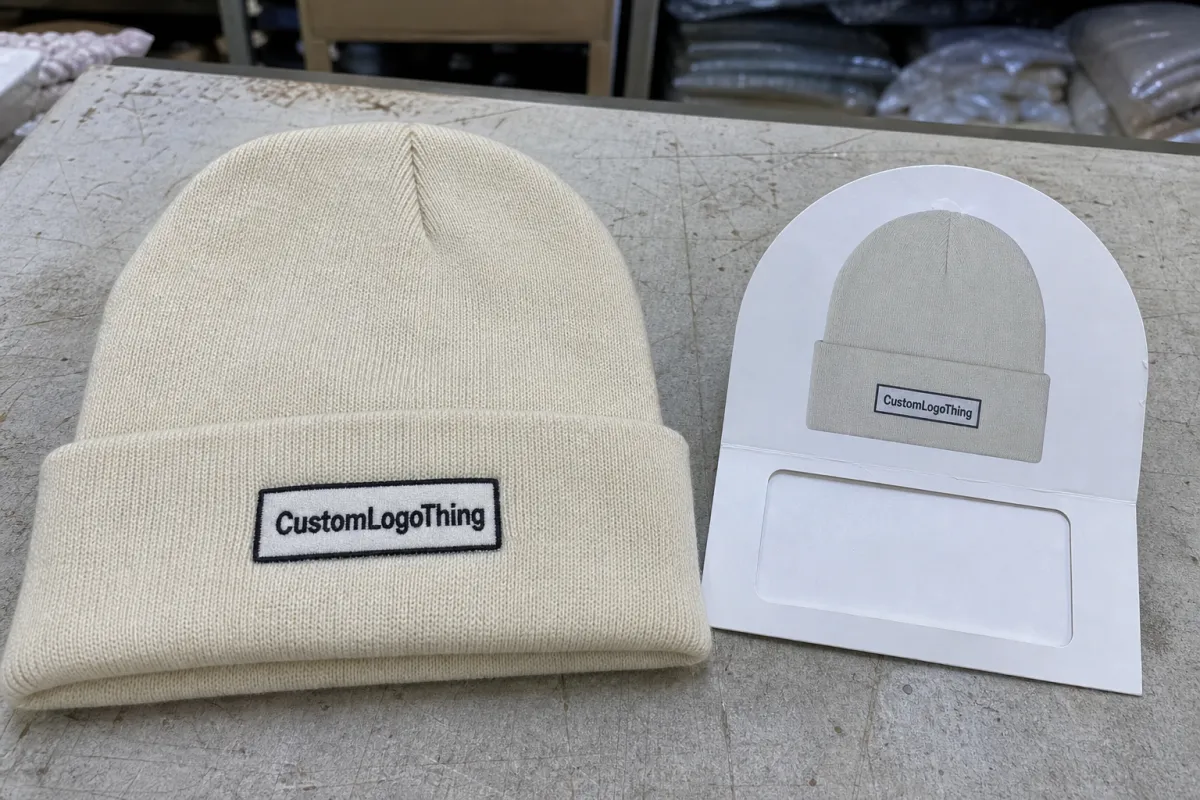
Cuffed Knit Beanies are efficient because the branding zone is obvious. The cuff sits where the eye lands first, which helps the logo read quickly in a product photo, on a shelf, or in a gift box. That is a practical advantage, not a stylistic one. A slouch style can look softer, but it often hides the mark and makes approval more subjective.
In bulk, obvious wins. A cuffed silhouette reduces the number of decisions the buyer has to make and gives the factory a clearer target. If the cuff height, placement, and decoration method are fixed early, the decoration team can tell whether the art works as embroidery, a woven label, a patch, or a combination. Without those details, the first quote is usually just a placeholder with better formatting.
There is another reason these orders move quickly: the cuff tolerates branding better than the body of the beanie. The knit is easier to control on a flatter fold than on a rounded crown, where stretch and curvature can distort small artwork. A cuff depth of roughly 2.5 to 4 inches is common for many programs, though the right dimension depends on yarn thickness, target fit, and whether the logo needs to sit high or low on the fold.
One more practical point. Buyers often assume more decoration options make the order look premium. Sometimes they do. Sometimes they just add a decision tree. A clean one-color mark on a well-sized cuff can look more expensive than a crowded layout with too many textures competing for attention.
- Best for speed: one-color embroidery on a stable cuff
- Best for retail presentation: cuffed knit with woven label or patch detail
- Best for cleaner pricing: standard acrylic body, limited color changes, no custom trim
If the order also needs a hang tag, insert card, or special fold, include that in the first spec. Those details belong in the product build, not in a separate cleanup phase. The more the decoration and pack-out are considered together, the less likely the approval timeline is to split apart later.
Product details buyers should lock before quoting
A usable spec sheet starts with the structure of the beanie itself. The most important inputs are yarn blend, knit gauge, cuff depth, crown shape, and decoration method. A 100% acrylic beanie behaves differently from an acrylic-wool blend or recycled polyester. Acrylic is usually the most price-stable option and offers solid color consistency. Wool blends tend to feel warmer and more premium, but they also raise cost and can introduce care concerns. Recycled polyester may support sustainability claims, though the hand-feel and dye behavior can differ from conventional yarn.
Knit gauge matters more than many first-time buyers expect. A finer gauge usually gives a smoother surface and cleaner logo edge, while a chunkier knit can look more casual and may blur tiny details. That does not make one better than the other. It just means the art has to match the textile. A dense rib knit will hold embroidery better than a loose one. A loose knit can still work, but the decoration has to be planned with more restraint.
Color direction should be stated in writing. “Gray” is too vague. Heather gray, charcoal, and cool gray are all different results in production, and none of them look identical under store lighting. If the brand requires PMS alignment, that is helpful for the logo thread or the label print, but the yarn itself will still have its own visual behavior. Heather yarn, in particular, is a blended effect, not a flat color. Buyers who expect a paint-chip match from a knitted yarn usually end up revising the approval twice.
Decoration placement deserves the same level of clarity. If the logo is centered, how far above the cuff edge should it sit? If the mark is offset, which side leads? If the art is detailed, is the logo still readable at the target width? These are not minor questions. They determine whether the sample can pass without a redesign.
- Define the build: acrylic, wool blend, recycled polyester, or mixed yarn
- Confirm the finish: rib knit, single fold, double fold, or custom cuff depth
- State the decoration: embroidery, woven label, patch, or mixed approach
- Clarify the use case: retail, gifting, promotion, team program, or event giveaway
- Set the pack-out: folded, bagged, tagged, or retail-ready carton pack
One more detail helps more than people expect: the sample method. A photo mockup can show placement, but it cannot reveal stretch, stitch density, or whether the cuff sits flat after folding. A physical sample or strike-off catches that gap. It also exposes a problem that never looks serious in artwork files but becomes obvious in hand: the logo may be technically centered and still look visually heavy on one side.
For paper-based retail components, FSC guidance at fsc.org remains a sensible reference if the order includes tags or printed inserts. For carton performance and transit expectations, ISTA is still a useful benchmark. Those references do not replace buyer specifications. They keep the paperwork from drifting away from the actual product.
Specs that change fit, comfort, and return rate
Fit is where a beanie can look right on screen and still disappoint in hand. Yarn blend and knit density drive the first impression. Tighter construction tends to hold shape better after shipping and wear. Looser construction usually feels softer at first touch, but it can stretch out faster if the crown or cuff lacks recovery. In cold-weather retail, that recovery matters. A beanie that sags after an afternoon of wear can turn into a return, even if the color and logo were approved.
Headwear sizing is rarely exact, which is why buyers should ask for a fit target instead of relying on “one size fits most” as a full answer. The phrase is useful because it describes the available range, not because it removes the need for fit testing. Adult programs, youth programs, and oversized fashion fits all need different crown depths and stretch allowances. If the audience is mixed, the safest approach is to approve a sample on the intended user group before bulk production starts.
Decoration affects comfort too. Embroidery is usually the cleanest option for a simple logo, but dense satin stitch on a soft knit can pull the fabric and make the cuff pucker. Woven labels are lighter and work well for small, detailed art. Patches add visible texture, but they also add bulk. That extra bulk is not always welcome on a smaller cuff, especially if the beanie needs to fold neatly for retail display. There is no universal best choice. The right answer depends on the artwork, the knit, and the budget.
Buyers also need to think about recovery after shipment. A cuff that stretches too easily during packing may not return to its intended shape once unpacked. Likewise, a crown knit that feels fine on the bench can look tired after compression in cartons. That is why pre-production checks should include stretch, fold memory, and a quick visual check after the sample has been packed and unpacked. A good-looking piece is not enough if the beanie cannot hold its silhouette after transit.
- Warmth: tighter knit and denser yarn usually trap more heat
- Shape retention: rib construction and yarn recovery affect how the cuff sits after wear
- Comfort: softer blends reduce itch, but can change stretch behavior
- Durability: embroidery thread, patch backing, and label stitching all matter on stretch fabric
Compliance is part of comfort in a broader sense. Fiber content, country of origin, and care labeling should match the final build before production begins. If the order is part of a retail apparel line, the documentation has to be consistent across all product pages, hang tags, and carton marks. That kind of alignment is mundane, but it keeps warehouses, buyers, and compliance teams from stepping on one another later.
Cost, pricing, MOQ, and unit cost for bulk orders
Pricing makes more sense once the cost drivers are separated. Base price comes from yarn choice, stitch count, color changes, cuff construction, and crown complexity. Decoration then adds another layer. A simple one-color embroidered cuffed knit beanie often lands around $2.60-$4.50 per unit at 500 pieces before freight. Add a wool blend, multiple logo areas, custom labels, or premium packaging, and the number rises quickly.
MOQ is tied to setup, not just fabric. Straightforward cuffed knit programs can often begin around 100 to 200 pieces. Better unit pricing usually appears around 500 pieces and improves again above 1,000 if the build remains simple. Custom packaging, multiple yarn colors, and layered decoration tend to increase MOQ because the setup time has to be spread across the run. That is normal. Small runs with a lot of custom work are expensive whether the order is placed politely or not.
It helps to separate quote types. A factory unit price is not the same thing as a landed cost. Freight, duties, sample charges, and rush fees can change the total materially. A quote that hides those numbers can look attractive and still produce a higher final invoice. Buyers comparing programs should keep like for like: same decoration, same packaging, same shipment terms, same quantity. Otherwise the cheapest quote is only the cheapest in theory.
| Decoration option | Typical add-on at 500 pcs | MOQ impact | Best use |
|---|---|---|---|
| Flat embroidery | $0.35-$0.90 | Low | Simple logos and clean retail looks |
| Woven label | $0.20-$0.55 | Low to medium | Detailed artwork and lighter brand marks |
| Patch | $0.45-$1.20 | Medium | High-contrast branding and textured finish |
| Custom hang tag / retail pack | $0.10-$0.60 | Medium | Retail shelf readiness and gifting |
One practical pricing check is the stitch count. Embroidery looks simple from the outside, but a dense logo with layered fills takes more machine time and can raise the add-on price. The same is true of patches with special backings or labels printed with multiple colors. If the art is heavy and the budget is fixed, the easiest way to keep the order stable is usually to simplify the mark rather than compress every other part of the build.
If you are comparing proposals, keep the language consistent across them. A quote for a $3.10 beanie with no label, no bag, and no freight is not cheaper than a $3.65 landed program that includes those pieces. It is simply less complete. That distinction saves time and prevents the sort of false comparison that makes bulk planning feel more complicated than it needs to be.
Production steps, lead time, and shipping milestones
The process should feel boring once it is working correctly. A clean run moves through quote review, art confirmation, sample approval, bulk knitting, decoration, finishing, packing, inspection, and shipment. If a step disappears, it usually reappears later as a delay or a correction request. That is not drama. It is manufacturing.
- Quote review: confirm quantity, decoration, color, and pack-out before anything is approved.
- Art confirmation: check stitch count, logo size, placement, and thread colors.
- Sample approval: review fit, cuff depth, and decoration clarity on actual fabric.
- Bulk production: knit, decorate, finish, and pack after the approval is locked.
- Inspection and shipping: count cartons, verify labeling, and release freight.
Lead time becomes predictable when the brief is complete. A practical planning window is 1 to 2 weeks for sampling and 3 to 5 weeks for bulk production after approval. Transit sits outside that window. Air freight shortens the calendar but raises cost. Ocean freight lowers shipping expense and usually adds several weeks. Seasonal demand slows everything further, especially when buyers try to place winter orders after the market has already started to move.
The biggest schedule risks are usually not hidden production failures. They are small approval delays. Shade decisions drag when the color reference is vague. Complex knit patterns take longer to sample. Packaging changes introduced after the sample stage can hold the entire shipment. If the delivery date is fixed, the cleanest method is to work backward from the in-hand deadline and build a buffer for transit, customs, and receiving.
Quality control should be visible at the production stage, not only at the end. A useful inspection includes measurement against the approved spec, logo placement checks, yarn consistency, seam alignment, stretch recovery, and carton count. If the order is meant to travel far or sit in a warehouse for a while, carton compression and drop-testing deserve attention. A neat beanie in a crushed box still lands like a mistake.
How our bulk beanie programs stay consistent on repeat orders
Repeat orders are where weak systems show themselves. The best programs do not ask the buyer to reconstruct the same file every season. They keep the approved spec, artwork, color references, and packing plan on file so the next run follows the same instructions. That sounds basic because it is basic, yet many orders drift when a reorder quietly changes one small detail and nobody catches it until receiving.
Consistency depends on control points that are easy to verify. Pre-production checks compare the knit and decoration against the saved reference. Shade matching keeps the base color close to the approved sample. Measurement checks catch a crown that grew too tall or a cuff that shrank during knitting. Final carton counts confirm that the shipment matches the paperwork. None of these steps is glamorous. All of them matter.
Repeatability also protects margin. When the approved sample and production notes are preserved, there is less room for rework, fewer art corrections, and less time lost to clarification emails. For a buyer managing multiple headwear programs, that stability can be the difference between a clean replenishment cycle and a scramble every season. Bulk planning improves fastest when the spec is protected from memory loss.
- Fewer corrections: the factory already has cuff depth, logo size, and pack format saved
- Faster reorders: sample time drops when the approved reference is on file
- Cleaner compliance: labels and carton marks stay aligned with the prior run
- Less rework: no reset of art files, measurements, or decoration notes
A good reorder should feel faster because the build is already settled, not because someone skipped over the details. That distinction matters most for retail and gifting programs, where consistency is part of the product promise. If the second run looks different from the first, the buyer does not view it as a minor manufacturing variation. They view it as a broken expectation.
What to send first so the order moves without delays
Start with a complete request in one message: quantity, target delivery date, logo file, color direction, decoration method, and packaging needs. Add the use case too. Retail, promotion, and event giveaway orders are not interchangeable, and the quote should reflect that difference. A retail run may need a cleaner fold, a hang tag, and carton labeling. A promo run may care more about speed and unit cost.
Then ask for three items together: quote, sample timing, and freight estimate. If those arrive in separate threads, the order often loses momentum after the first reply. A complete picture is easier to approve than a partial one with missing numbers. The buyer is not asking for a favor; they are trying to make an accurate decision.
The most helpful file formats are usually the least complicated. A vector logo, a simple spec sheet, and one clear color reference go further than a folder full of half-matching mockups. If the artwork has tiny text or thin lines, say so up front. Those details can disappear in knitting or embroidery, especially on a smaller cuff.
- Exact beanie style: cuff height, crown shape, knit type, and yarn blend
- Logo details: placement, size, thread colors, and decoration method
- Retail or pack needs: fold style, insert card, label, bag, or carton marking
- Approval flow: who signs off on the sample and who approves shipment
- Shipping terms: destination, deadline, and whether air or ocean makes sense
If the buyer already has a wholesale ordering structure, keep it consistent across the beanie program rather than inventing a separate workflow for one season. The less the process changes, the less room there is for re-quoting and re-approving. That is how jewelry cuffed knit beanies Bulk Order Planning stays efficient without becoming sloppy.
Common mistakes that slow approvals
The easiest way to miss a deadline is to ask for precision after the order is already in motion. The biggest delays usually come from vague artwork, unclear color references, and changing packaging late in the process. Those problems are small in isolation. Together, they can add days or even weeks.
Another common issue is mixing sample approval with production approval. A sample may confirm the look, but the buyer still has to confirm quantities, carton markings, and destination details before bulk starts. If those items are left open, the factory may wait rather than assume. Waiting feels slow because it is slow.
There is also a tendency to underestimate how much the cuff matters. A logo that seems balanced in a digital mockup can look too large, too low, or too crowded once it is placed on an actual knit fold. The fix is usually minor, but only if the issue is caught early. By the time bulk production is under way, a small placement mistake has already become a costly one.
- Vague color notes: “gray” or “navy” without a sample reference
- Artwork too detailed for the cuff: tiny text, thin outlines, or crowded elements
- Late packaging changes: adding tags, bags, or inserts after sample approval
- Unclear shipping terms: leaving the destination or transit method undecided
- Skipping the physical sample: relying on mockups to judge fit and decoration
The cleanest orders are rarely the most elaborate. They are the ones where the buyer has already answered the production questions that usually cause friction. That is what keeps a cuffed knit beanie program moving with fewer revisions and less noise.
What MOQ should I expect for jewelry cuffed knit beanies?
Simple programs often start around 100 to 200 pieces, but the exact MOQ depends on yarn, decoration, and packaging complexity. Multiple colors, custom labels, or a patch plus embroidery can push MOQ higher because the setup time has to be spread across the run.
How do I get an accurate quote for cuffed knit beanies in bulk?
Send the quantity, logo file, color reference, cuff style, decoration method, and packaging details in one request. Ask for a landed quote that includes sample cost, freight, duties, and any rush fee, not just the factory unit price.
Which decoration method works best on cuffed knit beanies?
Embroidery is usually the cleanest option for simple logos, while woven labels and patches work better for detailed artwork. The best choice depends on cuff width, knit density, and whether the logo still needs to stay readable after wear and shipping.
How long does production usually take after approval?
A practical range is 1 to 2 weeks for sampling and 3 to 5 weeks for bulk production after approvals are locked. Transit time is separate, and seasonal congestion can add extra days, so plan backward from the launch date.
What should I review before placing the final order?
Confirm the final spec sheet, PMS colors, quantity, size range, decoration placement, packaging, and shipping terms. Make sure the approved sample matches the production brief so the reorder does not drift from the original plan.
Can repeat orders stay consistent from one run to the next?
Yes, if the supplier saves the approved artwork, measurements, and pack-out details. The cleanest repeat programs start with a locked spec and end with a final carton count that matches the paperwork.