Ceramic twisted handle paper bags Bulk Order Planning gets complicated as soon as the product has real weight, awkward edges, or a box inside the bag. A mug set that looks easy on a counter can become a weak-bottom, loose-handle problem once it is packed, carried, and stacked all day. If you want the quote to be useful, start with the ceramic load first and the artwork second.
Buyers often reverse that order. They approve the print, then discover the gusset is too narrow, the handle patch is too light, and the bag bows under the box. If you are building a retail program, keep the Wholesale Programs page handy for quantity tiers and use the FAQ for the spec questions that usually slow approvals.
“A pretty bag that fails on the shop floor is not premium. It is just a return waiting to happen.”
Why fragile ceramics change the bag spec fast
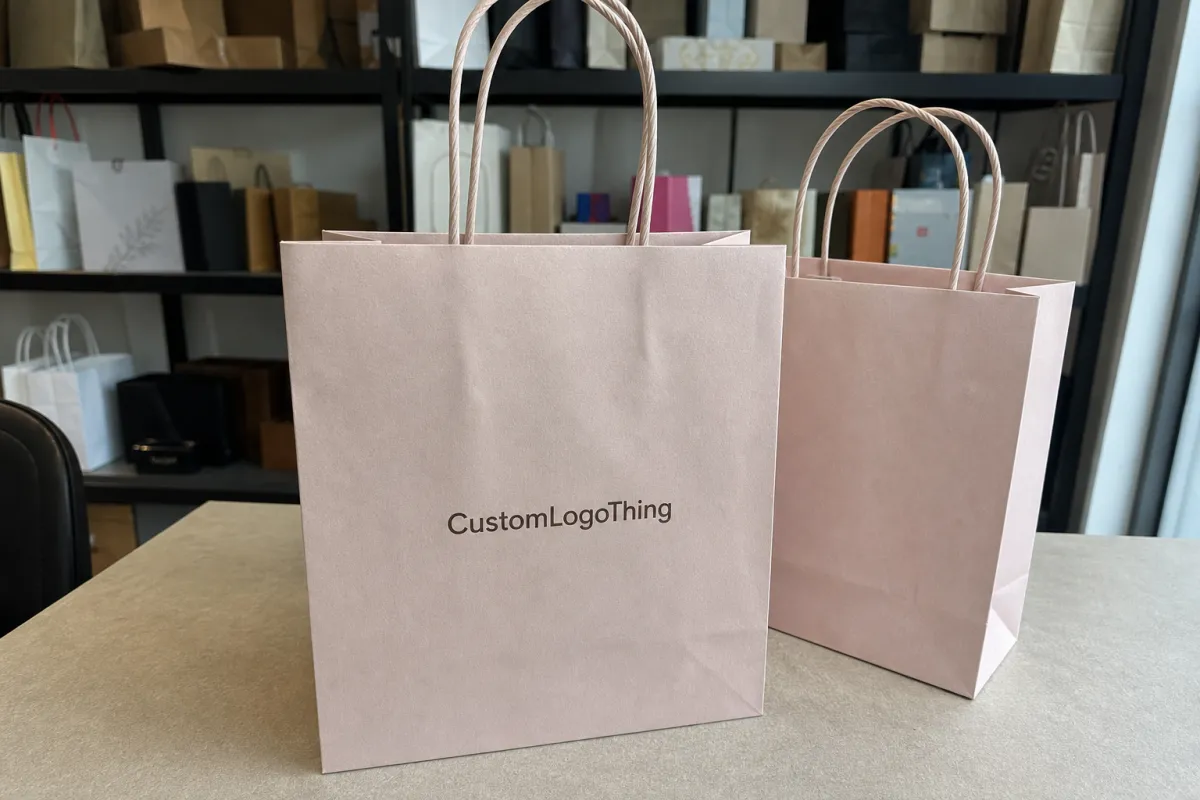
Most bag failures start with the product weight, not the artwork. In ceramic packaging, a twisted-handle paper bag is not just a carrier; it is part of the protection chain. The bag has to handle repeated lifts, a bit of twisting, and occasional overstuffing without opening at the bottom or pulling at the handle patch.
Ceramic twisted handle paper bags Bulk Order Planning should begin with the actual item, not a guessed category. A single mug, a boxed bowl, and a two-piece gift set do not belong in the same build. A 350 gsm art paper bag with a reinforced base may be fine for a light boxed cup, while a heavier set often needs kraft reinforcement, a thicker base board, or a wider gusset so the load sits flat instead of point-loading one corner.
The damage risk is not always dramatic. A weak bag may not drop the product on the floor; it may just tilt the box enough to crush a corner during transport. The bag still looks fine, but the customer opens a damaged ceramic item later and the claim lands on your desk anyway.
Set the use case before you set the finish.
- Gift shop bags usually need cleaner print, lighter load tolerance, and a premium rack presence.
- Event handouts usually want lower cost, faster turnaround, and simple one- or two-color branding.
- Ecommerce inserts need stronger packing tolerance because they travel inside another carton and get handled more than once.
For paper sourcing and shipment planning, it helps to check the relevant standards early. FSC documentation supports responsible paper sourcing, and ISTA methods are useful for the cartons that protect the bagged ceramic item in transit. The bag itself is not an ISTA sample, but the shipment around it still matters. See ISTA and FSC.
In practice, the right bag spec is a balance between carry strength, shelf appearance, and print economics. Buyers who understand that tradeoff usually get cleaner quotes and fewer revision rounds.
Ceramic twisted handle paper bags bulk order planning for retail sets
The selling scenario drives everything. If the bag holds a single mug, a boxed tea set, or a full ceramic gift bundle, the dimensions change immediately. A bag for one boxed mug might sit around 180 x 100 x 230 mm, while a gift set with inserts can push into wider gussets and taller side panels. The goal is not empty space; it is a bag that loads cleanly and stands straight on the shelf.
If the bag is only a brand carrier for the retail box, you can focus more on print quality, handle color, and shelf appeal. If it is part of the product protection, the spec needs stronger base reinforcement, better glue lines, and tighter control of the finished size.
Size the bag to the outer carton or product box, not only the ceramic item. That small step avoids loading problems. Too much slack and the product shifts around. Too little and the customer has to crush the handle area just to fit the box in. Neither one is good for display or handling.
Retail buyers also care about aisle behavior. A ceramic bag should look neat on a shelf and still survive store-floor handling, checkout packing, and the customer’s carry home. That means straight handle placement, accurate folding, and a base that does not wobble when the bag is set down.
Three decisions usually move the quote fastest:
- Finished size - custom dimensions can raise paper waste and die-cut cost.
- Print build - full-bleed art, metallic ink, or tight color matching adds steps.
- Handle and base reinforcement - stronger construction protects the load, but it is not free.
Before you request samples, define the ceramic package weight, the outer box size, and whether the bag will hold one item or multiple SKUs. That is the difference between a useful quote and a week of back-and-forth.
Size, paper weight, and handle construction that hold up
Paper weight is not just a style number. For ceramic sets, 170 gsm is a light starting point, 200 to 250 gsm sits in the middle, and 250 gsm plus reinforcement is the safer range for heavier retail bundles. Kraft can be a smart choice if the brand look works, while coated art paper gives a cleaner print face and a more polished finish. The tradeoff is straightforward: better graphics often cost more and fold with less forgiveness.
Twisted paper handles are cost-efficient and familiar in retail, but the construction details matter more than the handle type itself. Ask how deep the handle is inserted, how large the glue patch is, and whether the top fold has extra lining. A handle that looks fine in a photo can still pull loose if the adhesive area is too small for the load.
Bottom structure deserves more attention than it usually gets. A flat base board keeps boxed ceramics upright during packing and display. For heavier items, a doubled base or inserted board reduces flex and makes the bag easier to load without forcing the corners inward.
Finishing changes behavior too. Soft-touch lamination, glossy coating, or heavy ink coverage can affect how the bag folds and how the panels sit under tension. None of that is a deal breaker, but it should be discussed before tooling. Spec the structure first, decoration second.
For ceramic twisted handle paper bags Bulk Order Planning, ask for a sample with the actual product weight inside it. Empty samples flatter everybody. Loaded samples tell the truth.
Useful checks before approval:
- Handle pull test - confirm the bag can be lifted repeatedly without tearing at the patch.
- Base load test - verify the bottom stays flat with the ceramic box in place.
- Fit test - confirm the box slides in without scraping the print or crushing the gusset.
- Carton fit - make sure the packed bags stack cleanly for warehouse handling.
Pricing, MOQ, and unit cost: where the real budget moves
The cheapest quote is not always the cheapest bag. A low number can hide weak paper, undersized handle patches, or sloppy packing that creates damage later. Unit cost moves with paper grade, print coverage, finishing, and carton packing. If a supplier cannot explain those cost drivers, they are probably only selling a number.
MOQ usually drops when the spec gets simpler. Standard sizes, one- or two-color print, and common paper stocks are the easiest path to lower minimums. Custom dimensions, metallic ink, matte lamination, and very tight color targets usually push the order higher. That is normal, not a trick.
For buyers comparing offers, ask for pricing at three volume tiers. That shows whether the factory gives real scale savings or just a single attractive headline. Also ask for both ex-factory and landed cost. Freight, palletization, and carton volume can change the final number as much as the print upgrade does.
| Build option | Best use | Typical MOQ | Indicative unit cost | Notes |
|---|---|---|---|---|
| Plain kraft, twisted handle | Simple retail carry, lower visual demands | 3,000-5,000 pcs | $0.16-$0.26 | Good for lighter boxed ceramics; fewer print steps |
| Printed kraft, reinforced base | Gift shops and branded retail programs | 5,000 pcs | $0.20-$0.34 | Best balance of cost and structure for most orders |
| Coated art paper, multi-color print | Premium shelves, stronger visual branding | 5,000-10,000 pcs | $0.28-$0.48 | Better print face; usually higher setup and finishing cost |
| Heavy build with special finish | Heavier ceramic sets or premium gift programs | 10,000 pcs+ | $0.38-$0.65 | More protection, more labor, more chance for quote creep |
If you are building a broader packaging program, the Wholesale Programs page is the place to compare quantity tiers before you lock a spec. That is usually where the savings are, not in a vague supplier promise.
One more budget detail is carton packing. Bulk-packed bags are cheaper to produce, but carton-packed units often ship cleaner and reduce warehouse damage. If the bags are going straight into a gift assembly line, carton configuration may matter more than a small print saving.
Production steps and lead time from proof to pallet
A clean process beats a rushed one. The normal path is spec confirmation, artwork check, proof approval, material purchase, production, inspection, and packing. If any of those steps are fuzzy, lead time starts drifting. That is why final size, paper stock, print colors, and handle type need to be locked before production starts.
Sampling deserves its own budget and timeline. A digital proof is useful for layout, but a physical sample catches the real problems: handle position, paper feel, base stiffness, and load behavior. For ceramic packaging, one accurate sample is more useful than several perfect-looking PDFs.
Production time depends on how custom the order is, but a straightforward run often lands around 12 to 18 business days after proof approval, with longer timelines for special finishes or unusual sizes. Add freight on top. If you are shipping overseas, give yourself extra room for documents, customs, and delays.
Build the timeline backward from delivery, not from approval. That keeps the order honest. If the launch date matters, make the supplier quote the full calendar, including sampling and transit. Otherwise the freight stage becomes the part everyone forgot to account for.
Good buyers also ask about inspection points. At minimum, the supplier should confirm print registration, handle attachment, base adhesion, and carton counts before shipment. If the order is going into a shipping carton or gift kit, the packaging around the bag should be tested too. A bag that passes visual inspection but fails a drop test is not a win.
For shipping cartons and transit protection, the logistics side should follow a real test standard, not hope. That is where ISTA earns its keep.
What separates a reliable supplier from a cheap one
Reliable suppliers talk about tolerance, not just price. They can explain handle strength, cutting accuracy, print consistency, and carton compression without drifting into vague promises. If all you hear is “good quality” and “best price,” you are not getting a technical answer.
Look for repeatability. A single sample is easy. Holding the same paper stock, color density, and glue quality across the next run is the real test. If a factory cannot repeat the spec, every reorder becomes a new project.
Ask how load-bearing details are inspected before shipment. Handle insertion, glue lines, and bottom reinforcement should be checked while the bags are still in production flow, not after someone notices a failure in the warehouse. A supplier who documents those checks is usually safer than one who says they inspect everything.
Good suppliers also know what to simplify. If a finish adds cost but does not improve shelf impact or carry performance, they should say so. Honest advice saves more money than upselling. For buyers managing multiple SKUs, that kind of guidance is often worth more than a tiny unit price cut.
The best partner reduces risk. That means fewer surprises, fewer reworks, and fewer awkward conversations when the first shipment lands.
What to confirm before you request a quote
Lock the finished bag size, paper stock, handle color, print colors, and quantity before you ask for pricing. Vague specs produce vague quotes, and vague quotes make comparison painful. If the ceramic item is heavy, include the actual product weight so the supplier can recommend the right build.
Decide whether you need a plain sample, a printed sample, or a production-like proof. Each one serves a different purpose and comes with a different cost. Plain samples are faster, printed samples are better for brand approval, and production-like proofs are the closest thing to a dress rehearsal. Pick based on risk, not habit.
Confirm packing method too. Bulk packed, carton packed, and palletized shipments all affect cost and handling. Ceramic programs usually benefit from stronger carton planning and clear labeling, especially if bags will be inserted into gift boxes or shipped through a warehouse that wants neat counts.
Ask for the target delivery date and shipping destination before the quote is finalized. That lets the factory estimate freight correctly and avoid promising an unrealistic calendar.
If you want the order handled efficiently, send one compact spec sheet with size, load, artwork, MOQ target, packing method, and delivery window. That is the cleanest version of ceramic twisted handle paper bags Bulk Order Planning, and it saves time on both sides.
What MOQ should I expect for ceramic twisted handle paper bags?
MOQ depends on size, print colors, paper stock, and whether the bag uses reinforced handles or a standard build. Simple kraft runs usually allow lower minimums than custom-sized, fully printed, or heavily finished bags. If you need multiple SKUs, ask whether the supplier can split one production run across sizes or artwork versions.
How do I estimate unit cost for ceramic twisted handle paper bag bulk orders?
Start with the base paper grade, then add costs for print coverage, handle reinforcement, finish, and packing method. Larger quantities usually lower unit cost, but custom sizing or special decoration can erase part of that savings. Always compare quotes with freight excluded and included so the real landed cost is visible.
What details should I lock before requesting a quote?
Confirm finished dimensions, paper weight, handle type, print colors, and total quantity. Add the delivery destination, target date, and whether you want a sample or a production proof. If the ceramic item is heavy, include the actual product weight so the supplier can recommend the right build.
How long is the usual production timeline for ceramic twisted handle paper bags?
Timeline depends on approval speed, material availability, and whether the design needs custom tooling or color matching. Sampling and proof approval usually take the first chunk of time; production is only one part of the schedule. Freight can add several days or weeks, so the final delivery date should include shipping and receiving time.
Can I reorder the same ceramic twisted handle paper bags later?
Yes, if the supplier keeps the spec, dieline, artwork, and color references on file. Reorders are faster when the paper stock and finishing stay unchanged. For ceramic Twisted Handle Paper Bags Bulk order planning, the smartest move is to archive the approved version so the next run does not drift.

