Custom Logo Things
Restaurant Cuffed Knit Beanies Unit Cost Review & Order
A practical review of restaurant Cuffed Knit Beanies unit cost, MOQ, decoration choices, and lead times so you can budget a uniform order with fewer surprises.
Why the Lowest Beanie Price Can Cost More Later
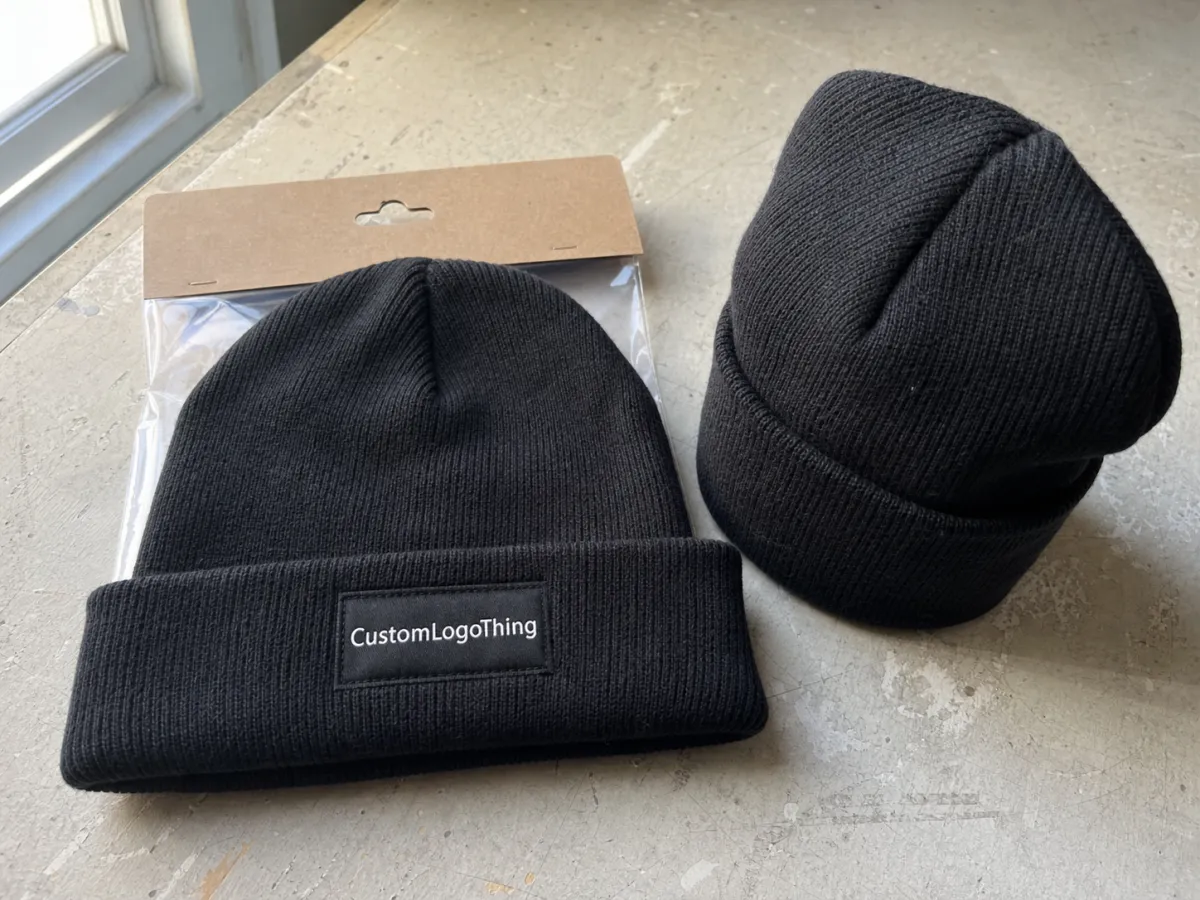
A restaurant Cuffed Knit Beanies unit cost review should start with use, not price alone. A beanie can look acceptable in a mockup and still fail the job once staff wear it through hot prep lines, cold deliveries, and repeated laundering. The first weakness usually shows up in stretch recovery. Then the knit loosens, the cuff rolls, and the logo stops sitting where it should.
The cheap option often survives the sample stage because a sample only has to look good once. Real use is less forgiving. A cap that pills quickly or loses shape after a few shifts may look like a minor issue, but for a restaurant it turns into a repeat purchase sooner than planned. That hidden replacement cycle is where the initial savings disappear.
Restaurants also care about consistency in a way retail buyers sometimes do not. If one location orders a slightly different beanie, the mismatch stands out immediately in a dining room or behind a counter. A uniform program only works when the hat still looks like the same hat after the first wash and the fifth reorder.
"A beanie that looks sharp on paper but sags on the floor is not a bargain. It is a short-term fix with a long tail of replacement cost."
The cuff is a big part of the value. It gives the logo a visible zone, keeps the front panel cleaner, and creates a more intentional shape than a plain slouch cap. For food service, that matters. The right cuffed knit beanie is part warmth, part brand presentation, part wear resistance. Any quote that ignores one of those pieces is incomplete.
What a Cuffed Knit Beanie Needs in Food Service
Food service is hard on headwear. Staff move quickly, kitchens run warm, and nobody wants a beanie that itches or clamps down halfway through a shift. A workable beanie should sit securely, cover enough of the ear to help in colder spaces, and still breathe enough to stay comfortable indoors. If it rides up, stretches out, or traps too much heat, it will spend more time in lockers than on heads.
Construction matters more than marketing language. A tighter rib knit usually keeps its shape better after repeated wear. A looser knit can feel softer, but it may sag sooner and show fatigue around the cuff. In most custom programs, cuff height lands around 2.5 to 3.5 inches, while total crown length often sits near 8.5 to 9.5 inches before stretch. Those ranges help the beanie fit a broad range of staff without looking oversized.
- 1x1 rib knit gives a cleaner, firmer look and better recovery.
- 2x2 rib knit feels thicker and a little more casual.
- Acrylic is usually the most price-stable choice for bulk orders.
- Acrylic blends improve hand feel and reduce scratch complaints.
- Wool-acrylic blends cost more, but they tend to feel warmer and more substantial.
Logo placement is another practical decision. The cuff is usually the best spot because it stays visible even if the beanie is pulled low or worn under an outer layer. A logo on the body can disappear under a hood or coat, which defeats the point of custom branding for front-of-house teams.
Restaurant buyers should also separate indoor comfort from outdoor performance. A soft acrylic knit is often enough for dining room staff, kitchen support, and casual winter wear. Delivery teams, host stands in colder climates, and patio service usually need a denser knit with better insulation. That extra warmth can change the unit price, but so can the reduced return rate from staff actually keeping the beanies on.
Specs That Change Warmth, Fit, and Logo Readability
The spec sheet decides a lot of the final result. Buyers should ask for knit gauge, yarn weight, cuff depth, crown length, stretch recovery, and finishing details before comparing quotes. A chunky knit can look cozy, but it often reads less polished and may expose wear faster. A tighter gauge usually keeps the hat looking cleaner and gives embroidery or labels a flatter surface to sit on.
For restaurant uniforms, the beanie has to work as a utility item first. That means the fabric should keep its shape, stay comfortable during long shifts, and hold the logo in a readable position after repeated use. If the knit fuzzes quickly or the embroidery puckers, the order starts to look like a budget shortcut instead of a uniform system.
Decoration changes both the look and the unit cost:
- Embroidery usually gives the sharpest result on a cuff and works well for simple artwork.
- Woven labels preserve fine detail better when the logo includes small type or thin lines.
- Patches create a more retail-style appearance and can simplify complicated art.
- Knitted-in logos look premium, but the design has to be simplified for the knit structure.
Color control causes more reorder headaches than most buyers expect. Heathered yarns, dye lot changes, and vague color descriptions can make a second run look close but not quite right. If the restaurant depends on charcoal, navy, black, or another exact tone, that color needs to be written into the spec file. The same goes for Pantone references. A supplier cannot guess what "close enough" means to a brand team.
Durability questions should be direct. A useful factory response should mention pilling resistance, wash behavior, and snag risk. If a supplier can reference an industry test such as ASTM D3512 for pilling or an equivalent in-house standard, that is a stronger signal than generic promises. For orders packed into retail cartons or mailed to locations, ISTA-style transit testing from ISTA is a sensible benchmark. If paper tags or inserts are part of the kit, FSC paper is an easy way to document the source without complicating the purchase order.
Unit Cost Ranges and Order Breaks
The most useful restaurant cuffed knit beanies Unit Cost Review is the one that separates base price from landed cost. Price changes with quantity, yarn quality, decoration method, packaging, and whether the order needs individual bagging or retail-style tags. Smaller orders almost always carry a higher cost per piece because setup work gets spread across fewer units. That is simple arithmetic, but it still catches buyers off guard.
These working ranges are realistic for custom cuffed knit beanies used in restaurant programs:
| Option | Typical MOQ | Typical Unit Cost | Best For | Notes |
|---|---|---|---|---|
| Basic acrylic, one-color embroidery | 50-100 pcs | $4.25-$7.50 | Single-location trials, staff issue caps | Lowest entry point, simple logo, limited decoration time |
| Acrylic blend, woven label or small patch | 100-200 pcs | $5.75-$9.25 | Restaurants wanting a cleaner brand look | Better hand feel, stronger presentation, still cost-controlled |
| Wool-acrylic blend, custom knit logo or premium patch | 200-300 pcs | $7.50-$12.50 | Higher-end uniforms, winter programs, multi-site rollouts | Warmer, more refined, higher yarn and decoration cost |
Price usually improves after the first production break, often somewhere between 100 and 300 pieces. Exact thresholds vary by factory, but the pattern is consistent: setup cost gets diluted as quantity rises. A 50-piece run may look expensive; a 500-piece run usually looks much healthier on paper because the same setup is supporting more finished units.
The add-ons deserve close attention. The base price is only one part of the total.
- Setup charges for embroidery or label placement often run about $25-$100 per design.
- Tooling fees for custom knit programs can land around $60-$200 depending on complexity.
- Sampling may be free, credited back, or charged at a small production cost.
- Rush charges can add 10% to 25% if the schedule tightens.
- Freight can move the landed total more than buyers expect, especially on smaller orders.
If the quote bundles individual polybags, size stickers, hang tags, or custom cartons into one line, ask for a breakdown. A clean quote should show the per-piece cost, MOQ, decoration method, packaging details, and whether sample costs are credited against production. That level of clarity makes it easier to compare options without guessing where the margin sits.
Proofing, Production, and Delivery Timing
A clean production flow keeps the order from drifting. The usual sequence is straightforward: artwork review, mockup approval, sample confirmation if needed, bulk production, quality check, packing, and shipment. Problems tend to come from vague instructions, weak artwork files, or last-minute logo changes after proof approval. The process itself is not complicated. The discipline around it is.
- Artwork review: confirm logo size, colors, and placement.
- Mockup approval: lock the cuff position, decoration method, and final look.
- Sample check: verify fit, hand feel, and logo readability before the bulk run.
- Bulk production: the factory knits, decorates, and finishes the order.
- Quality check and packing: confirm quantities and packing instructions.
- Transit: allow time for freight, customs if applicable, and final delivery.
Lead time depends on how custom the beanie is. A stock cuffed knit beanie with embroidery often ships in 10 to 15 business days after proof approval. A more custom knit or patch-based order usually lands closer to 15 to 25 business days. Rush production is possible, but it tends to narrow decoration choices and raise cost. Speed rarely comes free.
Delays usually come from the same handful of issues: missing logo files, slow proof sign-off, late color changes, or shipping details that were not confirmed early enough. If the beanies support a seasonal rollout, a holiday opening, or a multi-location uniform refresh, build in time for one revision round. Tight schedules leave little room for correction once production starts.
Packaging deserves the same attention as the garment. Compression in transit can flatten lighter knits, especially if cartons are overpacked or the beanies are stuffed too tightly. A decent carton spec and a transit-test mindset help prevent damaged arrivals. If the order includes paper inserts or retail cards, FSC-certified paper keeps the documentation cleaner and avoids a second round of sourcing decisions.
Why Reorders Stay Simple for Multi-Location Teams
The best reorder is the one nobody has to explain twice. Same fit. Same cuff height. Same logo placement. Same color. Multi-location restaurants rely on that consistency because slight differences are easy to spot from across a dining room or across a rollout spreadsheet. The uniform starts looking cheap when the variations add up, not because the base beanie was wrong.
Reorders go faster when the supplier keeps the specification clean. Saved artwork, approved yarn choices, decoration method, and packing instructions reduce back-and-forth and keep the second run close to the first. A supplier should not need a new design brief every time the restaurant reorders the same item. That only slows down procurement and invites inconsistency.
Restaurants usually reorder for predictable reasons:
- Seasonal reset for colder months.
- New location openings with matching uniforms.
- Lost stock, worn caps, or size mix-ups.
- Staff growth that outpaces the original quantity.
The value of the first order is only part of the story. The real test is whether the factory can repeat the same result six months later without changing the knit, the color, or the placement. Stable repeat production saves time for managers and keeps the uniform system from turning into a series of one-off purchases.
What to Send for a Faster Quote
A useful quote starts with the right inputs. Send the quantity tiers first, including the starter run, likely reorder range, and any larger volume you may need later. Add the logo file, the target delivery window, the decoration method, and the color choice. If individual bagging, hang tags, or retail inserts are needed, mention that before proof approval so the pricing reflects the full scope.
For a cleaner comparison, ask for two versions:
- Budget option: simpler decoration, lower MOQ, tighter spec.
- Premium option: better yarn, stronger logo detail, or more polished packaging.
That side-by-side view makes the decision easier. It shows whether the higher-cost version is justified by the hand feel, warmth, or presentation, or whether the lower-priced run already meets the current need. One quote can hide a lot. Two structured options usually show the tradeoff clearly.
It also helps to confirm the reorder path in writing. Ask whether the same spec can be repeated, whether the supplier will charge new setup charges if the logo stays unchanged, and what happens if the restaurant later changes color or decoration style. A clear reorder process saves time and reduces the chance that a second batch comes back with subtle differences.
For a restaurant team trying to budget accurately, the most useful version of a restaurant cuffed knit Beanies Unit Cost Review is the one that pairs price with spec, timing, and repeatability. That is the only way to know whether the order supports daily use or just looks cheap on a quote sheet.
What affects restaurant cuffed knit beanie unit cost the most?
Quantity usually has the biggest effect. Small runs cost more per piece because setup work gets spread over fewer units. Decoration method, yarn quality, packaging, and delivery speed can shift the price as well. If the order needs priority production or upgraded freight, the landed total can rise even when the base quote looks steady.
Which decoration method works best for restaurant cuffed knit beanies?
Embroidery is often the cleanest choice for a cuff because it reads clearly and holds up in daily use. Patches work well if the logo has fine detail or if the restaurant wants a more retail-style look. A woven label is a good middle ground when the brand wants something understated and cost-controlled.
What is a realistic MOQ for custom restaurant beanies?
MOQ varies by factory and decoration method, but the lowest workable quantity often carries the highest unit price. For a one-location trial, ask for the smallest practical run and compare it with the next price break. Multi-location rollouts usually benefit from a larger order because the cost per piece comes down faster.
How long does production usually take after approval?
Production normally takes weeks rather than days because proofing, sampling, knitting, decoration, and packing all take time. Stock-based orders move faster than fully custom knit programs, but artwork approval still controls the schedule. If the launch date is fixed, leave room for revisions and shipping delays.
Can I reorder the same restaurant cuffed knit beanies later?
Yes, if the spec, logo, and decoration details are saved clearly. Keeping the same yarn, cuff size, and artwork file reduces the chance of variation on the next batch. A proper reorder process should be faster and more predictable than the first run.
That is the practical value of a restaurant cuffed knit beanies unit cost review: it helps you buy a hat that keeps its shape, supports the brand, and can be reordered without starting over each time.


