Jewelry Cuffed Knit Beanies unit cost review matters because the visible part of the product is not what usually drives the quote. At 500 or 5,000 pieces, the cost shift often comes from the yarn blend, stitch density, cuff build, embellishment method, and how much labor the decorative detail adds.
For seasonal buyers, this style sits in a useful middle ground: warmer and more giftable than a basic knit cap, but still easier to price than a fully premium accessory. The buying decision should focus on specs, MOQ, lead time, decoration limits, and inspection requirements rather than on the style name alone.
Why Jewelry Cuffed Knit Beanies Win Seasonal Buyers
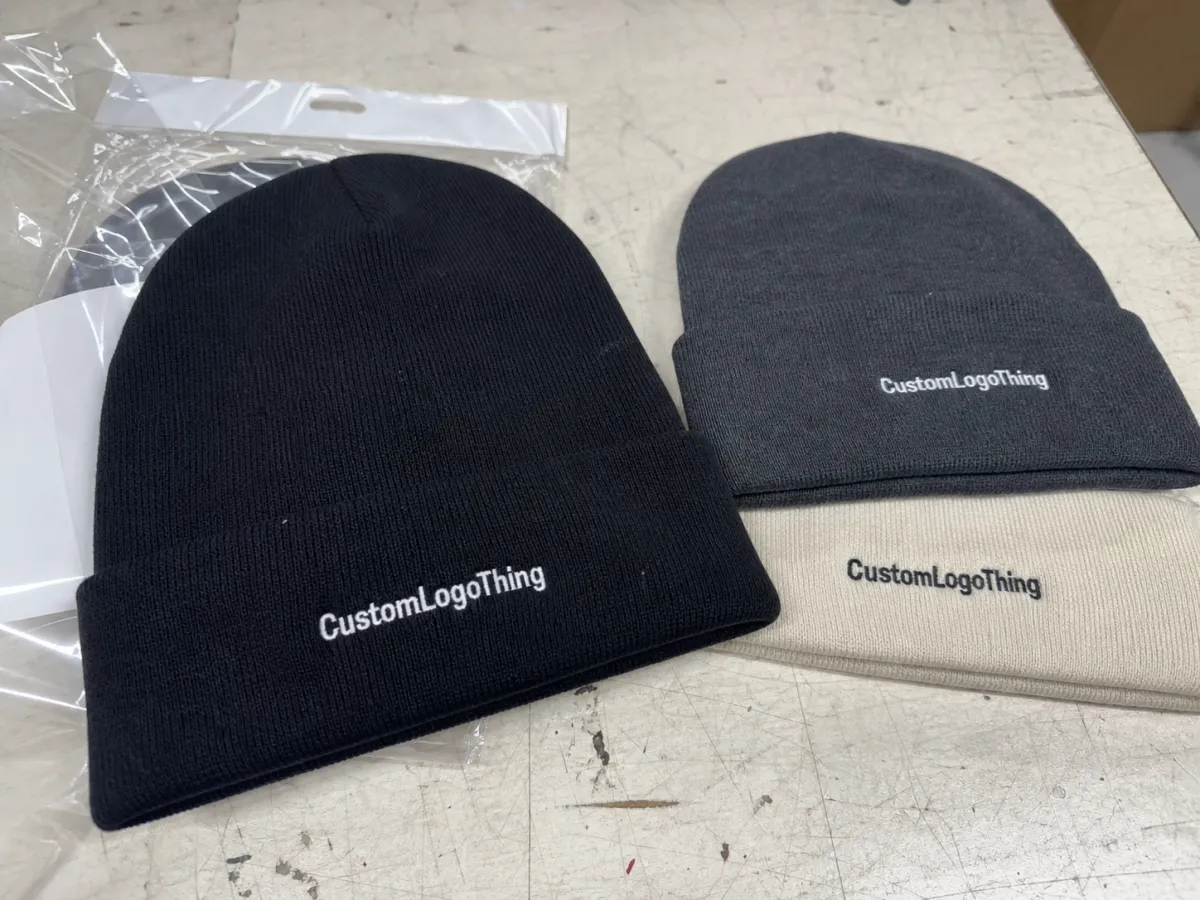
From a buyer's point of view, the appeal is practical. A cuffed knit beanie gives you a stable branding area and a familiar winter silhouette, while the jewelry accent adds a focal point that reads as more finished on shelf. That combination can raise perceived value quickly without forcing the item into a luxury price band.
Retail performance tends to improve when the design is easy to understand in a glance. A metallic charm, bead detail, or stone-like accent can make the product feel more intentional than a plain knit cap, especially in boutique, holiday, and gift-driven assortments. In those channels, visual impact often matters more than technical complexity.
This format is especially useful in seasonal programs where buyers need products that can support a gift story, a checkout display, or a bundled promotion. The item is still simple enough to source in volume, but the decoration gives it enough distinction to justify a higher shelf price than a standard beanie.
That does not make it a universal winner. It works best when the buyer wants a clear style upgrade and can accept the added cost of embellishment, sampling, and quality control. If the goal is only the lowest possible unit price, a plain knit cap will usually be cheaper. If the goal is stronger perceived value, this style has a better chance of protecting margin.
Jewelry Cuffed Knit Beanies Unit Cost Review: What Changes the Price
The biggest cost drivers are usually the least visible ones: yarn choice, knit gauge, cuff construction, embellishment type, and the amount of hand work needed to attach the jewelry detail. A basic acrylic beanie with a sewn charm is a very different production job from a tighter rib knit with a custom metal accent and extra finishing time.
Decoration often changes the quote more than artwork does. A new charm shape, rhinestone line, or cast badge can add tooling, sample revisions, and slower attachment. A logo color change or minor graphic tweak may be much easier if the base structure stays the same. Good suppliers should separate the knit base, the jewelry component, and any setup charges so the buyer can see where the money goes.
| Option | Typical cost impact | Best use | Buyer risk |
|---|---|---|---|
| Simple sewn charm | +$0.20 to $0.45 per piece | Low-risk promo and gift programs | Low, if attachment is secure |
| Rhinestone trim or bead accent | +$0.35 to $0.85 per piece | Fashion-led retail assortments | Medium, due to snag and loose-part checks |
| Custom metal badge or cast accent | +$0.60 to $1.40 per piece, plus tooling fees | Premium branded programs | Higher upfront setup charges and longer lead time |
| Integrated decorative knit detail | Varies by stitch count and labor | Sharper design story, lower loose-part risk | Can raise MOQ if the pattern is complex |
Volume has a bigger effect than many buyers expect. At 300 to 500 pieces, the first units carry most of the setup and sourcing burden. At 1,000 to 3,000 pieces, those fixed costs spread out better. At 5,000 pieces and above, the unit price often improves again, but only if the design stays stable and the factory can run efficiently.
Quote discipline matters. Ask for one page that separates base knit cost, embellishment adders, tooling, sample cost, packaging, freight assumptions, and payment terms. If those items are blended together, the low quote may not be the true landed cost.
Packing format also affects the number. A folded beanie in a simple polybag is cheaper than a retail-ready unit with a printed carton or hangtag, but the finished presentation may support a stronger sell-through. For most buyers, the right target is the lowest landed cost that still works at retail, not the lowest factory number.
Material Specs, Fit, and Decoration Limits to Confirm
Start with the yarn. Acrylic is still common because it controls cost and takes color well. Wool blends usually feel more premium but raise the base price and can require different care labeling. Recycled yarn may support sustainability claims, though buyers should confirm shade consistency and supply availability early.
Fit needs to be stated clearly. Confirm whether the beanie is adult unisex, youth-sized, or intended to stretch across both. Ask for cuff depth, crown height, and stretch recovery so you can judge how the item will sit on head form. A piece that looks fine flat can still fit poorly once worn, which is a common cause of returns in gift and boutique channels.
The jewelry detail has its own limits. Confirm weight, attachment method, edge safety, and placement before sampling is approved. A charm set too close to the cuff seam can distort the knit. A heavier metal accent can pull the fabric forward. Sharp edges are a hard stop. The supplier should explain how the piece is fastened and whether the attachment is reinforced from the inside.
Care and compliance details should be locked at the same time. Color references need to be specific, and label placement should not interfere with comfort or branding. If the product is for resale, ask for wash guidance, country-of-origin labeling, and any packaging claims that need support. For shipping durability, many buyers also review transit tests such as those outlined by the ISTA family of standards when the pack includes loose embellishments or delicate trim.
MOQ, Quote Format, and Price Breakpoints for Bulk Orders
MOQ is not just a number; it also tells you how the factory sources components and allocates labor. For jewelry cuffed knit beanies, a small test run often starts around 300 to 500 pieces, while a standard retail order may sit at 1,000 to 3,000 pieces. Larger seasonal buys may make sense at 5,000 pieces or more, depending on the design.
The quote should break out each cost element. A clean format includes sample cost, tooling fees, setup charges, unit cost, packaging, and shipping assumptions. If the supplier sends only one total, ask for the split. Without that, you cannot tell whether the price is low because the base knit is efficient or because freight, sampling, or decoration is being handled differently.
MOQ should also be read by color and embellishment. Mixed body colors, mixed jewelry styles, and split shipments can raise the effective minimum even when the style code stays the same. A buyer who wants three body colors and two decorative versions in one order may create more sorting, more inventory handling, and more rework than a single-color program.
Price breaks matter only if sell-through supports them. A lower unit cost is useful when it still leaves enough margin after freight, packaging, and markdown risk. A larger order can be the better financial choice, but only when the buyer has a realistic read on demand.
| Volume band | Typical pricing behavior | What to watch |
|---|---|---|
| 300 to 500 pcs | Highest unit cost; setup charges weigh heavily | Sampling, component sourcing, and small-run labor |
| 1,000 to 3,000 pcs | Moderate price drop; best for many retail buyers | Color count, embellishment complexity, freight method |
| 5,000+ pcs | Lower unit cost and better spread on tooling fees | Inventory risk, storage, and seasonal sell-through |
If packaging includes FSC-certified paper tags or inserts, confirm whether the supplier can provide traceability. The FSC system becomes relevant when the retail presentation matters as much as the beanie itself. It is a small line item, but it can affect how the product is positioned at shelf.
Process and Timeline: From Spec Sheet to Final Shipment
The production flow is straightforward when the buyer sends a clean brief. It starts with intake, then spec review, proofing, sample build, revisions, bulk production, inspection, and shipment. The projects that move fastest are the ones where the requirements are clear from the start.
Sampling and bulk production run on different clocks. A sample may take one to two weeks depending on yarn availability and whether the jewelry component must be sourced separately. Bulk production often takes longer, especially if color matching or embellishment approval is still open. A typical custom program may need 10 to 15 business days for sampling and 20 to 35 business days for production, with longer timelines for complex accents.
Approval timing affects cost. Once artwork, color, and jewelry placement are signed off, the order should lock before bulk sourcing begins. If the buyer changes direction after that point, the factory may need a new sample, rework, or additional tooling fees. The practical rule is simple: finish decisions before the supplier buys the parts that cannot be returned.
Seasonal planning matters because winter accessories move through production faster than many buyers expect. Build buffer for holiday cutoffs, store set dates, and promotional launch windows. If the product needs custom packaging, add more time for carton labeling and approval cycles. A rushed order usually costs more than the line item that made it urgent.
Quality Checks That Protect Margin and Reduce Returns
Quality control should cover more than appearance. Stitch uniformity, cuff elasticity, embellishment alignment, and attachment strength all need to be checked before cartons are sealed. A cuff that is too loose or too tight changes how the beanie sits and how the branding reads on shelf.
Wear and pull testing are especially useful for the jewelry detail. If the accent snags easily, loosens under stress, or bends during normal handling, return risk rises fast. A short snag test and a basic attachment pull test are usually enough to catch the problems that matter most in retail and gift programs.
Packaging belongs in QC as well. The decorative element should be packed so it does not scratch, bend, or catch on neighboring units. Carton compression, sleeve design, and inner bag selection matter more when the item has a raised decorative part. A beanie with a metal accent can ship well in a protected insert and still arrive damaged if the tray allows movement.
Good QC protects margin in a direct way: fewer defects mean fewer replacements, fewer chargebacks, and fewer complaints after launch. If the packout includes printed inserts or retailer-specific packaging, make sure the carton structure matches the product weight and handling route. That is standard commercial discipline, not a niche concern, and it is a key part of any buying review.
Next Steps: Send Specs, Compare Quotes, and Lock the Order
If you want accurate pricing, send a tight brief. Include target quantity, yarn preference, color references, cuff dimensions, jewelry style, branding method, packaging needs, and delivery window. The more exact the brief, the less likely the supplier is to pad the quote with risk.
Then compare quotes on the same terms. Every supplier should price the same pack format and the same assumptions about freight and payment. If one quote excludes shipping and another includes it, the lower number is not the lower landed cost. If one includes sample charges and another does not, that difference should be visible before approval.
Ask for a pre-production sample or photo approval if the jewelry detail is the main selling feature. Small placement changes can alter the retail look more than buyers expect. Fix those issues before bulk production starts, because changes after the order is in motion are slower and more expensive.
For Custom Logo Things buyers, the strongest result comes from matching the same specs, confirming the MOQ, checking the decoration limits, and approving the order only when the quote, timeline, and packaging plan all line up. That is the real value of a careful jewelry cuffed knit beanies Unit Cost Review.
What drives jewelry cuffed knit beanies unit cost the most?
Yarn choice, stitch density, embellishment type, and the labor needed to attach the decorative detail are usually the biggest drivers. Quantity matters too because setup and sourcing costs spread out more at higher volume.
What MOQ should I expect for custom jewelry cuffed beanies?
Many factories quote different breakpoints for test runs, standard retail orders, and larger seasonal buys. Ask for the MOQ by color and by embellishment style, since mixed designs often raise the minimum.
How long do sampling and production usually take?
Sampling usually finishes faster than bulk production, but timing depends on yarn availability and whether the jewelry component must be sourced separately. Build in extra time for revisions, approval delays, and peak-season congestion.
Can I lower the price without changing the look too much?
Yes. Simplifying the jewelry construction, limiting color counts, or choosing a standard yarn blend can reduce cost without changing the overall style much. You can also avoid split shipments and mixed embellishment combinations.
What should I send to get an accurate quote fast?
Send the target quantity, size, cuff dimensions, yarn preference, color references, embellishment idea, and delivery date. Include packaging needs and whether you want sample approval before bulk production starts.


