Jewelry Ribbed Winter Beanies Unit Cost review sounds narrow, but the real cost picture is broader than the hat itself. Base price is only one layer. Add decoration, labels, packing, cartons, inland freight, and export freight, and a quote can move 20% to 50% before anyone touches the knit. That is why a useful review has to follow the full order, not just the line item on the first page.
The cheapest beanie is often the one that creates the most work after sample approval.
Buyers usually want three things: a product that looks right, lands on time, and does not bleed margin through avoidable setup charges. That means thinking like a merchandiser instead of a bidder. A slightly better rib structure, a cleaner cuff, and a better packaging format can reduce rejects and raise sell-through. The price per piece may rise a little. The cost per successful sale can fall.
Why Ribbed Beanies Look Cheap Until Decoration and Freight Show Up
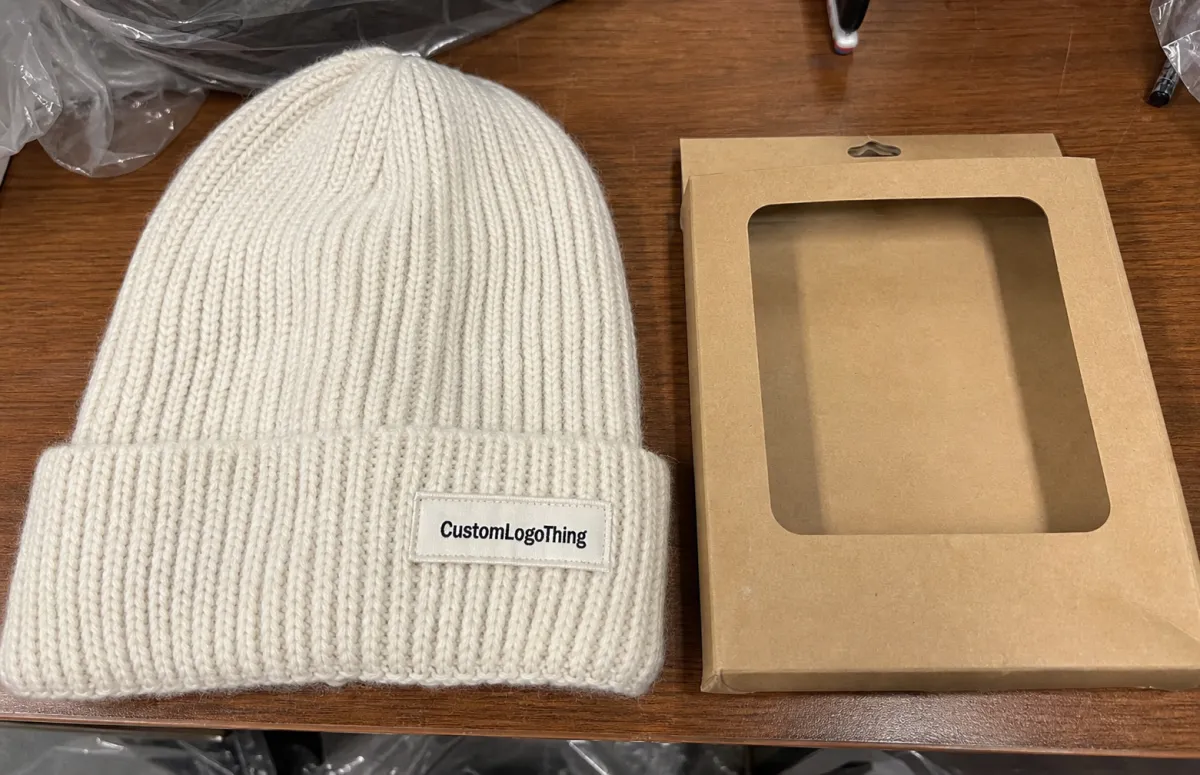
Ribbed beanies are deceptive. The construction is simple enough to look cheap on a quote sheet, yet the finishing choices decide whether the piece feels premium or disposable. A 2x2 or 1x1 rib knit gives stretch and shape, but it also makes decoration harder. The surface moves. Logos move with it.
That matters because logo method changes the perception of value fast. Embroidery can look crisp on a firm cuff and distorted on a soft one. A woven label holds detail, though oversized labels can pucker. A rubber patch adds dimension, but that same dimension can feel heavy on a refined lifestyle item. Heat transfer may look clean at first and then lose its appeal after a few wears. Each method has a different cost profile and a different failure mode.
Freight has the same habit. A light item still becomes expensive if carton dimensions are poor or the packing method wastes space. Mixed SKU programs make this worse because every additional colorway or placement needs its own sorting and checking. The base beanie may be inexpensive; the landed beanie may not be.
That is why a buyer should compare product price, decoration, packaging, and freight as one number. Split them apart and the quote looks smaller than it really is. Put them together and the economics make more sense.
There is also a merchandising angle that gets ignored. Ribbed beanies sit in a visible part of the assortment, especially in gift sets and winter displays. If the knit is loose or the cuff collapses in transit, the product looks tired before it reaches the floor. A better build can protect margin by reducing hand sorting and improving presentation.
Product Details: What Makes a Jewelry Ribbed Winter Beanie Worth Buying
A jewelry-adjacent winter beanie needs to feel more intentional than a basic promo cap. The product sits between fashion accessory and branded add-on, so the finish has to be clean. A cuffed ribbed silhouette works well because it gives a stable branding zone and a familiar retail shape. The best versions have medium stretch, decent recovery, and a hand-feel that does not scratch on first wear.
Color selection matters more than many buyers expect. Black, charcoal, oatmeal, stone, and navy remain the safest choices because they support premium branding without fighting it. In practice, one or two strong core colors usually produce a cleaner assortment than spreading an order across six weak ones. Fewer colors can also keep the cost structure simpler.
Decoration should match the product position. Woven labels are useful when the brand wants a tidy, understated look. Embroidery works for a more classic retail feel, but the knit density has to support it. Patches add texture and can elevate a simple beanie, though they are not ideal for every jewelry program. If the item is going into a gift set, subtle branding often performs better than a large logo.
- Typical build: cuffed rib knit with medium stretch and close-to-head retail fit
- Common branding points: center cuff, side cuff, or a small seam tab
- Best use cases: jewelry gift sets, boutique retail, winter promotions, holiday bundles
- Frequent mistake: choosing decoration before checking knit density and cuff width
Specs That Control Fit, Finish, and Repeat Order Quality
A quote is only useful if the spec behind it is clear. Yarn composition, knit gauge, cuff height, finished measurements, and tolerance range do most of the work. A beanie made with 100% acrylic at a medium gauge will not behave like a wool blend or a tighter knit. Warmth, stretch, and logo stability all shift with the material.
Good buyers ask for measurements instead of vague fit language. A finished height of 22 to 24 cm, cuff depth of 6 to 8 cm, and tolerance around +/- 1 cm is a practical starting point for many ribbed beanies. If the fit needs to sit lower over the ears or rise higher for a slouchier look, state that early. “Medium fit” does not help a factory cut or knit to target.
Color approval is another place where small mistakes become expensive. If the artwork has a Pantone target, send it. If the logo will be embroidered, confirm thread color against the garment color and test the contrast in real light, not just on a monitor. If a patch is involved, check edge thickness and border balance. Weak approvals tend to create rework, and rework is expensive in a low-margin product.
Packaging should be treated as part of the spec, not an afterthought. Flat fold, individual polybag, hang tag, barcode label, size sticker, and carton marks all affect labor and freight. A bulk pack may be fine for one channel. A retail-ready program needs more handling and more checking. That changes the unit cost in ways buyers often underestimate.
There is also a tradeoff between softness and structure. Softer yarns feel better in hand, but they can lose shape faster. Firmer knits hold the silhouette and give embroidery a cleaner base, but they may feel less plush. Neither is automatically better. A premium jewelry gift set may benefit from hand-feel first. A store program with repeated wear may need shape retention more.
For packaging and transit planning, standards from groups like ISTA are useful for understanding how a product should survive shipping, even if they do not tell you what the quote should be. Material guidance from the FSC also helps when the packaging story matters to the buyer.
Jewelry Ribbed Winter Beanies Unit Cost Review: What Changes the Quote
The quote changes for ordinary reasons. Quantity comes first, then decoration, yarn choice, color count, packaging, and setup work. Ask for a ten-variable custom build and the price will behave accordingly. Manufacturing rewards clarity, not optimism.
MOQ has a direct effect. A 500-piece order with one logo position and one colorway can sit in a very different price band than a 5,000-piece run with multiple colors and retail packaging. Smaller orders carry more setup cost per unit. Larger orders spread that cost out and usually improve the base price. The same logic applies when buyers mix logo placements or pack-out styles.
Sample cost and bulk cost should not be treated as the same stage. Samples are part of development, so they can include artwork setup, stitch programming, label creation, or one-off trims. Bulk pricing is lower because those tasks have already been absorbed. A custom sample at $25 to $60 is not unusual. A production run can land far lower once the build is locked and the MOQ is met.
For planning, these working ranges are more realistic than a generic “cheap” or “premium” label:
| Order Type | Typical Quantity | Approx. Cost Per Piece | What Usually Drives It |
|---|---|---|---|
| Budget program | 500-1,000 pcs | $1.80-$3.20 | Simple knit, basic woven label, limited packaging |
| Mid-tier retail | 1,000-3,000 pcs | $2.90-$5.80 | Better yarn, embroidery or patch, branded hang tag, individual polybag |
| Premium assortment | 3,000+ pcs | $4.80-$8.50 | Higher-grade yarn, tighter knit, stronger decoration, upgraded packaging |
Those figures are not promises. A dense embroidery program, specialty yarn, custom patch backing, or retail carton packaging can push the quote upward. A stock-style build with a small woven tab can sit lower. The key is to budget against the actual spec, not the idea of the spec.
Setup charges deserve scrutiny. Some suppliers fold them into the unit price, which makes the quote look tidy and makes comparison harder. Others state them separately: artwork setup, knit programming, woven label prep, patch tooling, or packaging setup. Clear line items are usually a better sign than a quote that looks polished but hides the real work.
A good jewelry ribbed winter beanies Unit Cost Review should also show what is included and what is not. If freight is excluded, say so. If labeling is extra, say so. If a 15-cent packaging change affects landed cost, that needs to be visible. Hidden assumptions cause bad buying decisions.
Process and Timeline: From Quote to Production to Delivery
The workflow is straightforward: inquiry, spec check, sample, approval, bulk production, quality control, shipment. The delays happen at the handoff points. Missing artwork, unclear color targets, and late revisions are still the most common reasons a project slips.
Lead time depends on how custom the build is. A stock-style ribbed beanie with a simple label can move faster than a custom knit with multiple colors and special packaging. For a custom program, 12 to 20 business days after sample approval is a realistic range, with longer timing if yarn must be sourced or if the order includes several SKUs. Urgent orders need to be stated early, not after the sample cycle begins.
Clean inputs save time. One file packet should cover quantity, logo art, color targets, decoration method, packaging instructions, and delivery deadline. If the spec keeps changing, the price and lead time will change with it. That is not a supplier problem. It is just the cost of indecision.
Why Buyers Reorder From a Supplier That Controls Spec, Cost, and Delivery
Repeat orders usually come from consistency. Buyers reorder when the sizing stays stable, the color matches the approved sample, and the decoration lands in the same spot every time. That sounds basic because it is. It is also the part that gets missed most often.
Fast quoting helps, but clarity helps more. A strong supplier says what is feasible, what is risky, and what will add cost. A weak one agrees to everything and cleans up the confusion later with a change order. That is not service. It is a delayed bill.
For retail-ready programs, internal coordination matters. Mixed SKUs, barcode labels, special folds, and carton-level packing instructions create more opportunities for error. A supplier that controls those steps well can reduce chargebacks, customer complaints, and late-stage panic. Fewer mistakes generally mean fewer costs after the invoice is paid.
Honest tradeoffs are another marker of quality. If a soft knit will not hold a heavy patch well, that should be said. If dark thread on a dark cuff will disappear visually, that should be said too. Buyers do not need flattery. They need the right warning before the order is locked.
Transit protection belongs in that same category. Packaging should protect the product through the route it actually takes, not the route imagined on a quote sheet. Carton build, stacking, and pack density matter when the beanies leave the factory. Suppliers who understand that usually understand the rest of the chain as well.
Next Steps: Lock the Specs, Request the Quote, and Approve the Sample
Start with the inputs that change the price: quantity, logo file, colors, decoration method, packaging needs, and deadline. If a spec sheet already exists, send it. A clear brief usually produces a cleaner quote and fewer follow-up questions.
Then compare only like with like. A sample with embroidery is not the same as one with a woven label. A quote that includes freight is not the same as one that excludes it. If the numbers do not cover the same product build, they do not mean much.
Before bulk approval, check three things: unit cost, MOQ, and landed cost. Then inspect the sample for fit, cuff recovery, logo placement, and packaging accuracy. If the beanie holds its shape, the branding reads cleanly, and the packing matches the channel, the order is ready. If not, fix the issue before production scales it up.
That is the practical version of a jewelry Ribbed Winter Beanies Unit Cost review: define the build, price the real thing, and buy the version that will actually sell.
What drives the jewelry ribbed winter beanies unit cost the most?
Quantity, decoration method, and yarn choice usually move the price more than the base cap itself. Packaging and multi-color orders can add cost quickly, especially when the program needs separate labels or carton setup.
What MOQ should I expect for custom ribbed winter beanies?
MOQ depends on the knit build and decoration method, not only the style. Higher-detail or multi-color programs often need a larger MOQ to keep the unit cost workable.
Can I mix colors or logo placements in one order?
Yes, but mixed options usually raise the unit cost because they add setup, sorting, and production complexity. The easiest way to control cost is to keep the base spec consistent.
How long do sample and bulk production usually take?
Simple samples move faster than fully customized knit or decorated versions. Bulk production depends on final artwork approval, material availability, and how quickly the sample is signed off.
What files do you need to quote jewelry ribbed winter beanies accurately?
Send the logo file, target quantity, preferred colors, decoration method, and packaging request. If you already have a spec sheet, include it; that usually leads to a cleaner quote with fewer follow-up questions.


