Pet Treat Ribbed Winter Beanies Unit Cost Review for Buyers
A pet treat Ribbed Winter Beanies Unit Cost review only works when it is tied to an actual spec. Ribbed knits hide handling marks better than flat knits, keep their shape through packing, and usually look more finished on shelf. That matters when the order is meant for winter giveaways, retail bundles, staff gifts, or trade show handouts and the buyer does not want something that looks tired before the season even starts.
The category looks simple, but the pricing is not. A ribbed beanie can feel cheap or polished depending on yarn choice, stitch density, cuff depth, decoration, and packaging. For pet treat brands, the sweet spot is usually a practical piece that feels intentional without turning into fashion merch. Buyers want something seasonal that supports the brand, not a novelty that fights with the product line.
That is why ribbed beanies keep getting reordered. They are easy to spec, easy to repeat, and forgiving enough for real distribution. Once the fit, logo placement, and packaging are set, the item tends to behave the same way from one run to the next. That consistency is where the value sits.
Why Ribbed Winter Beanies Beat Flat Knits on Shelf
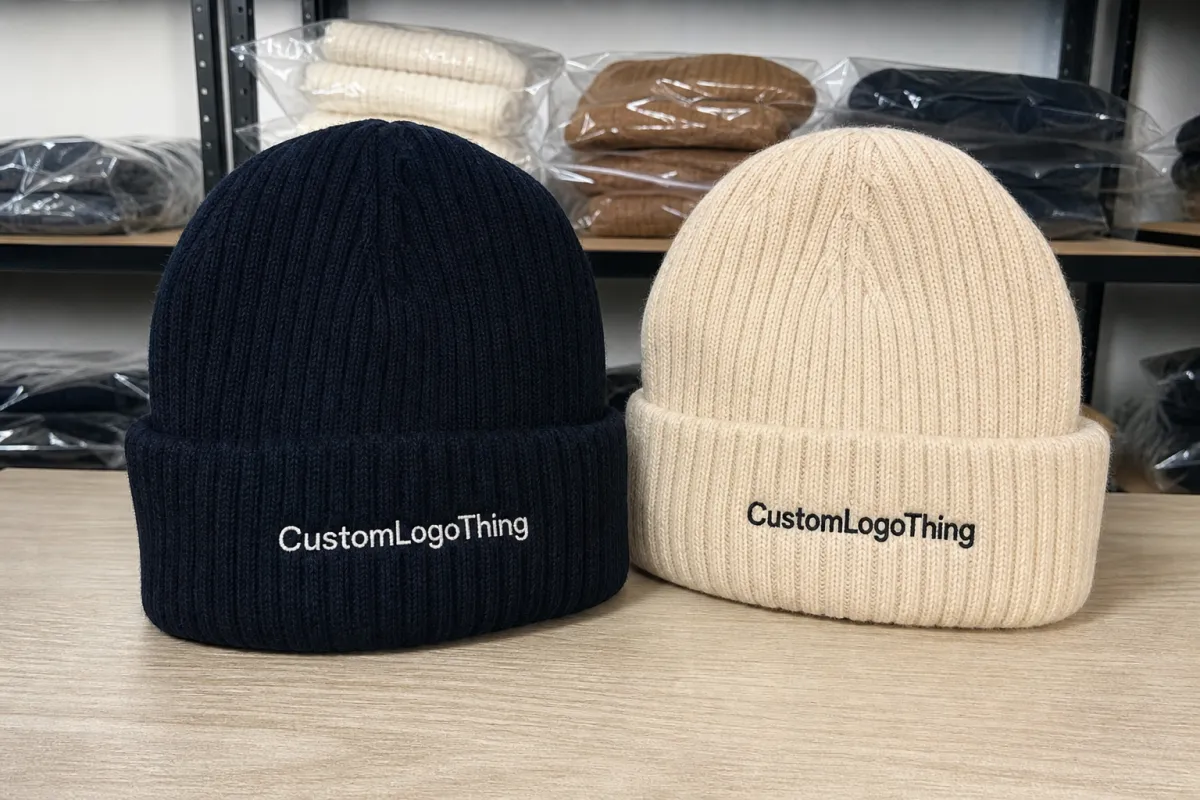
Flat knits can look clean in a mockup and then lose shape after compression, stacking, and freight handling. Ribbed construction has more visual depth, so small imperfections fade into the texture and the hat still feels substantial. A good rib looks deliberate. A flat knit that waves or wrinkles looks unfinished.
That difference shows up on a shelf. Ribbing creates more shadow and texture under store lighting, so the beanie looks fuller before anyone picks it up. For pet treat brands, that helps a seasonal bundle feel like a real part of the offer instead of leftover filler. The product still needs clear branding, but it does not need to shout.
Ribbed builds also tolerate small variance better. A flat knit with weak tension control can expose every inconsistency. Ribbed fabric absorbs some of that noise, which lowers the odds that a minor production shift becomes a visible defect. That is not a pass on QC, but it does give the line a little more breathing room.
If the sample only looks right under perfect conditions, the bulk order is carrying too much risk.
The strongest winter beanies in this category are usually the least dramatic ones. A clean cuff, restrained logo, and steady color palette hold up across retail, events, and direct-to-consumer packaging. The item feels useful instead of trendy, which is exactly why buyers keep coming back to it.
Fabric Weight, Rib Structure, and Fit Specs That Matter
Yarn choice sets the cost floor and shapes the customer experience. Standard acrylic is still the default for most volume orders because it is predictable, warm enough for promo use, and easier to price. Recycled acrylic or recycled blends can support a better sustainability claim, but they usually cost more and need tighter document control. Wool blends feel warmer and more premium in hand, yet they push the unit cost up quickly and can create care questions if the buyer expects easy washability.
Rib structure matters just as much. A tighter rib, usually spec'd in 1x1 or 2x2 construction, tends to recover better after stretching and keeps the cuff looking neat. A looser rib can feel softer, but it may relax faster and lose the clean shape that makes the hat look premium. Most buyers are surprised by how much the gauge changes the final result. The same logo can look sharp on one knit and a little slack on another.
Fit is not just about comfort. Crown shaping, cuff depth, and overall stretch decide whether the beanie sits well on different head sizes and whether the logo lands where it should. A shallow cuff can push the mark too close to the edge. A deeper cuff gives more room for embroidery or a woven patch and usually makes the product feel more substantial in hand. It also gives the factory a bit more tolerance during assembly.
Weight is another place where samples get misread. A dense beanie can feel premium, but if the knit is too stiff it starts to fight the wearer. A lighter piece may sound cheaper, yet it can be more comfortable and easier to wear for long stretches. In this category, heavy is not automatically better. Warmth comes from the right yarn and coverage, not just from packing in more material.
Color consistency deserves more attention than it usually gets. Ribbed texture can change how a shade reads under fluorescent retail lighting, daylight, and warehouse LEDs. Ask for a lab dip or approved shade reference before bulk. If the order uses recycled yarn, get the paperwork that supports the claim instead of relying on a verbal promise. For textile safety, some buyers also ask for OEKO-TEX Standard 100 or an equivalent test report. For paper cartons or inserts, FSC can matter there, but it does not replace fiber documentation for the beanie itself.
Packaging should be treated as part of the spec, not an afterthought. A beanie in a retail box, belly band, or polybag still has to survive compression, stacking, and rough handling. If shipping damage is a concern, standards such as ISTA are useful because they focus on the actual route the product will take, not just how it looks on a table.
Decoration, Labels, and Packaging for Pet Treat Brands
Decoration should follow the artwork, not force the artwork to fit the decoration. Embroidery is still the safest choice for simple logos with bold shapes and limited fine detail. It holds up well on ribbed knits, looks familiar to buyers, and usually gives the cleanest finish. The main watchout is density: too many stitches on a stretchy knit can pucker the fabric or distort the cuff.
Woven patches make sense when the logo includes small type, thin lines, or multiple color breaks that would blur under direct stitch. They add a slightly more structured look and usually preserve brand detail better than embroidery on textured knit. Silicone patches and faux leather labels push the hat toward a more premium feel, but they can be overkill if the rest of the order is meant to stay straightforward and price-sensitive.
Placement matters more than most buyers expect. Centered cuff branding is still the safest move because it reads fast and keeps the crown clean. Side placement works when the logo is intentionally small or the brand wants a quieter look. Inside labels, hem tags, and folded inserts matter more when the beanie is part of a retail set or gift bundle, because the outside face can stay minimal while the packaging carries the story.
For pet treat brands, restraint usually wins. The item should feel like it belongs to the assortment, not like a stray promo object from another campaign. A clean logo, one finish choice, and a controlled color palette are enough for most runs. The more layers of branding you add, the easier it is for the piece to look crowded.
Packaging adds real labor. Polybags keep dust off and make fulfillment easier, but they add material and handling. Belly bands give the item a more retail-ready look and can carry a barcode or seasonal copy. Hang tags help when the buyer wants room for a short brand message, but they slow packing and create one more thing to check before shipment.
Pet Treat Ribbed Winter Beanies Unit Cost Review
Unit cost usually moves in a few predictable places: yarn, decoration, labor, packaging, and freight. Standard acrylic with basic embroidery stays near the lower end of the range. Recycled yarn, dense stitch counts, custom patches, or premium packaging push the number up fast. Buyers often focus on the hat itself and forget that a small change in decoration can cost more than a material upgrade.
Order size matters just as much as spec. A low minimum looks flexible, but the per-unit price can be much higher if the factory has to open yarn, thread, or packaging just for a small run. Once the order crosses into a cleaner production lot, the pricing usually settles down. That is why it helps to compare the first run against the reorder run instead of treating them as the same job.
Lead time also affects cost in practice, even when it does not show up as a separate line item. Rush orders compress sourcing and QC, and those costs usually get folded into the quote. A buyer who can give a clear spec early usually gets a better number than a buyer who keeps changing the logo, placement, or packaging after sampling starts.
Freight can erase a savings win if the carton plan is sloppy. A low-cost beanie with oversized packaging can ship worse than a slightly more expensive one packed efficiently. That is why unit cost should be read alongside carton count, carton size, and destination. The cheapest looking quote is not always the cheapest landed result.
The practical test is simple: if the beanie is supposed to support a brand campaign, it should still look good after transit, unpacking, and display. If it only looks good in the sample room, the quote is missing the real cost of getting it into the market.
Production Steps, Lead Time, and Shipping Windows
The production path is straightforward, but each step can slow the order if the spec is still moving. Quote, sample, artwork approval, bulk knitting, decoration, packing, and dispatch all depend on the last decision being locked. When the buyer sends a clean brief, the factory can move in a straight line. When the logo or packaging changes midstream, the schedule stretches fast.
Sampling is where most delays start. The first sample should answer the real questions: does the rib recover, does the cuff sit right, does the mark read cleanly, and does the color match the brand? If any of those are off, it is better to adjust early than to carry a bad choice into bulk. A second sample is not unusual if the decoration method or yarn weight is new.
Shipping windows matter because winter products have a short useful season. A beanie that lands late can turn into aged inventory before it ever hits a shelf. That is why buyers should look at the calendar backward from the campaign date, not forward from the quote date. If the item is meant for a November launch, the order needs enough room for sample approval, production, transit, and a little slack for customs or receiving delays.
Air freight can save a season, but it is rarely the best default. Sea freight usually makes more sense for larger runs if the buyer has the lead time. The right choice depends on margin, urgency, and where the stock has to land. A slightly slower route is often fine if it keeps the landed cost under control and the launch date is still safe.
Why Buyers Reorder the Same Beanie Spec Each Season
Reorders save time because the guesswork is already gone. Once the fit, yarn, decoration, and packaging are approved, the next order usually moves faster and with fewer surprises. The buyer already knows how the item wears, how it photographs, and how it lands in distribution. That kind of familiarity matters more than trying something new every season.
A stable spec also helps with budget planning. If the same beanie has worked across retail bundles, event giveaways, and staff gifts, the buyer can compare apples to apples instead of reopening the entire sourcing process. That makes it easier to forecast quantity, timing, and spend.
There is also a brand reason to keep the same model alive. Seasonal merchandise works better when it feels like part of the program rather than a one-off experiment. A repeat beanie gives the line some continuity without forcing the company to commit to a trend that may not age well. For pet treat brands, that usually is enough.
What to Send for a Fast Quote and Cleaner Approval
Send the artwork in a format the factory can actually use, plus a clear note on size, placement, and thread or patch colors. If the logo has small detail, say so up front. If the cuff needs to stay a certain depth, put that in writing. The more the factory has to infer, the more room there is for a sample that misses the mark.
Include the target order quantity, destination country, packaging type, and desired delivery date. Those four details change the quote more than most buyers expect. A beanie packed in a retail box for domestic delivery is not the same job as a polybagged carton headed overseas.
If the claim matters, send the proof with the brief. Recycled yarn, safety testing, and paper certification all need documents, not just a note in the email. That keeps the approval process moving and avoids a back-and-forth later when the order is already in motion.
For faster approval, it helps to say what does not need to change. If the buyer only wants one decoration method, one label style, and one colorway, say that clearly. Narrow instructions often get better results than long creative notes because the factory can focus on the parts that matter.
FAQ
Are ribbed beanies better than flat knits for retail?
Usually, yes. Ribbing hides small handling marks, looks fuller under lighting, and keeps its shape better after packing.
What is the safest decoration method?
Simple embroidery is still the most reliable option for bold logos. Woven patches are better when the design needs finer detail.
Does heavier always mean better?
No. A beanie can be warm without feeling stiff. Comfort and recovery matter just as much as weight.
What should I confirm before bulk?
Yarn content, rib gauge, cuff depth, logo placement, packaging, and any claim documentation. Those are the parts that cause the most trouble if they are vague.
Why do reorders often cost less to manage?
Because the fit, decoration, and packaging are already approved. That cuts sampling time and reduces the chance of a costly surprise.


