Custom Knit Hats with Logo Bulk Order Pricing for Teams
A custom Knit Hats With Logo bulk order is one of the few winter purchases that keeps working after the initial handoff. People wear knit hats on the commute, at outdoor games, on job sites, and in group photos. That gives the item a different return profile than a giveaway that gets tossed into a desk drawer and forgotten by lunch.
Why bulk knit hats outperform one-off winter giveaways
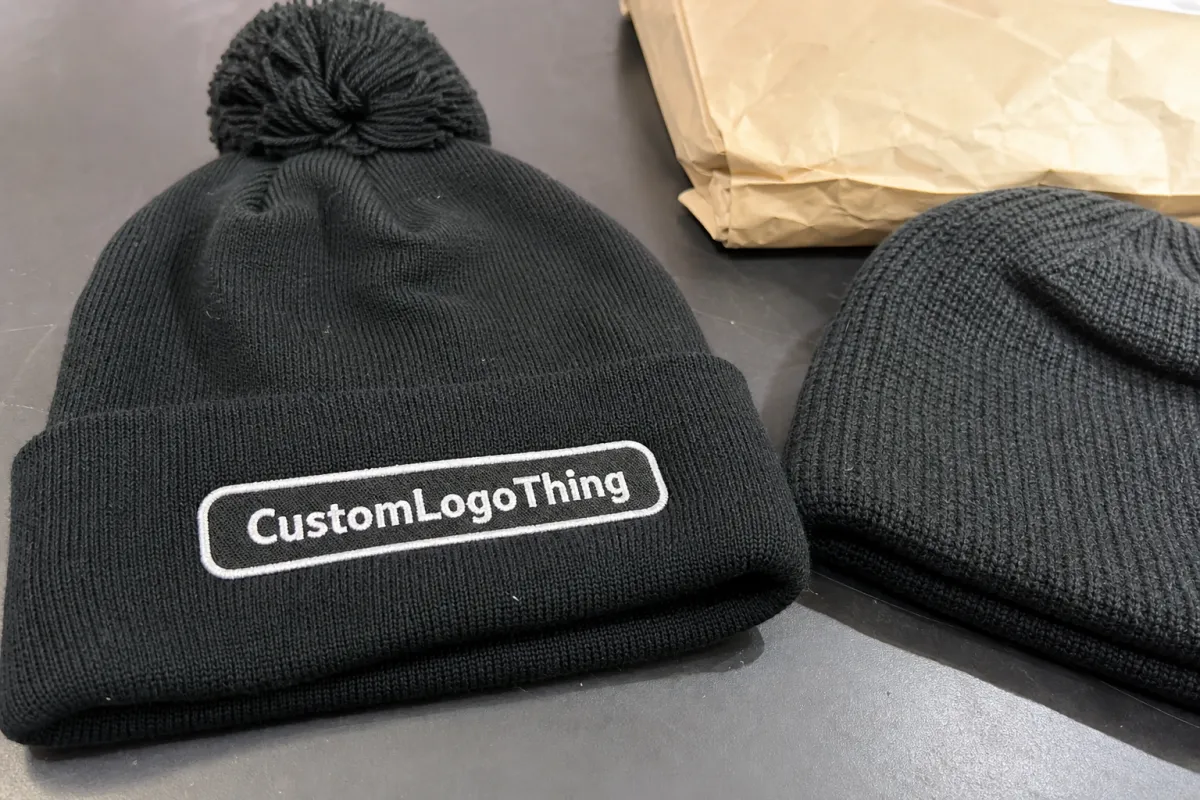
Winter headwear earns attention because it solves a real problem. A beanie is not a novelty item; it is something people reach for when the temperature drops. That practical use is the reason branded knit hats tend to stay visible for months instead of disappearing after one event.
For buyers, a custom Knit Hats with Logo bulk order also simplifies planning. One core item can serve employees, schools, retail programs, donor kits, and event merchandise with minor adjustments in color or packaging. That matters when the goal is to manage fewer production variables without making the item feel generic. If the hat is part of a larger program, the same logic applies to Wholesale Programs: define the core spec once, then adjust presentation only where it improves the fit for the audience.
Visibility is another advantage. Knit hats sit high on the body and move with the wearer, which makes the logo easy to notice in transit, in crowds, and in winter photos. The branding works best when the mark is placed with restraint and the art is readable from a distance. Loud is not the same as effective.
The strongest programs treat the hat as a useful item first and a branding surface second. That usually leads to better yarn choices, cleaner decoration, and packaging that supports the product instead of fighting it.
Styles and decoration choices
Style affects both price and perceived quality, so it should be decided early. Cuffed beanies are the safest option for most orders because they give a stable band for decoration and fit a wide range of head sizes. Slouch styles feel more relaxed and fashion-driven. Pom beanies read as more playful, but the pom can compete with the logo if the artwork is too small or too detailed. Double-layer knits add warmth and structure, which is useful in colder markets and in premium retail sets.
Decoration method matters just as much as the silhouette. Jacquard knit logos are built into the fabric and usually deliver the cleanest integrated look. Embroidery adds texture and can work well on cuffed beanies, though very soft knits may pucker if the stitch density is too high. Woven patches preserve more detail than direct knit conversion and can be a practical middle ground for small text. Sewn labels are the lightest-touch option and are often the easiest way to brand a simple wordmark without changing the hand feel of the hat.
Logo complexity is where many buyers get caught. Thin lines, gradients, tiny reverse type, and crowded iconography do not always translate well into knit structure. Even a fine-gauge beanie has limits. More colors usually mean more careful yarn transitions and a greater chance that small details will blur. In practice, a stronger contrast, a bolder mark, or a simplified layout often gives a better result than trying to force every detail into the knit.
Here is a practical comparison that helps when reviewing quotes:
| Style / Decoration | Typical MOQ | Indicative Unit Price | Best Use | Main Tradeoff |
|---|---|---|---|---|
| Cuffed beanie + embroidery | 100-150 pcs | $4.50-$7.50 | Teams, employee gifts, simple logos | Less detail on very soft knits |
| Jacquard knit beanie | 300-500 pcs | $5.50-$10.50 | Retail programs, schools, repeat orders | More setup, tighter art limits |
| Pom beanie + woven patch | 100-250 pcs | $6.00-$9.00 | Merch drops, winter events, casual branding | Pom can reduce logo space |
| Double-layer knit + sewn label | 250-500 pcs | $7.00-$12.00 | Premium gifts, colder climates, retail packaging | Heavier fabric increases material cost |
If the goal is repeatability, a jacquard build often wins. If the goal is flexibility across smaller departments or mixed audiences, a patch or label can be the safer route. That same decision process applies when hats are being packed with other branded items or with Custom Packaging Products: pick the method that fits the margin, the schedule, and the final presentation.
Specifications to lock before requesting a quote
The cleanest quotes start with a clean spec. Before asking for pricing on a custom Knit Hats With Logo bulk order, lock the basic production details: yarn type, knit gauge, cuff height, hat depth, stretch range, and finished dimensions. A beanie that looks similar in a product photo can fit very differently in hand. Most adult unisex hats land in a stretch range that covers roughly 20 to 24 inches in circumference, but knit density and yarn recovery change the feel more than most first-time buyers expect.
Color should be addressed early as well. Solid yarns are usually easier to match than heather or melange yarns, which blend tones by design. If Pantone matching matters, say so before proof approval. Also confirm the number of colors in the logo and the body. A two-color cuff with a two-color mark is a different job than a single-color rib knit, and the cost difference is real.
Artwork cleanup saves time and money. Thin strokes, small reversed type, and busy gradients are the first things to simplify. The production team has to convert the art into a knit map or embroidery path, and that translation is where details disappear. If the logo needs to stay crisp from a few feet away, make the shapes bolder and the contrast stronger. A clean working file is usually AI, EPS, or a PDF with outlined text.
"If the logo cannot be read from six feet away, the knit did not fail; the brief did."
Size is easy to ignore until the order arrives. Youth and adult beanies may look almost identical online, but the fit curve is different enough to affect comfort and returns. If the program needs mixed sizing, ask for the measurement sheet and not just the size label. That is especially important for school accounts and team orders where one box may need to serve a wide age range.
Sample requirements should also be decided up front. A simple logo on a standard cuff beanie may not need a physical sample. A complex design, a color-sensitive program, or an unusual construction usually does. The sample is not a luxury line item; it is a risk check.
Pricing, MOQ, and unit cost drivers
Price is more than the unit number on a quote. For a custom knit hats with logo bulk order, the real cost includes quantity, color count, decoration method, packaging, sampling, and shipping. A low headline price can become expensive once revisions, rush charges, or separate packaging fees get added later. Compare landed cost, not just the first number.
Quantity has the strongest effect. As volume rises, per-unit cost usually falls because setup costs are spread across more pieces. Minimum order quantity changes by method, though. A stock beanie with a patch may start around 100 pieces, while a fully custom knit with yarn-matched artwork may need 300 or more. If custom yarn colors are involved, the factory may need separate runs, which pushes both MOQ and Lead Time upward. Multiple colorways or alternate labels can do the same thing.
Use this checklist when reviewing a quote:
- Setup: knit programming, artwork conversion, or patch tooling.
- Material: acrylic, polyester, recycled yarn, wool blend, or mixed fiber content.
- Decoration: knit-in logo, embroidery, woven patch, or sewn label.
- Packaging: polybag, belly band, hang tag, retail box, or custom printed boxes.
- Sampling: digital proof, pre-production sample, or full size approval.
- Shipping: carton count, freight method, and destination timing.
That list sounds basic until a quote shows packaging excluded, samples billed separately, and freight left open. A quote that includes proofing rules, change limits, and delivery terms can be better value than a lower number that hides extra steps. If the hats will sit inside retail packaging or a branded kit, confirm whether those components run on the same schedule or on separate ones.
Material choice also affects the price. Acrylic remains common because it is affordable, easy to knit, and holds color well. Polyester can be useful for certain branding effects and recycled content programs. Wool blends often feel warmer and more premium, but they cost more and can introduce care concerns for buyers who want low-maintenance merch. That tradeoff should be discussed early, not after the proof is approved.
The most frequent buyer mistake is assuming all beanies are priced the same way. They are not. A simple label swap is one expense class. A dense jacquard pattern with multiple yarn changes is another.
Production process and turnaround timeline
Most delays happen before production starts. For a custom knit hats with logo bulk order, the sequence usually runs like this: artwork review, digital proof, yarn matching, sample approval, production, finishing, inspection, and shipment. If each step is approved quickly, the order tends to move on schedule. If one stage waits a week for feedback, the whole calendar slips.
- Submit the logo file and quantity.
- Receive a digital proof with size, color, and placement notes.
- Confirm yarn match or Pantone approximation.
- Approve a sample when the logo is complex or color-sensitive.
- Move into knitting, embroidery, or patch application.
- Finish with trimming, steaming, folding, and packing.
- Inspect cartons and ship to the final destination.
Typical turnaround depends on setup, but many orders land in the 12-20 business day range after proof approval when yarn is available and decoration is straightforward. Add time if the order needs a pre-production sample, a custom packaging step, or a high-volume seasonal slot. Shipping time should be treated separately from production time, especially when the in-hand date is tied to an event or launch.
Sampling is worth discussing honestly. A digital proof shows placement and color intent, but it does not reveal stretch, texture, or how a patch sits on the crown. For a standard cuff beanie with a simple mark, a proof may be enough. For a higher-value program, a sample is cheap insurance. It is also the best way to catch things that do not show up in renderings, like a logo that looks too small once the fabric relaxes or a cuff that feels shallower than expected.
If the hats are being shipped inside custom printed boxes or other packaging, carton handling belongs in the conversation from the start. Transit performance matters. Buyers who need a more formal check often refer to ISTA test methods for shipping durability and FSC guidance when paper components need responsible sourcing. That level of discipline is common in product packaging, and it applies to apparel kits too.
What to compare before choosing a supplier
Low price helps only if the product arrives on spec. A supplier should be judged on proof accuracy, stitch consistency, yarn sourcing, and repeat-order reliability. If they can document the same measurements and color approach on a reorder, that is worth more than a small discount from a vendor who has to rebuild the item from scratch each time. For a custom knit hats with logo bulk order, consistency matters because winter programs often reorder after the first sell-through or employee rollout.
Service quality shows up during quoting. Fast responses, clear mockups, defined revision limits, and honest change fees are all good signs. If the quote is vague, the production process usually will be too. It is better to hear that a shade needs a tolerance note than to be promised perfection. Buyers can plan around a realistic answer; they cannot plan around a guess.
Ask for sample photos from the same construction method, not just generic beanie images. Then check wash behavior, cuff recovery, and whether the logo remains legible after the fabric relaxes. If the supplier offers packaging choices, review those as well. A clean hang tag or insert card can make the hat feel more finished, but if the order also needs custom printed boxes or branded packaging, those components should be approved at the same time as the garment. That keeps the whole presentation consistent.
Production reliability usually beats a headline discount. Missing a ship date on a school store launch, holiday retail drop, or employee recognition program costs more than the savings from the lowest quote. The better supplier helps reduce risk before volume is placed, not after the deadline is already gone.
For buyers comparing several vendors, one simple test is useful: can they repeat the same hat six months later, with the same cuff depth, yarn shade, and logo placement, without starting over? If the answer is yes, the supplier is probably worth shortlisting.
How to place an order without delays
Start with a clean logo file, target quantity, preferred colors, and required in-hand date. Then decide whether the order is a standalone apparel program or part of a broader branded packaging rollout. If the hats are going into a kit, say so early. That affects packaging, carton counts, and the way the product needs to arrive.
For a custom knit hats with logo bulk order, the fastest path is usually the most disciplined one: lock the hat style, choose the decoration method, approve the digital proof, and reserve production time before asking for revisions that are not truly necessary. Every extra round of changes adds noise and can push the schedule backward. A tight brief gives the production team less room to guess and more room to produce accurately.
Here is the buyer checklist that tends to prevent delays:
- Confirm exact quantity and any color splits.
- Approve yarn, knit gauge, and cuff height.
- Review the logo in vector format.
- Ask for sample approval if detail matters.
- Set the in-hand date and shipping method clearly.
- Decide whether packaging is plain, retail-ready, or fully custom.
That is the practical side of it. Not glamorous, but effective. Teams that work this way usually get better-looking hats, fewer approval loops, and less last-minute scrambling. If the order is tied to a larger merchandise program, the same process discipline helps other items move faster too, from inserts to Custom Packaging Products.
Winter merchandise rewards clarity. The buyer who knows the decoration method, fit target, and shipping timeline is much more likely to get a hat that works in real use, not just in the mockup. That is the difference between a seasonal item and a useful one.
What is the minimum for a custom knit hats with logo bulk order?
MOQ depends on knit method, color count, and whether the logo is knitted in or added as a patch or embroidery. Simple stock beanies with labels can start lower, while custom yarn matching and multi-color designs usually need higher minimums. Ask for the exact MOQ before artwork approval so you do not rebuild the design around an order size that is too small.
How does logo method affect pricing on bulk knit hats?
Jacquard knit logos often cost more upfront, but they can be efficient at higher quantities because the design is built into the hat. Embroidery and patches may reduce setup complexity, though they can add labor or attachment steps depending on the style. The best value usually comes from matching the decoration method to logo simplicity, quantity, and required durability.
Can I mix colors or sizes in one order?
Many suppliers allow color mixes, but each colorway can affect production scheduling and minimums. Size mixing is easier with stretch knit beanies, though youth and adult fits should still be confirmed with specs. If you need assorted colors, ask whether the order can be split by quantity or whether each color needs its own minimum.
What artwork files work best for knit beanies?
Vector files such as AI, EPS, or PDF are preferred because they preserve clean edges for stitch conversion. Simple logos with limited small text and strong contrast translate better than detailed gradients or thin line work. Providing Pantone references helps the factory match yarn colors more consistently across bulk production.
How long does a bulk knit hat order usually take?
Turnaround depends on proof speed, sample approval, stock yarn availability, and current factory workload. Most delays happen before production starts, so quick artwork approval usually matters more than the knit step itself. Build in shipping time separately, especially if the order needs to arrive before a launch, event, or seasonal window.

