If you are using a Retail Merch Beanies sample approval checklist, you are already ahead of the usual scramble. Most beanie problems do not announce themselves with drama. They show up as small, annoying misses: a cuff that sits higher than planned, embroidery that pulls the knit, a label sewn 6 mm off center, a color that looked correct on screen and drifts in daylight. Individually, those issues seem harmless. Put them on a retail shelf and the whole item starts looking less intentional.
That is why sample approval is not a formality. It is the first real test of whether the spec sheet, artwork, yarn choice, and factory interpretation can survive production. A strong sample gives you a believable bulk run. A weak one usually means the problems were only hidden, not solved.
What a Beanie Sample Approval Really Catches
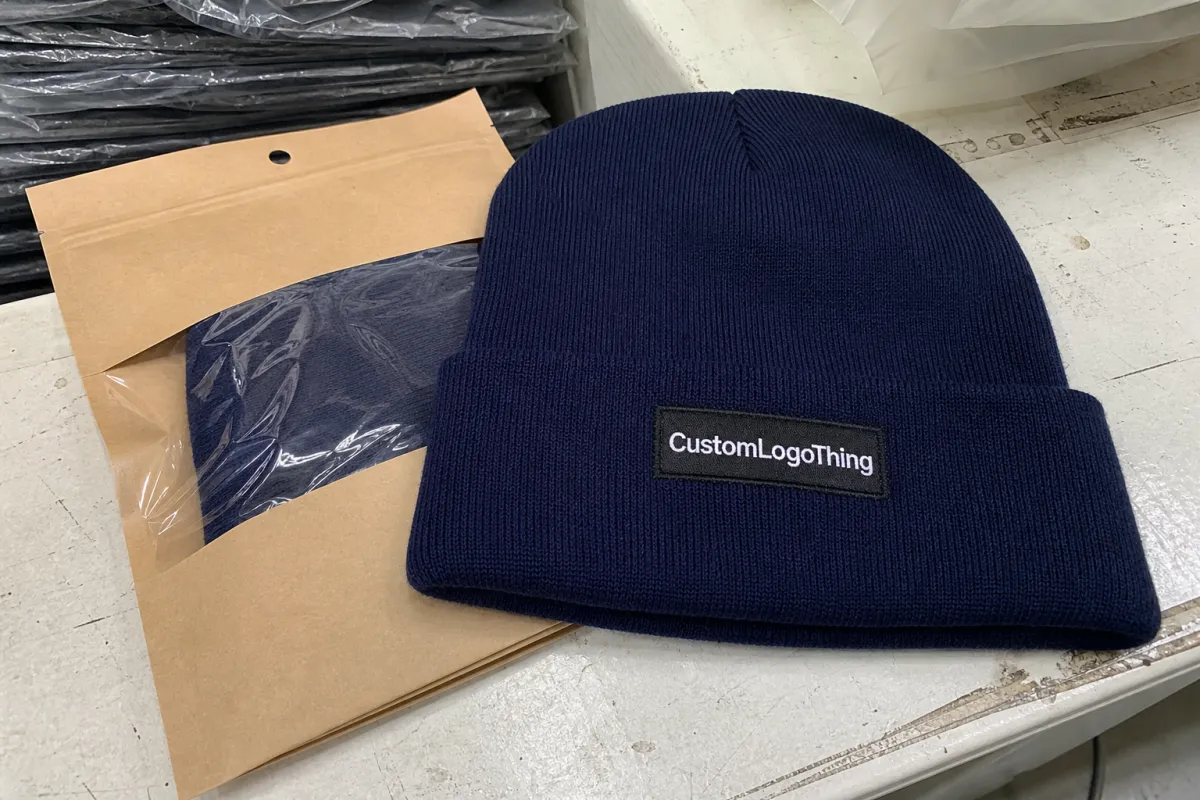
A sample is a stress test for the product, not a souvenir. It shows whether the beanie still works once knit tension, trim placement, and decoration all compete for the same small surface area. On a headwear item, there is nowhere to hide. The crown, cuff, and logo are all visible at once, and even a minor mismatch reads as quality drift.
The mistakes buyers miss most often are not huge. They are the kind that create the vague feeling that something is “off.” Crown depth can be too shallow by a centimeter. The cuff can flip differently from the approved reference. A woven label can stand too tall or curl at one corner. Embroidery may be technically centered, but visually heavy because the panel underneath is stretching. None of that sounds catastrophic on paper. On a retail beanie, it can be enough to make the item look like a sample instead of a finished product.
That is why a retail merch beanies Sample Approval Checklist matters. It turns a loose opinion into a decision based on measurements, finish, and presentation. Three outcomes are worth recognizing:
- Approve when the sample matches the agreed spec and the finished look is acceptable for retail.
- Approve with revisions when the issue is small, measurable, and not likely to affect fit, decoration integrity, or brand consistency.
- Reject and resample when the miss will carry straight into bulk production.
That last one is not overcautious. It is practical buying. Beanies are compact products, which means tiny differences show quickly. A 3 mm shift on a patch or a slightly taller cuff can change the whole read of the piece.
Buyer reality: a beanie that photographs well can still wear short, sit loose, or distort the logo once it stretches on a head.
Sample Approval Process and Timeline
A decent approval process starts before the factory knits anything. The cleaner the brief, the fewer expensive surprises later. At minimum, the buyer should send a tech pack or a working spec with dimensions, artwork, logo placement, yarn preference, care label copy, packaging notes, and target landed cost. If the brief is vague, the sample will be vague too. Factories can fill gaps, but they usually fill them with assumptions.
The flow is simple in theory and messy in practice:
- Request the sample using the approved artwork and spec sheet.
- Build the first sample with the chosen yarn, stitch count, and decoration method.
- Review the physical piece for fit, color, finish, and trim accuracy.
- Revise the parts that miss the mark and mark up the changes clearly.
- Sign off only when the sample, quote, and timeline match the intended order.
Timing depends on complexity. A simple acrylic knit with a basic woven label may take 7-12 business days for the first sample, plus shipping. Once you add custom yarn dyeing, embroidered patches, recycled blends, or special fold-and-pack instructions, 2-4 weeks is more realistic. If the factory is already running holiday orders, the schedule can stretch without much warning.
Some delays are predictable: artwork cleanup, stitch corrections, lab dip approval, label revisions, and transit time. Others are less visible. For example, a factory may need to reprogram the knitting machine if the gauge changes, or rework decoration placement because the cuff folds differently than expected. Those adjustments are normal. They are also why “quick sample” and “quick approval” are often separate promises.
Set a review deadline before the sample ships. Otherwise the project drifts into the kind of limbo where nobody technically owns the next step. For a standard beanie, 48 to 72 hours for first comments is reasonable. For a technical piece with multiple decoration points, give yourself up to 5 business days. Silence becomes a decision if no one responds.
For packaging-heavy programs, third-party testing may also matter. If the beanies are going into cartons, polybags, or display-ready packs, ask whether the route calls for ISTA-style transit testing from ISTA. If the insert cards, hang tags, or belly bands use paper stock and recycled content claims matter, FSC certification may be relevant. Those are not decorative details. They affect cost, documentation, and what can be claimed on the ticket.
Fit, Fabric, and Decoration Factors That Decide Approval
Fit comes first. A beanie can have strong branding and still fail because it sits wrong. Check head depth, cuff height, stretch recovery, and whether the crown holds its shape after being worn. Most retail buyers want a snug fit without pressure. Promo slouch and retail slouch are not the same silhouette, and they do not sell the same way.
Fabric choice changes nearly everything. Acrylic is usually the most economical and the easiest route for color-heavy runs. Recycled acrylic or recycled polyester blends can support sustainability claims, but the hand feel can shift and the price often rises by 10% to 25%. Wool blends feel warmer and more premium, yet they introduce more care questions and can cost 20% to 40% more depending on yarn quality and mill setup. Fleece lining improves warmth, but it adds bulk, stitching, and the risk of changing the outer shape.
Decoration is where many first samples fail. Embroidery density can pucker a knit if the stitch count is too heavy. A badge can look sharp in a flat mockup and sit awkwardly once the cuff folds. Woven labels should lie flat, not curve at the edges. Printed graphics on knit surfaces need close inspection because the fabric stretches and can blur the edges of the art. If the decoration only looks correct while the beanie is perfectly still on a table, keep looking.
Color and finish deserve the same attention as logo placement. The yarn shade, knit texture, and seam neatness all change how the beanie reads from a few feet away. A slightly off-black yarn can seem acceptable under sample-room lighting and cheap under store lighting. Compare the sample against the approved Pantone reference, the buyer sample, and at least one daylight photo. Do not rely on a single view. Retail customers never see a product from only one angle.
| Material / Build | Typical Cost Impact | What It Changes | Buyer Watchout |
|---|---|---|---|
| Acrylic knit | Lowest | Softness, color range, easy bulk production | Can pill and look less premium if yarn quality is weak |
| Recycled blend | +10% to +25% | Sustainability claims, material story, hand feel | Color matching and texture can shift from the first sample |
| Wool blend | +20% to +40% | Warmth, retail value, winter positioning | Care expectations and pilling need closer review |
| Fleece-lined knit | +15% to +30% | Warmth, comfort, premium feel | Bulk and seam thickness can distort the final fit |
Retail merch beanies sample approval checklist
Here is the practical part. A Retail Merch Beanies sample approval checklist should be short enough to use in a real review, but detailed enough to stop later arguments. If the checklist takes an hour to read, people skip it. If it is only a yes/no prompt, it misses the failure points that matter. The useful version sits in the middle.
Documentation to confirm first
Before handling the sample, compare it with the approved spec sheet, artwork file, Pantone references, care label copy, and packaging instructions. If any of those changed after the sample was made, flag it immediately. Otherwise the factory gets blamed for following the wrong version. That happens more than anyone wants to admit.
Physical inspection order
- Measure dimensions for crown height, cuff depth, width, and stretch recovery.
- Inspect knit quality for skipped stitches, holes, uneven ribs, or tension shifts.
- Check seam and finish so the inside looks clean and the closure sits flat.
- Review decoration placement for size, centering, alignment, and stitch density.
- Confirm label accuracy for brand tag, care tag, size marking, and country of origin, if used.
- Assess presentation in folded, bagged, or hang-tagged form, because shoppers buy what they see first.
Use the beanie like a person would
Put it on. Stretch it. Wear it for a few minutes. Then inspect it again. A beanie can feel fine in hand and still sit too high, collapse at the crown, or pull across the forehead. Check it in daylight. Photograph it. Compare those images to the approved reference. The purpose is not to admire the sample. It is to find the weak points before bulk production turns them into a larger problem.
Write the decision clearly
Do not send a note that says “looks good overall, just fix a few things.” That is not feedback. It is a future dispute. Use measurements, directions, and marked-up images. For example: “Reduce embroidery width from 42 mm to 38 mm,” or “Move the label 8 mm lower on the cuff.” Specific notes keep the second sample from becoming an interpretation exercise.
When the sample is acceptable, sign it off in writing and keep the annotated copy. When it is not, ask for a revision and restate the target finish. The checklist only works if the output is specific enough for production to follow without guessing.
Retail Beanie Sample Pricing, MOQ, and Quote Triggers
Sample pricing is rarely arbitrary, even if it looks that way from the buyer side. You are usually paying for development labor, knit setup, decoration setup, special labels, packaging mockups, and shipping. A basic knit sample may land around $25-$60 before freight. A custom decorated sample with embroidery, badges, or custom yarns often sits closer to $60-$150, and premium development samples can climb past that if the factory has to rework them more than once.
MOQ and sample pricing are tied together. Lower MOQ usually means higher unit cost because setup is spread over fewer pieces. That is why a buyer asking for 300 units of a complex retail beanie may see a less appealing quote than a buyer ordering 3,000 units of a simpler style. The factory is accounting for machine time, yarn waste, decoration labor, and handling. It is not a penalty; it is arithmetic.
Ask for commercial terms in writing before approving the sample. You want the sample fee, bulk unit cost bands, MOQ, repeat-order pricing, revision fees, and whether the sample fee is credited back on production. Some suppliers credit the development fee if the bulk order moves forward. Some do not. Guessing is an expensive habit.
| Sample Option | Typical Sample Fee | Best For | Tradeoff |
|---|---|---|---|
| Basic knit sample | $25-$60 | Simple logos, standard yarns, low-risk approvals | Limited room for custom finishing or premium presentation |
| Custom decorated sample | $60-$150 | Embroidery, woven labels, patches, cuff branding | More setup steps, longer review cycle |
| Premium development sample | $120-$250+ | Wool blends, recycled yarns, special packaging, launch pieces | Best visual result, but approval is slower and pricier |
One practical point: if the first sample is close but not exact, a second round is often cheaper than approving a style that misses the shelf look. The cheapest sample is not always the lowest-fee sample. Sometimes it is the one that prevents a bad bulk order.
Common Sample Approval Mistakes That Slow Launches
The easiest mistake is approving from one flattering angle. A front-facing photo can hide a misaligned patch, a loose seam, or a cuff that sits oddly when folded. Turn it around. Check the back, inside, and side profile. Beanies have more angles than people remember, mostly because buyers tend to look at the logo and move on.
Vague feedback causes its own delays. “Looks good” tells the factory almost nothing. “Needs work” tells them even less. They need measurable corrections, not general discomfort. If the crown is too tall, say by how much. If the logo is too large, note the exact reduction. Otherwise the next sample comes back with a slightly different mistake and the review cycle starts over.
Sample creep is another slow leak. One revision changes the silhouette. The next changes the label. By the third round, the style has drifted away from the original brief and nobody is sure which version is approved. Keep each revision tied to the same reference point. If the design has changed materially, reset the approval process instead of pretending it is still the same sample.
Skipping the written trail causes arguments later. One person remembers the sample as “fine except for the cuff.” Another remembers a completely different issue. Only the signed notes settle the matter. Paper beats memory. Every time.
Expert Tips and Next Steps Before Bulk Order
The cleanest approval systems use a one-page signoff sheet with pass/fail checks, photo references, and exact revision notes tied to the Retail Merch Beanies sample approval checklist. Keep it simple enough that merchandising, sourcing, and production all use the same version. If the teams work from different notes, the bulk order inherits the confusion.
If a physical resample is not practical, ask for annotated photos or a short video in natural light. That helps with minor corrections, especially color, label position, or packaging presentation. A photo set still does not replace touch, stretch, and fit testing, though. For first-round approval on a retail piece, photos alone are a weaker form of proof.
Before the PO goes live, lock four things in writing: the final sample, the final quote, the MOQ, and the ship date. If any of those changes after approval, someone owns the risk. That should not be a surprise at receiving. A clean handoff saves more money than shaving a few cents off the unit price.
If you are buying for retail, send the checklist to sourcing, merchandising, and production together. Then have them approve the same version. That sounds basic because it is basic. Most smooth launches are the ones with the least drama. Use the retail merch beanies sample approval checklist as a gate, not a ceremonial step, and a lot of expensive nonsense disappears before it starts.
What belongs in a retail merch beanies sample approval checklist?
Include fit, yarn hand feel, knit quality, decoration placement, label accuracy, color match, and packaging presentation. Add commercial checks too: sample cost, MOQ, bulk pricing, revision fees, and shipment timing. Use measurable notes so the factory knows exactly what to fix before production.
How long does beanie sample approval usually take?
Simple samples can move in a short development window, while custom yarns, embroidery, and label changes take longer. Shipping and revision cycles often add more time than the actual knitting work. Set a clear review deadline so the project does not stall between sample rounds.
Why does sample pricing change so much for retail beanies?
Price shifts when the sample needs custom yarns, extra decoration steps, special labels, or multiple revisions. Factories may also charge more for low MOQ development work because setup cost is spread across fewer units. Ask whether the sample fee is credited back on bulk production before you approve anything.
Can I approve a beanie sample from photos only?
Photos help, but they do not replace touch, stretch, and fit testing. Photo approval is safer for small revisions than for first-round signoff on a retail product. If you must approve remotely, request multiple angles, close-ups, and a short video in natural light.
What if the sample is close but not exact?
Do not hand-wave the difference; document the exact change needed with measurements or marked-up photos. Approve only if the miss will not affect retail sellability, fit, or brand consistency. If the issue is structural or visual at shelf distance, ask for a revision instead of hoping it improves later.


