Knit Hats With Logo Unit Cost Breakdown for Buyers
The knit hats with logo Unit Cost Breakdown usually surprises buyers because the beanie body is rarely the main cost driver. Quantity, yarn choice, decoration method, packaging, and freight can move the number more than the hat shape itself. Two quotes that look similar at first glance can end up several dollars apart once setup, sampling, and delivery are included.
That is why a line-item quote matters. A useful estimate should show the unit price, setup charges, decoration costs, packing method, and freight assumptions so the landed cost is visible instead of hidden in a single tidy number. For a buyer comparing vendors, the real question is not only which hat looks best on paper. It is which combination of yarn, decoration, and order size produces a repeatable price without unpleasant surprises after approval.
Knit Hats With Logo Unit Cost Breakdown: What Drives Price
Most of the price movement comes from production method, not the fact that the product is "just a beanie." A plain cuffed knit hat may seem simple, but the cost changes quickly once the order calls for a knit-in logo, a sewn patch, private labeling, a pom, or a fleece lining. Each of those choices adds machine time, handling, or inspection.
Buyers often focus on the visible hat and overlook the hidden work behind it. A quote may include digitizing for embroidery, pattern setup for a jacquard logo, or tooling for a rubber patch. It may also list a sample fee, then add separate charges for woven labels, hangtags, barcode stickers, or bagging. If those items are not clearly separated, the headline price can look better than it really is.
A practical quote should separate the estimate into layers:
- Base hat - body construction, yarn type, fit, and color count.
- Decoration - knit-in logo, embroidery, woven patch, rubber patch, or label work.
- Setup - artwork prep, machine programming, digitizing, or patch tooling.
- Packaging - polybag, insert card, hangtag, barcode sticker, carton marking.
- Freight - carton weight, destination, transit mode, and delivery terms.
The best way to control cost is to remove assumptions before the sample stage. Once the supplier knows the exact hat style, decoration method, and packing standard, the quote becomes easier to trust. That is also the point where buyers usually see what is really driving the total: the artwork, the stitch count, the materials, or the minimum order quantity.
A simple-looking beanie can become expensive if the logo is complex or the construction is not well matched to the artwork. Thin type, tiny outlines, and gradient effects are all harder to translate into knit form. Clean shapes and strong contrast tend to produce better results and a steadier price.
Yarn, Gauge, and Fit Choices That Set the Base Hat Cost
The base hat cost starts with yarn selection. Acrylic remains the most common value choice for promotional beanies because it is consistent, easy to source in broad color ranges, and predictable in mass production. Wool blends usually cost more but bring a warmer handfeel and a more premium perception. Recycled yarns can support a sustainability claim, although they are not automatically cheaper because the supply chain and processing are different.
Fit changes the material usage. A cuffed knit beanie uses a familiar amount of yarn and usually provides the cleanest area for front branding. A slouch hat uses more body length, so yarn consumption rises. A pom style adds another component and another finishing step. Fleece lining adds fabric, sewing time, and inspection, which can raise the unit price more sharply on smaller runs than on large ones.
Gauge matters just as much as style. A tighter gauge can make the logo look sharper and give the hat a denser, more substantial feel, but it may slow knitting and use more yarn. A looser gauge is often softer and faster to produce, yet the logo can lose edge definition. The sample usually exposes this trade-off very quickly. If the artwork looks good on a proof but muddy on the knit sample, the stitch structure usually needs to change.
From a buyer's point of view, the cheapest material is not always the best buy. A hat that feels balanced, holds shape, and displays the logo clearly often performs better in retail or promotional use than a lower-cost option that looks flat or stretches out after a few wears. The right base spec should match the intended value of the program, not just the lowest initial price.
A screen mockup can hide knit realities. Yarn bulk, stretch recovery, and stitch density decide whether the logo reads cleanly or disappears into the fabric.
Logo Decoration Options and Placement That Change Labor
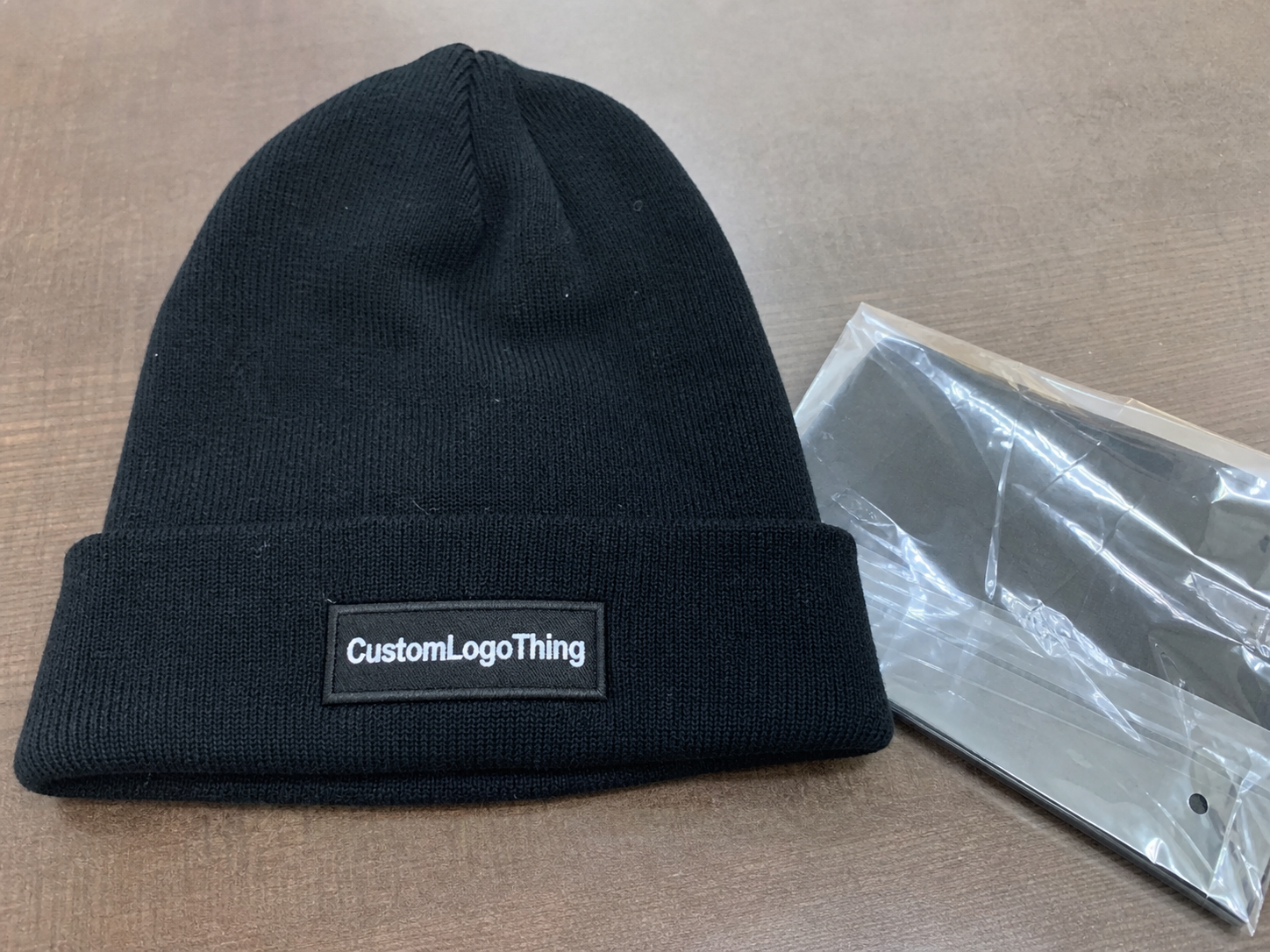
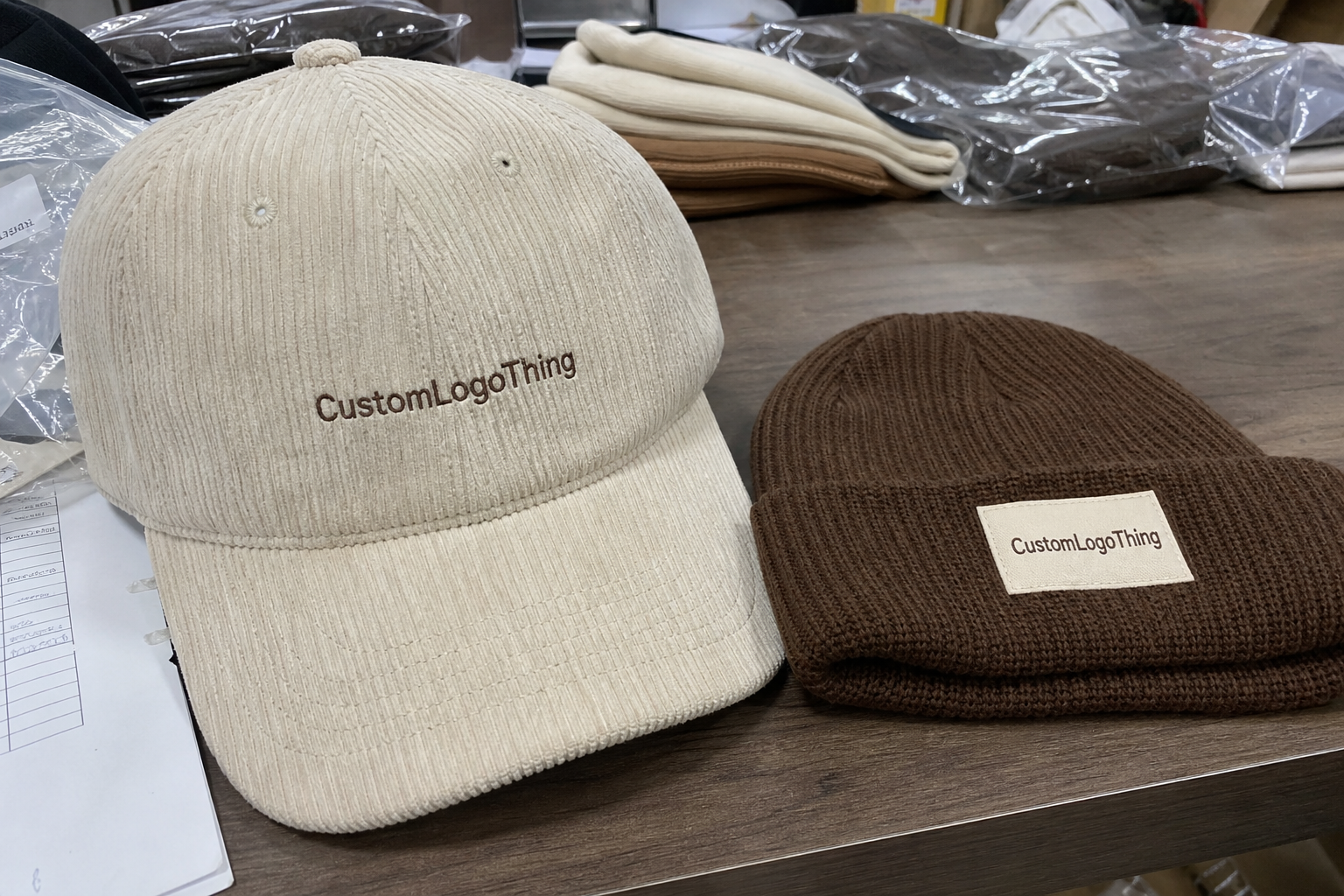
Decoration is where the knit hats with logo Unit Cost Breakdown can move quickly. Knit-in logos create a clean integrated look, but they demand artwork that fits stitch limits and color transitions. Embroidery is flexible and works well for many small and mid-size orders, although dense thread coverage adds labor and can pull on softer knits if the backing is too heavy. Woven labels and sewn patches deliver crisp detail, while rubber or PU patches can look modern and clean but may bring tooling or mold charges.
Placement changes the labor story too. A centered patch on the cuff is usually the simplest arrangement. Side-panel branding takes more alignment work. A back seam label or side tag may seem minor, but every extra placement adds handling, sewing, and inspection time. Multiple decorations on one hat can improve the visual result, yet the labor cost tends to rise faster than buyers expect.
Three practical rules help keep the order efficient:
- Keep logo colors limited because every added color increases production complexity.
- Use the simplest decoration method that still matches the brand standard.
- Match the artwork to the knit surface instead of forcing fine detail into a medium that cannot hold it cleanly.
That last point matters. Small text, hairline rules, and subtle gradients may look polished in a digital file but fall apart on yarn. A bolder mark with strong contrast usually prints better at retail distance and produces fewer approval delays. If the logo is detailed, a woven patch or embroidery can be more dependable than a knit-in graphic because the result is easier to repeat and the unit price is less likely to drift.
Placement also affects quality control. A patch that is even a few millimeters off-center becomes obvious on a cuffed beanie. With knit-in logos, the issue can be stitch registration: if the front panel tension changes during knitting, the logo can look slightly warped. Good suppliers check these details before bulk approval, because fixing them after production starts is expensive.
Specs to Lock In Before You Request Quotes
The clearest quotes start with the clearest specs. The most useful details are the ones that remove guessing: circumference, crown height, cuff depth, yarn weight, gauge, and whether the hat is single-layer or lined. If one supplier assumes a 9-inch crown and another assumes 10 inches, the numbers are not truly comparable. That is how buyers end up reviewing quotes that look similar but describe different products.
Branding details need the same discipline. Private label tags, care labels, hangtags, barcode stickers, polybagging, and carton markings all add material or labor. Sometimes the charge is minor. Sometimes it is a separate line item. If these items are left out of the request, the supplier has to guess, and the price can come back lower than the finished order will really cost.
Good specs also reduce back-and-forth during proofing. A clean artwork file, a clear logo size, and an agreed placement help the factory create a digital proof faster. If the buyer has not decided between a woven patch and embroidery, the request should ask for both options. That produces a more honest knit hats with logo unit cost breakdown and makes the approval process less likely to stall.
Use this pre-quote checklist:
- Hat type, fit, and color count.
- Logo size, placement, and decoration method.
- Yarn preference and any recycled content requirement.
- Packaging spec, including polybag, insert, or hangtag.
- Delivery window and ship-to location.
If the order includes retail cartons or mailer packaging, ask whether the supplier packs to a recognized transit standard. For shipping tests, many teams reference ISTA methods. If recycled paper components are part of the spec, such as hangtags or carton board, FSC certification may matter. Those details affect both the story and the math because they change packing structure, carton count, and sometimes freight weight.
Cost, MOQ, and Unit Price by Order Size
Order size is one of the strongest levers in the knit hats with logo unit cost breakdown. Fixed work such as digitizing, pattern setup, patch tooling, and proofing does not disappear on a small run, so the cost per piece falls as quantity rises. A 300-piece order can feel expensive because the setup cost is spread across fewer units. A 5,000-piece order often looks far better even when the materials are nearly identical.
Here is the simplest way to read the price. Small runs carry a heavier share of setup, sampling, and manual handling, especially if the logo needs a custom patch or a knit-in pattern. Larger runs spread those fixed costs across more units, so the unit cost falls. MOQ usually rises with complexity. A plain cuffed beanie with an embroidered mark can often start lower than a fully knit-in logo with multiple colors or a lined build.
| Order band | Typical cost per piece | Common setup charges | Notes |
|---|---|---|---|
| 300-500 pcs | $4.25-$7.50 | $40-$150 | Sampling and decoration setup take a larger share; MOQ can be tighter for knit-in logos. |
| 1,000 pcs | $3.10-$5.60 | $35-$120 | Often the first size where bulk pricing starts to feel more efficient. |
| 3,000 pcs | $2.35-$4.20 | $25-$100 | Fixed costs are spread wider, so the unit price improves. |
| 5,000+ pcs | $1.85-$3.45 | Often built into the quote | Best for simpler decoration and repeatable colorways. |
Those numbers are directional, not universal. Yarn selection, stitch count, logo coverage, packaging, and destination all change the landed cost. A woven patch may add only a few cents on a large run, while a detailed multi-color knit-in design can add much more because the machine time, color changes, and approval steps are heavier. The useful comparison is not just the unit price; it is the full cost of getting the product approved, packed, and delivered in usable condition.
MOQ discussions also deserve context. Some factories set the minimum by decoration method, not by the hat itself. A knit-in pattern may need a higher minimum because the machine programming and sample approval are less forgiving. Embroidery and patches usually allow more flexibility. Buyers who know that difference can choose the decoration that fits both the design and the inventory plan.
Process and Timeline From Proof to Delivery
Once the details are locked, the process follows a fairly stable sequence. It starts with inquiry and spec confirmation, moves to artwork cleanup, then to a digital proof. If the decoration is custom enough, a sample or pre-production approval follows. After that come bulk knitting, finishing, quality control, and final packing. Clear handoffs keep the job moving; unclear ones create delays that usually show up later as rush charges or missed deadlines.
Timeline depends on more than machine speed. Yarn availability, color matching, art revisions, and buyer approval all matter. In many programs, the proof stage is shorter than the time it takes for feedback to come back. A clean artwork file and a narrow list of revisions can save days. If the logo, placement, and packaging are still changing after the proof arrives, the production schedule usually stretches.
For a straightforward order, a reasonable planning window is often 7-10 business days for proofing and sample alignment, followed by 12-20 business days for bulk production once approval is in place. Larger runs, lined hats, or custom packaging can add time. Freight is separate and should be quoted separately so the buyer sees both the production schedule and the delivery schedule.
Quality control is not a single end-of-line check. Good production teams inspect yarn consistency before knitting, then review size consistency after finishing, then check logo placement and folding before packing. For knit hats, some of the most common issues are measurement drift, loose threads, patch misalignment, shade variation between dye lots, and an approved sample that does not match the bulk lot closely enough. Buyers usually avoid trouble by asking how the factory checks these points before shipment.
If the schedule is tight, the safest way to protect lead time is to finalize the spec before the proof. Small changes to placement or packaging can ripple across the whole order. The cost effect may be modest; the time effect is not. That is especially true for bulk orders, where a one-line revision can force another approval cycle.
What a Reliable Knit Hat Supplier Should Disclose Up Front
A reliable supplier does more than quote a number. They explain why the number exists. That means written line items, sample expectations, color tolerance, reorder support, and a plain explanation of how the knit hats with logo unit cost breakdown is built. If a vendor can separate setup from decoration and packaging from freight, the buyer has something real to compare.
There are several warning signs. Vague all-in pricing is one. A weak sample policy is another. If the supplier will not separate decoration, packaging, and freight, the quote may look attractive while hiding the actual project cost. Unclear over-under tolerance is also a problem. A buyer should know whether the factory can ship 3 percent over, 5 percent under, or some other variance before approving production.
Useful suppliers usually disclose:
- Sample path - what is charged, what is credited, and what approval is required.
- Reorder continuity - whether colors, labels, and patch specs can be repeated.
- Material consistency - yarn lot control and matching tolerance.
- Packing detail - how hats are folded, bagged, boxed, and marked.
- Freight assumptions - EXW, FOB, or delivered terms, stated clearly.
That kind of transparency matters because knit accessories are easy to underquote when a supplier omits small but real costs. A buyer who sees the whole structure can compare true value rather than just a headline price. For repeat programs, that same clarity helps keep reorder pricing from drifting without explanation.
Another useful sign is how the supplier talks about quality control. If they mention stitch count, size tolerance, patch registration, thread trimming, label placement, and final carton count without being prompted, they are probably used to handling custom knit programs. If they only talk about price, the quote is usually less reliable.
Next Steps for a Clean Quote and Faster Approval
A cleaner quote starts with better inputs. Gather the artwork, target quantity tiers, yarn or color preference, logo dimensions, packaging needs, and delivery deadline before asking for pricing. Suppliers can quote much more accurately when the request is specific. That is also the easiest way to keep the cost per piece honest from the first round.
Ask for at least two or three price bands if possible. That shows where the quantity break lands, which is often the most useful part of the discussion. A 500-piece run may show one unit price, while 1,000 or 3,000 pieces reveal whether larger volume improves the landed number enough to justify more inventory.
Keep the quote structure consistent across vendors. If one supplier includes packaging and another excludes it, the comparison loses value. Use the same checklist, ask for the same line items, and keep the same delivery assumptions. That is the cleanest way to compare MOQ, tooling fees, lead time, and bulk pricing without guessing.
For buyers reviewing several options, the best decision usually comes from matching the hat construction to the logo complexity. A simple decoration can support a lower price. A more detailed brand mark may justify a different method or a higher minimum. Either way, the knit hats with logo unit cost breakdown is most useful when it shows the cost of each choice instead of hiding everything inside a single lump sum.
What changes knit hats with logo unit cost the most?
Quantity is usually the biggest lever because setup costs spread out as the order gets larger. Decoration method, yarn choice, and packaging also move the number, and rush timing or shipping destination can change the landed cost as well.
What is the usual MOQ for custom knit hats with logo?
MOQ depends on the hat construction and the decoration method. A simple cuff beanie with a patch can often start lower than a fully knit-in logo or a multi-color build, but the unit cost will rise if the order is very small because setup is spread across fewer pieces.
Is a knit-in logo cheaper than embroidery or patches?
Not always. Knit-in branding can work well on larger runs, but it needs artwork that fits the stitch structure and may require more planning. Patches and embroidery can be a better fit for smaller orders or more detailed logos, especially when the buyer wants to hold the cost per piece down.
How long does production usually take for logo knit hats?
Artwork review and proofing can move quickly when files are clean and specs are clear. Sampling or pre-production approval usually takes longer if colors or placement need revisions, and bulk production plus shipping will depend on quantity, factory schedule, and destination.
What do you need to quote knit hats with logo accurately?
Provide quantity tiers, artwork files, color references, the decoration method you want, fit details, packaging needs, and any label or hangtag requirements. A delivery window and ship-to location help the supplier quote lead time and freight more accurately, which makes the knit hats with logo unit cost breakdown easier to trust.