Private Label Beanies Unit Cost Breakdown for Bulk Buyers
For bulk buyers, the private label beanies Unit Cost Breakdown usually surprises people in one place: trim and finish. Labels, patches, hangtags, polybags, carton packing, and barcodes can move the quote more than the knit body itself, especially once MOQ and freight are added. A beanie that looks nearly identical on a flat lay can land at $2.20 per piece in one spec and $3.45 in another because the decoration path, materials, and packing instructions are not the same.
That is why the real buying question is not “What does the factory price say?” It is “What will the landed cost be after sampling, packaging, freight, and any import charges?” For margin planning, that distinction is everything. A clean factory quote can still produce a messy invoice if the order includes hidden revisions or retail-ready packing that was never costed properly.
Why a Small Trim Choice Can Move the Beanie Quote
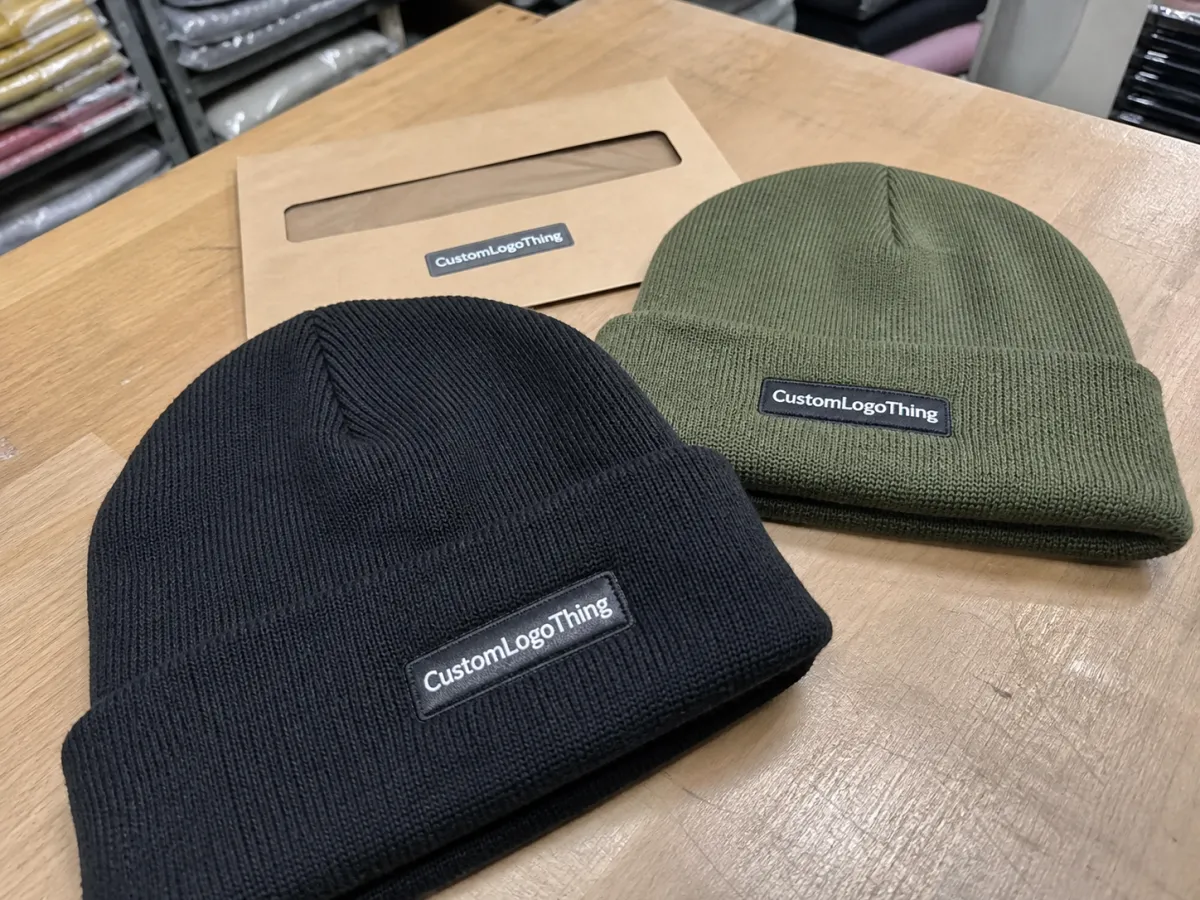
Most buyers start with the knit body, but the trim often decides the final price. A simple woven label may add only a few cents. A stitched patch, rubber badge, custom hangtag, or multi-piece packaging stack adds labor, setup, and revision time that never shows up in a first-glance mockup. That is why the Private Label Beanies unit cost breakdown needs to be read line by line, not as one neat factory number.
Two beanies can look similar from three feet away and still price very differently. One may use a stock acrylic body, a single-color embroidery hit, and a standard fold-over label. The other may use a mixed-fiber yarn, a woven patch, a side flag label, and a branded insert card. The second style may only add 10 to 20 minutes of extra handling per dozen pieces, but across a 3,000-piece run that labor is real money.
“The difference between a usable quote and a misleading one is rarely the knit body. It is usually the trim count, the setup path, and what happens after the first sample.”
Landedd cost should lead the discussion. Factory price matters, but it is not the final number. Freight, carton packing, barcode stickers, warehouse labeling, and retail-ready prep can shift margin by several points. A buyer who only compares the factory number may think they saved 8 percent, then lose that gain on packaging and shipping. The smarter comparison asks what the full cost per piece will be at the warehouse door.
Beanie Styles, Fits, and Branding Options Buyers Can Compare
Private label beanies are not one product. They are a set of style choices that affect audience, seasonality, and channel fit. A cuffed rib knit beanie is the safest all-around option for retail and promotion because it holds embroidery well and looks clean on shelf. A slouchy fit leans more fashion and streetwear. Fleece-lined styles target colder weather and usually cost more because of the extra lining and sewing. Performance blends, often with polyester or recycled content, are better for activewear programs where stretch, moisture handling, or lighter weight matters.
The branding method should match the style, not fight it. Embroidery works well on cuffed rib knit because the cuff gives you a stable face area. Woven labels suit almost any style, but they are subtle, so they fit brands that want quiet branding. Rubber patches create a stronger retail read and can help a private label program look more premium, but they usually require more setup and sometimes tooling fees. Sewn-on tags are cost-efficient for basic programs and pair well with custom labels and tags from a supplier like Custom Labels & Tags when the buyer needs one consistent brand system across headwear and apparel.
From a buyer’s point of view, the style choice should answer three questions: who is wearing it, how cold is the use case, and where will the product sell? Retail chains usually prefer a clean cuffed beanie with a simple logo because it is easy to merchandise. Event buyers often want strong logo visibility and fast replenishment. Corporate programs usually care more about comfort, lead time, and keeping the budget predictable across a large run.
| Style | Typical Branding | Relative Unit Cost | Best Use Case |
|---|---|---|---|
| Cuffed rib knit | Embroidery, woven label | Lowest | Retail basics, promotions, team merch |
| Slouchy fit | Woven label, patch, side flag | Low to medium | Streetwear, lifestyle drops |
| Fleece-lined | Patch, embroidery, care label pack | Medium to high | Cold-weather retail, outdoor use |
| Performance blend | Embroidery, heat transfer, label pack | Medium | Sports, workwear, active programs |
Yarn Weight, Gauge, and Finishing Specs That Lock In Quality
The best pricing conversations start with the technical spec sheet. If the yarn weight is vague, the gauge is loose, and the cuff depth is unspecified, the quote will be soft too. Buyers should lock in yarn composition, knit gauge, cuff height, crown shape, stretch recovery, and finishing method before asking for bulk pricing. Otherwise, one supplier may assume a lighter 7-gauge body and another may price a denser 9-gauge knit, and the two samples will not compare fairly.
Color is another place where cost can drift. Solid stock yarns are the most economical path, especially black, navy, red, and heather gray. Pantone matching adds complexity because yarn dye lots are less forgiving than print inks. Heather effects can look sharp on the shelf, but they are not a clean one-to-one color match. If the brand needs exact color consistency, buyers should say that early and ask whether the supplier can match within a tolerance or only against existing stock yarns.
Fit should be defined for the wearer, not just the pattern maker. Adult unisex beanies may fit 56 to 60 cm head circumference, but youth sizing usually needs a shorter crown and less stretch tension. If the order spans multiple channels, a buyer should ask for size and fit notes in the sample approval. Care label wording and fiber-content disclosure also matter. The label language must match the market, the fabric blend, and any retailer requirements. For private label programs, these small details prevent avoidable rework.
Finishing is where the spec turns into a usable product. A clean crown seam, even tension at the rib, and consistent cuff fold affect sell-through because buyers judge headwear quickly. A slightly twisted label or uneven top stitch can turn a decent beanie into a markdown item. Experienced buyers ask for close-up photos of the sample, not just a single front view, because one flattering angle hides a lot.
Private Label Beanies Unit Cost Breakdown, MOQ, and Unit Cost
This is the part most buyers want first: the private label beanies unit cost breakdown itself. A useful quote should split the order into the knit body, decoration, setup charges, sample cost, packaging, and freight assumptions. If the supplier gives only one all-in number, there is no way to see what happens when MOQ changes or when the brand decides to upgrade packaging.
For a basic cuffed beanie, a realistic starting range at modest volume might look like this: knit body at $1.35 to $2.10, embroidery at $0.35 to $0.85, woven label at $0.10 to $0.22, and standard polybag at $0.05 to $0.12. Add setup charges of $40 to $120 depending on the decoration method, and sample charges of $35 to $90 if the design is custom. If a rubber patch is involved, tooling fees can add another $60 to $180, sometimes more if the mold has multiple colors or a raised detail profile.
MOQ changes the math fast. At 300 to 500 pieces, the cost per piece can stay stubbornly high because setup and sampling are spread across fewer units. At 1,000 pieces, many programs become more efficient because the same setup is divided by a larger run. At 3,000 pieces and above, bulk pricing often improves again, especially if the style stays single-color and the trim package is simple. That does not mean every big order is cheap; it means the fixed cost is diluted more effectively.
Here is a buyer-friendly way to compare common pricing drivers:
| Quote Element | Typical Range | Cost Impact | Best Way to Control It |
|---|---|---|---|
| Knit body | $1.35-$2.10 | High | Use stock yarns and one body style |
| Embroidery or patch | $0.35-$1.20 | Medium | Limit stitch count or keep one decoration method |
| Setup charges | $40-$120 | Medium at low MOQ | Reuse art and avoid multiple revisions |
| Tooling fees | $60-$180 | High on custom patches | Choose woven labels if the look still works |
| Packaging | $0.05-$0.45 | Low to medium | Keep packaging simple unless retail-ready is required |
The easiest savings levers are usually the least glamorous ones. One body color, one logo method, stock yarns, and standard packaging can trim the quote without making the beanie look cheap. If the brand asks for a second logo hit, a custom hangtag, and a special fold, the cost per piece can climb faster than expected. That is normal. It is also why the private label beanies unit cost breakdown should be modeled before the buyer commits to shelf pricing.
There is one more layer that buyers often forget: landed cost is not just the sum of factory lines. Depending on the market, there may be duties, customs brokerage, domestic freight to a warehouse, or retailer compliance charges. Those numbers are not dramatic on a small order, but on a long run they can change gross margin enough to affect the launch plan. The safest quote includes a factory-side number and a freight-side estimate so the buyer can compare both with the same method every time.
Sampling, Approval, and Production Timeline You Can Plan Around
Most headwear delays happen before bulk production even begins. A strong process usually starts with quote review, then artwork approval, then sample development, then revision if needed, then final sign-off, then production, quality control, and shipment. If the buyer sends incomplete art or unclear decoration placement, the sample stage gets stretched for no good reason. That delay often costs more than a slightly higher factory price would have.
In normal conditions, sample development can take 5 to 10 business days for a straightforward beanie. More complex styles, such as fleece-lined versions or patch-heavy designs, may need 10 to 15 business days. Bulk production often runs 12 to 20 business days after final approval, though peak season can push that longer. Add freight time on top of that, and the full timeline can move by one to three weeks depending on the shipping method.
Three approvals usually slow the project the most: artwork, color match, and packaging sign-off. Fit approval matters too, but buyers often underestimate how long it takes to settle label copy, barcode placement, and carton marking. If the packaging has retail claims or compliance language, the approval chain becomes even tighter. The better the spec sheet, the fewer revision loops.
One practical move is to ask for a pre-production sample photo set before full-run approval. Close-up images of logo placement, inner label, crown seam, and packaging can catch issues early. That is especially useful when the launch date is fixed and there is no room for a repeat sample round.
Packaging, Carton Packs, and Freight Details That Affect Landed Cost
Packaging sounds simple until the landed cost lands on your desk. A beanie packed in a plain polybag is not the same as a beanie packed with an insert card, barcode sticker, hangtag, size label, and retail fold. Each addition adds material and labor, and each one increases the chance that the order needs extra handling on arrival. If the program is retail-facing, that cost may be worth it. If the order is a giveaway, the extra spend may not pay back.
Carton packing matters for freight as much as it matters for protection. More units per carton can lower freight cost per piece, but only if the carton weight stays manageable and the product still arrives in good shape. Transit plans should be checked against recognized shipping tests such as ISTA transit testing standards, especially if the order is moving through multiple handling points. If the beanies use paper hangtags or paper wrap, sourcing through a certified chain can help with documentation; FSC is the common reference point buyers ask for.
Air freight versus sea freight is not just a speed choice. It is a margin choice. Air can make sense for launch-critical drops, replenishment, or a missed retail window, but the premium can erase the savings from a cheaper product spec. Sea freight is slower, yet it usually protects margin better on larger runs. A buyer who knows the calendar should compare both lanes before approving the order, not after production ends.
Retail-ready packaging can also save money later. A beanie that arrives with the right barcode, ticketing, and carton marks may avoid relabeling costs at the warehouse. That means a slightly higher unit cost up front can still be the better deal if it reduces labor or damage later. The main question is not whether packaging costs money. It does. The question is whether the packaging spend earns its place in the workflow.
Why a Low-Error Manufacturing Partner Saves Time on Reorders
A good supplier does more than quote a price. It keeps the spec stable. That matters on reorders, because the cheapest first order can become expensive if the second run needs correction. Clear documentation, approved swatches, final artwork, photo records, and carton maps reduce variation across shipments. They also make it easier to forecast future unit cost instead of reopening the entire order every time.
The biggest difference between a responsive factory and a middleman is control. A direct manufacturing partner can confirm stitch count, label placement, and packaging details without hiding margin inside vague line items. A middleman may still be useful for sourcing support, but the buyer should insist on seeing the actual spec sheet and approved sample path. Otherwise, the order can drift after approval and the quote loses credibility.
Reorder speed also depends on communication speed. If a supplier takes three days to answer a sample question, a buyer can lose a week across one approval cycle. That matters when a launch date is fixed or a retail chain wants a replenishment window. In fast-moving programs, the supplier’s response time is part of the price.
This is also where Custom Labels & Tags can become part of the control plan. Keeping label formats standard across programs makes reorders easier, and it reduces the chance that one product line ships with a different trim than the last. For a buyer managing multiple SKUs, that consistency is worth more than a tiny per-piece discount.
Quality control should be built into the order, not added as a hopeful extra. Buyers should ask for stitch count checks, color tolerance review, label placement inspection, and carton count verification before shipment. A beanie is a small item, which makes it easy to assume variation will not matter. It does. One uneven cuff or a crooked patch can hurt perception across an entire shelf set.
What to Send for a Fast Quote and the Next Order Steps
A usable quote starts with usable inputs. Send the quantity, the target delivery date, the decoration method, the artwork files, the color reference, the destination ZIP or port, and the packaging requirement. If the beanies need adult, youth, or unisex sizing, state that too. If the buyer wants a specific yarn feel, such as softer hand-feel or tighter stretch recovery, say so in the first message. The better the brief, the fewer quote assumptions.
Ask for two quote scenarios whenever possible. One should be the most economical version that still fits the brand. The other should show the upgraded version with the extra trim, packaging, or patch detail. That comparison makes the tradeoffs visible. In many cases, the premium option adds only a modest amount to the retail story while materially changing the cost per piece. In other cases, the extra decoration has no sales benefit and should be removed.
Before placing the order, confirm the spec sheet, request the sample, verify the landed cost, and lock the freight plan. If the supplier can give a line-item view of the private label beanies unit cost breakdown, the buyer can forecast margin with fewer surprises. That is the difference between a quote that looks good and an order that actually performs.
For buyers running a bulk program, the best move is simple: keep the body spec stable, control the trim count, and make every added feature earn its place. Do that, and the price stops feeling arbitrary. It becomes a working plan.
How does MOQ change a private label beanies unit cost breakdown?
Higher MOQ spreads setup and sampling across more units, so the unit cost usually drops. At low quantities, setup charges, sample fees, and decoration labor matter more than the knit body itself. Larger runs can also improve bulk pricing on yarn and packaging.
Which customization adds the most to the quote for private label beanies?
Multiple decoration methods, special labels, and custom packaging usually add up faster than a small yarn upgrade. Complex patches or higher-stitch embroidery can raise labor, but the bigger surprise is often the setup and revision cycle around them.
Can I lower private label beanie pricing without changing the design?
Yes. Keep one body style, one decoration method, and one packaging format. Using stock yarns, limiting color changes, and standardizing trim often cuts cost without changing how the beanie looks on shelf.
How long do sampling and bulk production usually take for beanies?
Sampling often takes 5 to 15 business days depending on artwork readiness and material complexity. Bulk production commonly runs 12 to 20 business days after final approval, then freight adds its own timeline. Peak season can extend both.
What should I send to get an accurate private label beanie quote?
Send quantity, artwork files, color references, destination, target delivery date, packaging preferences, and any compliance or retailer label requirements. If possible, ask for a landed-cost estimate instead of factory price alone.

