Buyer Fit Snapshot
| Best fit | Kraft Mailers with Logo projects where brand print, material claims, artwork control, MOQ, and repeat-order consistency need to be specified before quoting. |
|---|---|
| Quote inputs | Share finished size, material target, print colors, finish, packing count, annual reorder estimate, ship-to region, and any compliance wording. |
| Proofing check | Approve dieline scale, logo placement, barcode or warning zones, color tolerance, closure strength, and carton packing before bulk production. |
| Main risk | Vague material claims, crowded artwork, missing packing details, or unclear freight terms can make a low unit price expensive after revisions. |
Fast answer: Kraft Mailers with Logo: Film, Print, MOQ, and Carton Packing should be specified like a repeatable production item. The safest quote records material, print method, finish, artwork proof, packing count, and reorder notes in one written spec.
Production checks before approval
Compare the actual filled-product size with the drawing, then confirm tolerance on folds, seals, hang holes, label areas, and retail display edges. Reserve space for logos, QR codes, warning copy, and material claims before decorative graphics fill the panel.
Quote comparison points
Review material grade, print process, finish, sampling route, tooling charges, carton quantity, and freight assumptions side by side. A quote is only useful when the supplier can repeat the same color, closure quality, and packing count on the next order.
Kraft Mailers With Logo: How to Choose, Price, and Order
If the first thing a customer touches is the mailer, then kraft Mailers with Logo are doing real work. They turn a plain shipping step into a branded touchpoint. No foam. No rigid box. No budget drama pretending to be strategy.
That is the appeal. Kraft Mailers With Logo look deliberate, feel practical, and make a brand seem organized before the product even shows up. For Custom Logo Things, that sweet spot matters: packaging that earns its place in the shipping line instead of acting like it belongs on a mood board.
I have seen plenty of good products get wrapped in forgettable packaging, and the result is always the same: the brand feels smaller than it actually is. A mailer is not a billboard. It is closer to a handshake. If that handshake feels flimsy, customers notice fast. If it feels calm and considered, they usually do not overthink it. Which is exactly the point.
What Kraft Mailers With Logo Are and Why They Work
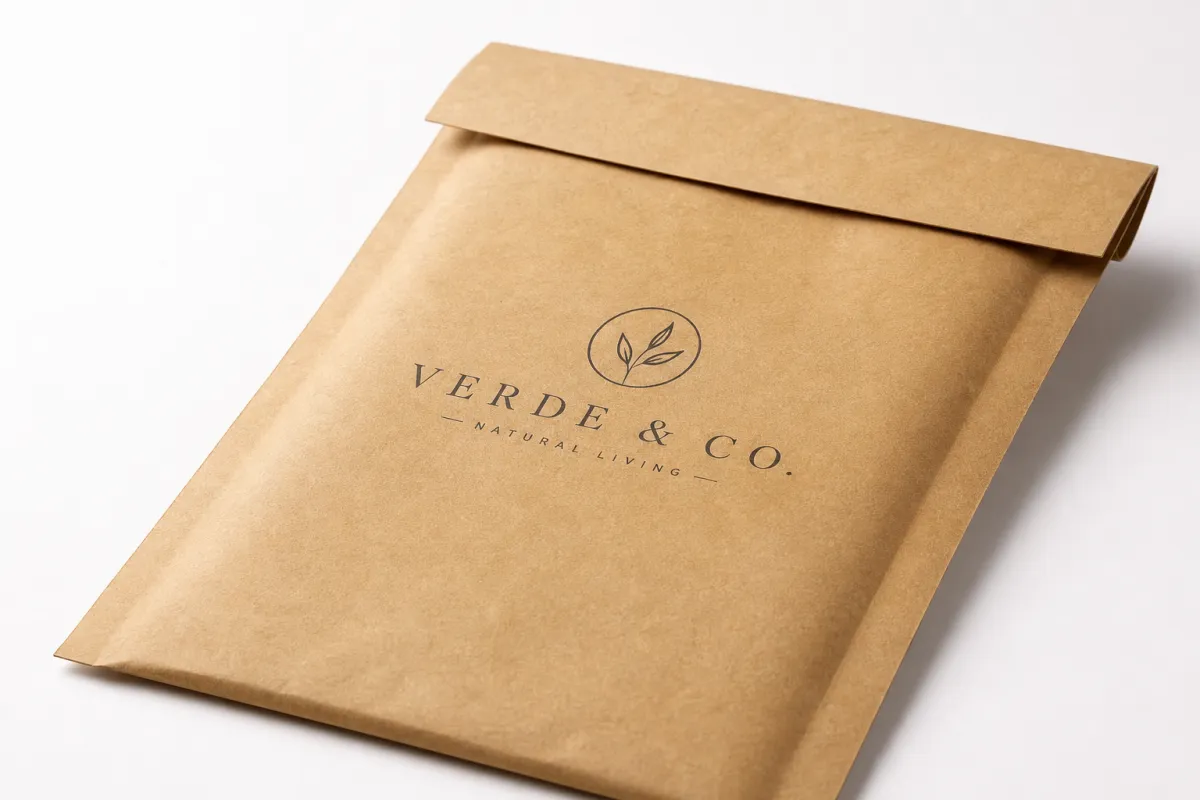
Kraft mailers with logo are paper-based shipping mailers or envelopes printed with a brand mark, pattern, short message, or simple visual system. They are common for lightweight ecommerce shipments, small retail orders, sample kits, and returns. Some are flat. Some have gussets, tear strips, or reinforced seal flaps. The structure depends on the product and how rough the shipping route gets.
They work because kraft paper already has texture. It feels honest. It looks warmer than a glossy white mailer. A loud design usually makes things worse, not better. A clean black logo, a restrained one-color mark, or a short line of copy often looks sharper on kraft than a busy layout ever could. The material does half the branding before the ink shows up.
Most brands use kraft mailers with logo for apparel, accessories, beauty samples, subscription items, printed collateral, and returns. They also fit flat or nearly flat products well. If the item is small enough to avoid crushing and heavy enough to need a proper closure, you are in the right lane. They are not a replacement for a corrugated shipper when protection matters. They are not trying to be. That honesty helps.
The point is not to make shipping fancy for its own sake. The point is to make it look intentional. A customer opening a parcel should not feel like the brand grabbed a generic brown envelope off a warehouse shelf and called it done. Kraft mailers with logo tell the customer, quietly, that the details were considered. That shows up in reviews, social posts, and repeat orders.
A mailer that looks clean at arm's length and survives a stacking test is doing the job. Everything else is decoration.
There is a practical branding bonus too. Kraft stock gives you one canvas across product lines, which means a simple logo system can carry across seasonal launches, sample shipments, and replacement orders. Pair that with a sane unboxing flow, and kraft mailers with logo can make a small brand look much more organized than it really is. Packaging does love a good illusion.
If you are building a broader packaging program, compare mailers against the rest of the line Before You Order. The right mix often includes paper-based mailers, rigid cartons, inserts, and sometimes Custom Packaging Products for higher-value items. That keeps the decision tied to use case, not habit.
How Kraft Mailers With Logo Are Printed and Sealed
The material side starts with paper weight, recycled content, coating, and liner structure. A thin kraft mailer can work fine for lightweight apparel, but it turns flimsy fast if the paper is soft or the seams are weak. Common outer paper ranges sit around 90-140 gsm, though the exact build depends on whether the mailer is flat, padded, or reinforced. Higher recycled content can help the sales pitch, but recycled fiber alone does not make the bag stronger. Structure does that.
Kraft mailers with logo are usually printed in one of three ways. Flexographic printing is the workhorse for larger volumes because setup costs make more sense once the run gets big enough. Digital printing fits shorter runs, test launches, and artwork that may change later. A single-color logo usually gives the best cost-to-look ratio because kraft paper already handles some of the branding. Need gradients or full-color photography? Fine. Just expect the price and proofing to get more annoying.
Seal style matters just as much as print. Self-adhesive strips are common because they move fast in fulfillment. Tamper-evident closures help if you want a more secure opening experience. Tear strips help when customers may reuse the mailer for returns. If returns are part of the customer flow, build that into the structure before artwork approval, not after.
Artwork prep is where orders start to wobble. Vector files are the safest format because the logo stays sharp at any size. The supplier should send a dieline or template before anyone starts shifting elements around. Use it. Guessing the print area is how logos land too close to the edge, get clipped on the fold, or sit in a zone that wrinkles during sealing. On kraft stock, tiny details vanish faster than people expect, especially when the ink color does not contrast hard enough.
For that reason, kraft mailers with logo usually perform best with simple placement and generous spacing. Keep the logo out of fold lines. Avoid hairline text unless you have a strong reason and a supplier who has already proven it on brown stock. For a broader look at paper-based packaging standards, the resources at packaging.org are a useful baseline before you lock a spec.
The production flow is standard: file review, quote confirmation, proof or sample, revisions, final sign-off, manufacturing, then shipment. Basic? Sure. Also where delays happen. If the supplier finds a problem in the bleed, logo placement, or artwork resolution, the job stops. Not a conspiracy. Just what happens when prepress gets rushed.
What Kraft Mailers With Logo Cost and What Changes the Price
Pricing for kraft mailers with logo usually comes down to five levers: size, paper thickness, print colors, finish, and closure style. Custom dimensions can add cost because the factory has to adjust tooling or materials. More print colors mean more setup and more room for misalignment. A soft-touch or specialty coating can push the price up again, though many kraft buyers skip it because the natural paper feel already does the job.
Quantity is the biggest reality check. Small runs cost more per unit because the setup gets spread across fewer mailers. That is normal. It is also why a sample pack or pilot order can look expensive on paper while still being the smartest move. Need 100 units for a launch test? You are paying for flexibility. Need 10,000 units for ongoing shipments? The math changes fast.
Here is the blunt version: if the mailer will be seen by every customer, do not chase the cheapest line item and then act shocked when the paper feels weak or the ink looks muddy. Kraft mailers with logo should be sturdy enough to survive handling, stacked cartons, and some friction in transit. A mailer that fails early costs more than a slightly better one. Replacement cost, labor, and customer trust all get dragged into it.
| Order Type | Typical Quantity | Ballpark Unit Cost | Best For | Main Tradeoff |
|---|---|---|---|---|
| Sample or pilot run | 100-500 | $0.45-$1.20 | Testing fit, color, and brand response | High setup cost per piece |
| Low-MOQ test order | 500-2,000 | $0.28-$0.65 | Launches and smaller ecommerce runs | Less room for custom features |
| Mid-size reorder | 2,500-10,000 | $0.16-$0.35 | Ongoing shipments and repeat campaigns | More planning needed for storage |
| Bulk production | 10,000+ | $0.10-$0.22 | Stable programs with predictable demand | Less room for last-minute changes |
Those numbers are not universal. Mailer size and print coverage can move them a lot. A large kraft envelope with a two-color print and a tear strip will not price like a small flat mailer with a one-color logo. Freight can also surprise people if the carton count is high or the destination sits far from the factory. Build those costs into the quote before comparing suppliers.
Hidden costs are where projects get annoying. Artwork cleanup, plate charges, sampling, freight, rush fees, and revision cycles can add up when the project is not managed cleanly. Kraft mailers with logo are straightforward to order, but they still need disciplined file prep. If the supplier is fixing your art, you are already spending more than planned.
Timing costs matter too. A cheaper option that takes three extra weeks can be the wrong move if your launch date is fixed. Ask whether the quote includes proofing, whether the price covers a physical sample, and whether the freight estimate is current. If you want a second format for comparison, Custom Poly Mailers can be worth reviewing alongside kraft options, especially for moisture-heavy shipping lanes or very light items.
How to Order Kraft Mailers With Logo on a Real Timeline
Start with the basics: final mailer dimensions, product weight, shipping method, target quantity, and brand colors. If you do not know the exact size yet, measure the packed product instead of the product alone. That sounds obvious. People still miss it all the time. The product may fit in theory and still be a pain to pack once inserts, tissue, labels, or folded garments get added.
The next step is the dieline. Ask for it before final artwork starts. Kraft mailers with logo are easier to approve when the template shows fold lines, print-safe zones, sealing areas, and trim lines. If the supplier cannot provide a template, treat that as a warning sign. Not a deal-breaker on its own, just a cue to slow down and verify more carefully.
A clean approval chain usually looks like this: quote, file check, proof or sample, revision, final sign-off, production, and shipment. The whole cycle can move in a few days if the artwork is clean and the supplier is responsive. More often, production takes 1-3 weeks after approval, with longer timelines for large runs, multicolor printing, or custom sizes. Sampling can add a few days. That is normal. The job is planning for it instead of pretending the calendar will behave because the launch deck looks pretty.
Simple one-color orders can move quickly. Full-color designs with custom dimensions and return features take longer. Kraft mailers with logo are not difficult, but they are not instant either. Seasonal peaks, freight congestion, and revision loops can stretch the schedule. Add a buffer if the mailers support a campaign launch, influencer send, or peak sales period. One week helps. Two is better if the project matters.
Good suppliers ask about packaging performance, not just art. That is a good sign. They may ask whether the mailer needs to survive parcel sorting, whether the adhesive has to hold in humid conditions, and whether the mailer should be recyclable in common paper streams. For recycling guidance, EPA recycling resources are worth checking against your material spec, because local rules and material mix matter more than brand assumptions.
Here is a clean order checklist:
- Confirm packed product size and weight.
- Request the mailer dieline.
- Choose paper weight, closure type, and print color count.
- Send vector artwork and any brand color references.
- Approve a physical sample or digital proof.
- Lock the quantity and delivery date.
If that list feels simple, good. Packaging usually goes wrong when people skip the boring parts. Kraft mailers with logo reward clear specs and punish improvisation. The supplier cannot read your mind, and the press operator definitely will not.
Common Mistakes That Make Kraft Mailers Look Cheap
The fastest way to ruin kraft mailers with logo is to choose the wrong size. A mailer that is too big lets the product slide and creates dead space. One that is too small wrinkles, bulges, and looks forced. Either version makes the packaging feel improvised. That is not a branding problem. That is a measuring problem.
Another common mistake is using too many colors or too much detail. Kraft stock is not a blank white canvas. Thin lines, tiny text, pale gray logos, and low-contrast shades can disappear. Dark green, black, navy, white, and restrained metallic accents usually read much better. Keep the design honest. If the logo needs six colors to work, the logo probably needs a different application.
Protection gets ignored more often than people admit. If the mailer will face moisture, abrasion, or rough sorting, ask about paper weight, seam strength, and closure performance. Kraft mailers with logo often ship through parcels, bins, trucks, and sometimes wet concrete. That is a bad place for a flimsy mailer. If the design includes a return use case, a tear strip and second seal can prevent a lot of post-purchase annoyance.
Skipping a sample is another classic mistake. A screen mockup is not a physical proof. Brown kraft paper changes how inks appear, especially lighter tones. What looks crisp on a laptop can turn muddy in production if the contrast is weak or the ink coverage is too fine. A sample also tells you whether the mailer opens cleanly, folds straight, and stacks properly. Those details matter more than people want to admit.
Then there is the reorder mistake. Buyers often order the smallest workable quantity because they want to avoid inventory risk. That sounds cautious. It can also be expensive if the setup fee gets repeated too often. Kraft mailers with logo usually make more sense when you plan for the next purchase, not just the current one. If the format will stay in rotation, keep the spec stable and avoid unnecessary changes that force a new proof cycle.
For paper-based options, recycling and fiber sourcing are part of the brand conversation too. If sustainability matters, check the exact material build and ask whether the stock is FSC-certified or made with recycled content that still performs. The FSC standard is worth understanding if procurement teams care about sourcing discipline: fsc.org. Certification is not a magic wand, but it is a more meaningful signal than vague green language on a sales sheet.
Expert Tips for Better Branding and Fewer Packaging Problems
Use one strong logo placement instead of trying to fill every surface with a message. Kraft mailers with logo usually look best when the brand mark has room to breathe. A centered logo or a controlled corner placement often feels more confident than a crowded layout. You do not need to shout on a shipping mailer. The customer already knows it came from you.
Contrast is the easiest upgrade. Dark ink on kraft paper is the cleanest route for most brands. If the identity system already includes deep green, black, charcoal, or navy, those tones usually print well. White ink can also look strong if the factory knows how to print it on brown stock without making it dull. Metallics can work too, but keep them restrained. A little goes a long way. Too much looks like a rescue job.
Design for the shipping photo, not just the mockup. Customers post packaging from weird angles, under bad lighting, and while holding a phone in one hand. That means kraft mailers with logo should read well from a distance and still feel tidy up close. The best mailers are legible from three feet away and still feel considered when opened on a desk.
Test the mailer in the real world before approval. Fold it. Rub it. Stack it. Run a light moisture test. Slide the product in and out a few times. Those tests are not glamorous, but they tell you whether the paper creases too easily or the adhesive is too aggressive. If you want a more technical comparison, the shipping and transport world often leans on ISTA parcel testing and related ASTM methods to check whether packages survive handling before they go live.
That kind of testing matters more for ecommerce than for presentation. You are not just buying a printed surface. You are buying a working package. Kraft mailers with logo should survive the last mile without turning into a soft mess by the time they reach the customer. If the mailer only looks good in a prototype photo, it is not done yet.
There is also a smart operational move here: standard sizes and repeat print setups beat endless custom tweaking. If a brand knows it will reorder often, stable specs save money, speed up approvals, and reduce mistakes. That is one reason many teams keep a simple packaging stack and use a small number of repeatable formats rather than inventing a new mailer for every launch.
If your team is comparing materials across channels, keep the packaging ecosystem in mind. A paper mailer can cover some jobs, a corrugated carton handles others, and a plastic-film option may make sense for moisture-heavy or very lightweight shipments. That is where a broader catalog like Custom Packaging Products helps the decision stay practical instead of aspirational.
Next Steps: Build a Spec and Run a Pilot Order
The best way to order kraft mailers with logo is to treat the purchase like a spec-driven project, not a casual shopping cart order. Build a one-page sheet with size, paper weight, logo placement, color count, closure style, target quantity, and delivery deadline. That document should be boring. Boring specs are excellent. They keep costs and expectations under control.
Then ask for 2-3 quotes using the same spec. Not a vague version of the spec. The same one. That is the only way to compare pricing fairly. If one supplier quotes a 120 gsm paper and another quotes 100 gsm, you are not comparing the same package. You are comparing different packages with the same logo. Common mistake. Waste of time.
A physical sample is worth the small delay. Kraft mailers with logo can look different under bright office light than they do on a warehouse floor or in customer photos. A sample lets you verify the paper feel, print clarity, fold behavior, and closure performance before you commit to the full run. If the sample looks right, reorder gets faster because the spec already did the hard work.
If you are unsure about size, brand impact, or packing speed, start with a pilot order of 100-500 units. That range is big enough to expose real problems and small enough to keep the mistake manageable. Once the pilot works, lock the spec and reorder before changing artwork, materials, or structure again. Every new variable adds time and cost. Packaging does not need drama.
Kraft mailers with logo work best when they are simple, well-sized, and built for the actual job. If the stock feels sturdy, the print reads clearly, and the closure survives shipping, you have a package that does more than carry product. It carries the brand without acting precious about it. That is the standard worth aiming for.
The practical move is simple: write the spec, order a sample, test it with real product, then place the pilot only after the mailer survives packing, stacking, and transit without getting weird. That is how you avoid expensive guesswork and end up with kraft mailers that look good for the right reasons.
What are kraft mailers with logo used for?
They are used for lightweight ecommerce shipments, subscription kits, apparel, inserts, sample packs, and small retail orders. Kraft mailers with logo help the shipping package match the brand experience without forcing you into a full custom box for every order.
How much do kraft mailers with logo cost?
Cost depends on size, paper thickness, print colors, quantity, and whether you need custom tooling or setup. Low quantities usually cost more per unit because the setup is spread across fewer mailers. For many buyers, kraft mailers with logo land in a practical range from about $0.16 to $0.65 per unit depending on volume and features, with sample runs higher.
How long does it take to produce kraft mailers with logo?
Sampling and proofing can take a few days if the artwork is ready and the supplier is responsive. Production often runs 1-3 weeks, though larger orders, custom dimensions, and multicolor printing can take longer. Rush orders are possible, but they usually cost more and leave less room to correct problems.
What file do I need for a logo on kraft mailers?
A vector file such as AI, EPS, or PDF is usually the safest format because it stays sharp at any size. The artwork should be simple enough to read on brown kraft stock, especially if the print area is small. If the supplier sends a dieline, use it. Guessing placement is how logos end up clipped or off-center on kraft mailers with logo.
Are kraft mailers with logo recyclable?
Often yes, if the mailer is mostly paper and does not include plastic-heavy liners or coatings that interfere with recycling. Adhesives, inks, and local recycling rules can change what is accepted, so do not assume every version qualifies. If recyclability matters to your brand, ask for the exact material breakdown before you place the order.


