Buyer Fit Snapshot
| Best fit | printed kraft paper bags price for packaging buyers comparing material specs, print proof, MOQ, unit cost, freight, and repeat-order risk where brand print, material, artwork control, and repeat-order consistency matter. |
|---|---|
| Quote inputs | Share finished size, material target, print colors, finish, packing count, annual reorder estimate, and delivery region. |
| Proofing check | Approve dieline scale, logo placement, barcode or warning zones, color tolerance, and any recyclable or compostable wording before bulk production. |
| Main risk | Vague material claims, crowded artwork, or missing packing details can create delays even when the unit price looks attractive. |
Fast answer: Printed Kraft Paper Bags Price: Costs, MOQ, and Value should be specified like a repeatable production item. The safest quote includes material, print method, finish, artwork proof, carton packing, and reorder notes in one written spec.
What to confirm before approving the packaging proof
Check the product dimensions against the actual filled item, not only the sales mockup. Ask for tolerance on folds, seals, hang holes, label areas, and retail display edges. If the package carries a logo, QR code, warning copy, or legal claim, reserve that space before decorative graphics fill the panel.
How to compare quotes without losing quality
Compare board or film grade, print process, finish, sampling route, tooling charges, carton quantity, and freight assumptions side by side. A lower quote is only useful if the supplier can repeat the same color, closure quality, and packing count on the next order.
Printed kraft paper bags price: Costs, MOQ, and Value
Printed Kraft Paper Bags price can look tidy on a quotation, then shift the moment the bag spec starts getting real. A cafe may need takeaway bags that hold hot boxes without sagging, a boutique may want something clean and retail-ready, and a food brand may need a carry bag that feels light in the hand but still has enough body to survive a busy counter. Each of those jobs affects the printed kraft paper bags price in a different way because paper weight, structure, handle type, and finishing all bring their own cost.
I have seen buyers focus on the logo first and then wonder why the numbers do not line up. The logo matters, sure, but it usually sits behind the paper, the size, the handle, the print coverage, and the minimum order quantity. A 1-color satchel bag and a reinforced block-bottom carry bag can carry the same artwork and still land in completely different price bands. That part surprises people, though it really should not.
A practical way to approach the order is to settle the bag structure first, then the paper, then the artwork, and finally the quantity. That sequence gives printed kraft paper bags price some actual shape, which makes comparison much easier and keeps the conversation grounded. Skip that order and every supplier can look like they are quoting a different product.
The sections below break down where the money goes, which details really move the cost, and how to ask for a quote that can be compared fairly. That is usually the quickest path to a printed kraft paper bags price that makes sense instead of one that just looks neat on paper.
Printed Kraft Paper Bags Price: Why the Quote Moves Fast
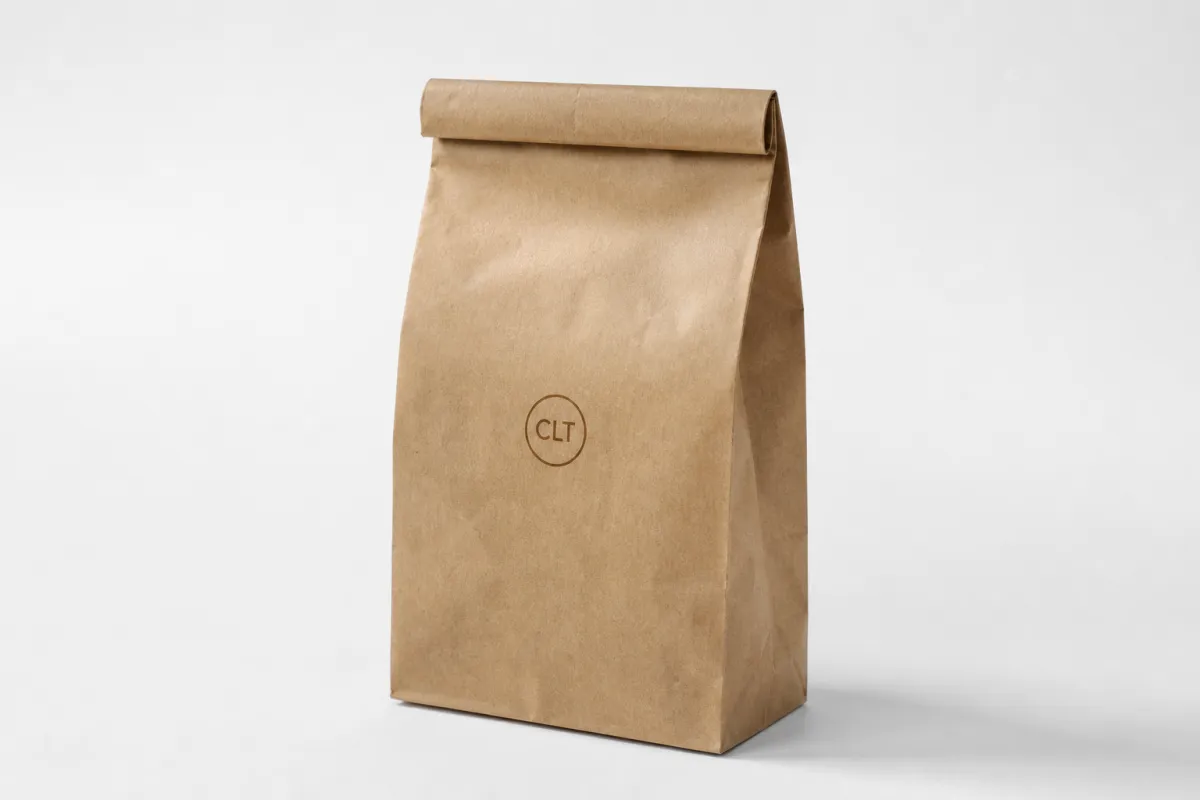
Picture three common orders. A cafe asks for 5,000 takeaway bags. A boutique needs 3,000 retail bags with a clean one-color logo. A gift brand wants a heavier bag with a more polished surface. All three can ask for printed kraft paper bags price and receive three different answers, even before the artwork is finalized, because the base structure often Drives the Cost more than the print itself.
Paper weight is usually the first lever. Lighter kraft paper bags often use 80gsm to 100gsm stock for simple retail use, while stronger carry bags may need 120gsm or 150gsm paper, sometimes with reinforcement at the top edge or bottom panel. That extra material shows up quickly in the printed kraft paper bags price because it changes raw material usage, forming behavior, and overall strength. A 100gsm bag and a 150gsm bag are not close substitutes, even if they look similar in a catalog photo.
Print method comes next. A single-color logo with modest coverage is far easier to run than full-coverage artwork, multiple colors, or a design that needs tight registration. The printed kraft paper bags price can rise even when the dimensions stay the same because the printer must prepare plates, align colors, and sometimes allow extra drying or finishing time. Ink coverage matters, and so does artwork complexity.
A simple one-color logo on standard kraft paper often costs less than a crowded design that looks attractive on screen and turns awkward in production.
Handles, gussets, coatings, and reinforcement bring in another layer of cost. Twisted paper handles, flat handles, die-cut handles, and rope handles each need different materials and assembly steps. Add a wider gusset for boxes, a stronger bottom for bottles, or grease resistance for food service, and the printed kraft paper bags price moves again. Two bags can carry the same logo and still sit in different cost bands because the structure is doing different work.
That is why comparing quotes built on different specs leads nowhere useful. If one supplier quoted a 90gsm satchel bag and another quoted a 120gsm block-bottom carry bag with reinforced handles, the printed kraft paper bags price gap is the product talking. Once that becomes clear, the buying decision stops feeling like guesswork.
Supply-chain math matters too. Small runs carry a heavier share of setup cost per piece, while larger runs spread those fixed costs across more units. The printed kraft paper bags price often looks steep at low volume and much smoother once the order climbs past a certain point. The supplier did not suddenly become generous; the setup cost simply stopped dominating the total.
Product Details: What You Are Actually Buying
A buyer who wants a sensible printed kraft paper bags price needs to understand the bag itself, not just the artwork. The common formats include flat bags, satchel-style bags, and block-bottom bags. Flat bags stay simple and light. Satchel-style bags give a little more room for small retail items. Block-bottom bags stand better on shelves and carry more weight. Once the format is clear, the printed kraft paper bags price starts to read like a product decision instead of a mystery.
Kraft paper usually appears in two main finishes: natural brown and white kraft. Brown kraft delivers the familiar recycled look that works well for food, coffee, and brands leaning into a natural presentation. White kraft creates a brighter print surface and can make colors look sharper. Both can be produced with recycled content, and both can include fiber with post-consumer waste, yet the print result and visual tone are not the same. If crisp color reproduction matters, white kraft often helps. If the brand wants warmth and texture, brown kraft usually fits better.
Paper thickness changes the feel immediately. A bag at 100gsm may be fine for light retail items, simple takeaway use, or promotional packaging. Move to 120gsm or 150gsm, and the bag feels firmer, resists tearing more effectively, and usually improves confidence in use, though the printed kraft paper bags price rises with it. That increase is normal because more fiber and stronger forming requirements mean more material and more control on the line.
Printing should be described in plain language. A single-color logo is the least complicated option. Two-color branding adds setup and alignment work. Multi-color artwork needs more attention, and full-wrap printing can affect surface appearance and drying time. When the artwork is busy, the printed kraft paper bags price usually climbs because the printer has more to manage at each stage. That is not a penalty; it is simply the cost of a more demanding production run.
Functional details matter as much as appearance. Some buyers need an inside coating for moisture or grease resistance. Others need reinforced top edges so the bag can hold a heavier box or bottle. A clothing brand may care most about a clean print surface, while a takeaway brand needs both print quality and load strength. If the bag is supposed to carry food containers, bottles, or stacked items, mention that early. The printed kraft paper bags price becomes more accurate, and the finished bag is more likely to behave properly in the hand.
- Flat bags fit light products and short runs.
- Block-bottom bags suit retail, food, and small gift packaging.
- Twisted paper handles are common for carry bags and hold up well.
- Die-cut handles create a cleaner look but do not suit every load.
- Reinforced tops and bottoms increase cost while improving performance.
One detail buyers skip too often is the print surface and the outer packing method. If bags are shipped in corrugated cardboard cartons that crush too easily, they can arrive warped. If the inner pack is loose, edges scuff and handles bend. A fair printed kraft paper bags price should include a sensible packing approach, not just paper and ink. Packaging is part of the product experience, not an afterthought.
For brands making sustainability claims, do not let a supplier point to a green label and call the conversation finished. Ask whether the kraft paper is FSC certified, whether the ink system suits the end use, and whether the coating affects recyclability or compostability. Natural kraft with no plastic lamination behaves differently from laminated or heavily coated stock. If the bag is meant to support biodegradable packaging claims, the whole structure needs checking, not only the face paper.
Specifications That Change Performance and Cost
Good quotes start with clear specifications. A dependable printed kraft paper bags price needs dimensions, paper thickness, handle style, print colors, finish, and load requirement before numbers start moving. A supplier can work with rough ideas, but rough ideas create rough pricing. The spec sheet does the real work because it removes the guesswork that inflates both price and timeline risk.
Size matters more than many buyers expect. A small satchel bag for a pastry box is not the same thing as a wide retail carry bag for folded clothing. Width, gusset depth, and height all affect material usage and machine setup. If your product mix changes through the year, one bag size may not fit everything. Oversizing increases cost and wastes material; undersizing creates returns, wrinkled presentation, and unhappy staff. Both cause more trouble than a modestly higher printed kraft paper bags price.
Paper weight should match the load, not the mood board. A lightweight 80gsm or 100gsm kraft paper bag can work well for flyers, small gifts, or low-weight items. A bag meant to carry boxed food or heavier merchandise usually needs stronger stock. That is where the printed kraft paper bags price begins to reflect a real functional decision. The bag has to survive the use case, not just photograph well.
Print coverage also changes the quote in a direct way. A small logo placed once on the front panel costs less than a full-wrap design that reaches both sides and the gusset. Foil accents, specialty coatings, and heavy ink coverage add complexity. If the design team wants something more elaborate, that is fine, but the printed kraft paper bags price will follow the design choices. Design decisions are cost decisions.
A useful rule from the packaging side is simple: the more custom the structure, the more carefully the dieline, artwork file, and target weight should be confirmed before production begins. Once a supplier cuts a custom bag size and commits to plates or setup, changes become expensive. A tight approval process saves more money than repeated email revisions. A stable specification protects the budget.
| Bag spec | Typical use | Cost impact | Notes |
|---|---|---|---|
| 80gsm brown kraft, flat bag, one-color print | Light retail, flyers, bakery items | Lowest | Best for simple branding and low weight |
| 100gsm white kraft, satchel style, two-color print | Boutique, gifts, small apparel | Moderate | Cleaner print surface, more setup than one-color |
| 120gsm block-bottom, twisted handle, one- or two-color print | Retail carry bags, takeaway food | Higher | Stronger structure, wider application |
| 150gsm reinforced carry bag, custom size, full coverage print | Heavier products, bottles, premium packaging | Highest | More material, more assembly, more print complexity |
That table is a map, not a promise. The printed kraft paper bags price in any real order will still depend on quantity, freight, packing, and whether the artwork is clean or troublesome. Even so, the spec choices above explain why one quote lands neatly and another feels inflated. They are not the same product.
Packaging standards matter here too. If the bags will ship inside a branded box or warehouse carton, ask how the outer pack is built. Corrugated cardboard protects the bags well when the carton size and pack count are chosen sensibly. Testing guidance from ISTA helps frame what the shipment should survive in transit, including drop, vibration, and compression. That is not glamorous work, but it prevents damaged inventory and avoidable rework.
Printed Kraft Paper Bags Price, MOQ, and Unit Cost
MOQ is where the printed kraft paper bags price discussion becomes concrete. Smaller runs usually carry a higher unit cost because setup, plates, color matching, and machine time are spread across fewer bags. Once quantity rises, the unit cost usually falls. That is basic packaging economics, and it explains why the lowest-looking offer is not always the cheapest order.
Most factories set MOQ based on size and print method. A simple one-color bag may start lower than a more complex custom build, but there is no universal number that fits every product. The printed kraft paper bags price may look attractive at 3,000 units and much better at 10,000 units, even though the overall spend rises. Buyers need to compare unit cost and order floor together, or the wrong number gets all the attention.
Ask for a quote in a way that exposes the real tradeoff. Request unit cost, setup cost, sample cost, freight estimate, and whether the price changes at higher volumes. If the supplier only gives one total number, the printed kraft paper bags price is not fully visible. A complete quote should show where the money is going because that is how you know whether a small specification change can save anything.
A pattern shows up often enough to matter: a slightly larger order can reduce the unit cost enough to beat a lower MOQ that looks cheaper at first glance. That sounds backward until the totals are compared side by side. If the printed kraft paper bags price drops meaningfully at 10,000 pieces versus 5,000, the larger order may be the better commercial decision even though the cash outlay is higher. Buyers who only focus on MOQ miss that tradeoff.
For standard orders, the ranges below help frame expectations. They are not a final quote, only a useful guide for common printed kraft paper bags price scenarios. The more custom the bag, the wider the range tends to stretch.
| Order tier | Typical unit price | MOQ behavior | Best fit | What usually drives the cost |
|---|---|---|---|---|
| 1,000 to 3,000 pieces | $0.28 to $0.55 | Highest floor | Pilot runs, launches, testing | Setup costs and short-run efficiency |
| 5,000 to 10,000 pieces | $0.16 to $0.32 | Common sweet spot | Small cafes, boutiques, local chains | Balanced production efficiency |
| 20,000 to 50,000 pieces | $0.09 to $0.22 | Lower per-unit pressure | Regional programs, repeat orders | Volume spread across fixed setup |
If the printed kraft paper bags price is going to stay honest, compare quotes on the same basis. Dimensions, paper weight, handle type, print colors, and packing spec need to match. A lower headline number that leaves out freight or sample cost is not a lower price; it is a partial quote. That distinction saves more budget than people usually expect.
Process and Timeline: From Artwork to Delivery
A clean order moves through a straightforward sequence: inquiry, specification confirmation, artwork check, sampling, approval, bulk production, quality inspection, packing, and shipment. Each stage nudges the printed kraft paper bags price a little, yet the bigger effect is on schedule risk. When one stage is vague, the entire order slows down. Packaging rarely rewards ambiguity.
Most delays come from a few familiar places. Artwork files are incomplete. The size changes after the quote. Color references arrive late. A sample waits too long for approval because three people want to comment. None of that is unusual. It is normal production friction. Buyers who want a stable printed kraft paper bags price should remove as much of that friction as possible before the order starts.
Timelines work better when they are treated as separate stages rather than one broad promise. A sample often takes around 5 to 7 business days, depending on structure and artwork. Bulk production commonly takes 12 to 20 business days for a straightforward order. Shipping adds its own timing, whether the choice is air freight for speed or sea freight for cost control. The printed kraft paper bags price does not include time travel, so the bag will not appear instantly.
Fast orders call for discipline, not optimism. If a buyer needs bags for a launch or seasonal rush, dimensions, material, artwork, and payment terms should be confirmed right away. The sooner a proof is approved, the better the chance of holding the schedule. A rushed order with unclear specs often costs more and arrives later than a calm order with clean paperwork. That is production reality, not a scare tactic.
Proofing matters more than many teams admit. A digital mockup is useful, but it is not a physical sample. The mockup shows layout. The sample shows paper feel, handle strength, print coverage, and real proportions. If the printed kraft paper bags price is based on a design the buyer never held in hand, the risk of a bad surprise rises. A sample costs a little at the front end and saves a lot when the bag has to perform in the real world.
In practice, the best buyers do not ask, “Can you do this?” They ask, “What exact spec will let you do this well, and what does it do to printed kraft paper bags price?” That is a stronger question because it gets the order out of the speculative stage and into production faster. It also gives the supplier something usable instead of a fuzzy wish list.
Why Choose Us for Printed Kraft Paper Bags
A good supplier should reduce risk, not add drama. For printed kraft paper bags price, reliability matters more than polished marketing language. Consistent paper quality, sharp print registration, and stable sizing are the basics. If those parts are sloppy, the bags look cheap no matter how nice the artwork is. If those parts are controlled, even a simple design feels more premium in hand.
Production support is part of the value. The right partner helps check artwork, confirms the dieline, flags risky specs, and explains where a small change can improve cost without hurting the bag. That is where printed kraft paper bags price improves in a practical sense. Not through magic, but by reducing avoidable waste in the order. A supplier who understands packaging knows when to recommend a simpler finish, a better paper weight, or a more sensible handle style.
Quality control should be visible in the process. Buyers should expect sample support, spot checks during production, and export-ready packing that protects the bags during transit. If the bags are going out in corrugated cardboard cartons, the carton spec should be chosen to support the load, not merely to count as packaging. Good packing protects print quality, edge crispness, and handle alignment. A damaged carton leads to damaged bags, and damaged bags lead to expensive explanations.
For brands with sustainability goals, ask for evidence rather than broad claims. FSC Certified Paper can support traceability. Recycled materials can reduce virgin fiber use. Post-consumer waste content can be part of the story, though it does not automatically make a product the right fit for every use case. Biodegradable packaging claims still depend on the full build, not just the word “kraft.” A responsible supplier will explain those limits instead of pretending every eco claim applies to every bag.
If you want a cleaner procurement process, use the supplier as a technical filter. The best printed kraft paper bags price is not always the lowest number on day one. It is the number that gets you a bag that prints cleanly, ships safely, and works on the shelf or in the hand without complaints from staff or customers. That is what the purchase is really buying. The rest is noise.
Packaging professionals also know that standards protect both sides. For sourcing, FSC certification helps verify responsible fiber traceability, while ISTA testing references help frame what the shipment should survive in transit. They do not rescue a weak design, but they do keep expectations honest about what the bag is supposed to do. That honesty matters more than glossy language ever will.
Next Steps: Get the Right Quote Fast
If you want a real printed kraft paper bags price, do not send a vague note that says “need bags, please quote.” Send the size, paper weight, handle style, print colors, quantity, delivery target, and target budget. That is the shortest path to a useful number. The more complete the brief, the less time gets lost in back-and-forth that should have been settled in the first message.
Compare quotes on the same basis. Unit cost matters. Setup cost matters. Freight matters. Sample cost matters. If one supplier shows a low printed kraft paper bags price but leaves freight out or does not clarify MOQ, the quote is not actually lower. It is just easier to read. Buyers should focus on landed cost, not headline cost. Otherwise they are comparing apples to a box of screws.
A simple decision path works well. Request a sample, confirm the artwork, approve the proof, then move to production once the specification sheet matches the budget. That sequence keeps the printed kraft paper bags price tied to the real order rather than to assumptions made early in the process. It also gives you a chance to catch handle issues, print shifts, or paper feel concerns before they become part of a full run.
For brands that treat packaging as part of the product, the last step is simple: send the exact order details and ask for a quote built on one clean specification. That is how you get the right MOQ, the right lead time, and the right printed kraft paper bags price without circling the same questions for a week. It also makes the supplier’s job easier, which usually means a better answer for you.
What affects printed kraft paper bags price the most?
Quantity usually has the biggest impact because setup costs are spread across more bags at higher volumes. Paper weight, handle style, print colors, and special finishes also change the unit cost quickly. Custom dimensions and reinforced structures normally cost more than standard bag sizes, so the printed kraft paper bags price moves fast once the spec becomes more custom.
What is the MOQ for printed kraft paper bags?
MOQ depends on bag size, paper spec, and printing method, so there is no single universal number. Smaller bags or simpler one-color prints can sometimes start lower than complex custom builds. Ask for the MOQ together with the printed kraft paper bags price so you can compare real tradeoffs instead of only looking at minimum order numbers.
Can I get a lower printed kraft paper bags price by changing the artwork?
Yes, simpler artwork usually reduces setup complexity and can lower the quote. Fewer print colors and less coverage often cost less than full-bleed or multi-layer designs. If price matters more than decoration, keep the logo clean and avoid unnecessary special effects. That usually gives you the best printed kraft paper bags price without making the bag look cheap.
How long does production usually take for printed kraft paper bags?
Timeline depends on sample approval, order quantity, and whether the artwork is ready when you request the quote. A smooth order moves through proofing, production, inspection, and shipping without avoidable changes. If you need bags for a launch date, confirm the lead time before approving the artwork, because printed kraft paper bags price is only half the story.
Should I order samples before placing a bulk order?
Yes, especially if the bag needs to match a retail display, food service use, or a specific brand color. A sample shows paper feel, handle strength, print quality, and actual size better than a screen proof. Sampling costs a little upfront, but it is cheaper than fixing a bad bulk run and then explaining why the printed kraft paper bags price did not include avoidable mistakes.
Printed kraft paper bags price is not just a number on a quote sheet. It is the sum of size, paper, print, handles, finish, MOQ, and freight, plus the cost of getting the spec wrong. Give the supplier a clean brief and compare like for like, and the printed kraft paper bags price becomes much easier to judge while the order becomes far easier to manage. If there is one takeaway, it is this: define the bag before you chase the price, and the price usually makes a lot more sense.

