Buyer Fit Snapshot
| Best fit | Laminated Mailing Boxes with Logo projects where brand print, material claims, artwork control, MOQ, and repeat-order consistency need to be specified before quoting. |
|---|---|
| Quote inputs | Share finished size, material target, print colors, finish, packing count, annual reorder estimate, ship-to region, and any compliance wording. |
| Proofing check | Approve dieline scale, logo placement, barcode or warning zones, color tolerance, closure strength, and carton packing before bulk production. |
| Main risk | Vague material claims, crowded artwork, missing packing details, or unclear freight terms can make a low unit price expensive after revisions. |
Fast answer: Laminated Mailing Boxes with Logo: Board, Finish, Dieline, and Unit Cost should be specified like a repeatable production item. The safest quote records material, print method, finish, artwork proof, packing count, and reorder notes in one written spec.
Production checks before approval
Compare the actual filled-product size with the drawing, then confirm tolerance on folds, seals, hang holes, label areas, and retail display edges. Reserve space for logos, QR codes, warning copy, and material claims before decorative graphics fill the panel.
Quote comparison points
Review material grade, print process, finish, sampling route, tooling charges, carton quantity, and freight assumptions side by side. A quote is only useful when the supplier can repeat the same color, closure quality, and packing count on the next order.
For a lot of brands, laminated mailing Boxes With Logo are the first physical signal that the order was packed with care. That first impression carries more weight than many teams expect. The carton may be scanned, stacked, slid, compressed, and opened several times before the product ever leaves the box, which means the outer shell has a real job to do.
From a packaging buyer's point of view, laminated mailing Boxes with Logo sit in a useful middle ground. They look more polished than a plain corrugated mailer, yet they do not push the operation into fragile gift-box handling or a complicated shipping setup. The laminate adds scuff resistance, steadier color presentation, and a cleaner unboxing moment without making the process feel fussy.
That is the real appeal: control. A controlled first impression, a controlled surface finish, and a better chance that the artwork still looks deliberate after the box moves through a courier network that was never built for gentleness.
For businesses that care about presentation and transit performance, laminated mailing boxes with logo usually make sense in these situations:
- Subscription shipments that need a repeatable branded opening experience.
- PR kits and press mailers that must arrive looking polished.
- Premium accessories, beauty items, and small electronics where the outer box carries part of the value signal.
- Fragile or boxed goods that benefit from a stiffer printed surface with better protection.
- Direct-to-consumer orders where visible wear on the carton can damage the brand before the product does.
There is a simple promise behind laminated mailing boxes with logo: stronger presentation, fewer complaints about surface wear, and a more consistent opening experience. That promise is not automatic. It depends on the board, the print method, the laminate type, and the way the box is shipped. Handled well, the format earns its keep quickly.
What Laminated Mailing Boxes with Logo Actually Change
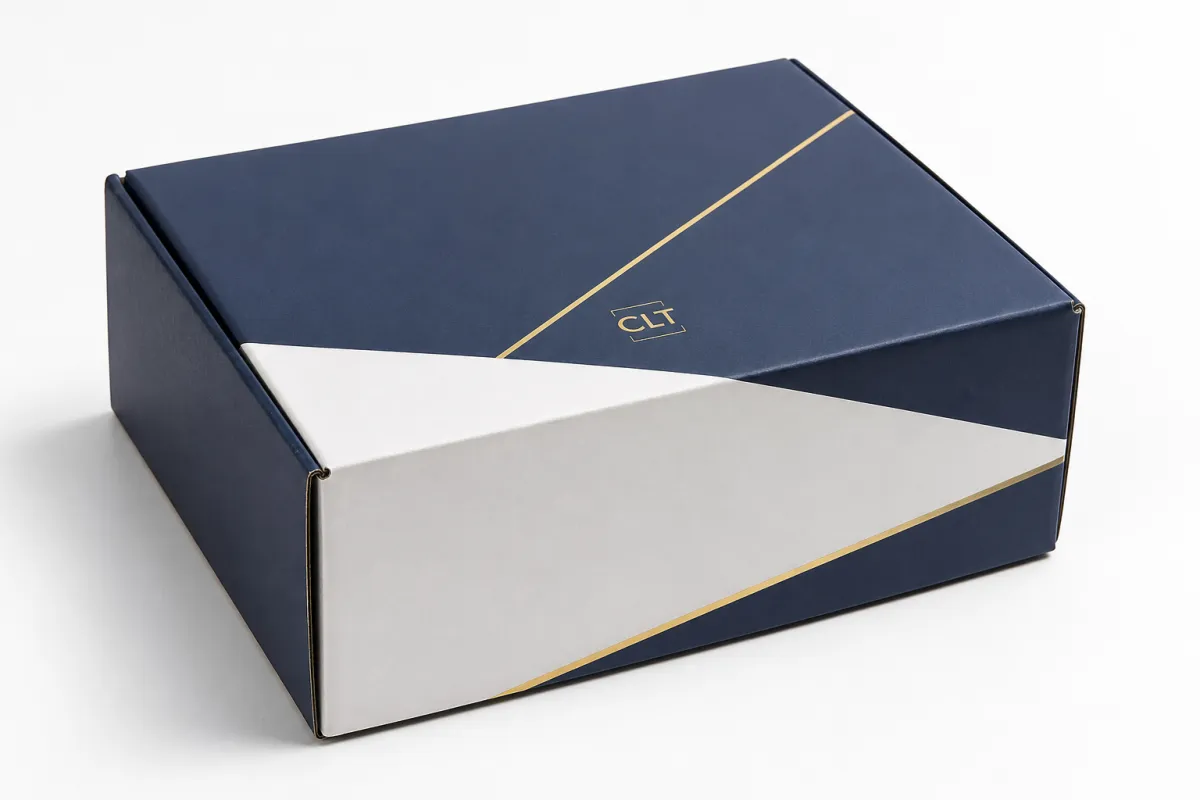
The outer box is often the first thing customers judge. Sometimes it is the only thing they judge before they decide whether the brand feels premium, careful, or somewhere in between. In practical terms, laminated mailing boxes with logo change that first judgment in a few concrete ways: the printed surface looks cleaner, the structure resists visible wear better, and the branding holds up longer under friction.
At its simplest, laminated mailing boxes with logo are Printed Mailer Boxes finished with a protective laminate layer. That layer can be gloss, matte, or soft-touch, and it sits over the printed sheet before the board is cut and folded into shape. The point is not only shine or texture. The laminate helps reduce scuffing, fingerprint marks, and the rubbed-through look that can happen when printed cartons are handled over and over.
That extra protection matters because shipping is rough on packaging. A carton may be loaded, unloaded, stacked, and slid across belts and pallets. If the artwork is applied directly to an uncoated surface, the image can look tired long before the product is damaged. With laminated mailing boxes with logo, the visual damage threshold is usually higher, which means the box is more likely to arrive looking intentional instead of merely survived.
There is a brand psychology piece here as well. Customers do not inspect the laminate under a microscope. They notice whether the logo feels crisp, whether colors stay rich, and whether the surface still looks neat after transit. That is why laminated mailing boxes with logo are popular for ecommerce subscriptions, launch kits, and premium sample shipments. They create a controlled visual cue that matches the product price point more closely.
"The box gets judged before the product does."
That line sounds blunt because it is. I see a common mistake where brands treat the outer mailer as nothing more than a shipping vessel. They spend heavily on product development, then wonder why the unboxing feels cheaper than the product itself. laminated mailing boxes with logo reduce that mismatch. They matter because they help align what the brand says with what the parcel looks like in the real world.
I still remember a cosmetics launch where the formulas were excellent, the photography was polished, and the shipping carton was the weak link. The uncoated stock picked up rub marks in transit, and the first customer photos looked a little tired even before anyone opened the box. That kind of thing is gonna happen if the outer pack is ignored. Switching to a laminated mailer fixed most of the surface complaints without changing the fulfillment workflow.
They also fit a wide range of use cases without forcing a change in the shipping workflow. A fulfillment team can still pack, tape, label, and ship in the usual way. The box itself just has better surface durability and a more controlled finish. For most operations, that is the sweet spot: better perception without a packaging system that becomes slow or delicate.
One more point buyers sometimes overlook: lamination can help artwork handle light moisture and humidity swings better than an uncoated surface. It will not make the carton waterproof, and no one should pretend otherwise, but it can limit staining and surface softening that turn a strong design into a dull one. For teams shipping across different climates, that edge is worth attention.
Production Process and Timeline for Laminated Mailing Boxes with Logo
The production path for laminated mailing boxes with logo is straightforward, but the sequence matters. The process begins with the dieline, which maps the structure, folds, flaps, glue areas, and safe zones. Artwork is then placed on that dieline so the logo, product photography, pattern work, and copy sit where they should once the box is folded. After that, the printed sheet receives the laminate, then the board is die-cut, creased, folded, glued, and packed.
The order of those steps is not trivia. Print first, laminate second, and the printed surface stays protected while color and adhesion stay predictable. If the finish is rushed or applied in the wrong sequence, the board can show curling, weak bond areas, or surface distortion. Well-made laminated mailing boxes with logo depend on getting that sequence right from the start.
In a practical timeline, most orders move through a few familiar stages. Quoting and specification review come first, then artwork checks, then proofing or sampling, then production, finishing, quality inspection, and shipment. Standard sizing and final artwork keep the process smooth. New structures, unusual finishes, or late-stage design changes stretch the schedule.
Typical timeline pressure points are easy to predict. A custom size adds time because the dieline and tooling need confirmation. Complex print coverage can slow proof approval, especially when gradients, large solid areas, or multiple spot colors are involved. Specialty lamination, such as soft-touch or anti-scratch film, may add a step or two. For many buyers, laminated mailing boxes with logo are still efficient, but only when decisions are made with discipline.
Here is the part that often saves the most time: send final artwork, confirm dimensions early, and approve samples quickly. A packaging team can move fast when it is not waiting for a revised logo file or a changed closure style. That sounds simple, yet it is usually the difference between a shipment that lands on time and one that spends a week circling the same proof.
If you are comparing packaging programs, it helps to keep the broader structure in view. A brand might use Custom Packaging Products for rigid gift boxes or inserts, and pair that with a lighter mailer format when shipping costs matter. Or it might move some orders to Custom Poly Mailers for soft goods while reserving laminated mailing boxes with logo for higher-value items that need a more polished presentation.
For sourcing and performance standards, two references are worth knowing. The International Safe Transit Association publishes transit test methods that help evaluate how packaging holds up under shipping stress. And if sustainability claims matter to your procurement team, the Forest Stewardship Council is the certification body many buyers look to for responsibly sourced fiber claims. Both move the conversation away from vague promises and toward measurable expectations.
Key Design and Durability Factors That Matter Most
Material choice comes first. Corrugated board, paperboard, and heavier carton structures all behave differently under load. A lightweight paperboard mailer can work well for cosmetics, literature, or slim accessory sets, while a stronger corrugated structure is usually better for heavier shipments or routes with more handling. The wrong board choice is one of the quickest ways to make laminated mailing boxes with logo feel impressive on a shelf and disappointing in transit.
Finish choice matters just as much. Gloss gives strong color pop and sharper contrast, but it can show fingerprints and fine rub marks more easily. Matte softens the look, cuts glare, and often hides handling marks better. Soft-touch adds a velvety feel that customers tend to connect with premium products, though it can be more expensive and may not suit every graphic style. The finish changes not only appearance, but the way laminated mailing boxes with logo communicate brand tone.
Structural details can decide whether a box survives a shipping lane or collapses halfway through it. Box depth has to match the product stack height closely enough that the contents do not move around. Closure style matters because a tuck flap that pops open is a weak point in automated handling. Edge strength, corner crush resistance, and the use of inserts all affect how well laminated mailing boxes with logo resist deformation.
Artwork design changes once lamination enters the picture. Large solid ink areas may look richer, but they can reveal scratches more clearly if the box is abraded. Dense gradients can produce strong shelf appeal, yet they need careful proofing to keep banding and tonal shifts under control. Logos that sit too close to folds may disappear into creases after assembly. Better brands design for the dieline, not just for the screen.
Shipping environment deserves more attention than it usually gets. Humidity can soften uncoated surfaces. Temperature swings can affect adhesive performance. Long parcel routes can expose the box to many more contact points than a local delivery. Palletized loads bring compression into the picture, while hand-carried shipments often bring cosmetic wear. All of that changes how laminated mailing boxes with logo should be specified.
If you want a practical way to think about the options, compare them by transit stress rather than by appearance alone. A shiny box that looks polished on a desk is not necessarily the best choice for a dense fulfillment network. A matte box may photograph less dramatically, yet still arrive in better condition and generate fewer complaint emails. That trade-off is often more useful than chasing a finish that only looks dramatic in a mockup.
| Finish option | Typical visual effect | Durability note | Indicative add-on cost | Best fit |
|---|---|---|---|---|
| Gloss lamination | Bright color, sharp contrast, reflective surface | Good basic scuff resistance, fingerprints more visible | Often lowest of the laminated options | Lifestyle brands, bold graphics, colorful launch boxes |
| Matte lamination | Muted shine, cleaner and more restrained look | Hides handling marks better than gloss in many runs | Usually modestly above gloss | Premium DTC, minimal branding, higher-end product lines |
| Soft-touch lamination | Velvety, tactile, upscale finish | Strong presentation, but can cost more and needs careful proofing | Often the highest of the three | Luxury sampling, PR kits, collector-style packaging |
The table above is not a price sheet. It is a decision filter. For many brands, laminated mailing boxes with logo are less about choosing the fanciest finish and more about choosing the finish that matches the route, the product, and the customer's expectation of value.
Cost, Pricing, and MOQ Factors for Laminated Mailing Boxes with Logo
Pricing starts with the obvious variables: size, board weight, print coverage, laminate type, tooling, and order quantity. The less visible math matters too. A custom die, a complex print setup, extra proofing, and special packing requirements can all move the quote. That is why two orders that look similar on paper can end up with very different unit economics for laminated mailing boxes with logo.
Volume usually lowers the unit cost, but only after the setup expense has been spread across enough boxes to make the run efficient. That is the basic logic behind most packaging pricing. A lower quantity can still be the right choice, especially for launches or pilot runs, yet the per-unit price will almost always be higher. Buyers sometimes call this a penalty, but it is really the cost of making a small custom run behave like a larger one.
MOQ expectations vary by supplier and by structure. A lower minimum order often looks attractive until the per-unit price and freight are added in. A higher MOQ may offer a better landed cost, but only if the business can actually use the inventory without creating storage problems. The smartest comparison for laminated mailing boxes with logo is not headline price alone; it is total landed cost against expected sell-through.
There is also a meaningful difference between quote components. Some manufacturers include plate or die fees in the package price. Others list them separately. Sample charges may be refundable, partially refundable, or nonrefundable. Freight can swing widely depending on carton size and destination. If a buyer does not ask what is included, the first quote can look cheaper than the second while costing more after add-ons.
If you want to keep cost under control without flattening the brand, standardization helps. A business that builds every SKU in a different box size will usually spend more than one that rationalizes dimensions across a line. Limiting finish choices can also save money. So can consolidating orders by season instead of placing scattered short runs. Those are the kinds of decisions that make laminated mailing boxes with logo commercially sensible, not just visually appealing.
Here is a simple pricing lens that helps buyers stay honest:
- Best for lowest setup pressure: standardized size, one finish, one print layout.
- Best for premium feel: matte or soft-touch with moderate coverage and a well-controlled dieline.
- Best for small launches: pilot quantity with a sample signoff, even if the per-unit price is higher.
- Best for comparing suppliers: ask each quote to show tooling, finishing, packing, and freight separately.
For a rough planning reference, small custom runs of laminated mailing boxes with logo can land in a noticeably higher unit-cost band than larger volumes because the setup is spread over fewer pieces. At scale, the gap narrows. That does not mean large orders are always better. It means the buyer should decide whether the brand value created by the box justifies the inventory commitment.
Another useful question is this: what complaint are you trying to avoid? If the answer is that the box scuffs too easily, a laminate may pay for itself by reducing replacements, refunds, or customer service time. If the answer is that the box needs to look more premium in photos, that is valid too, but the return should be measured differently. laminated mailing boxes with logo can support both goals, yet the logic behind each purchase is not identical.
Step-by-Step Guide to Ordering Laminated Mailing Boxes with Logo
Start with a one-page spec sheet. It should include product dimensions, shipping method, target quantity, box style, preferred finish, brand priorities, and any insert requirements. That document does more than organize the order. It forces the team to decide what matters most before quotations begin, which makes laminated mailing boxes with logo much easier to source accurately.
Next, request a dieline and a quote together. If artwork is built against the wrong structure, revisions multiply quickly. A dieline allows the design team to place the logo, text, and any decorative elements in the correct positions from the start. For custom programs, that step is worth more than it looks. It reduces wasted proof cycles and keeps laminated mailing boxes with logo aligned with the actual carton geometry.
Once the dieline is in hand, send print-ready files with bleed, safe zones, and logo placement confirmed. Do not leave fold lines to guesswork. Check the proof for color balance, panel alignment, copy placement, and any areas where glue or folds could interfere. This is where many orders lose time, because a box that looks good on a monitor can reveal problems the moment it is mapped onto a physical net.
Ask for a physical sample or mockup if the box is tied to a new product line, a high-value campaign, or a shipment that must endure rough handling. A desk sample can show scale and structure, but it will not fully predict what happens in the supply chain. For laminated mailing boxes with logo, sampling is often cheaper than solving a complaint later.
Then approve the final production sample and confirm the shipping schedule. If the order has a launch date, build in a buffer for freight, not just manufacturing. Transit delays are common enough that no buyer should count on the box arriving the same day production ends. Keep a reorder record too. Dimensions, board spec, finish, approved artwork version, and supplier notes should all live in one place so the next run is faster and less error-prone.
A tidy ordering process usually looks like this:
- Gather product dimensions, target quantity, and shipping requirements.
- Request a quote and dieline at the same time.
- Build artwork directly on the approved structure.
- Review proof details carefully, including fold and glue zones.
- Approve a sample if the order is new or high value.
- Confirm lead time, freight, and packing method before production starts.
The brands that move fastest usually do one thing well: they keep the decision chain short. That matters because laminated mailing boxes with logo are not hard to order, but they do reward clarity. Confusion is expensive. Clear specs are not.
Common Mistakes Brands Make with Laminated Mailing Boxes with Logo
The first mistake is choosing a finish based only on a mockup. A high-gloss render can look fantastic on a screen and still turn into a fingerprint magnet in the warehouse. Matte can feel safer, but it is not a cure-all either. The right answer depends on how much the box will be handled, what the brand wants customers to feel, and how visible surface wear will be during transit. That is why laminated mailing boxes with logo should be judged in real use, not just in renderings.
The second mistake is ignoring the dieline. It sounds basic, yet it happens often. A logo placed too close to a fold can disappear into the crease after assembly. Copy near adhesive zones can be hidden or distorted. Decorative borders can misalign once the box is cut. Design files that ignore the structure usually cost more to fix than to prepare correctly in the first place.
The third mistake is under-specifying the box for the product weight. A mailer that feels sturdy in hand can still flex too much under load. That flex turns into crushed corners, bowed panels, and unhappy unboxing photos. If the carton is undersized or too light for the contents, no amount of lamination will rescue it. laminated mailing boxes with logo are not a substitute for proper structural engineering.
The fourth mistake is comparing quotes only by headline price. Freight, sample charges, setup fees, and MOQ all change the real economics. A quote that seems cheaper may actually be more expensive after every line item is counted. If you only compare one number, you may buy the wrong box for the wrong reasons.
The fifth mistake is skipping a real-world test shipment. A carton that survives a desk check can still fail in a conveyor network, on a humid route, or in a stack inside a depot. If possible, send a few test boxes through the same carrier path they will use in production. That test tells you far more than a perfect sample ever will. For laminated mailing boxes with logo, transit testing is not optional when the order matters.
One way to reduce those mistakes is to frame the box around evidence. Ask:
- What does the product weigh, and how much movement is inside the box?
- How many hands will touch the parcel before the customer opens it?
- Will the box be stacked, palletized, or shipped individually?
- Does the finish need to hide wear, enhance color, or create a tactile premium effect?
- What would a complaint about the box cost the business?
Answer those questions honestly and laminated mailing boxes with logo become much easier to spec. Skip them, and the order can drift into expensive guesswork.
Another mistake I see pretty often is treating the packaging team like they can guess the intent from a mood board. They usually cannot, at least not reliably. If the goal is a bright retail feel, say that. If the goal is a quiet premium finish that hides wear, say that too. The more specific the brief, the less you end up paying for avoidable back-and-forth.
Expert Tips and Next Steps for Better Results
If the brand is unsure about finish, test two versions of the same artwork. One glossy, one matte, for example. That side-by-side comparison often reveals more than a presentation deck can. Bright graphics may benefit from gloss. Minimal, upscale visuals may look stronger in matte or soft-touch. A tactile sample matters because laminated mailing boxes with logo are judged with the hands as much as with the eyes.
Build a one-page packaging brief before you ask for quotes. Keep it simple: size, material, finish, print coverage, expected volume, target delivery date, and any special handling concerns. A brief like that saves time for both sides and cuts down on repeated questions. It also makes supplier comparisons cleaner because each quote responds to the same specification.
For a new launch or seasonal promotion, start with a pilot run if the timeline allows it. Small runs are not just about risk reduction. They let the team observe how the box behaves under real fulfillment pressure, how customers react, and whether the finish photographs the way the design team expected. If the pilot goes well, the scale-up order for laminated mailing boxes with logo becomes a much safer bet.
Track the evidence after launch. Watch damage rates. Read customer comments carefully. Save unboxing photos. If box wear drops and return complaints stay low, the case for the packaging is easy to defend. If the data says otherwise, adjust the board, finish, or structure before ordering more. That kind of disciplined feedback loop separates a packaging purchase from a packaging strategy.
There is also a broader procurement lesson here. Branded mailers do not exist in isolation. A company might use Custom Packaging Products for premium kits, then shift lighter orders into mailers or flexible packaging where that makes more sense. A few product lines may even perform better with Custom Poly Mailers if the goods are soft, low-friction, and less presentation-sensitive. The best decision is rarely the fanciest one. It is the one that matches the item, the route, and the customer expectation.
So where should a buyer start? Collect the dimensions. Request a sample. Compare two or three manufacturers. Ask for a clear breakdown of printing, finishing, freight, and MOQ. Then test the box under the same conditions it will actually face. That is the simplest path to choosing laminated mailing boxes with logo without guessing your way through production.
Honestly, many teams overcomplicate this choice. The right package is usually not the most elaborate one. It is the one that ships cleanly, looks good on arrival, and makes the brand feel worth the price the customer paid. For that reason, laminated mailing boxes with logo can be a very smart move when the design is grounded in reality rather than wishful thinking.
If you are deciding on laminated mailing boxes with logo, start with the box you actually need in transit, not the one that looks prettiest on a render. Confirm the size, choose the finish that fits the handling conditions, test one sample route, and lock the approved specs before placing the full order. That sequence keeps the packaging useful, not just attractive.
What are laminated mailing boxes with logo best used for?
They work best for ecommerce orders, subscription kits, PR mailers, and any shipment where presentation matters as much as protection. The laminate helps the printed surface resist scuffs, which is useful when the box will be handled multiple times in transit.
How long does production usually take for laminated mailing boxes with logo?
The timeline depends on artwork approval, sampling, box complexity, and the finish selected. A faster order usually comes from final files, standard sizing, and quick proof approval; custom structures and special finishes add time.
Are laminated mailing boxes with logo more expensive than plain boxes?
Yes, they usually cost more because printing, finishing, and setup add to the base material price. The difference narrows at higher volumes, and the value often comes from better brand impact and fewer appearance-related complaints.
Which finish works best for laminated mailing boxes with logo?
Gloss works well when you want strong color contrast and a brighter, more noticeable look. Matte or soft-touch is usually better when you want a premium, less reflective surface that hides fingerprints more effectively.
What should I send to get an accurate quote for laminated mailing boxes with logo?
Send box dimensions, estimated quantity, product weight, desired finish, artwork files, and the shipping destination. If possible, include a sample photo or reference box so the manufacturer can quote the structure and print setup more accurately.


